BMW’s Laserlight and Mercedes-Benz Digital Light systems deliver the brightest factory headlights you’ll find, with peak intensities exceeding 100,000 candelas and visibility extending beyond 600 meters—nearly double the 30,000-50,000 candela output of standard LED systems. Audi’s Matrix LED technology follows closely with individually controlled emitters that optimize beam patterns dynamically. If you’re considering aftermarket upgrades, options like GTR Ultra 3 achieve 928 max lux in projector housings. The following sections break down measurement standards, performance comparisons, and legal compliance requirements that’ll help you make an informed decision.
Understanding Headlight Brightness Measurements and Standards
When evaluating automotive headlights, you must distinguish between several photometric quantities that each describe different aspects of light output and performance. Lumens quantify total visible light output, while candelas measure luminous intensity in a specific direction—the metric regulatory tests reference for beam-forming compliance. Illuminance (lux) measures flux per unit area on roadway surfaces at fixed distances, and luminance (cd/m²) describes perceived brightness for glare analysis.
Testing employs goniophotometers to derive candela values across beam angles, imaging photometers for spatial distribution mapping, and projected-beam methods with Lambertian screens. FMVSS 108 and ECE regulations define mandatory luminous intensity limits and beam pattern cutoffs. Imaging photometers can capture all test points simultaneously, eliminating the inefficiency of manual testing with handheld illuminance meters. LED technology offers significant advantages in brightness and energy efficiency compared to traditional halogen systems. Most regulatory standards recommend headlights around 3,000 lumens to balance visibility and safety while preventing glare to other drivers. Usable road illumination depends on pattern, aiming, and contrast rather than raw lumen claims alone; typical halogen bulbs produce ~700 lm per bulb, while LED and HID systems range higher but require proper optics.
Factory-Installed High-Performance Headlight Systems by Manufacturer
Premium automotive manufacturers differentiate their high-performance models through factory-installed headlight systems that measurably exceed base halogen output in both total luminous flux and usable on-road illuminance. BMW’s Bi-Xenon HID systems deliver 2,800–3,500 lumens per bulb through precision projector optics, achieving superior hotspot intensity across their lineup. Audi’s Matrix LED enhancements employ individually controllable emitters that maintain high output while selectively shading beam portions, maximizing usable downrange brightness without glare. Mercedes-Benz Multibeam and BMW Laserlight implementations extend effective beam distance through micro-optics and laser-boosted LED arrays, which can extend visibility up to 600 meters for enhanced safety during high-speed driving. OEM comparisons reveal that luxury brands’ adaptive technology provides measurable brightness efficiency advantages: these systems increase central lux values at distance by dynamically optimizing beam patterns. Even mainstream manufacturers like Hyundai/Kia now offer projector-based factory LED modules on top trims, narrowing the performance gap to premium-brand systems. Proper beam pattern engineering and optical integration are critical factors that determine whether aftermarket lighting solutions deliver their promised performance benefits. Aftermarket LED bulbs claiming outputs of 40,000 lumens represent performance levels vastly exceeding factory installations, though actual usable road illumination depends on proper beam pattern engineering and optical integration.

【500%+ Brighter & Advanced Fanless Cooling】 Upgrade your 9005 9006 LED bulbs to Marsauto M1C combo. 60,000LM 6500K cool white light (30,000LM high beam + 30,000LM low beam) – 500%+ brighter than halogen. Fanless passive cooling system provides 0 dB quiet operation with no moving parts to fail. Perfect for long night highway driving.

【Repair LED Headlights】Our car LED headlight decoder, as a capacitive decoder that transmits pulse signals, can detect and solve the problem of LED headlight flickering, LED headlight malfunction, excessive flickering, no flickering or dashboard light bulbs burning.

Anti-Flicker: The LED bulb decoder is specially designed for 9005/9006/H10 LED car bulbs, adopting ultra-high frequency circuit design and high-power output to transmit signals quickly and accurately, provide sufficient current, solve problems of error codes, flickering, and random extinguishing, and make the light stable and reliable.
Aftermarket LED Bulb Options for Maximum Light Output
Aftermarket LED bulb replacements demonstrate quantifiable performance advantages over stock halogen units, with leading products achieving 200–400% brightness increases in standardized lux measurements. In LED bulb comparisons, GTR Ultra 3 tops projector tests at 928 Max Lux (238% brighter), while reflector applications reach 2,345 Max Lux (386% increase). Beamtech delivers 611 Max Lux in projectors and 1,907 in reflectors, showing consistent performance across headlight types. Lasfit LS Plus achieves superior brightness efficiency at 100–110 lumens per watt with 6,500 total lumens, markedly exceeding factory LED outputs of 1,500–2,000 lumens. For halogen upgrades, Philips UA2500 provides 1,600 lumens at 6000K, while Osram Night Breaker Speed prioritizes low glare and road legality. Reflector headlight results generally produce higher brightness output than projector configurations when using the same LED bulb models. These specifications enable data-driven selection based on your specific headlight housing configuration.

【Ideal and Safe Beam】- The 9005 LED bulbs adopt the same halogen emitting position design. Perfectly match the halogens’ beam pattern. Ensure optimal light shape and focused lightt

1200% Exceptional Brightness: Featuring 16 advanced chips per bulb and an incredible 70,000LM brightness per set. Powered by the latest technology, these headlights efficient illumination, ensuring optimal visibility and safety during nighttime drives

【900% Brighter - S1 Pro Bulbs】The SEALIGHT 9005 H11 bulbs combo feature 16pcs high-performance chips, delivering up to 8 times the brightness than stock bulbs. Upgrade your nighttime driving experience by replacing dim, narrow stock bulbs with SEALIGHT 9005/HB3 H11/H9/H8/H16 LED Bulbs Combo. Enjoy crystal-clear 6500K cool white light that cuts through the dark, giving you way better visibility for safer night drives
Reflector Vs Projector Headlight Performance Comparison
Reflector and projector headlight housings employ fundamentally different optical architectures that produce measurable performance variations in beam control, light distribution, and effective road illumination. Reflector design relies on shaped facets within a mirrored bowl to redirect light forward, producing a wider, more scattered beam with minimal intrinsic cutoff control. In contrast, projector efficiency stems from a lens-and-shield assembly that concentrates lumens into a defined beam pattern with a sharp horizontal cutoff line, reducing upward glare and improving usable lux at distance. Projectors deliver higher candela values and superior long-range throw because focused optics minimize internal losses. When paired with HID or LED sources, projectors outperform reflectors in effective road brightness, while reflector housings often generate broader lateral spread at close range but sacrifice peak intensity and controlled beam geometry. Reflector headlights remain a reliable choice for drivers prioritizing affordability and standard performance in typical driving conditions.
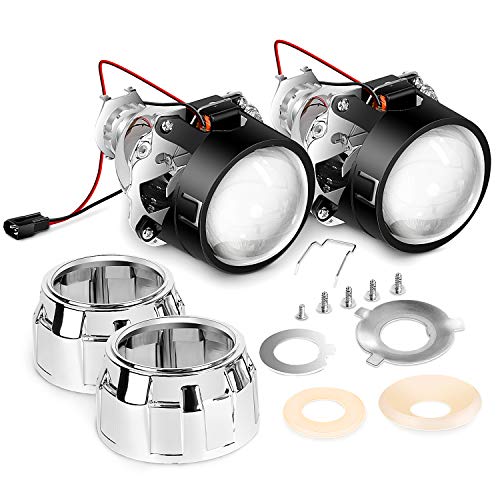
H1 mini projector kits (low/high beams), fit in tight spaces for quad retrofits or fog lamp upgrade

Fit for most H1/H4/H7/H11/9005/9006/9007/H13 housings with modifications

【Unique Angel Eyes Shrouds】3.0 Inch angel eyes switchback Shrouds comes with turn signal feature,unique appearance makes your car look more attractive.
Legal and Safety Considerations for Upgraded Headlights
Before installing brighter bulbs or retrofit assemblies, you must navigate a complex regulatory landscape where federal photometric standards, state-level enforcement, and safety performance requirements intersect to define legal headlight configurations. FMVSS 108 mandates DOT-marked assemblies meeting specific beam patterns and intensity limits; placing LED/HID bulbs in halogen housings typically violates headlight legality due to scatter and glare. NHTSA enforces color restrictions—only white (2,500–6,000 K) and amber are permitted—while blue, red, or purple tints breach safety regulations. State inspections verify proper aiming and maximum candela output; mis-aimed or over-bright lamps result in citations even when components carry DOT markings. Lens films and tinting void compliance. Always verify both federal certification and local vehicle codes before modifying lighting systems to ascertain on-road legality. Most jurisdictions limit headlight output to 3,000–4,000 lumens per bulb to prevent blinding oncoming drivers.

【Super Bright】Our H1 headlight bulbs deliver a brightness of more than 1500LM, up to 5000K color temperature, providing the best visibility in foggy and rainy weather, Our headlight bulb filled with more than 45% Xenon gas to be more brighter and whiter, Blue ion membrane filters yellow light and gets super white light.

【Super Bright】Our H11 headlight bulbs deliver a brightness of more than 1500LM, up to 5000K color temperature, providing the best visibility in foggy and rainy weather, Our headlight bulb filled with more than 45% Xenon gas to be more brighter and whiter, Blue ion membrane filters yellow light and gets super white light.
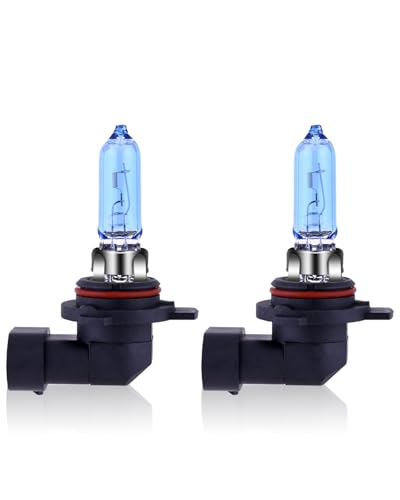
【Super Bright】Our 9012 headlight bulbs deliver a brightness of more than 1500LM, up to 5000K color temperature, providing the best visibility in foggy and rainy weather, Our headlight bulb filled with more than 45% Xenon gas to be more brighter and whiter, Blue ion membrane filters yellow light and gets super white light.