

Most modern vehicles feature automatic headlight shut-off that activates 30 to 180 seconds after you turn off the ignition, though exact timing varies by manufacturer. Your car’s ECU evaluates headlight switch position and ambient-light sensor data to determine whether lights should extinguish immediately or follow a programmed delay. You’ll find configurable timer settings in your dashboard menu, ranging from instant shutoff to 90 seconds depending on your make and model. Understanding your vehicle’s specific system architecture and available manual overrides can help you optimize battery conservation and lighting control.
How Automatic Headlight Systems Detect Light Levels
Modern automatic headlight systems rely on ambient-light sensors to measure exterior illuminance and trigger lamp activation when threshold conditions are met. Light sensor types include photodiodes for fast, linear response across the visible spectrum, phototransistors for improved sensitivity, and low-cost LDRs in budget implementations. Advanced systems deploy CMOS camera modules that spatially discriminate light sources for beam switching. Signal processing conditions the raw sensor output through analog RC filtering to suppress transient pulses, automatic gain control to compress the wide dynamic range from night to daylight, and hysteresis in comparator thresholds to prevent cycling during dusk changes. Microcontrollers apply digital debouncing and adaptive thresholds modified by contextual inputs—wiper activation, vehicle speed—forcing lights on during rain or low-visibility conditions even when ambient lux exceeds static thresholds. The front-mounted camera is typically positioned in the upper portion of the windshield to detect oncoming and leading vehicle lights for automatic high beam switching.
Default Headlight Behavior When the Ignition Is Turned Off
When the ignition switches off, most vehicles equipped with automatic headlight shutoff execute a timed power-down sequence that extinguishes the lamps 30 to 180 seconds after key removal. Default headlight settings vary by manufacturer: the 2015 Toyota Venza implements a 2-3 minute delay, while the Nissan Z maintains illumination for up to 180 seconds. This ignition off behavior prevents immediate darkness while protecting battery reserves from extended drain. You’ll find delay intervals adjustable in certain models, ranging from 0 seconds for instant cutoff to maximum factory specifications accessible through dashboard or radio screen interfaces. The ECU evaluates switch position, parking brake status, and ambient light sensor data to determine final lamp state, ensuring headlights deactivate regardless of manual switch configuration. Different headlight bulb technologies such as halogen, LED, and HID options may respond differently to automatic shutoff systems depending on the vehicle’s electrical design. Older base model vehicles without automatic features may require aftermarket relay modifications to interrupt power flow and prevent battery drain when headlights are accidentally left on.
Programmable Auto-Off Timer Settings for Headlights
Most vehicles now incorporate user-configurable headlight auto-off timers accessible through dashboard menu systems, allowing you to specify exact delays between ignition shutoff and lamp extinguishment. You’ll access these settings through your infotainment system’s vehicle customization menu, typically under light settings or similar categories. Standard headlight timer intervals range from immediate shutoff to 90 seconds, with 30-60 seconds being most common across manufacturers. Toyota models offer 30, 60, and 90-second options plus complete deactivation. Honda systems provide zero, 15, 30, and 60-second selections, with 15 seconds proving most popular among users. Timer activation typically begins after closing the driver’s door rather than ignition shutoff. You can override programmed delays by manually locking doors, which immediately extinguishes headlights. To adjust these settings, you must start the engine before accessing the menu system, as the configuration options require active vehicle power. Higher duration settings increase battery drain risk during extended periods.

🕒 Adjustable Timing: With an impressive accuracy range from 1 to 720 seconds, our time relay ensures precise control over your vehicle's electrical systems. Customize the delay-off duration according to your specific needs for optimal performance.

【High performance 】Compared to normal electromagnetic relay modules, it has a longer service life.High performance control chip for high stability and low power consumption.

❃❃ Digital cycle timer delay module with time ranging from 1 second to 999 hours, available for various application.▲▲ (Notice: no out put Voltage) If you need the E-Manual or meet any other questions, pls contact us and we will send it to you!!!
Methods to Manually Disable Automatic Headlights
Several methods exist to manually override or disable automatic headlight systems, ranging from simple switch manipulations to complex electrical modifications. You can access manual off switches through your vehicle’s touchscreen by finding your way to Controls > Lights > Off, or by turning the physical headlight switch to the off position. For Toyota vehicles, press the designated button to disable automatic high beams. Advanced disabling settings include deactivating Sentry Mode via Controls > Safety > Sentry Mode, which prevents headlights from remaining lit during security operations. More complex modifications involve exposing the headlight switch on your turn signal stalk and installing a 12-volt relay to interrupt the peach wire when ignition turns off, effectively overriding automatic functions regardless of switch position. Applying the parking brake may deactivate DRLs in some vehicle models, offering another manual override option.
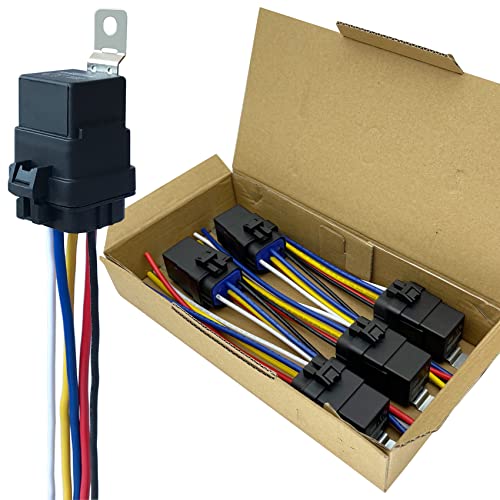
Never go beyond its capabilities. Try to stay 10 to 15% below what the rate is for

High switching capability: Normally open 40A/14V DC and normally close 30A/14V DC. Suitable for Nilight LED light bar wiring harness kit

Upgraded Version - Automotive relays built in fuse socket included 30A blade fuse with heavy duty 14AWG wires for main contact. no need of a separate fuse holder, saving space and money. 4-Pin SPST (Single Pole Single Throw) Relay.
Vehicle-Specific Automatic Headlight Features and Controls
Modern vehicles implement automatic headlight systems through distinct activation protocols that vary by manufacturer and model generation. You’ll find different vehicle controls depending on your make: some require turning the headlamp knob to AUTO, while others use button modules like the fourth-generation ŠKODA OCTAVIA. Your system’s sensor calibration directly affects performance—windshield-mounted cameras detect oncoming vehicles for high-beam control, while dashboard-mounted daylight sensors measure ambient brightness. The Body Control Module processes this data to execute lighting decisions. IntelliBeam systems activate high beams above 25 mph and deactivate below 12 mph. Full LED matrix headlights adapt automatically to driving modes. You can adjust sensitivity thresholds, though Japanese regulations prohibit disabling automatic functions while driving on 2020+ vehicles. Heavy vehicle loading that shifts the vehicle’s angle downward can compromise sensor detection accuracy and prevent high beams from switching off properly.

[Universal for 12V Vehicles]: Universal compatibility with all standard 12V vehicles, easy installation that won’t disrupt your car’s lighting or electrical system
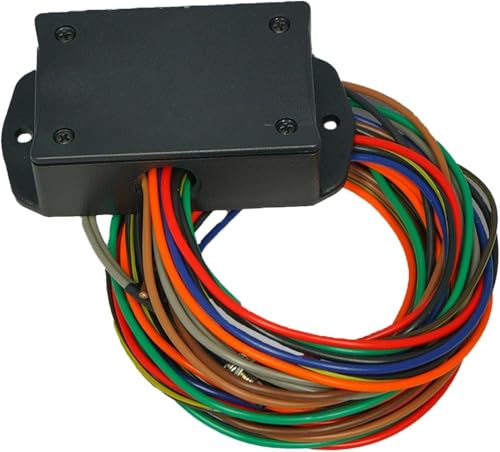
SMART DAY/NIGHT DETECTION: Modernize your older vehicle with intelligent "Set & Forget" technology. The sensitive UV light sensor detects low-light conditions, automatically triggering your headlights and parking lights at dusk or when entering tunnels/parking garages.

Smart Lighting Activation: Automates the process of switching your vehicle headlights on and off based on ambient light conditions; streamlines nighttime driving and provides consistent visibility without manual input
Installing Ignition-Linked Relays for Forced Headlight Shutdown
When factory automatic headlight systems fail to shut off or your vehicle lacks ignition-based cutoff protection, installing an ignition-linked relay circuit forces headlight shutdown when you remove the key. This ignition relay configuration uses a 12V automotive SPDT or SPST relay rated for 30–40A to interrupt power to your headlight circuit. You’ll connect the relay coil to an ignition-switched source (ACC or RUN), ensuring the coil de-energizes when the key is removed. Proper headlight wiring techniques require cutting the existing headlight switch output and routing both ends through the relay contacts, making the relay the sole power path. For a secure and lasting connection, consider soldering with heat shrink tubing to join wires at critical connection points rather than relying solely on crimped connections. Unlike daytime running lights designed for daytime visibility, this ignition relay system ensures complete headlight shutdown for battery protection. Use 12–14 AWG wire from a fused battery source through relay contacts to headlights, maintaining adequate ampacity. Install inline fuses on both relay power feeds and coil circuits for short-circuit protection. A basic multimeter can verify proper voltage at connection points during installation, though a Power Probe with LED indicators streamlines the testing process for positive and negative connections.

Integrated Diode: Each relay includes a built-in diode that suppresses induced voltage during switching, safeguarding your electrical components from potential damage.

Great Design: The switch panel is made of high quality design of 3 in 1. 1 ON OFF main toggle switch with safety cover, 1 red engine start button, 1 x indicator LED, Come with the relay to control the buttons of this item.

REMAP YOUR WIRING -Use this 12V automotive fuse relay box with 12 AWG / 16 AWG prewired long pigtail wiring harness as your waterproof power distribution block solution. Organize, consolidate, and keep track of multiple independent electric circuits with six 5pin relay sockets and six fuse holders.
Preventing Battery Drain With Automatic Shut-Off Systems
While hardwired relay circuits provide mechanical cutoff when you remove the key, automated shut-off systems prevent battery drain through sensor-driven light management that responds to ambient conditions. Illuminance sensors mounted near your dashboard measure external brightness with spectral response matching human vision, triggering headlight deactivation when ambient light exceeds preset thresholds. This headlight technology operates across -40 to +105°C without false triggers, ensuring reliable battery conservation. Your ECU processes sensor data alongside ignition status for intelligent power management. Aftermarket control boxes ($129-$150) retrofit older vehicles with plug-and-play functionality, utilizing 40A heavy-duty relays for swift shut-off. Adjustable sensitivity settings prevent premature on/off cycles that waste energy, while secondary sensors provide failsafe redundancy. Compact, low-power sensors minimize their own energy consumption while controlling high-load lighting circuits. For vehicles with automatic headlight systems, consult your owner’s manual for specific instructions on how your particular model’s sensors detect light levels and trigger deactivation. Automatic headlight switches streamline installation with quick-connect wire harnesses that integrate directly into existing electrical systems.


Adaptive Headlight Technology: Intelligently adjusts headlight based on driving conditions for optimal visibility during night driving and adverse weather conditions
Safety Advantages of Automatic Headlight Technology
Automatic headlight systems deliver measurable crash reduction through consistent activation protocols that eliminate human error in lighting control. You’ll experience safety improvements through DRLs that reduce multiparty daytime crashes by 5-10 percent and pedestrian incidents by 77 percent (5.2 versus 2.9 per 10,000 vehicles). Your nighttime protection increases substantially with good headlight ratings preventing 19 percent of single-vehicle crashes and 23 percent of pedestrian collisions. Adaptive lighting technology enhances visibility through automatic beam adjustment, reducing nighttime accidents by 25 percent while eliminating glare concerns. Leading manufacturers like Audi, BMW, and Mercedes-Benz have developed LED matrix headlights and advanced beam systems that automatically adapt to road conditions and oncoming traffic. These systems maintain ideal illumination parameters regardless of driver intervention, addressing the documented underutilization of high beams. Upgrading to premium headlight bulbs with superior brightness output and color temperature ranges further enhances visibility during nighttime driving conditions. Advanced driver assistance systems incorporate cameras and sensors that alert drivers about obstacles, significantly reducing human error in low-visibility conditions. Statistical analysis confirms vehicles equipped with standard DRLs demonstrate crash rates 1.73 times lower than vehicles without automated lighting protocols.


