
To replace your Hyundai Tucson’s headlight bulb, you’ll first need to identify the correct type for your model year—ranging from H4 bulbs (2010-2014) to 9005/H7 combinations (2019-2020). Disconnect your battery‘s negative terminal, allow the assembly to cool for 10-15 minutes, then remove the dust cap and release the spring clip. Handle only the bulb’s plastic base to avoid oil contamination from your skin. The process takes under 10 minutes once you understand your model’s specific requirements and available upgrade options.
Identifying the Correct Bulb Type for Your Tucson Model Year
Finding the right headlight bulb for your Hyundai Tucson requires knowing your vehicle’s model year and headlamp configuration. For 2019-2020 models, you’ll need 9005 (HB3) for high beams and H7 for low beams in halogen setups. The 2016-2018 generation uses 9005 high beams with either H11 halogen or D3S HID low beams, though some configurations use H7 for combined high/low beams. Earlier 2015 models typically feature 9012 (HIR2) or H7 combined high/low beams, while 2010-2014 versions use H4 bulbs. Front fog light bulbs vary between H11 (H8/H9) and 880 depending on your specific year. When selecting replacement bulbs, consider comparing brightness levels and energy efficiency across different bulb types to ensure optimal visibility. Always verify bulb compatibility by checking your owner’s manual before purchasing replacements, as different trim levels may use different configurations. If aftermarket headlamp assemblies have been installed, the bulb sizes may differ from the original factory specifications.
Essential Safety Precautions and Tools Needed
Once you’ve confirmed the correct bulb type for your Tucson, prepare your workspace and gather the necessary safety equipment before starting the replacement procedure. Essential safety measures include wearing insulated gloves rated for electrical work and safety glasses to protect against debris. Allow the headlight assembly to cool for 10–15 minutes if recently used, and disconnect the negative battery terminal to prevent short circuits. Park on level ground with the parking brake engaged. Pull the hood latch from the driver’s side to unlock the hood.
Your tool checklist should include insulated screwdrivers, trim-panel tools for removing access panels, a multimeter for electrical diagnostics, and lint-free cloths with isopropyl alcohol for bulb handling. Avoid skin contact with halogen bulb glass—oils create hot spots causing premature failure. Store replacement bulbs in original packaging until installation.
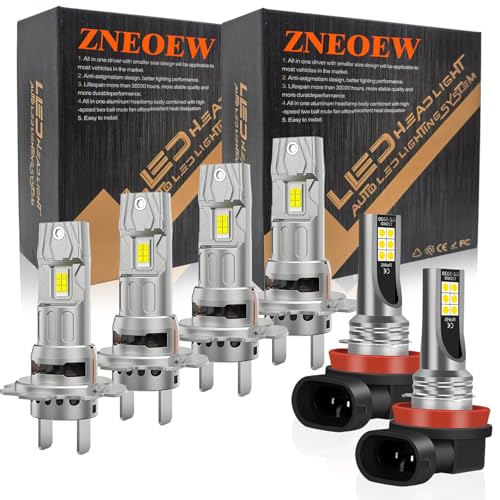
Exceptional Brightness & Clarity: Experience up to 800% brighter illumination compared to standard halogen bulbs. These bulbs emit a intense 6500K cool white light, providing superior visibility and a modern, high-end look for your vehicle’s headlights and fog lights.

【Note Before Purchase 】Package Include Pair 9005 High Beam and Pair H7 Low Beam ,Fit for Tucson 2019 2020 2021, Please check the correct vehicle age when place order

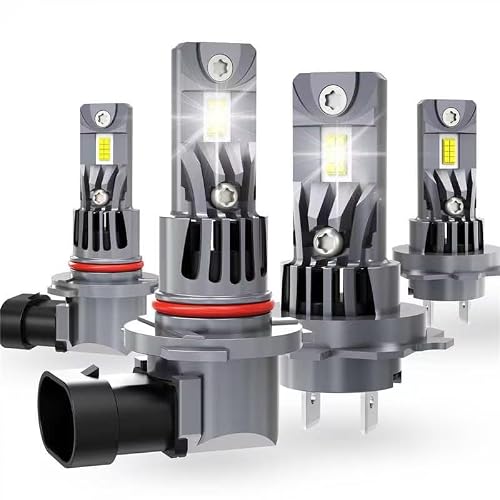
【Compatible with Hyundai Tucson 2014-2015】-Package Include Pair 9012 High Low Beam Headlight Bulbs ,Fit for Hyundai Tucson 2014-2015. Please check the correct vehicle age when place order
Step-by-Step Bulb Replacement Process
Before beginning the physical replacement, position your Tucson on level ground and allow the headlight assembly to cool for at least 10 minutes if the lights were recently operating. Verify bulb compatibility by checking your owner’s manual—common types include H7 or 9003/HB2 depending on model year. Access the bulb assembly from the engine bay, removing the dust cap with a counterclockwise twist. Depress the connector’s retaining tab and pull straight back to disconnect. Release the spring clip by unhooking it, then withdraw the bulb without twisting. For installation tips: handle only the plastic base to prevent oil contamination on halogen glass. Align keyed tabs, insert until fully seated, re-secure the clip, reconnect the electrical plug, and replace the dust cap. Test immediately.

Lights Dim Over Time, Replace In Pairs: Your lights are a pair, one is never turned on without the other. If one bulb burns out, the other isn't far behind. Replace your H7 XtraVision Halogen bulbs in pairs for optimum performance.

【Visual Enhancement】: The OKOENIEO H7 halogen bulbs are 200% brighter than other halogen bulbs, providing drivers with a wider and farther field of vision. Offering a greater visibility, they allow drivers to spot deer, wildlife, falling rocks, or obstacles ahead of time, ensuring safer nighttime driving.

Lights Dim Over Time, Replace In Pairs: Be sure to replace both H7 headlights at the same time for optimum performance. If one bulb burns out, the other isn't far behind. Replacing in pairs allows for premium visibility
Model-Specific Installation Variations
While the fundamental replacement procedure remains consistent across Tucson generations, accessing and installing headlight bulbs varies considerably by model year. You’ll find 2005-2015 models support straightforward plug-and-play LED installations using H7 low beams and 9005 high beams, though you must verify bulb sizes on pre-2010 units. The 2016-2020 generation maintains these specifications while offering particularly simpler access points in 2020 models. When working with 2021 versions, you’ll encounter shifts to HID options requiring ballast adapters for LED conversions. Post-2021 Tucsons demand CANbus adapters or anti-flicker modules to prevent electrical instability. The 2022-2024 Hyundai Tucson comes with factory-installed LED headlights, limiting upgrade options to rear lighting components. These model year variations necessitate different replacement techniques, particularly regarding beam pattern alignment in projector housings. LED technology offers superior visibility and energy efficiency compared to traditional halogen alternatives. Always assess your trim’s electrical compatibility before selecting LED upgrades to confirm proper integration.

Headlight Assembly Compatible with 2016 2017 2018 Hyundai Tucson w/ LED DRL

Kit Includes: 1 Driver Side Headlight Assembly; 1 Passenger Side Headlight Assembly
Common Mistakes to Avoid During Installation
Understanding your Tucson’s model-specific requirements means little if you compromise the installation through preventable errors. Never touch halogen bulb glass with bare hands—oils from your fingers create heat concentration points that cause premature burnout. Use gloves or a plastic bag as handling precautions. If contact occurs, clean residue immediately with alcohol.
Proper bulb alignment demands attention to orientation markers. The pin must point upward with the retaining clip snapping underneath. Misalignment allows insertion but reduces performance and security. Twist until you hear a definitive click; incomplete engagement permits vibration-induced failure. Taking under 10 minutes for the entire procedure allows you to complete this DIY replacement process efficiently without rushing through critical steps. Different bulb types such as 9005 or H7 may be required depending on your model year.
Before insertion, pull wires aside to prevent obstruction damage. After installation, verify the dust cover’s directional arrows align correctly and twist fully to create an airtight seal against moisture and contaminants. When confirming successful replacement, start the car to ensure both outside lights illuminate properly before closing the hood.
Upgrading Options and Cost Considerations
Though factory halogen bulbs meet basic visibility requirements, LED upgrades deliver measurable performance improvements that enhance nighttime driving safety. LED bulbs produce 3000 lumens versus 1400 lumens from typical H7 halogens, increasing throw distance and visibility. When conducting a cost analysis, you’ll find options ranging from $9.99 to $345.33 depending on package complexity and brand selection.
For your 2016-2021 Tucson, consider these verified options: Lasfit custom H7 kits with housing-specific adapters, Diode Dynamics SL2 fanless bulbs with limited lifetime warranty, or SL2 Pro delivering 1800 lumens per bulb. The performance benefits include 6000K cool white output, automotive-grade reliability, and plug-and-play installation. Diode Dynamics offers 30-day returns without restocking fees, while RIMTHIN provides 90-day worry-free returns, reducing upgrade risk. When comparing upgrade paths, you should evaluate beam pattern concerns to ensure your new bulbs maintain proper light distribution without blinding oncoming drivers.
These LED upgrades feature compact designs with internal cooling fans that ensure reliable operation and prevent premature failure from heat buildup.
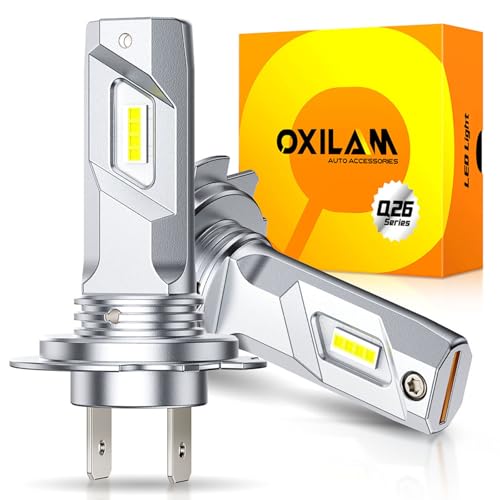
3-Minute Instant Upgrade: OXILAM Q26 H7 LED bulbs feature a 1:1 halogen-sized body, eliminating the need for adapters or polarity adjustments. Install them in just 3 minutes—no modifications, no tools, no hassle!

AUTOONE H7 LED bulbs adopt premium high-power LED chips, providing 1200% brightness enhancement and 60000LM high-lumen output. 6000K cool white light brings crystal-clear road illumination, effectively improves visibility in low-light conditions. The focused beam pattern offers wider and farther view without glare, greatly enhancing driving safety at night.
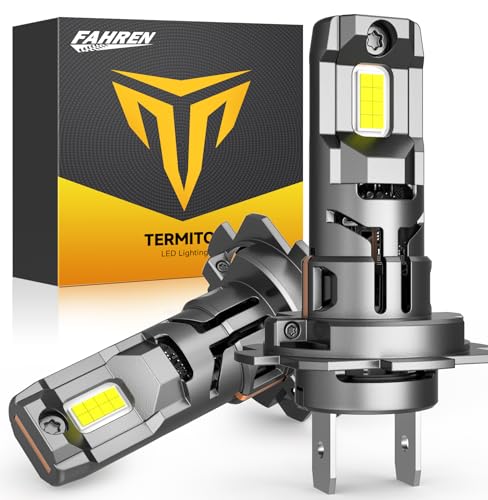
Outstanding 90000LM & 6500K Natural White: Built with high-efficiency luminous chips, these H7 bulbs Accessory Light Kits output stable 1300% brightness and 6500K standardized cool white color temperature. Precision beam shaping eliminates astigmatism and dark zones, with accurate cutoff line controlling stray light. It significantly improves night visibility without dazzling oncoming vehicles for safer driving.


