You’ll find Philips excels in beam pattern precision and LED longevity, while Sylvania delivers measurably brighter halogen performance at lower price points. Philips models like X-tremeVision offer superior cutoff control and DOT-compliant patterns, whereas Sylvania’s SilverStar Ultra achieves peak lux readings exceeding 500 in low-beam tests. Philips LEDs provide 3-year to lifetime warranties, while Sylvania halogens burn brighter but last only 400-500 hours versus standard bulbs’ 1,000+ hours. The sections below break down specific performance metrics and real-world testing data.
Brightness Performance Showdown: Lumens and Light Output Compared
Independent laboratory testing reveals measurable differences in peak lumen output across premium halogen bulbs, with OSRAM Night Breaker Unlimited and Sylvania SilverStar Ultra consistently ranking at the top of comparative brightness charts. In controlled brightness metrics comparison, Night Breaker Unlimited measured approximately 2,240 lumens—delivering 29% gains over OEM baseline—while SilverStar Ultra recorded 2,210 lumens at 27% improvement in the same test sample. Peak lumen analysis shows manufacturer marketing claims (often citing 90–110% improvements) greatly exceed independent measured gains, which typically fall within 10–30% ranges. You’ll find that raw lumen numbers provide useful rankings, but downroad illuminance and beam distribution determine actual visibility. Lab scoring separates low-beam and high-beam performance, enabling direct comparison of how each bulb performs in real-world driving scenarios rather than relying solely on advertised specifications. At the lower end of performance testing, Philips Diamond Vision measured only 1,074 lumens, representing 41% less brightness than OEM bulbs despite premium pricing.

【Visual Enhancement】: The OKOENIEO H11 headlight bulb are 200% brighter than other halogen bulbs, providing drivers with a wider and farther field of vision. Offering a greater visibility, they allow drivers to spot deer, wildlife, falling rocks, or obstacles ahead of time, ensuring safer nighttime driving.
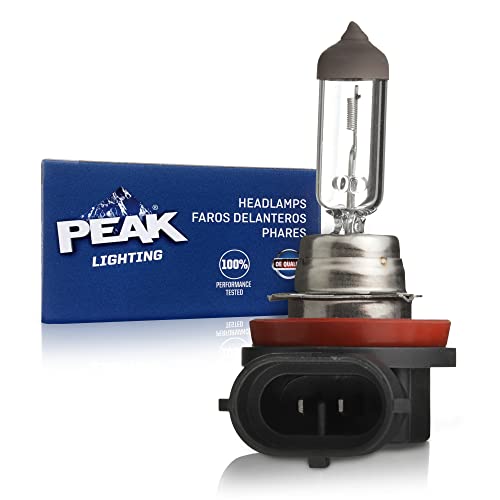
REPLACEMENT HEADLIGHT BULB: A powerful and convenient single automotive light bulb, suitable for headlight replacement and restoration of your motorized vehicle
Color Temperature and Whiteness: What You’ll Actually See on the Road
Color temperature fundamentally changes your perception of headlight performance, measured in Kelvin (K) on a scale where lower values produce warmer yellow-red tones and higher values shift toward cooler blue-purple hues. Standard halogens operate at 3200K-3750K, appearing distinctly yellow. Sylvania’s SilverStar Ultra delivers whiter light (3675K-6750K depending on model) compared to ExtraVision’s yellower output at 3250K. Philips performance halogens range 3400K-3725K, while their UltinonSport LED approaches 5000K-6000K for daylight simulation.
The visibility impact is measurable: whiter light between 4300K-6000K provides superior contrast and downroad clarity. This range produces maximum brightness while mimicking natural daylight. Beyond 8000K, excessive blue compromises rain and fog performance. Higher Kelvin values don’t guarantee increased brightness—a common misconception is that higher temperature equals higher output when lumens actually determine light intensity. Misaligned headlights can similarly reduce visibility regardless of color temperature, making proper headlight alignment essential for nighttime safety. Ensuring beam pattern quality remains consistent across different color temperatures helps maintain both safety and regulatory compliance on nighttime roads. You’ll notice Philips models generally offer whiter output with enhanced longevity, though both manufacturers recognize that shifting toward cooler temperatures improves road perception over stock yellow bulbs.
Lifespan and Durability: Which Brand Lasts Longer?
Real-world factors—voltage fluctuations, heat buildup, vibration, and DRL usage—significantly impact both brands’ actual service life. Your vehicle’s electrical system and driving patterns matter more than brand selection for predicting replacement intervals. Proper headlight alignment ensures that your bulbs’ light output is directed effectively on the road, which can also influence how quickly they degrade under use. The Sylvania Silverstar Ultra demonstrates 458 hours lifespan, while OSRAM NIGHT BREAKER 200 offers approximately 500 hours of expected use. For those prioritizing longevity over brightness, basic halogen bulbs remain a practical choice for extended service life.
Top Performing Models From Each Manufacturer
Both manufacturers position distinct flagship models targeting different performance priorities and installation scenarios. Philips’ Ultinon Pro9000 delivers high lumen output at ~6000K with integrated drivers for plug-and-play LED applications, while their Ultinon Access H7 achieves strong peak brightness though independent tests reveal elevated glare at B50L sampling points. For halogen comparison factors, Sylvania’s SilverStar Ultra demonstrates superior low-beam performance with measured peaks exceeding 500 lux in controlled testing, ranking among top retail halogen performers. The Ultinon Sport employs dual cooling (active fan plus aluminum heat sink) for stable output in demanding applications. Your user preferences determine ideal selection: Philips emphasizes LED conversion technology with color temperature consistency, while Sylvania prioritizes halogen beam control and reflector optimization, particularly evident in their SilverStar Ultra’s documented photometric performance. H7 bulbs feature a single filament design that allows manufacturers to optimize either low beam or high beam applications for improved focus. Legal compliance should be verified before installation, as legal regulations regarding headlight modifications vary by jurisdiction and may restrict certain brightness levels or color temperatures. For drivers concerned about long-term headlight durability, applying clear protective sealants can help prevent moisture ingress and extend bulb assembly longevity.
Philips X-Tremevision Vs Sylvania Silverstar Ultra: Head-To-Head
When comparing these halogen upgrade flagships in controlled testing environments, Sylvania’s SilverStar Ultra delivers measurably superior brightness performance with 27% increased output over stock bulbs—outpacing Philips’ XtremeVision 130% by 11 percentage points despite falling just 30 lumens short of OSRAM’s category leader. The headlight brightness advantage comes with tradeoffs: SilverStar Ultra’s cobalt blue nano-coating produces whiter light through its tri-band coating system, while XtremeVision exhibits yellower bulb color characteristics. However, Philips counters with extended service life, addressing SilverStar Ultra’s acknowledged durability weakness. At $25 per pair, XtremeVision presents better long-term value despite lower luminous output. You’ll sacrifice approximately 11% headlight brightness choosing Philips, but gain operational longevity. SilverStar Ultra ranks second overall in laboratory testing, optimizing visibility over replacement intervals. The Philips X-tremeVision 130% surpasses older versions by 4% in brightness, representing incremental improvements within the product line. Both bulbs demonstrate strong beam pattern quality that contributes to their market leadership positions. When evaluating aftermarket bulbs, it’s important to consider legal considerations of aftermarket bulbs in your jurisdiction before making your final selection.

Lights Dim Over Time, Replace In Pairs: Your lights are a pair, one is never turned on without the other. If one bulb burns out, the other isn't far behind. Replace your 9003 XtraVision Halogen bulbs in pairs for optimum performance.

Fit for 99% of vehicles - SYJIIP Halogen headlamp are close to the wattage of the original halogen headlamp bulb, which can reduce the occurrence of CANBUS problems, avoid erroneous and flickering. As long as your original light bulb model is the same as ours, then SYJIIP's light bulb will be suitable for your car.
Stock Bulb Specifications and Upgrade Potential
Standard halogen bulbs from Philips and Sylvania establish baseline performance metrics that define upgrade potential across brightness, color temperature, and longevity parameters.
Stock bulb features differ notably: Philips standard halogens deliver 3425K with 5.8-year lifespan (1759 hours), while Sylvania’s 3325K base models reach 8 years (2450 hours) in select configurations. High beam variants from both brands achieve 3675K, though Philips averages 1.5-2.1 years versus Sylvania’s 3.4-year durability. Both manufacturers’ stock offerings provide adequate visibility for standard driving conditions, though legal requirements regarding headlight modifications should be considered when evaluating upgrades. Brightness levels measured in lumens directly impact nighttime visibility and safety performance across varying road conditions.
Upgrade options present critical tradeoffs. Philips X-treme reaches 3750K but drops lifespan to 2.9 years. Sylvania SilverStar Ultra maximizes clarity over stock specifications but suffers from shorter lifespan at less than 1 year. Philips CrystalVision balances performance at 3400K with 6.9-year longevity. Premium Sylvania lines achieve 6750K while maintaining 6.4-year durability, demonstrating inverse relationships between output intensity and operational life.
Real-World User Experiences and Reviews
Thousands of consumer reports reveal consistent patterns: upgraded halogens from both manufacturers deliver perceptible brightness improvements over OEM bulbs, though real-world durability rarely matches manufacturer specifications. User experiences across forums and lab tests position Sylvania SilverStar/Ultra near peak lumen output, while Philips X-tremeVision consistently outperforms stock. You’ll find reliability concerns with both brands—Philips models sometimes fail within two years, and Sylvania’s premium lines show variable longevity. Quality-control issues appear in both product families, with out-of-box failures and batch inconsistencies reported. Environmental factors—vibration, voltage swings, moisture intrusion—dominate failure modes regardless of brand. The performance improvement justifies accepting reduced bulb longevity for most drivers prioritizing nighttime safety. Considering color temperature options can also influence your selection, as warmer yellow tones provide different visibility characteristics compared to cool white light across various driving conditions. Both brands offer models with varying beam pattern quality that affects how light distributes across the road surface. Authorized dealers prove essential; counterfeit or aged stock from unknown sellers frequently underperform. Most experienced users maintain spare bulbs, accepting shorter service life as the tradeoff for enhanced visibility.
Beam Pattern Quality and Road Visibility
Beyond raw brightness claims and longevity debates, beam pattern quality determines what you’ll actually see on the road. Philips halogens deliver superior cutoff precision—VisionPlus and BlueVision maintain DOT-compliant patterns that mirror factory specifications in H7 reflector housings. Sylvania LEDs face LED limitations: their six-sided chips create scattered beams unsuitable for projector or reflector systems. While Sylvania’s S-V.4 achieves 1,040 LUX high beam versus typical halogen outputs, beam pattern comparison reveals critical deficiencies. The SL.VX2’s narrow two-sided chips improve distribution, measuring 610 LUX high beam, yet still can’t replicate halogen filament precision. Some Sylvania models produce dismal 109 LUX maximums with poor patterns. Unbranded budget LEDs may feature misleading high review counts despite worst-in-class performance and legitimate safety concerns. For legal, usable illumination, Philips halogens consistently outperform aftermarket LEDs through controlled beam geometry, despite lower LUX readings.
Warranty Coverage and Replacement Recommendations
Warranty protection separates these manufacturers markedly. Sylvania provides explicit coverage: 12 months for halogen bulbs, 3 years for HIDs, and up to lifetime for LED options. You’ll need proof of purchase and product registration for LED/HID replacements. Philips offers no published warranty periods on product pages, requiring retailer verification before purchase.
For replacement tips, you’ll find Sylvania’s SilverStar high-performance halogens burn out faster than XtraVision models, though warranty comparison shows equal 12-month coverage. Replace bulbs in pairs to maintain beam consistency. Heavy night drivers should stock spares, as performance bulbs rarely last beyond one year. When selecting replacement bulbs, consider the lumens output and color temperature that best suit your driving conditions. OEM vehicle warranties typically cover LED headlight bulbs for approximately 3 years or 36,000 miles under general warranty terms. Neither manufacturer covers installation costs. Note that return shipping charges remain your responsibility when filing warranty claims with Sylvania. The warranty comparison favors Sylvania’s transparency, while Philips requires direct inquiry for coverage terms and replacement procedures.
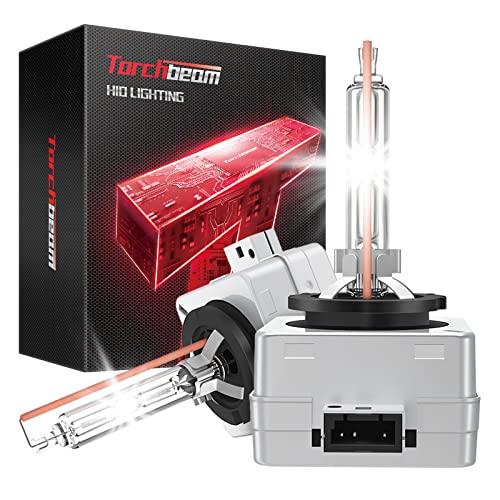
Safer Night Driving: Torchbeam d3s bulbs made with German xenon gas. Replacement OEM Part Number: 42302C1, 42302(WX/XV), 42403(C1), 66340, 66340CBH, 66340CBI, ect.

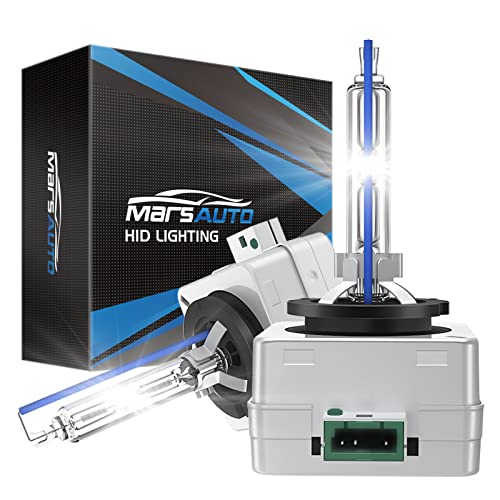
Replace Only HID Bulbs: Fit for stock D3S HID Xenon bulbs only, NOT ADAPT if your auto has stock Halogen/LED lights
Price Vs Performance: Getting the Best Value
Coverage terms matter less when upfront costs strain your budget. Sylvania’s SilverStar Ultra runs $35–$75 per 2-pack, while Philips X-tremeVision spans $20–$60, making competitive pricing model-dependent. Discount strategies cut both brands 20%–50% at mass retailers, so timing determines real value. Independent tests show SilverStar Ultra reaching ~507 lux hotspot and 1,626 lm, while Philips variants deliver +20% to +38% low-beam gains over stock. Yet premium halogens sacrifice durability: both brands typically last 400–800 hours versus 1,000+ for standard bulbs. Price-per-lumen calculations favor mid-priced Philips SKUs on sale, but beam pattern quality—hotspot focus and cutoff sharpness—drives usable road illumination more than raw numbers. Your vehicle’s reflector design ultimately dictates measured performance differences between brands. When comparing options, consider how color temperature preferences affect your night driving experience and visibility. For DIY installation, ensure you avoid touching the glass bulb surfaces during bulb replacement to prevent damage and degraded performance. Both manufacturers back their halogen bulbs with 12-month warranty coverage, providing equal protection against premature failures.

UP to 300% Brighter—Clearer Warm White Light Vision: Littlelucky H11 halogen bulbs output a 3800K,4000LM warm white light, experience up to 300% brighter for clearer vision in low-light and fog etc conditions, enhancing driving safety and visibility

【Vacuum Precision Optical Blue Film Technology】Engineered with a micron-level optical blue coating to reduce the deep-yellow appearance of conventional halogen bulbs and deliver a clearer, less-yellow warm-white beam. The coating also acts as a thermal insulator with enhanced UV protection, effectively slowing oxidation, yellowing, and premature aging of the headlight housing. Please note: this bulb delivers an enhanced warm white halogen output — not the cool white appearance of HID lighting.

UP to 300% Brighter—Clearer Warm White Light Vision: Littlelucky H7 halogen bulbs output a 3800K,4000LM warm white light, experience up to 300% brighter for clearer vision in low-light and fog etc conditions, enhancing driving safety and visibility