Car headlight costs vary dramatically based on technology and replacement scope. You’ll pay $10–$40 for halogen bulbs, $50–$200 for HID units, or $100–$400 for LED replacements. Complete assembly costs range from $30 for basic halogen housings to $5,000+ for laser systems, with adaptive LED assemblies averaging $600–$1,350. Factor in labor rates of $100–$200 hourly, plus installation time spanning 15 minutes to 2 hours depending on your vehicle’s configuration. Understanding the specific variables affecting your replacement scenario will help you determine accurate cost projections.
Understanding Headlight Technology Types and Price Ranges
When selecting replacement headlights, you’ll encounter four primary technologies that differ remarkably in performance specifications and cost structure. Halogen units represent the baseline option, delivering 400–1,000 operational hours with moderate headlight brightness at the lowest price point, though halogen efficiency trails competing technologies considerably. HID xenon systems increase luminous output through arc-discharge design, extending service life to 2,000–2,500 hours while requiring ballast integration that elevates installation costs. LED configurations achieve superior energy conversion ratios with 25,000-hour longevity, enabling compact thermal management and adaptive beam control. Laser headlights occupy the premium segment, providing maximum range projection with 30% greater efficiency than LED but restricted to high-end applications due to substantial component expenses. Matrix LED headlights utilize controllable LEDs for high-resolution light patterns that allow precise adaptive beam shaping. Factors such as usage frequency and environmental conditions can significantly influence the actual lifespan you experience with any headlight technology. Each technology tier correlates directly with replacement cost escalation.
Bulb-Only Replacement Costs by Technology
Budget allocation for headlight bulb replacement varies substantially across technology platforms, with halogen units establishing the entry-level benchmark at $10–$40 per bulb before labor charges. Premium halogen variants command higher pricing due to enhanced luminosity specifications. HID/Xenon bulb types escalate costs to $50–$200 per unit, reflecting specialized ignition systems and dealership-sourced components. LED replacements represent the upper tier at $100–$400 per bulb, though aftermarket alternatives like SEALIGHT pairs range $39.99–$99.99. Pricing trends correlate directly with longevity metrics: halogen delivers 500–1,000 hours, HID extends 2,000–10,000 hours, while LED technology achieves 25,000–50,000 hours. These lifespan differentials justify initial investment disparities when calculating total ownership costs. Each bulb technology produces distinct light output measured in lumens and beam pattern quality that influence both performance and replacement frequency. Diagnostic assessment of your vehicle’s existing bulb type determines replacement expenditure parameters. To maintain optimal nighttime visibility and safety, consider applying a UV-protective clear coat when restoring aging headlight lenses alongside bulb replacement. Replacing bulbs in pairs ensures uniform light output and prevents mismatched brightness levels between left and right assemblies.
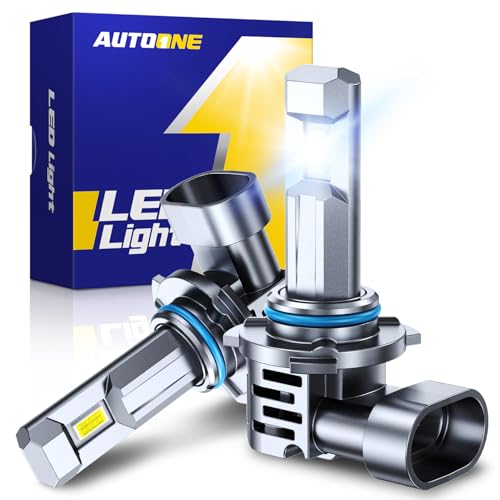
Great Brightness - 36000 Lumens

【1600% Brighter Than Halogen】 This 9005/HB3 LED bulb achieves a peak luminous flux of 70,000 lumens with a 6500K color temperature. The integrated multi-chip LED architecture enables optimized light distribution, extending illumination range and enhancing reaction time during nighttime driving. Engineered as a plug-and-play upgrade, these units provide a direct performance enhancement over conventional halogen bulbs.Headlight Assemblies, Parts & Accessories › Headlight Assemblies
Complete Headlight Assembly Replacement Expenses
Complete headlight assembly replacement escalates financial commitment beyond bulb-level interventions when housing damage, moisture intrusion, or sealed-unit configurations necessitate full module substitution. Your cost breakdown spans $30 to $5,000 per unit, with mainstream assemblies averaging $150–$800. Budget-tier aftermarket options start at $10.97 for Ford F150 and $11.97 for Chevrolet Silverado, while OEM equivalents command premium pricing. Assembly types dictate expenditure: conventional halogen housings ($30–$200), adaptive LED modules ($600–$1,350 for Subaru Forester and Cadillac XT5), and laser-equipped units ($5,000+ for BMW i8). You’ll encounter extreme variances—$2.97 Honda CRV assemblies versus $3,000 Volvo XC90 units—reflecting technology integration, manufacturer specifications, and supply chain positioning. Sealed EV headlights like Tesla Model 3 exceed $1,000, eliminating serviceable bulb options entirely. Professional installation adds $100 to $400 in labor charges depending on assembly complexity and vehicle accessibility. For Nissan Altima models, full headlight assembly replacement typically ranges between $150 and $800 depending on the part selection and labor requirements. Aftermarket HID conversion kits may present cost savings initially but often fail to meet Federal Motor Vehicle Safety Standard 108 requirements, resulting in fines and inspection failures that ultimately increase total ownership expenses.

Seamless replacement - this headlight assembly was specifically designed to look and function like the original headlight on specific vehicles

【VEHICLE COMPATIBILITY】Headlight Assembly Compatible With 2003-2007 Honda Accord 2/4 Door. Bulbs are not included. High beam bulb type: 9005; Low beam bulb type: 9006. OEM Part Number: 33101-SDA-A01, 33151-SDA-A01. ABPA Partslink Number: HO2503120, HO2502120.

[Fit For] - 07-13 Chevy Avalanche | Suburban | Tahoe
Labor Costs and What Drives Them Higher
Professional headlight service labor rates span $100 to $200 per hour across most markets, with standard bulb replacement consuming $30 to $300 in technician time depending on access complexity. Labor rate variability stems from regional pricing differences, with metropolitan shops commanding $150-$180 hourly versus rural facilities at $100-$120. Accessibility challenges dramatically impact billable time: straightforward replacements require 15 minutes, while Volkswagen, Audi, and Lexus models demanding bumper removal extend service to 2.0 hours. BMW, Mercedes-Benz, and Audi vehicles require post-installation coding, adding 0.5-1.5 diagnostic hours. For do-it-yourself maintenance on compatible models like the Chrysler 300, unplugging the electrical connector and releasing the bulb by turning it counterclockwise can eliminate labor costs entirely. Replacing both headlight bulbs simultaneously is recommended for even brightness and prevents the need for repeated service visits shortly after. Some vehicles like the GMC Yukon may require removing clips or covers to access the headlight assembly during replacement procedures. Adaptive lighting systems necessitate calibration procedures costing $50-$300 beyond replacement labor. Complete LED assembly installations command $100-$700 in technician charges, reflecting electrical integration complexity and precision alignment requirements for ideal beam projection.

Easy Installation: 1:1 design, no external driver or connector required, plug and play
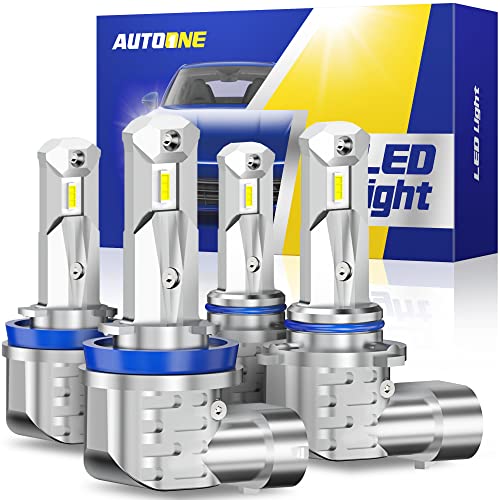
Huge Improvement in Visibility: AUTOONE H11 9005 led bulbs combo are equipped with high luminous efficacy csp chips. And 1:1 halogen bulbs’ beam pattern, spread out the light more to help in the side and front vision but no endangering others
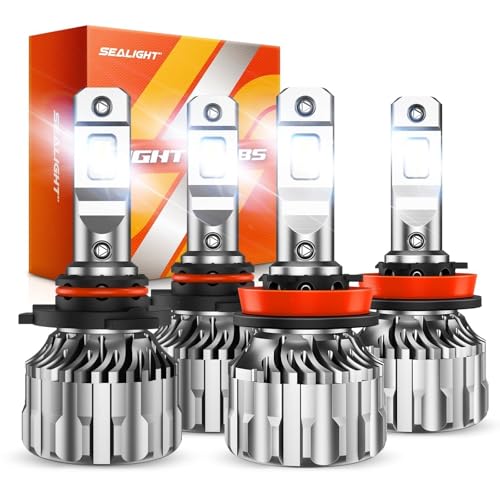
Better Driving Experience- The h11 9005 bulbs provide super bright illumination, offering a safer and more enjoyable driving experience
Lifespan and Long-Term Value by Headlight Type
When evaluating headlight technology investments, service life becomes the primary cost determinant beyond initial purchase price. Halogen bulbs deliver 400–1,000 operating hours, translating to 1–2 years under typical nighttime driving patterns, requiring frequent replacement cycles. HID/Xenon systems extend lifetime expectations to 2,000–15,000 hours (3–10 years depending on OEM quality), while factory LED assemblies often surpass 30,000–50,000 hours—potentially outlasting vehicle ownership. Aftermarket LED kits show variable performance (5,000–20,000 hours) due to inconsistent thermal management and driver circuitry. Maintenance frequency directly impacts total ownership cost: halogen’s low entry price becomes expensive through repeated service intervals, whereas LED’s premium upfront investment amortizes favorably across extended service periods. Driver/ballast electronics frequently limit HID and LED longevity more than the light source itself, making component quality critical. The vehicle’s electrical system health plays a significant role in determining actual bulb lifespan, as voltage instability can cause premature failure regardless of bulb type.
Vehicle-Specific Factors That Impact Your Total Bill
Your vehicle’s make, model, and factory lighting specification determine replacement costs far more than headlight technology alone. Economy models like the Civic or F-150 benefit from abundant aftermarket options, driving assembly prices down to $30–$200. Luxury vehicles face restricted sourcing: Volvo XC90 assemblies reach $2,800, while Cadillac XT5 units cost $1,350. Factory specifications lock you into premium pricing—dealer-only connectors and proprietary modules limit aftermarket substitution on recent models. Labor compounds cost variability: cramped engine bays and bumper-removal requirements push installation from 5 minutes to multiple hours ($100–$400). Vehicles with integrated sensors demand post-replacement calibration, adding specialized shop fees. Consider brightness levels and color temperature options when evaluating bulb performance, as these factors influence both visibility quality and long-term replacement frequency. OEM assemblies typically double aftermarket prices for identical applications, yet older or niche platforms offer few alternatives. Xenon HID systems may require ballast replacement, with aftermarket units ranging from $100 to over $300 depending on quality and specifications.
Dealer vs. Independent Shop vs. DIY: Cost Comparison
Where you choose to replace headlight assemblies or bulbs determines both immediate cost and long-term value retention. Dealers charge $100–$200 per hour labor plus OEM assemblies ($300–$2,500+ per side), totaling over $1,000 per headlight with diagnostic and calibration fees. Dealer advantages include guaranteed OEM fitment, extended warranties, and integrated coding for adaptive systems. Independent shops offer $70–$150 hourly rates and aftermarket assemblies ($150–$600 versus OEM $300–$1,500+), reducing total bills to $100–$400 for mainstream vehicles. Independent benefits include faster turnaround when parts are stocked and lower upfront costs. DIY halogen bulb replacement costs $10–$40 in parts, though premium LED bulbs offering superior brightness and beam patterns can cost more but provide enhanced visibility. The 2012 Camry typically uses H11 bulbs for low beams and 9005 bulbs for high beams, making it important to verify your vehicle’s specific requirements before purchasing replacements. Complex LED/adaptive systems requiring programming favor dealer service despite higher expense, while routine replacements benefit from independent shop pricing and availability. When performing DIY work, always disconnect the battery first to prevent electrical shorts and potential injury.

10X Super Brightness: The brightness of SEALIGHT H11 bulbs S3 series is 10X that of traditional bulbs. Whether it is the brightness, illumination width and illumination mileage of the bulb, it has achieved a comprehensive upgrade, giving you an ultimate night driving experience

【Super Bright & High Performance】These h11 bulbs use top-tier automotive-grade chips. With a cool white color temperature of 60,000LM, they produce a super bright beam that outshines your original bulbs—giving you better visibility and a safer drive

H11 bulbs are 600% brighter than traditional bulbs. Combined with a color temperature of 6000K, they make night driving safer.
Money-Saving Strategies for Headlight Replacement
Since labor constitutes 40–70% of professional headlight replacement costs, performing DIY bulb replacements delivers immediate savings of $30–$300 per service interval. Consult your owner’s manual for installation tips and complete the 5–60 minute process using basic tools. LED bulbs maximize bulb longevity at 40,000 hours versus halogen’s shorter lifespan, reducing replacement frequency despite higher upfront costs of $50–$200 per pair.
Headlight restoration kits ($10–$30) eliminate the need for $300+ assembly replacements when addressing cloudy lenses. For yellowed or oxidized headlights, UV sealants and polishing systems offer professional-quality restoration without full replacement costs. Common household items like toothpaste and baking soda can also serve as affordable abrasives for restoring cloudy headlights with basic surface preparation and masking tape protection. Aftermarket parts offer substantial savings over OEM components—halogen bulbs average $20 versus dealer premiums. Online retailers provide competitive pricing with halogens as low as $10–$15. Always verify part numbers match your vehicle’s make, model, and year specifications. Replace bulbs in pairs to guarantee even lighting output and prevent premature failure. Routine checks help avoid escalation of headlight issues over time and prevent more costly repairs down the road.
Insurance and Warranty Coverage for Headlight Repairs
While proactive maintenance and DIY replacements reduce out-of-pocket expenses, accident damage and unexpected failures can trigger insurance or warranty coverage pathways that offset repair costs. Collision and extensive policies cover headlight damage from crashes, vandalism, or weather events, though your deductible often exceeds single-headlight replacement costs. Liability-only policies exclude own-vehicle repairs entirely. Insurers apply actual cash value calculations and may deny claims for pre-existing damage or wear-and-tear. OEM parts endorsements determine whether you’ll receive factory assemblies or aftermarket equivalents. Modern sealed headlight assemblies and advanced lighting technologies like LED systems can significantly increase replacement costs, making insurance coverage particularly valuable when available. Understanding brightness levels and beam patterns helps you select appropriate replacement bulbs that meet your vehicle’s specifications and legal requirements. New-vehicle warranties cover manufacturing defects and premature component failure, requiring dealer diagnosis for authorization. Extended service contracts may include electrical system coverage. Filing an insurance claim before initiating repairs ensures you gain consent from insurers and avoid out-of-pocket costs when fault has not been established. Review policy exclusions, deductible thresholds, and warranty terms before filing claims to avoid premium increases on sub-deductible repairs.