Daytime Running Lights (DRLs) are low-intensity, forward-facing lighting systems that automatically activate when you start your vehicle’s engine. They’re designed to enhance your vehicle’s visibility to other drivers, pedestrians, and cyclists during daylight hours rather than illuminate the road ahead. DRLs utilize technologies like LED, halogen, or reduced-intensity headlamps, consuming minimal energy while producing white, yellow, or amber illumination. Research shows they reduce daytime collisions by 5-15% and considerably improve detection during dawn and dusk conditions. The sections below explore technical specifications, regulatory requirements, and installation options.
Definition and Purpose of Daytime Running Lights
Daytime Running Lights (DRLs) are low-intensity, low-wattage lighting systems that activate automatically when the vehicle’s engine runs. These forward-facing lights emit white, yellow, or amber illumination upon ignition, handbrake release, or gear shift engagement. You’ll find them positioned at the vehicle’s front, occasionally extending to side or rear locations.
DRL history traces back to addressing vehicle visibility during daytime conditions. Unlike headlights, they’re not designed for road illumination but exclusively for increasing your vehicle’s conspicuousness to other road users. The system operates at reduced brightness levels compared to standard headlights, consuming less energy while providing sufficient contrast against backgrounds. DRLs bridge the visibility gap during twilight, dawn, and dusk conditions, helping other drivers, pedestrians, and cyclists identify active vehicles and accurately perceive distance and speed in varying environmental conditions. The primary function is to aid recognition of a vehicle’s presence and direction, enhancing perception for all road users.
How Daytime Running Lights Work
Three distinct mechanisms trigger DRL activation: engine ignition, handbrake disengagement, or transmission engagement into gear. Daylight sensors detect ambient conditions to initiate operation automatically, requiring no driver input. The system operates independently through dedicated modules that control timing and synchronization with existing lighting circuits.
Power efficiency distinguishes DRLs from standard headlights. Resistors limit current to low-beam bulbs, reducing intensity to 400-1,200 candela within regulatory surface areas of 25-200 cm². LED implementations consume minimal electrical energy while maintaining visibility standards. When you activate headlights, DRLs automatically dim or deactivate to prevent glare and conserve power. DRLs maintain low power consumption compared to conventional lighting systems throughout their operation.
The control module manages all operational parameters, including brightness adjustment and coordination with alternator power post-startup. Faulty modules result in activation failures or continuous operation regardless of headlight status.
Types and Technical Specifications of DRL Systems
Modern DRL systems employ five primary light-source technologies, each with distinct performance envelopes and integration constraints. LED modules deliver 25,000–50,000 h service life at <10 W per array, enabling flexible optical patterns. Halogen-based DRL offers lower efficiency (~2,000 h) with higher thermal output. Reduced-intensity headlamp configurations repurpose low-beam circuits but accelerate bulb wear. Dedicated xenon units provide superior luminous output yet face cost penalties. Optical-fiber light guides permit compact brand-specific signatures.
Control methods range from standalone relay circuits requiring ignition-signal switching to integrated ECU architectures managing dimming, turn-signal masking, and headlamp interaction via CAN protocols. Ambient-light sensors adapt intensity or disable operation at low speeds. Photometric specifications mandate 400 cd typical intensity, ≥40 cm² luminous area, and automatic extinguishing when headlamps activate. Systems are powered by the alternator to minimize battery drain during vehicle operation.
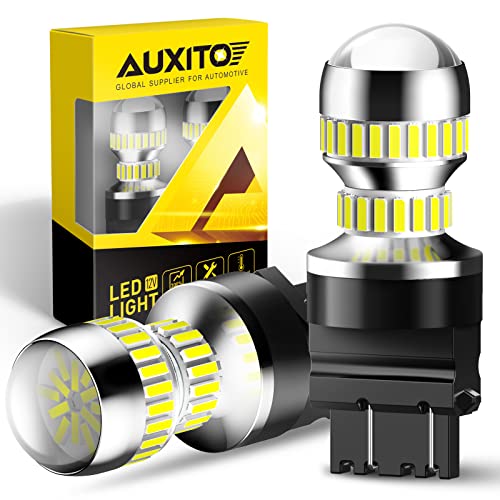
Resembling halogen bulb shape design and sequencing 54 pieces 4014-SMD LED chips precisely around the 3157 led bulb. Delivering 360° high luminous efficiency with full 6000K white light, see more clearly and safely when reversing

【500% Brighter for Safer Reversing】Upgraded with high-output LED chips and an HD projector lens, these 3156 3157 LED reverse light bulbs deliver up to 500% brighter illumination than halogen bulbs. The 6000K White light improves rear visibility, helping you back up more safely at night, in rain, or in low-visibility conditions

▼▼▼IMPORTANT NOTICE: 1. We have upgraded the appearance of these 3157/3156 led bulbs, you may randomly receive the old or new bulbs. 2. Please add 50W 6ohm load resistor to solve hyper flash/fast blinking/no flash/error message on dashboard if it occurs. 3. The bulbs Don’t built in resistor and package Doesn’t come with resistor!!!
Safety Benefits and Crash Reduction Data
Controlled studies across multiple jurisdictions quantify DRL effectiveness through crash database analysis spanning millions of vehicle-years. You’ll find crash statistics demonstrate 5-15% reductions in multiparty daytime collisions, with Transport Canada and meta-analyses confirming this range. Australian data from 119,606 crashes (2010-2017) shows 8.8% overall non-nighttime multi-vehicle crash reduction. Safety research reveals enhanced performance during dawn and dusk changes, where DRLs reduce crash risk by 20.3% through improved conspicuity in low ambient light. NHTSA’s 2008 study documented 5.7% accident reduction for light trucks and vans. Single-vehicle crashes involving non-motorists decreased 12% in daytime conditions. Opposite-direction fatal crashes dropped 5%, while rural frontal and cross-traffic collisions reduced 7-8%, reaching 11-14% in ideal visibility conditions. DRLs enhance visibility on tree-lined roads and poorly lit areas where dappled light creates challenging driving conditions.
Global Regulations and Legal Requirements
Regulatory frameworks governing daytime running lights vary markedly across global markets, reflecting different approaches to mandatory implementation versus voluntary adoption. Sweden pioneered mandatory DRLs in 1977, with Nordic countries following suit due to extended winter darkness. The European Union implemented Directive 2008/89/EC requiring ECE R87-compliant dedicated lamps on passenger cars from February 2011, expanding to trucks and buses by August 2012. Canada mandates DRLs on all vehicles since 1990, while you’ll find the United States permits voluntary adoption under FMVSS 108, capping brightness at 3,000 candela. UNECE Regulation 87 specifies 400-1,200 candela photometric output for global harmonization. Australia, New Zealand, and Japan permit but don’t require DRLs. The primary motive behind these regulations centers on safety enhancement through improved vehicle visibility. Regulatory updates continue evolving through directives like 2019/2144.
DRLs vs. Headlights: Understanding the Difference
Beyond understanding where and when DRLs are mandated, you must recognize the fundamental operational distinctions that separate these dedicated visibility systems from conventional headlamps. DRLs activate automatically upon ignition, emitting reduced-intensity illumination exclusively through front lighting assemblies while leaving tail lights inactive. This configuration maximizes DRL effectiveness for oncoming vehicle detection without contributing to road illumination. Conversely, headlight technology engages the complete lighting system—front and rear—through manual activation, delivering higher-intensity output designed for driver visibility enhancement during low-light conditions. DRLs consume notably less electrical power than headlights, improving fuel efficiency while minimizing emissions. The critical distinction lies in purpose: DRLs function as passive safety indicators for other motorists, whereas headlights serve as active illumination tools for drivers maneuvering hazardous conditions or darkness. Legal headlight systems must comply with federal safety standards to ensure proper brightness and beam patterns that do not blind other drivers. For vehicles with advanced lighting systems, you can adjust DRL settings through in-car menus or multimedia interfaces to customize their activation and intensity. Modern vehicles incorporate DRLs as a standardized safety feature, with many regions now mandating their inclusion to reduce daytime collision rates.

❤️ High brightness --- Imported high-purity LED high-power light source five lamp beads structure design;

Smart Control Functions: This DRL controller offers multiple functions including constant light, dimming, delay and automatic on/off switching, allowing customization for various driving conditions and preferences.
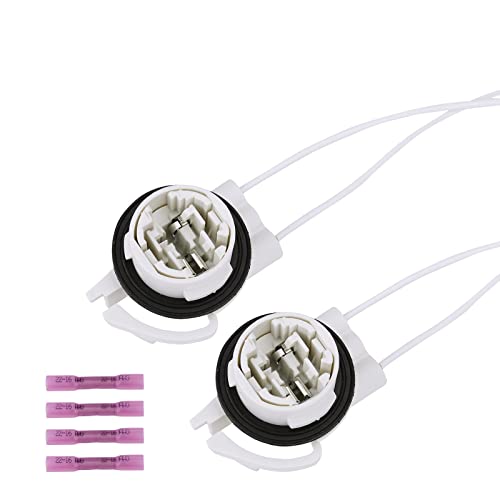
REPLACEMENT Light Socket Repair Kit-Heavy duty bindings offer a greater hold against vibration, abrasions, and moisture
Advantages of Using Daytime Running Lights
While conventional wisdom emphasizes headlight functionality for nighttime operation, DRLs deliver measurable safety advantages through continuous daytime visibility enhancement. Your vehicle becomes detectable from greater distances, enabling other motorists to accurately judge speed and distance. Fleet data demonstrates a 7% reduction in daytime crashes, while NHTSA reports 5% fewer fatal opposite-direction collisions. For vulnerable road users, DRLs provide critical driver awareness—pedestrian and cyclist fatalities decrease by 12% in single-vehicle scenarios, with motorcycle-related crashes dropping 23%. LED-based systems operate automatically upon ignition, consuming minimal power while maintaining ideal visibility through fog, overcast conditions, and twilight hours. Proper headlight aiming between 22 inches and 54 inches from the ground ensures that DRLs work effectively alongside your vehicle’s primary lighting system. When selecting DRLs, consider factors such as lumens output and color temperature to ensure optimal performance for your specific vehicle. You’ll benefit from enhanced peripheral detection without manual intervention, as DRLs function efficiently throughout continuous operation with negligible battery impact and extended service intervals. These safety features are covered extensively in comprehensive driver education courses, ensuring new drivers understand their proper use and benefits.

Turn Signal Lights: The car led strip lights with dynamic scan start up and turn signal function, high brightness, low power consumption and long-lasting. DRL led strip is a great way to enhance your car's appearance and boost its signal, making your car easy to spot for other drivers on the road.

Application on: 3157 3156 4114 3357A 3457A 60-3528-SMD White Hight Power LED cab be used as DRL Daytime Running Light Bulbs.

2pcs of waterproof flexible(120°) high power 12V flip slim chip COB LEDs generation DRL daylight driving light daytime running ligh
Potential Drawbacks and Limitations
Despite their documented safety benefits, DRLs introduce several operational and perceptual challenges that can compromise signaling effectiveness and road-user detection. High-intensity beams can create glare for oncoming drivers, while diminished contrast between DRL and turn-signal illumination reduces directional intent recognition. You’ll find that widespread DRL adoption decreases motorcycles’ relative conspicuity, since their daytime headlights no longer provide unique visibility advantage. Drawback considerations include rear-end collision risk when drivers mistake automatic DRLs for full headlights, leaving tail lamps unlit in low-visibility conditions. Visibility challenges extend to pedestrians and cyclists, whose movement cues become masked in DRL-saturated traffic environments. Inconsistent lamp configurations across vehicle models increase cognitive load, while intense LED wavelengths impair low-contrast object detection during pivotal lighting periods. The potential driver confusion stems from DRLs being mistaken for active headlights, particularly in low light conditions when full headlights should be engaged. Selecting the correct bulb type for your vehicle ensures optimal DRL performance and compliance with safety standards.
Modern Design Trends and LED Integration
LED technology has fundamentally transformed DRL architecture, delivering luminous efficacy exceeding 150 lumens per watt while drawing less than 10 watts per module—a 75% reduction compared to halogen predecessors. You’ll find design innovations like OSRAM’s Oslon Boost HX series enabling matrix configurations that provide uniform beam patterns with enhanced optical control. Modern aesthetic integration leverages OLED and laser-based solutions for flexible form factors, allowing seamless incorporation into vehicle fascia contours. Premium applications now feature adaptive systems with Bluetooth-enabled RGB configurations and ADAS integration for dynamic brightness adjustment based on ambient conditions. The year 2026 Sonata exemplifies these capabilities through wireless-controlled responsive systems. Advanced adaptive headlights technology similarly optimizes visibility by adjusting beam direction to enhance road illumination efficiency. For optimal performance and longevity, manufacturers recommend replacing bulbs in pairs to ensure consistent lighting output across both sides of the vehicle. Next-generation modules combine recyclable materials with human-centric temperature adjustment, addressing both sustainability mandates and circadian rhythm considerations while maintaining sub-10W power consumption profiles. Manufacturers investing in R&D for smart lighting technologies are positioning themselves competitively as connected DRLs gain dominance in new vehicle installations.
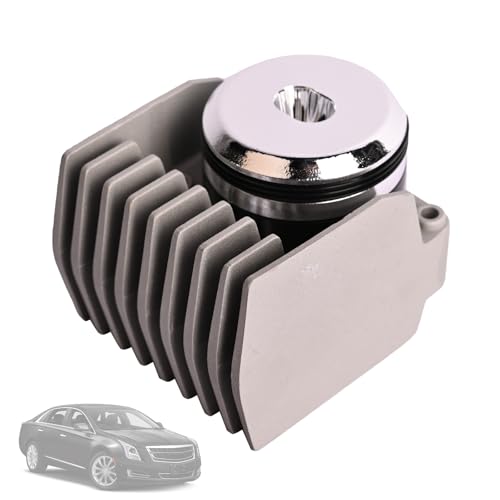
Application:Compatible with Cadillac XTS 2013-2017.

Universal fitment for any vehicle with LED DRLs, ensuring compatibility with most car models
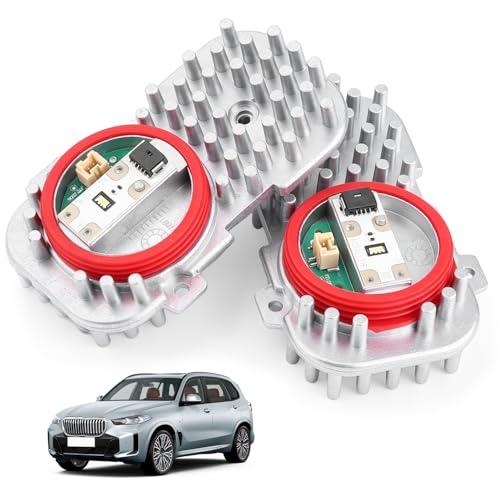
Vehicle Fitment: Daytime running light led modules are Compatible with BMW X5 X3 E92 E93 F06 428i 435i 328i 335i 428i 430i 435i 440i 640i 650i ALPINA B6 M3 M4 M6
Aftermarket DRL Options and Retrofit Considerations
When retrofitting daytime running lights, you’ll encounter three distinct installation architectures: plug-and-play bulb replacements that interface directly with OEM sockets, universal strip or pod kits requiring custom mounting and wiring, and vehicle-specific housings engineered for factory-style integration. Aftermarket compatibility pivots on proper CAN-bus adaptation—low-current LED loads often trigger error codes requiring resistors or dedicated drivers to prevent hyper-flash and BCM interference. Retrofit challenges escalate with electrical integration: tapping high-beam circuits without control modules creates unwanted behavior, while surface-mount pods demand precise panel cutting that risks water ingress. Thermal management through heatsinks guarantees sustained output in confined spaces. Regulatory compliance varies regionally—FMVSS 108 restricts sealed-beam LED replacements in the U.S., while ECE-compliant kits simplify legal adoption in UNECE markets. Always verify local lamp-intensity standards and color restrictions before installation. Select systems with engineered beam patterns to ensure optimal light distribution and compliance with photometric requirements across different driving conditions.

【Colorful RGB LED strip】Multi color decorate your car differently, give you an amazing visual experience.

Universal fit for most cars, trucks, and SUVs for relatively smaller size fog lamp or projector lens retrofit use

[Cyberpunk X-Style Aesthetic & DRL]-Transform your motorcycle with our distinctive X-element Daytime Running Light (DRL) design, a perfect fusion of futuristic mecha aesthetics and classic round styling. This personalized 5.75 inch LED motorcycle headlight creates a bold "Black Knight" presence. Ideal for Cafe Racer, Bobber, and Scrambler custom projects seeking a unique, high-end look that stands out day or night.