You’ll need to choose based on your vehicle’s lighting function: H11 bulbs feature a PGJ19-2 base, operate at 55 watts, and produce 1,350 lumens for low-beam applications like fog lights and daytime running lights, while 9005 bulbs use a P20d base, run at 65 watts, and deliver 1,700 lumens for high-beam illumination. The bulbs aren’t interchangeable due to different base designs and electrical requirements. H11 offers better fog penetration with warmer 3,200K-3,500K light, whereas 9005 provides superior long-distance visibility with whiter 5,000K-6,000K output. Below, you’ll find detailed compatibility specifications and performance comparisons.
Understanding Bulb Base Design and Compatibility
The fundamental incompatibility between H11 and 9005 headlight bulbs stems from their distinct base designs: H11 utilizes a PGJ19-2 base while 9005 employs a P20d base. These configurations differ completely in their physical structure, preventing any direct interchange between the two types.
You’ll notice the base design differences extend beyond simple labeling. The H11’s PGJ19-2 base features narrow prongs positioned closer together, while the 9005’s P20d base incorporates wider prongs with greater spacing. This creates immediate compatibility issues—your vehicle’s socket will only accept the specific base type it’s designed for. Interchanging H11 and 9005 can lead to bulb failure. If you’re unsure which bulb type your vehicle requires, consult your owner’s manual or refer to a headlight replacement guide for your specific model.
The locking mechanisms further distinguish these bulbs. H11 connectors include plastic tabs on both ends for secure placement, whereas 9005 connectors omit these lugs entirely. Without adapters or wiring modifications, cross-installation remains impossible due to these fundamental structural differences. Some modern vehicles now utilize LED circuit boards as an alternative to traditional bulb designs, offering improved durability and heat distribution compared to conventional replacements.

【Super Bright】Our H11 headlight bulbs deliver a brightness of more than 1500LM, up to 5000K color temperature, providing the best visibility in foggy and rainy weather, Our headlight bulb filled with more than 45% Xenon gas to be more brighter and whiter, Blue ion membrane filters yellow light and gets super white light.
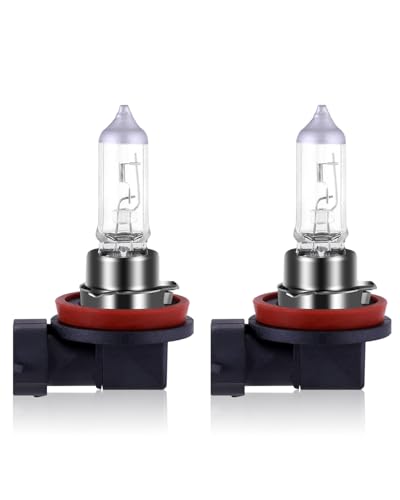
【Super Bright】Our H11 headlight bulbs deliver a brightness of more than 1500LM, providing the best visibility in foggy and rainy weather, Our headlight bulb filled with more than 45% Xenon gas to be more brighter and whiter.
Power Consumption and Wattage Differences
Standard halogen H11 and 9005 bulbs operate at distinctly different power levels—55 watts versus 65 watts respectively—creating measurable impacts on your vehicle’s electrical system. The 9005’s higher power draw of approximately 5.4 amperes (versus H11’s 4.6 amperes at 12V) increases current demand on your alternator, wiring, and fuses. This additional 10-watt difference translates directly into greater heat generation within your headlamp housing, accelerating thermal stress on lenses, reflectors, and seals. You’ll experience higher I²R losses in connectors and wiring, raising the risk of connector overheating if your circuit wasn’t designed for 65-watt loads. The higher wattage of 9005 bulbs contributes to their increased brightness level, making them more suitable for high beam applications where maximum illumination is required. When selecting a replacement harness, ensure it accommodates the power requirements of your chosen bulb type to maintain proper functionality of features like auto-leveling and daytime running lights. When considering upgrades or substitutions, verify that your vehicle’s relay sizing, fuse ratings, and harness gauge can safely handle the increased continuous load without degrading performance or causing premature component failure.

15X Brighter Road Coverage: With 150,000LM per set, you're not just swapping bulbs—you're stepping up to a whole new standard of road illumination. This 9005 H11 light combo dramatically expands high and low beam visibility while maintaining a clean, well-defined cutoff. The wide, uniform spread makes highway driving and poor-weather navigation noticeably safer and easier on your eyes

【160,000LM High-Output Illumination】 Equipped with upgraded CSP chips, the SEALIGHT S2S 9005/HB3 and H11/H8/H9/H16 bulbs generate 160,000LM of focused light with a 6500K cool white output, extending your driving visibility up to 1800FT for clearer nighttime road awareness.

【98%+ Vehicle Compatibility】Termitor H11/H9/H8 9005/HB3 Headlight Adjusting Screws Equipped with the latest upgraded linear decoding technology and built-in intelligent IC driver, it is suitable for more than 98% of vehicles. CANbus ready, ensuring no errors, flickering, or radio interference. Please note: Some sensitive vehicle models may still require a CANbus decoder. Feel free to contact Forenner if needed
Brightness Output and Lumen Comparison
While wattage consumption provides important context for electrical system planning, actual light output measured in lumens determines real-world visibility performance. Standard halogen H11 bulbs typically produce 1,350 lumens, while 9005 bulbs deliver approximately 1,700 lumens—a significant brightness advantage. This difference directly impacts your nighttime driving experience: 9005’s higher lumen output excels in high-beam applications, illuminating greater distances on highways, whereas H11’s lower brightness levels suit low-beam and fog light functions without excessive glare.
You’ll find variability across technologies. Halogen versions maintain these standard distinctions, but LED and HID equivalents can reach up to 9,000 lumens for both formats. However, H11 ranges typically span 1,100-1,700 lumens, while 9005 variants occupy the 1,700-2,100 lumen spectrum. Laboratory testing consistently confirms 9005’s brightness superiority in traditional halogen configurations. For drivers seeking significant performance improvements, LED and HID conversions offer substantially enhanced brightness compared to standard halogen options. The H11 produces a low, wide beam for nearby illumination, making it particularly effective for urban driving conditions. Superior bulb models deliver enhanced nighttime visibility and safety on all road types.

【90000LM for Safer Night Driving】 Need a brighter view on dark country roads or foggy highways? Marsauto M1S 9005 delivers 90000LM of crisp 6000K white light per pair—making road signs, lanes, and obstacles visible long before you reach them.

360° Adjustable—Precision Spotlight Beam: The upgraded 9005/HB3 Bulbs features a rotating clip that can be adjusted using the included wrench during installation. This allows for free adjustment of the bulb's insertion angle, enabling precise control over the beam's direction to ensure a clear, focused light. Unlike other bulbs that cannot adjust their insertion direction, they may experience issues with the beam being too high or too low after installation

[80,000LM Ultra-Bright Output & Daylight Clarity] Termitor 9005 Powersports Light Bulbs deliver 80,000 lumens of crisp 7000K Daylight White light, dramatically improving contrast on trails and roads. Whether in fog, rain, or darkness, you get a wide, clear field of view for safer off-road driving. Pair pack offers a complete upgrade for your vehicle.
Color Temperature and Light Quality
Measured in Kelvin (K), color temperature fundamentally shapes how H11 and 9005 bulbs render the road ahead, with halogen variants exhibiting distinct thermal profiles that affect both visibility and aesthetics.
H11 halogens operate at 3,200K-3,500K, producing warm, slightly yellow light that reduces driver fatigue and penetrates fog effectively. In contrast, 9005 halogens reach 5,000K-6,000K, delivering whiter output with enhanced contrast for improved road visibility.
Your light spectrum options expand considerably with LED and HID technologies. LED H11 bulbs span 3,000K-6,500K, while HID variants offer 3,000K amber through 8,000K blue ranges. Modern LED headlight solutions provide superior brightness and longevity compared to traditional halogen options across various Jeep models. When selecting among these various headlight bulb series, consider how each performs across different driving conditions and weather scenarios. For ideal visibility factors, you’ll find 3,000K performs best in adverse weather, 4,300K mimics OEM output, and 6,000K-6,500K maximizes nighttime clarity without blue-tinted glare that compromises practical illumination. HID bulbs achieve their bright white light through an electric arc that energizes xenon gas between two electrodes, producing more intense illumination compared to traditional halogen lamps.

【800% Breakthrough Brightness】Marsauto H11 bulb shine 800% brighter than traditional bulbs. M1S H11 H8 H9 bulb uses non-traditional chip technology, and its light output is much higher than other chips on the market. At the same time, the number of lamp beads on a single side has been increased from one to two, which solves the problem of low lumen caused by one lamp bead and can also increase the width of illumination, escorting car owners at night.
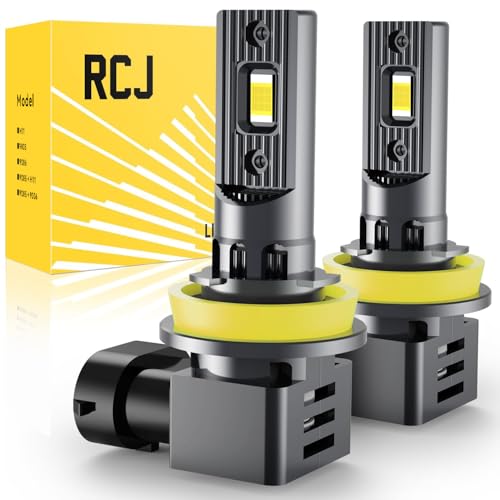
【800% Brighter Than Halogens】- Equipped with advanced lights, 100W, 30000LM, RCJ H11 bulbs can provide 800% brightness, 6000K cool white makes the road clearer

[Superior Visibility - Safe Driving] ZonCar H11 LED bulb features the latest upgraded LED chip, delivering 70,000 lumens of brightness — 13 times brighter than the original equipment bulb. Combined with its ultra-penetrating 6000K cool white light and wide-angle beam, it allows you to see up to 1,400 feet ahead on the road, providing a wide field of view to enhance driving safety.
Typical Applications and Use Cases
Beyond understanding how these bulbs illuminate the road, you’ll need to match each type to its factory-designated role in your vehicle’s lighting system. H11 bulbs serve as low beam headlights in sedans like Honda Accord and Toyota Camry, fog lights in compact cars including Mazda 6, and daytime running lights on Toyota RAV4 and Ford Ranger. They’re compatible with Toyota models (Camry 2007–2025, Corolla 2009–2025), Honda Civic, and BMW 3 Series.
9005 bulbs function as high beam headlights in trucks like Chevrolet Silverado and Ford F-150, plus SUVs including Toyota 4Runner and Highlander. The higher wattage of 9005 bulbs makes them particularly effective for long-distance visibility on dark highways. For optimal performance, consider factors like brightness levels measured in lumens when selecting between different bulb types. When planning headlight upgrades, verify your vehicle’s specific requirements—mixing these types compromises vehicle safety. Both bulb types offer upgrade options including halogen, LED, and HID bulbs to enhance your vehicle’s visibility. H11 excels in low-visibility weather conditions, while 9005 provides distance illumination for highway driving in full-size vehicles.

UP to 300% Brighter—Clearer Warm White Light Vision: Littlelucky H11 halogen bulbs output a 3800K,4000LM warm white light, experience up to 300% brighter for clearer vision in low-light and fog etc conditions, enhancing driving safety and visibility

【Super Bright & High Performance】These h11 bulbs use top-tier automotive-grade chips. With a cool white color temperature of 60,000LM, they produce a super bright beam that outshines your original bulbs—giving you better visibility and a safer drive
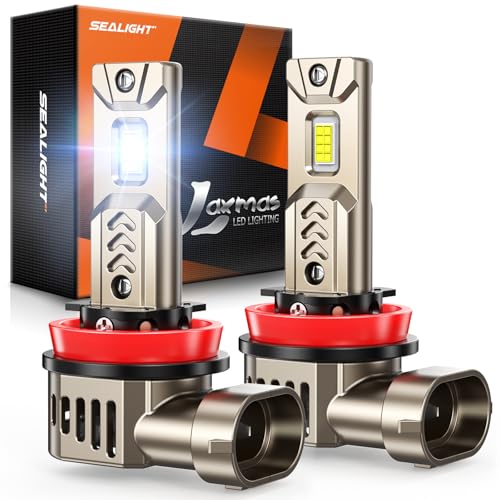
12X Brighter Than Original: Top Automotive-Grade chips with 70000LM per pair, 6500K cool white. Super focused beam pattern design provides wider and farther lighting range which is 12 times brighter than your original bulb
Lifespan Expectations for Each Bulb Type
Halogen bulbs in both H11 and 9005 configurations deliver markedly different service lives, with 9005 units averaging 300-320 hours compared to H11’s 500-1,000 hour range. The 9005’s higher wattage (65W versus 55W) and single-filament design accelerate degradation. Premium halogen variants sacrificing longevity for brightness may last just 100 hours in high-beam applications.
LED conversions fundamentally shift lifespan comparisons, offering 25,000-50,000 hours for both bulb types—roughly 25-50 times longer than halogens. Solid-state construction eliminates filament failure while resisting vibrations that compromise traditional bulbs. Durability factors include IP67/IP68 weatherproofing and reduced thermal stress from lower power consumption. Proper alignment after installation ensures optimal visibility without blinding oncoming drivers, which also helps protect the longevity of your lighting system. Protecting your headlight lenses with UV coating protection helps prevent oxidation that can degrade clarity over time. The reduced replacement frequency of LEDs translates to fewer service intervals and lower long-term maintenance costs. You’ll replace LEDs considerably less frequently, though initial costs remain higher than standard halogen replacements.
Advantages and Disadvantages of H11 Bulbs
Operating at 55W versus the 9005’s 65W, H11 bulbs place less demand on your vehicle’s electrical system while delivering efficient low-beam performance. You’ll experience performance factors including minimal glare for oncoming traffic and precise beam patterns ideal for fog lights and suburban driving. LED variants reach up to 6,500 lumens—700% brighter than halogens—with cooler white light enhancing obstacle detection.
Installation considerations favor H11’s plug-and-play compatibility with low-beam housings and fog light assemblies. You’ll benefit from instant-on functionality and advanced thermal management in LED versions. However, some LED H11 models exhibit abnormal patterns without proper hotspots, measuring only 550 lux maximum versus quality halogens reaching 5,350 lux. The 55W design delivers minor fuel efficiency gains through reduced electrical load. Proper installation requires checking bulb holder terminals to ensure secure electrical connections before finalizing your replacement. Popular manufacturers like Sylvania, Philips, and GE offer reliable H11 options for both OEM and performance applications. The H11’s warm yellowish light between 3200K and 3500K offers superior penetration through fog and rain compared to higher Kelvin alternatives.
Advantages and Disadvantages of 9005 Bulbs
With 1,700 lumens in halogen configurations, 9005 bulbs outperform H11’s 1,350-lumen output by 25%, delivering superior high-beam illumination for long-range visibility and hazard detection. LED variants amplify this advantage, reaching 3,600 to 13,000 lumens—up to 10x brighter than halogens—while lasting 30,000 hours with minimal maintenance. The plug-and-play P20d base guarantees straightforward installation without modifications, fitting reflector and projector housings when DOT/SAE compliant.
9005 advantages include exceptional brightness, energy-efficient LED options consuming less power, and IP67-rated durability against vibrations and harsh conditions. Their single-filament design optimizes high-beam precision. The 9005 bulb is compatible with vehicles from manufacturers including Audi, BMW, Ford, GMC, Dodge, Chevrolet, Honda, Toyota, and Nissan. Considering beam pattern quality helps ensure you select a bulb that provides optimal visibility and safety performance. Unlike racing applications where fake headlight decals replace functional lighting on fully illuminated tracks, standard road vehicles require genuine 9005 bulbs for safe nighttime driving.
9005 disadvantages center on halogen variants generating substantial heat that risks assembly damage, requiring more frequent replacements due to shorter service life compared to LEDs. Halogens waste 20% of energy as heat, limiting efficiency.