To replace your 2017 Honda Accord’s daytime running lights, you’ll need to remove the front bumper and disconnect the battery before extracting the headlight assembly. The common LED burnout issue requires swapping the failed circuit board with a replacement featuring 8 Philips Lumileds Z-ES chips. You’ll also need to inspect the acrylic light pipe for heat damage, trim any melted sections with a Dremel, and polish the ends for optical clarity. The guide below covers detailed procedures for complete repair and restoration.
Understanding the LED DRL Burnout Problem in 2016-2017 Honda Accords
The 2016-2017 Honda Accord’s daytime running light system suffers from a critical design flaw that causes premature LED failure. Your DRL operates on just two LED chips: one positioned near the side-marker and another toward the headlight’s center. The central LED chip design receives excessive power from the driver unit, creating severe heat management issues. This over-powering generates intense heat that eventually burns out the LED chips. The insufficient power distribution across only two chips compromises long-term reliability.
Heat damage extends beyond the LEDs themselves. You’ll notice the DRL lens deteriorates from excessive temperatures, creating the appearance of failed LEDs. In severe cases, the acrylic light pipe’s end melts completely, requiring you to trim approximately 1/4 inch with a Dremel tool and restore clarity using plastic polish. When replacing a burnt LED, you can swap the working LED from a donor headlight assembly to restore full functionality. For successful installation, ensure you carefully align the new bulb correctly to avoid future burnout issues similar to the original design failures.
Identifying Your Daytime Running Light Type
Before you purchase replacement parts or begin any repair work, determining whether your 2017 Honda Accord uses halogen or LED daytime running lights is essential for selecting the correct components and planning your repair approach.
Visual Inspection Method: Examine the bottom projector section of your headlight assembly. If you notice a burnt-out LED appearance, your vehicle uses LED chips. Alternatively, locate the dust cap on the back of the headlight—if you find an H11 halogen socket, you’ve got halogen bulbs.
Physical Verification: Remove the headlight assembly. LED configurations reveal a circuit board with surface-mount LED chips, while halogen setups show a traditional bulb socket. Check OEM part labeling on existing components—Sylvania 2825 or H11 indicates halogen bulbs. For vehicles equipped with halogen DRLs, the stock bulb number H11 is used for the low beam headlight function, which typically serves as the daytime running light on most 2017 Honda Accord trims including EX, EX-L, Hybrid, LX, and Sport models. LED daytime running lights offer advantages such as improved visibility and enhanced safety compared to traditional halogen options. When evaluating brightness levels and color temperature between different bulb types, consider how these factors impact both daytime performance and nighttime functionality.

Lights Dim Over Time, Replace In Pairs: Your lights are a pair, one is never turned on without the other. If one bulb burns out, the other isn't far behind

FITMENT: The Accord interior LED light kit is compatible with 2013 2014 2015 2016 2017 2018 2019 2020 2021 2022 Honda Accord all cab size.
Gathering the Necessary Tools and Materials
Successfully replacing your 2017 Honda Accord’s daytime running lights requires assembling specific tools and materials before you begin the repair process. You’ll need a replacement LED board containing 8 Philips Lumileds Z-ES chips built on a copper PCB for heat conductivity. Gather a Phillips screwdriver for removing screws and clips, plus specialty pry tools like a Titan paint scraper for bezel removal without damage. If your light pipe shows melting, acquire a Dremel tool and plastic polish for trimming and restoration. Include Morimoto RetroRubber sealant ($20.80-$26.00) for moisture protection during reassembly. Like headlight restoration products that provide protective coating to prevent deterioration, proper sealant application protects your daytime running lights from environmental damage. Understanding beam pattern quality ensures your replacement lights perform optimally and maintain proper visibility standards. Following safety precautions and proper tool maintenance guarantees successful installation. This direct plug-and-play solution costs notably less than $300+ headlight assembly replacement while delivering OEM-matching performance.

✅ Complete Set – Left & Right DRLs for Accord Facelift: This kit includes 2 LED daytime running lights for both left and right front bumper positions. Designed specifically for the Honda Accord Facelift 2021-2022.

Removing and Disassembling the Headlight Assembly
With tools and materials prepared, you’ll begin by removing your 2017 Honda Accord’s front bumper to access the headlight assembly. Pull the hood latch lever, lift the hood, and remove all clips and 10mm bolts securing the bumper. Pry from the corners to release plastic clips, then disconnect from fender liners.
Locate the clip at the headlight’s top center and release it with a flathead screwdriver. Remove the rubber weather seal and exposed 10mm bolt. Access and remove the 10mm bolts on the side and underneath the housing. For driver-side access, disconnect the negative battery terminal first.
Insert a screwdriver to release lower retaining clips, then pull the assembly straight forward. Perform wiring inspection before disconnecting harness connectors. Press the tab on each connector to release all four connectors from the headlight assembly. To prevent premature burnout, avoid touching the glass part of halogen bulbs during any inspection or replacement procedures. Mark headlight alignment positions before complete removal. Keep track of the assembly removal order to ensure proper reinstallation when reversing disassembly steps.

✔Compatible with: This headlight and front bumper bracket set is compatible with 2013-2017 Honda Accord. Please make sure it matches the front assembly of your vehicle before purchasing.
![SOCKIR-For 2016-2017 Honda Accord Sedan 4 Dr [Halogen w/ LED DRL] Headlight | Factory OE Style,Driect Headlamp Assembly Replacement,Built-in LED DRL,Driver & Passenger Side](https://m.media-amazon.com/images/I/51mg6mrhH8L._SL500_.jpg)
【FITMENT】Headlights Assembly Pair for 2016-2017 Honda Accord Sedan. Bulbs are NOT included. High beam bulb type: 9005; Low beam bulb type: H11; Signal light: 7444NA. DRL: LED; OEM Part Number: 33150-T2A-A81, 33100-T2A-A81, HO2502169, HO2503169.

【Part Number】:71190-T2A-A01, 71140-T2A-A01, 71198-T2A-A01, 71193-T2A-A01
Inspecting for Acrylic Light Pipe Damage
Once you’ve removed the headlight assembly, carefully examine the acrylic light pipe for heat-induced damage before proceeding with DRL replacement. Look for melted plastic, charring, or discoloration at the pipe’s end where it contacts the LED. Not all failed DRLs show visible melting, but inspect the tube’s interior thoroughly after removing the LED board. The original single-LED light pipe design compromises acrylic durability through concentrated heat buildup, causing degradation over time.
Pry out plastic components using a flathead screwdriver, pushing down side tabs to access the pipe fully. Check for burnt sections, cracks, or chips indicating thermal stress. If you find melted material, you’ll need to slice approximately 1/4 inch off the damaged end with a Dremel tool, then polish it smooth before installing upgraded multi-LED components that prevent future overheating.
Installing the LED Repair Kit Circuit Board
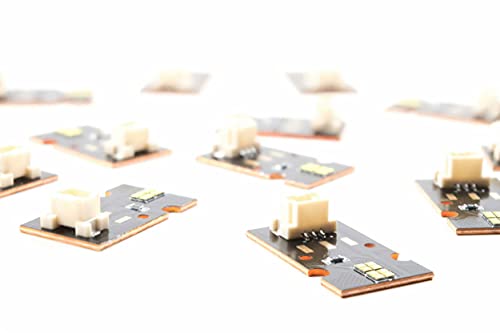
After confirming the light pipe’s condition, you’re ready to install the upgraded LED circuit board. This replacement offers significant LED circuit advantages over stock components—eight Philips Lumileds Z-ES chips distribute power more evenly than the original design, reducing operating temperatures that cause premature failure. The copper PCB construction maximizes heat conductivity for extended lifespan. LED headlights provide improved nighttime visibility compared to traditional lighting systems, and this upgraded board delivers similar benefits for daytime running lights. These LEDs also offer superior energy efficiency compared to halogen alternatives, reducing strain on your vehicle’s electrical system.
Follow these installation tips for proper fitment: Remove the two screws securing the original board’s top and bottom sections. Carefully reposition the wire, then gently pull out the old board. Align the new board with the OEM Honda surface mount connector and secure it by reversing the removal steps. The plug-and-play design requires only one connector and two screws, ensuring straightforward replacement without modification. This upgraded board is backed by a 3-year warranty for peace of mind.

FITMENT: For 2013-2015 Honda Accord 4-door sedan DX LX EX SE models, just like the OEM style LED daytime running lights on EX-L model (not compatible with trims that have LED DRL, such as EX-L)

Fit for 2013 2014 2015 Honda Accord 4-door sedan DX LX EX SE models with incandescent bulb parking light headlamp(Not compatible with trims that have LED DRL,such as EX-L)

Excellent materials: The car hood LED strip are made of silicone and LED bulbs, can be bent at will and is not prone to deformation, waterproof and dustproof, and will not easy age or crack even after long-term use, maintaining a stable and long-lasting performance
Repairing Melted Light Pipe Ends
If your DRL has failed, the original LED circuit board’s concentrated heat output may have melted the acrylic light pipe’s end—a design flaw affecting many 2016-2017 Honda Accord headlight assemblies. Heat buildup from two overworked chips causes the tip to deform and scorch.
First, inspect the plastic piece inside the headlight for burn marks. Push down the retaining tab and remove the light pipe carefully using a flathead screwdriver. Check the acrylic tip for melting damage.
If melted, use a Dremel tool to slice off approximately 1/4 inch from the damaged end. This targeted cut removes only the affected portion. After trimming, apply plastic polish to restore optical clarity and guarantee proper light transmission—essential acrylic maintenance before installing your replacement LED board.

【See Wider, Drive Safer】9005 9006 1200% Higher Brightness Bulbs eliminate dark blind zones and boost night visibility. Equipped with premium LED chips, each pair delivers 130,000LM of 6500K cool white light—1200% brighter than stock halogen lamps. Extra illumination grants you longer response time on unlit rural roads.

Material: Headlight conversion cable is made of tin-plated copper stranded wire, which is heat-resistant (not easy to melt), wear-resistant and corrosion-resistant, suitable for long-term use. The shell is made of plastic and metal structure, and the wire length is 190cm (74.8 inches)
Reassembling and Testing Your Headlight
With your light pipe repaired or replaced and the new LED board installed, you’re ready to secure the headlight assembly back into the vehicle. Align the assembly flush against all mounting points, then torque the 10 mm bolts snug plus 1/8 turn—avoid overtightening that cracks plastic housings. Reinstall bumper clips and grommets in their original positions to preserve headlight alignment and seal out moisture. Having extra clips ready is advisable since many can break during the reinstallation process.
Reconnect all electrical connections until connector tabs click. Verify harness orientation matches socket indexing for bulbs, DRLs, and turn signals. Insert bulbs at the specified angle and twist-lock them, ensuring anti-rotation tabs engage for correct beam pattern. Use a Phillips screwdriver to secure any remaining covers or trim pieces before final testing.
Turn the ignition to accessory and test headlights, high beams, DRLs, and turn signals. Check beam patterns on a wall 7.5–10 feet away, adjusting aim bolts if necessary.