Your car’s headlight output depends on its technology: halogen bulbs produce 700–1,500 lumens per bulb, while HID systems generate 3,000–5,000 lumens and modern LEDs reach 3,000–6,000 lumens. Low-beam applications typically require 1,500–2,000 lumens for adequate visibility, whereas high-beams need 2,500–3,500 lumens. Advanced laser headlights in luxury vehicles can exceed 8,000 lumens. Understanding these specifications, along with legal limits and beam pattern quality, will help you select the best headlight configuration for your driving conditions.
Understanding Lumens and Headlight Brightness
When evaluating automotive lighting performance, lumens serve as the fundamental unit for quantifying total visible light output from a headlight bulb. This metric measures luminous flux—the total amount of light produced—while accounting for human eye sensitivity that peaks at 555 nanometers wavelength. Your lumen perception directly correlates to actual brightness experienced, unlike electrical power consumption measured in watts.
For brightness comparison, understand that lumens represent omnidirectional output measured via integrating sphere testing, whereas lux quantifies illuminance on surfaces at specific distances. Modern LED headlights break traditional wattage correlations, with premium units achieving 120-180 lumens per watt efficiency compared to 60-100 lm/W in lower-quality alternatives. Minimum recommended output stands at 500 lumens per bulb, though complete automotive headlight systems typically require 3,000 lumens total for adequate visibility. Advanced designs optimize lumen output for maximum road light reach, ensuring effective illumination distribution across driving surfaces.
Lumen Output by Headlight Type
Different headlight technologies produce vastly different lumen outputs, with halogen systems representing the baseline at 700–1,500 lumens per bulb while modern LED configurations reach 3,000–6,000 lumens per bulb and can achieve 12,000–16,000 lumens per pair in high-end applications. This lumen comparison reveals HID/Xenon systems occupying the middle ground at 3,000–5,000 lumens per bulb, though they require ballasts and warm-up time. Laser headlight technology delivers the highest output at 8,000–10,000+ lumens, found exclusively in luxury vehicles. When evaluating headlight technology, you’ll notice low-beam applications typically require 1,500–2,000 lumens, while high-beam needs range from 2,500–3,500 lumens. For specialized driving conditions, suburban environments benefit from 9,000–12,000 lumens, and rural or off-road situations may demand 13,000–20,000 lumens total output. The headlight type and design determine lumen output, providing a direct indication of brightness as opposed to wattage.
Halogen Vs HID Vs LED Vs Laser Headlights
Understanding the raw lumen numbers provides context, but the technology behind headlight systems determines how those lumens translate to real-world visibility. You’ll find halogen efficiency limited to 1,000–1,500 lumens with 1.5–6.9 year operational windows. HID systems triple that output at 3,000–5,000 lumens, though HID lifespan demands ballast integration and warm-up periods. LED features include 3,600–4,500 lumens per bulb with instant-on capability and superior power consumption metrics. LED headlights also provide advanced anti-dazzle features that help reduce glare for oncoming traffic while maintaining optimal visibility. Laser advantages emerge in premium applications, delivering 6,000 lumens with exceptional beam focus for distance illumination and can extend visibility up to 600 meters on high-speed routes. Your selection criteria should prioritize beam pattern geometry alongside lumen specifications—halogen provides baseline performance, HID offers mid-tier brightness, LED balances efficiency with output, and laser maximizes long-range visibility at premium cost. Regulatory frameworks establish candela limits between 20,000 to 75,000 to prevent excessive glare to oncoming drivers.

【900% Brighter - S1 Pro Bulbs】The SEALIGHT 9005 H11 bulbs combo feature 16pcs high-performance chips, delivering up to 8 times the brightness than stock bulbs. Upgrade your nighttime driving experience by replacing dim, narrow stock bulbs with SEALIGHT 9005/HB3 H11/H9/H8/H16 LED Bulbs Combo. Enjoy crystal-clear 6500K cool white light that cuts through the dark, giving you way better visibility for safer night drives

【120,000LM & 17X Brightness】SEALIGHT H13/9008 bulb outputs up to 120,000 lumens and boasts 1700% greater brightness than other bulbs. 6500K White Brightness, it delivers an extended, wider field of vision for nighttime driving with sufficient frontal illumination. It helps you spot deer and falling rocks from miles away, allowing for faster responses to potential road accidents.

80,000 lumens Brightness: With a 2026 upgraded chip and 32 lamp beads, H11 H8 H9 H16 Fog Light bulbs deliver a bright 80,000 lumens, providing clear visibility and enhancing safety during nighttime driving.
Legal Lumen Restrictions and Regulations
While headlight brightness considerably impacts road safety, regulatory frameworks worldwide impose strict luminous intensity limits to balance visibility with glare prevention. In the United States, federal law mandates DOT compliance with high-beam intensity capped at 75,000 candela per side, though no exact lumen limit exists. Europe’s ECE standards permit 140,000 candela while prioritizing anti-glare beam patterns. Japan enforces stricter controls, prohibiting headlights exceeding 6,000 lumens with JIS certification requirements and roadside enforcement. China’s GB 25991-2010 standards ban ultra-high-lumen aftermarket conversions, mandating lab-tested certified kits only. Australia’s ADR 13/00 requires minimum 1,000-lumen low beams within 4000K-6000K color temperature ranges. Many aftermarket LED headlight bulbs are not DOT-approved and thus illegal for on-road use in the United States, creating compliance challenges for drivers seeking brighter illumination. Understanding these international standards prevents legal implications, ensuring your vehicle remains compliant across jurisdictions while maintaining ideal illumination performance. Non-compliant lights can cause glare issues, blinding oncoming drivers and creating dangerous road conditions.
Choosing the Right Brightness for Your Vehicle
Selecting ideal headlight brightness requires matching lumen output to your specific driving conditions and vehicle specifications rather than maximizing intensity. For urban environments with adequate street lighting, you’ll find the best brightness in the 1,500–2,000 lumen range per bulb, preventing unnecessary glare while maintaining visibility. Rural and highway driving demands higher outputs—2,500–3,500 lumens provide the best range for poorly lit roads. Low beams should stay within 700–2,500 lumens per bulb to balance safety and visibility, while high beams exceed 2,500 lumens for maximum illumination. Consider your bulb type: halogen systems typically deliver 1,000–1,500 lumens, while DOT-approved LEDs range from 2,000–4,000 lumens. Premium LED efficacy reaches 120–180 lumens per watt, ensuring efficient light distribution without compromising beam pattern quality. Proper beam pattern quality ensures that light is distributed effectively across the road without creating unsafe angles that could blind oncoming drivers. LEDs offer the advantage of instant full brightness with no warm-up time required, unlike other headlight technologies that need time to reach optimal output. When comparing upgrade options, HID xenon systems provide maximum brightness for those seeking the highest illumination levels available on the market.

Wide Vehicle Compatibility: Designed for 9005/H11 Light bulbs and h11 fog lights Combo applications, compatible with 2015–2019 Honda CR-V, 2014–2020 Honda Civic, 2007–2014 Toyota Camry, 2017–2022 Ford Escape, 2010–2017 Chevrolet Equinox, and 2019–2024 Ram 1500, esc
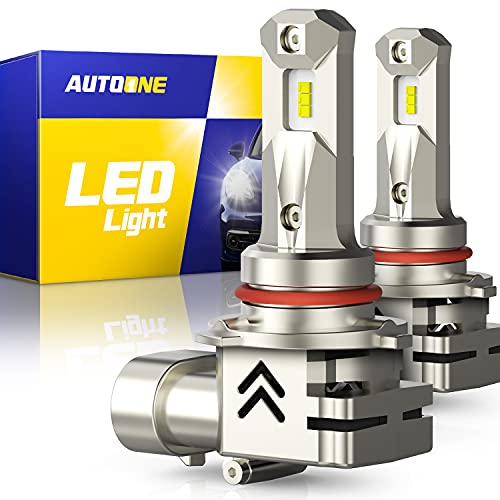
Compatible with Toyota 2003-2022 4Runner, 2004-2020 Sienna, 2007-2013 Tundra/Venza, 1992-2018 Camry/Corolla, 2008-2018 Sequoia, 1995-2012 Avalon, 1998-2005 RAV4/Celia, 1991-2017 Land Cruiser, 2003-2013 Matrix, 2010-2015 Prius; For Jeep Compass 2011-2021, Cherokee 2016-2019, Grand Cherokee 2005-2018, Commander 2006-2010; For Ram 1500/2500/3500 2011-2022; For Honda Accord 1990-2022, Pilot 2006-2022, Ridgeline 2017-2022, Civic 1988-2021, C-RV 2015-2020, Crosstour 2012-2015, CR-Z 2011-2016, HR-V 2019-2022, Odyssey 2005-2020; For GMC Yukon 2002- 2020 Sierra 2500 HD 2001-2020; For Ford F-150 2015-2022, Taurus 2008-2018,Explorer 2002-2019, Expedition 2003-2021

【Super Bright and High Performance】- The FITMOTORS H13 light Bulbs are equipped with top automotive-grade chips that provide an impressive output of 80W and 16,000 lumens in total. With a cool white color temperature of 6500K, these bulbs deliver a super bright beam pattern that is 300% brighter than your original halogen bulbs. Experience enhanced visibility and safety on the road.