To replace your Hyundai Santa Fe’s headlight bulb, first identify the correct bulb type for your model year (ranging from 9003/H4 for 2001-2006 to 9005 for 2019-2020). Disconnect the negative battery terminal and allow the engine to cool for thirty minutes. Access the headlight assembly from under the hood, remove the dust cap by turning counterclockwise, disconnect the electrical connector, and twist out the old bulb. Install the new bulb without touching the glass, using vinyl gloves. The sections below provide detailed specifications and troubleshooting procedures.
Identifying the Correct Bulb Type for Your Santa Fe Model Year
Before replacing your Hyundai Santa Fe’s headlight bulbs, you must identify the exact bulb type for your model year, as specifications vary greatly across generations. For 2019-2020 model years, both high and low beams use 9005 (HB3) bulbs. The 2013-2018 generation features H7 high beams, while low beams may use H7 or D3S/D3R HID depending on trim level. For 2010-2012 models, you’ll need H7 high beams and H11B low beams. The 2007-2009 generation uses H7 bulbs, though 2009 low beams may require H11B. Earlier 2001-2006 model years utilize 9003/H4 combination bulbs, with 2006 offering H7 as an alternative. Always verify your specific trim’s requirements, as bulb types differ between standard halogen and optional HID systems. Before beginning the replacement process, gather the necessary tools needed such as socket wrenches, Phillips screwdrivers, and trim tools. For optimal nighttime visibility and safety, proper headlight beam alignment should be verified after bulb replacement. When selecting replacement bulbs, ensure you choose original factory specifications rather than aftermarket alternatives, as sizing and performance may vary significantly from OEM components.
Gathering Your Tools and Preparing Your Workspace
Once you’ve confirmed the correct bulb type for your Santa Fe’s model year and trim level, assemble the necessary tools before starting the replacement process. You’ll need a Phillips head screwdriver (#1 or #2), 8mm socket with ratchet, and vinyl gloves to prevent oil contamination on the bulb glass. Tool organization is critical—use a magnetic parts tray for screws and clips to avoid losing components.
For workspace setup, park on a flat, stable surface like a garage floor or driveway. Prop the hood securely and position a work light to illuminate tight headlight areas. Place a protective mat beneath the engine bay to catch dropped hardware. Keep clean, lint-free cloths accessible for handling replacement bulbs without leaving fingerprints that could cause premature failure. Carefully handle bulbs during installation to avoid damaging the glass surface, which can lead to reduced performance and shortened lifespan. If you notice symptoms such as headlights that do not operate intermittently, it may indicate a failing relay rather than a bulb issue. While disconnecting the battery is not mandatory, disconnecting the battery is advisable to ensure safety during the replacement procedure.

Made of premium materials Chromium molybdenum vanadium steel, which is stronger than most carbon steels; After chrome plating, it is corrosion-resistant and beautiful.

Dual material handle provides a more comfortable grip and higher performance

PREMIUM MATERIAL - Forged from chromium molybdenum vanadium steel with chrome plating, these screwdrivers provide superior corrosion resistance and long-lasting durability suitable for automotive and household repair tasks
Safety Measures Before Starting the Replacement
Because headlight replacement involves working around electrical circuits, hot components, and sharp edges, you’ll need to implement strict safety protocols before touching any part of your Santa Fe’s lighting assembly.
PPE essentials include safety goggles to shield eyes from debris, chemical-resistant nitrile gloves to protect against battery acid and sharp edges, and close-fitting clothing to prevent snagging on engine components. If using aerosol cleaners, wear a respirator to avoid inhaling solvents.
Electrical precautions require disconnecting the negative battery terminal before accessing wiring, ensuring the ignition is off with keys removed, and inspecting all connectors for corrosion or damaged insulation. Allow the engine to cool for thirty minutes minimum to prevent burns from hot housings and bulbs. Proper beam adjustment and headlight housing condition are essential to ensure your new bulbs provide safe illumination without creating glare for other drivers. Work in a well-lit, level area with the parking brake engaged. Gather your basic tools beforehand, as this straightforward procedure should take approximately 10 minutes once you’re prepared.
Accessing the Headlight Assembly Under the Hood
With safety equipment in place and the engine fully cooled, you’ll find the headlight assembly accessible from the engine bay rather than through the front fascia on most Santa Fe generations. Component locations vary by model year, requiring specific approaches. For 2001-2006 models, remove three 10mm screws and pull the assembly straight out. The 2007-2013 generation necessitates front bumper cover removal before accessing mounting bolts. On 2013-2018 driver side installations, disconnect the diagnostic port, then remove two 10mm bolts securing the headlight assembly. The passenger side uses one 8mm and one 12mm bolt instead. After removing fasteners, wiggle the assembly back and forth until it pops free. Press the tab on the electrical connector‘s backside to release wiring, maintaining careful tension to prevent damage. If your vehicle is equipped with fog lights, disconnect the wiring harnesses before fully removing the assembly. For tight spaces similar to those found in other vehicles, consider temporarily removing clips to gain better access to stubborn components.

Lights Dim Over Time, Replace In Pairs: Your lights are a pair, one is never turned on without the other. If one bulb burns out, the other isn't far behind. Replace your H7 XtraVision Halogen bulbs in pairs for optimum performance.

Excellent Brightness: Equiped with filament from Austria, high purity quartz , and 28% more xenon , which lead to 20% more light output than original bulbs. The brightness even higher than Internation Standard.
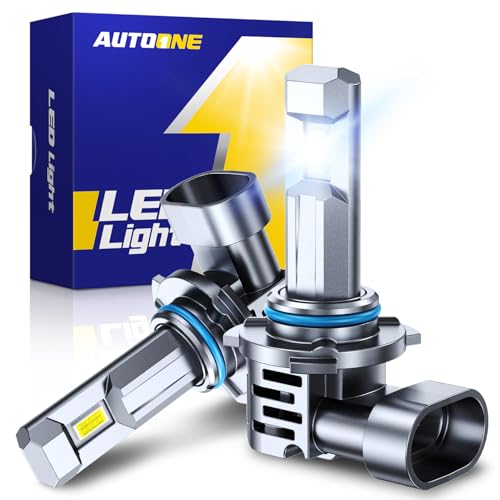
Great Brightness - 36000 Lumens
Removing the Old Headlight Bulb
After freeing the headlight assembly, locate the dust cap covering the bulb socket on the assembly’s rear. Twist it counterclockwise a quarter turn to remove—the passenger side releases easily, while the driver side sits near the battery. Pull the electrical connector straight off, releasing any clip if it’s stiff. On some models, you’ll disconnect this after bulb removal.
Next, undo the retaining clip using a Phillips screwdriver to remove both securing screws. This clip holds the bulb firmly in place. Turn the bulb counterclockwise until tabs align, then pull straight out. Common mistakes include touching the glass with bare hands—oil damages bulbs and affects bulb compatibility. Use gloves or paper towels when handling replacements.

AUTOONE H7 LED bulbs adopt premium high-power LED chips, providing 1200% brightness enhancement and 60000LM high-lumen output. 6000K cool white light brings crystal-clear road illumination, effectively improves visibility in low-light conditions. The focused beam pattern offers wider and farther view without glare, greatly enhancing driving safety at night.
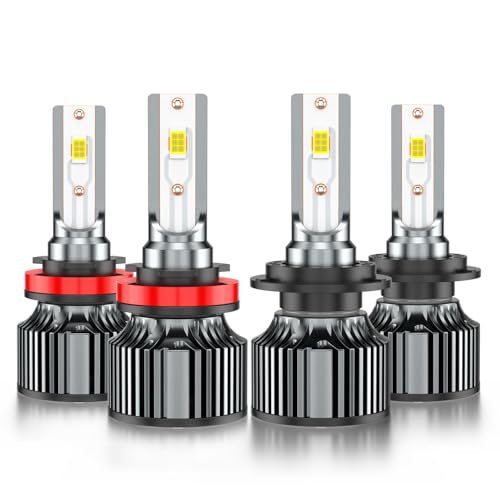
Fit For - These light bulbs combo compatible with Hyundai Santa Fe high and low beams 2009 2010 2011 2012 2013 2014 2015 2016. Our bulbs are suitable for Off-Road use only. If you need assistance or have any questions, please contact us via Amazon message for a free kit.
Installing the New Headlight Bulb
Handle the new headlight bulb with care to prevent premature failure. Avoid touching the glass with bare hands—oils from your fingertips cause hotspots that greatly shorten bulb life. Use gloves or a paper towel when handling OEM bulbs.
For H11 low beam installation, align the notches or prongs and push down. Rotate 1/4 turn clockwise until it locks. Position any blue dot at the bottom. For H7 high beams, align the notch upward (12 o’clock position), swing the metal retaining arms closed, and rotate clockwise until you hear a click.
Installation tips for D3S HID bulbs on Limited trims require inserting the bulb before attaching the electrical connector. Confirm proper orientation for a flush fit. If you accidentally touch the glass surface, clean the bulb with rubbing alcohol before installation. Understanding bulb base types ensures secure installation and prevents compatibility issues. Bulb compatibility issues arise if you mix standard and HID types—verify your model’s specifications before purchasing.

Halogen Assembly Upgrade: Engineered exclusively for halogen headlight housings. Not compatible with HID/Xenon or LED projector systems.

REPLACEMENT HEADLIGHT BULB: A powerful and convenient single automotive light bulb, suitable for headlight replacement and restoration of your motorized vehicle

【Compatibility Check Before Purchase】: Bulbs compatible with Hyundai Santa Fe 2013 2014 2015 2016.The bulb combo includes H7 high beam and H11B low beam and H11 Fog bulbs totaling 6 in the package.
Testing and Final Assembly Checks
Before reconnecting the battery and closing up the headlight assembly, perform a thorough inspection to verify proper installation. Confirm the bulb’s alignment notch seats correctly in the socket slot. For diagnostic verification, conduct continuity testing by disconnecting the bulb and setting your multimeter to continuity mode. Probe the socket terminals—an audible beep confirms circuit integrity. Follow with resistance measurement by switching to ohms setting; readings near zero indicate a functional bulb, while infinite resistance (OL) signals failure. Inspect the assembly cover for cracks and verify it’s seated properly. Remove any fingerprints from the bulb surface using alcohol wipes. Twist the dust cover until locked. To prevent potential damage to the bulb and ensure longevity, wear gloves when handling the new bulb during final assembly steps. Reconnect the battery’s negative terminal, then activate headlights to confirm even illumination without flickering. Ensure your replacement bulb meets DOT regulations to maintain legal compliance and optimal performance. Always ensure the vehicle is off during the testing procedure to prevent electrical shock or damage to components.