
To replace your car’s headlight relay, first turn off the engine and locate the relay in the fuse box using your owner’s manual diagram. Grasp the old relay firmly and pull it straight upward with even pressure, then inspect the socket for corrosion or damage. Align the new relay’s pins with the socket and push down until you hear a click. Test the headlights with a multimeter to confirm 12-13.5 volts at the connector, then reassemble the fuse box cover. The sections below provide detailed troubleshooting steps and installation techniques.
Recognizing Headlight Relay Problems
How do you determine whether your headlight relay has failed rather than the bulbs themselves? When both headlights fail simultaneously, the relay’s likely culprit. Individual bulb failure affects only one light. Key signs malfunctions include complete power absence when you engage the switch, flickering during operation, or lights remaining on after shutdown. You’ll notice dimmer-than-normal brightness from unstable voltage distribution or intermittent operation where lights turn off unexpectedly. Listen for clicking or buzzing sounds from the relay location—these indicate worn internal contacts. A voltage drop test confirms relay failure when power doesn’t reach the bulbs. While relay lifespan varies by manufacturer and conditions, recognizing these symptoms early prevents safety hazards from inadequate nighttime visibility and enables timely replacement before complete system failure. Exposure to humidity can affect the relay’s electrical conductivity and contribute to premature failure.
Gathering the Right Tools and Materials
Once you’ve confirmed relay failure through symptom analysis and testing, prepare your workspace by assembling the necessary tools and parts before you begin the replacement procedure.
Tools Overview
You’ll need basic hand tools including a socket wrench for screw-mounted relays, needle-nose pliers for gripping stuck components, and a small flathead screwdriver for careful prying. A multimeter is essential for post-installation verification. If your vehicle has an enclosed fuse box, obtain the appropriate cover removal tool. Using dielectric grease on electrical connections can improve contact quality during the relay replacement process.
Material Essentials
Match the replacement relay’s part number to your vehicle manual specifications. Confirm the 12V voltage rating and verify current capacity matches your headlight draw from bulb specifications. Consider headlight relay kits that include pre-wired connectors and installation instructions. For optimal visibility after relay replacement, you may want to upgrade to high-brightness halogen bulbs that can deliver significant lux improvements over standard headlights. Disconnect your battery’s negative terminal before starting work to prevent electrical shorts. Budget between $145.99 and $170.00 for a quality replacement relay that includes a 12-month/12,000-mile warranty.

Integrated Diode: Each relay includes a built-in diode that suppresses induced voltage during switching, safeguarding your electrical components from potential damage.

High switching capability: Normally open 40A/14V DC and normally close 30A/14V DC. Suitable for Nilight LED light bar wiring harness kit

Upgraded Version - Automotive relays built in fuse socket included 30A blade fuse with heavy duty 14AWG wires for main contact. no need of a separate fuse holder, saving space and money. 4-Pin SPST (Single Pole Single Throw) Relay.
Finding the Headlight Relay in Your Vehicle
Before you can replace the headlight relay, you must locate it within your vehicle’s electrical system. Start by consulting your owner’s manual for exact relay locations and fuse panel diagrams. Most headlight relays are positioned in the left instrument panel fuse block on the driver’s side or within the engine compartment fuse block under the hood. Check the fuse panel cover label, which describes relay names and ratings for proper identification. For identifying relays, look for labeled diagrams on the inside of fuse box covers. Some models mount the relay on top of the left instrument panel fuse block for easy access. If you’re uncertain about the relay location, reference your vehicle’s wiring diagram to trace connections from the headlight switch. You can use a test light to check voltage at the dimmer switch on the steering column to verify electrical flow.
Preparing the Fuse Box for Access
After locating the headlight relay position, you’ll need to prepare the fuse box area for safe access and component replacement. Start by turning off your engine completely and removing the key from ignition. Work in a well-lit area to clearly see the fuse box layout and identify components accurately. Gently remove the fuse box lid without forcing it—some models require pressing support struts to lower the glove compartment for full access. Clear any obstructions around the work area to guarantee unobstructed reach. Reference your fuse diagram to locate the specific headlight relay slot. If you’re uncertain about power isolation, disconnect the battery as an additional safety measure. Position yourself comfortably on the driver’s side with adequate lighting for precise component handling. Keep an assortment of fuses in the glove box for future issues that may arise during your repair work.
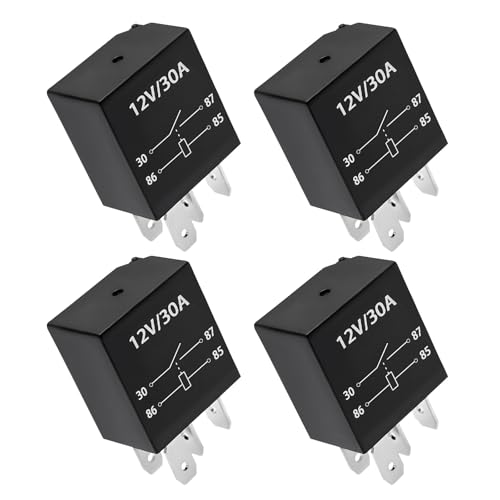
【Practical Function】: There are 4 pin and 5 pin relays to choose from. You can also choose a 2-pack or 4-pack. These 12V 30A relays can be used to control the circuits of high-current load components on vehicles, allowing the components to function properly.

【6 Way Relay Box】 - This 12v relay box features 6 dedicated slots for neat and organized relay installation, keeping your wiring system tidy. Easily replace a faulty relay individually without disturbing the entire setup, minimizing maintenance hassle
Removing the Old Headlight Relay
With the fuse box exposed and accessible, grasp the headlight relay firmly by its body and pull straight upward with steady, even pressure. If resistance is high, use a relay puller or insulated pliers—never metal tools that could bridge terminals. Before extraction, confirm correct identification through relay identification methods: compare the part number, pin count, and printed schematic against your service manual diagram. Note the keyed pin orientation to guarantee proper reinstallation. Apply relay handling precautions by wearing safety gloves and avoiding contact with adjacent connectors. Once removed, inspect the relay housing for cracks, burn marks, or melted plastic. Check pins for corrosion or bending, and examine the socket for heat damage or loose terminals indicating underlying electrical faults. To prevent contamination during this process, consider wearing gloves similar to those recommended when handling delicate automotive components. The first relay controls both high and low beams, while the second relay is dedicated specifically to high beam operation. If you encounter difficulty locating your relay, consult your vehicle’s owner manual for a diagram of the fuse box layout specific to your make and model.
Selecting the Correct Replacement Relay
Because installing an incompatible relay can damage your vehicle’s electrical system or create a fire hazard, you must validate that the replacement matches both the electrical specifications and physical form factor of the original component. Start by confirming the coil voltage matches your vehicle—typically 12V for cars, 24V for commercial vehicles. Check relay specifications for contact current rating; headlight circuits usually require 30–80A depending on lamp type. Validate the contact voltage rating covers 14V to account for alternator charging. Match the physical footprint (ISO mini, ISO 280) and pin layout (30, 87, 85/86 terminals) to guarantee proper fit in existing relay blocks. Select relays with appropriate contact materials—silver alloy contacts handle lamp inrush currents and resist wear over hundreds of thousands of switching cycles. Ensure the relay includes integrated fuse protection to safeguard against electrical faults that can lead to circuit damage.
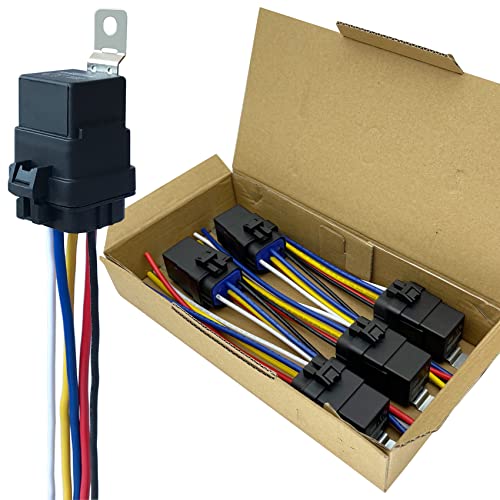
Never go beyond its capabilities. Try to stay 10 to 15% below what the rate is for

【ENGINEERING PARAMETERS】 CB1-12V ACB13201 Relay features a heavy-duty 40A contact rating and 12VDC operation. This precision-engineered 5-pin SPDT (Single Pole Double Throw) power relay is built to manage high-current loads while maintaining circuit integrity in critical automotive and motorcycle modules

Versatile Compatibility: Fits a wide range of Toyota vehicles, including for 2003-2014 4Runner, 2002-2011 Camry, 2007-2009 Prius, 2006-2012 RAV4, and more. Ideal for various automotive applications such as A/C compressors, starters, headlights, horns, fans, and other accessories.
Installing the New Headlight Relay
Proper installation of the headlight relay requires attention to mounting location, wire routing, and electrical connections to guarantee reliable operation and prevent voltage drops. Mount the relay base on the driver’s side inner fender well near the headlight harness, ensuring the black ground wire attaches securely to the mounting screw. These relay locations minimize wire length and simplify routing.
For power supply, route a 10-12 gauge red wire from terminal #30 to the battery positive post, installing a fuse holder near the battery. Connect the black wire to chassis ground. Before beginning any electrical work, disconnect the negative battery connection to prevent potential damage to vehicle systems. Employ proper wiring techniques by using t-taps on factory high beam and low beam wires for control inputs. Crimp terminals on output wires, connecting directly to headlight bulbs with 12-gauge wire. Solder all connections and apply heat-shrink tubing before testing operation. The control inputs typically use multifunction lever switches or other factory controls to activate the relay circuit. Upgrading to higher quality replacement bulbs can significantly enhance nighttime visibility once the relay installation is complete.
![True Mods H6054 H4 LED Headlight Wiring Harness [Negative Switched Conversion] [Fused] Universal H4 Head Light Relay Harness Kit for 9003 H6024 5x7 7x6 4x6 Subaru Toyota Jeep Sealed Beam Headlamp](https://m.media-amazon.com/images/I/51+wV9S2Q4L._SL500_.jpg)
YOUR VEHICLE NEEDS THIS - Swapping out old headlights for LED conversions on negative switched vehicles like Toyota, Subaru, Mitsubishi, or Suzuki, is not a simple job. But with our plug-and-play universal dual H4 headlight relay harness kit for high/low beam it can be! The compatible sockets include: 7x6 5x7 H6024 (2D1 H6054 H5054 H6054LL 6014 6052 6053)|H6024 (2D1)|4x6 6x4 (H4651, H4652, H4656, H4666, H6545)|H5006 (2C1) sealed beam headlights and more!

FIX DIM HEADLIGHTS & IMPROVE LIGHT OUTPUT: Upgrade your old factory headlight wiring with this H4 LED headlight relay harness kit. Fix common issues including dim headlights, flickering headlights, voltage drop, weak high beam/low beam performance and insufficient power supply. This fused relay wiring harness delivers stable battery power directly to your H6054 LED headlights, improving brightness and reliability during night driving.
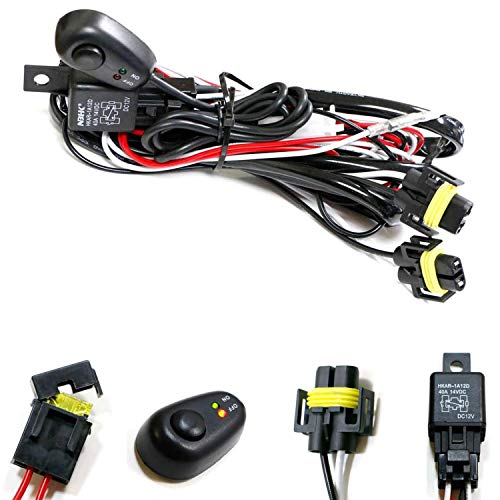
One relay wiring harness set includes a 4-pin SPST relay module box, in-line safety fuse box, pushbutton switch, input +/- terminals, and dual H11/H8/H9 outputs for reliable and efficient electrical connections
Testing the Headlight System
After completing the relay installation, verify system performance through systematic electrical testing. Turn the headlights ON and measure voltage at the headlight connector using a multimeter; you should read approximately 12–13.5 V, matching battery voltage. This confirms proper relay operation and circuit continuity.
Next, activate the relay coil by switching the headlights and listen for an audible click, indicating contact closure. Measure voltage across the relay coil terminals to verify control-side activation. If coil voltage is absent, suspect a faulty headlight switch, ground connection, or BCM output.
Use a test lamp at harness pins to confirm steady power delivery. Perform circuit analysis by checking all fuse connections and inspecting wiring for damage, corrosion, or loose terminals that could compromise system reliability. Additionally, you can set the multimeter to resistance (ohms) mode to test individual bulb filaments if headlight functionality remains questionable after relay replacement.
Reassembling the Fuse Box Cover
Replacing the fuse box cover completes the headlight relay installation and restores essential protection to your vehicle’s electrical system. Before proceeding, verify all fuses and relays are correctly positioned, then clean the cover and surrounding area to guarantee debris-free cover alignment. Match the cover’s tabs to corresponding slots on the fuse box, orienting labeling outward for future access. Position the cover evenly to prevent pinching wires underneath. Ensure that wire connections use reliable crimping or soldering techniques to maintain a solid electrical connection beneath the cover.
For securing methods, apply firm downward pressure until you hear an audible click, indicating proper engagement of side levers or clips. Check all four corners for flush seating, then gently tug edges to confirm secure attachment. Avoid using prying tools that could damage plastic housing. Finally, reconnect the battery terminal and test headlight functionality to verify successful installation. After completing reassembly, start the vehicle and test various functions to ensure the headlight relay and other electrical components operate correctly. If the headlights do not respond as expected, you may need to verify the relay coil resistance with a multimeter to confirm proper installation.
Troubleshooting Common Issues
When headlight relay issues occur, systematic diagnosis separates actual relay failures from related electrical faults. Start with a visual inspection of the relay housing and socket for melting, corrosion, or loose connections—common symptoms indicating thermal damage or moisture ingress. Perform a swap test by exchanging the suspect relay with an identical unit from your fuse box; restored function confirms relay failure. Listen for an audible click during activation; absence suggests coil or mechanical failure. Use a multimeter to measure coil resistance against OEM specifications and verify 12V at relay output terminals with headlights on. Different relay types require specific pinout configurations, so always match replacements exactly. Clean socket terminals with electrical contact cleaner before installing the new relay to guarantee reliable contact. Verify that pin 85 lacks continuity to ground when the headlights are switched off, as unwanted grounding can prevent proper relay activation. Replacement relays are generally affordable at under $50, making them a cost-effective first step in electrical system troubleshooting. If the replacement relay fails immediately after installation, further electrical diagnosis by a professional may be necessary to identify underlying wiring or component issues.

Replacement Model: Our relay can perfectly replace the relays numbered G8HL-H71, 39794-SDA-A03, 39794-SDA-A05, and 1R191. The AC relay is 0.87×0.57×1.07 inches in size. Please check the model before purchasing

GM Vehicle Compatibility: Direct OEM replacement for part numbers 12088567, 12135170, 13502679, 158707, 13500114, 12088567, 12135170, 13502679, 158707, 15-8707, 19116057, 15328866, 19115083, 19115080, and 15393412, and more. Fits Chevy Silverado, GMC Sierra, Buick LaCrosse, and other GM models (1995-2011).

Practical Function: This automotive relay is specially designed to deliver dependable control for automotive systems, ensuring smooth and efficient operation. Its high current capacity contributes to the overall safety and stability of electronic components and automotive circuitry