Your headlight relay is an electromagnetic switch that manages the high-current demands of your vehicle’s lighting system. When you activate your headlight switch, it sends a low-voltage signal to energize the relay’s coil, creating a magnetic field that pulls an armature closed. This bridges the battery feed (terminal 30) to your headlights (terminal 87), completing the high-current circuit while protecting your dashboard switch from thermal damage. Understanding component locations and failure symptoms will help you maintain ideal illumination performance.
Understanding the Headlight Relay: Definition and Purpose
A headlight relay functions as an electromagnetic switch that enables a low-current control circuit to manage a high-current load circuit in automotive lighting systems. You’ll find this electromechanical component controls your headlights without overloading the vehicle’s switches or wiring harnesses. The relay functionality centers on protecting your electrical system from excessive current demands while ensuring efficient power transfer. In modern computer-controlled systems, separate relays manage low beams, high beams, and daytime running lights independently. Switch operation occurs when your body control module supplies ground to the relay coil, creating a magnetic field that closes high-power contacts. This design eliminates the need for high-current rated switches, reducing both cost and weight. You’ll typically find these cube-shaped units in your engine block’s electrical distribution unit, positioned for accessibility while avoiding water submersion. However, not all computer-controlled systems require relays, as some utilize an integrated energy module instead.
Key Components of a Headlight Relay System
The relay coil forms the control element of the headlight relay system, consisting of copper wire wound around an iron core to generate the electromagnetic field necessary for switching operations. When you activate the headlight switch, a low-voltage signal energizes the coil, creating magnetism that pulls the armature onto its contact point. The armature function involves bridging terminal 30 (battery feed) to terminal 87 (headlight output), completing the high-current circuit. Once you deactivate the switch, spring tension returns the armature to its rest position, breaking the connection. This configuration prevents excessive current flow through the dashboard switch itself. The relay acts as a middleman between the low-voltage control circuit and the high-voltage headlight load circuit. Terminal configurations may include 87a for dual-function relays, while fuse protection between terminal 30 and normally-open contacts prevents overcurrent damage to the entire lighting circuit.
How Headlight Relays Operate in Your Vehicle
When you turn on your vehicle’s headlight switch, you’re initiating a cascading electrical sequence that leverages electromagnetic principles to control high-current circuits efficiently. The switch signals your body control module (BCM), which provides ground to the relay coil. This relay activation creates a magnetic field that pulls the internal contacts closed, completing the high-current path from your battery directly to the headlight assemblies.
This configuration prevents voltage drop by minimizing wire length between the battery and lights. Your headlight switch handles only the low-current coil circuit—typically under one ampere—while the relay contacts manage the full headlight load. The electromagnetic principles governing relay operation protect your switchgear from excessive current, prevent wire overheating, and enable reliable operation of high-wattage lighting systems without compromising electrical system integrity. By rerouting the heavier current through relays, you reduce wear on the dimmer and headlight switch contacts while improving overall lighting performance. Additionally, the lifespan of your headlight bulbs can be extended by maintaining a healthy electrical system and choosing quality bulb technology appropriate for your vehicle’s needs. Modern vehicles increasingly integrate relays with advanced systems like adaptive driving beams to dynamically optimize beam patterns and brightness based on driving conditions.
![True Mods H6054 H4 LED Headlight Wiring Harness [Negative Switched Conversion] [Fused] Universal H4 Head Light Relay Harness Kit for 9003 H6024 5x7 7x6 4x6 Subaru Toyota Jeep Sealed Beam Headlamp](https://m.media-amazon.com/images/I/51+wV9S2Q4L._SL500_.jpg)
YOUR VEHICLE NEEDS THIS - Swapping out old headlights for LED conversions on negative switched vehicles like Toyota, Subaru, Mitsubishi, or Suzuki, is not a simple job. But with our plug-and-play universal dual H4 headlight relay harness kit for high/low beam it can be! The compatible sockets include: 7x6 5x7 H6024 (2D1 H6054 H5054 H6054LL 6014 6052 6053)|H6024 (2D1)|4x6 6x4 (H4651, H4652, H4656, H4666, H6545)|H5006 (2C1) sealed beam headlights and more!

FIX DIM HEADLIGHTS & IMPROVE LIGHT OUTPUT: Upgrade your old factory headlight wiring with this H4 LED headlight relay harness kit. Fix common issues including dim headlights, flickering headlights, voltage drop, weak high beam/low beam performance and insufficient power supply. This fused relay wiring harness delivers stable battery power directly to your H6054 LED headlights, improving brightness and reliability during night driving.

High Quality Material: This product is crafted from high-grade aluminium alloy. This material rapidly dissipates heat generated during operation, preventing component damage from thermal build-up and effectively extending the product's service life. Additionally, the aluminium alloy possesses impact resistance, adapting to complex conditions such as vehicle vibration during travel to ensure structural stability.
Locating and Replacing Your Headlight Relay
Understanding relay operation becomes practical when you need to service a malfunctioning unit. Consult your owner’s manual to locate the headlight relay in either the under-hood fuse panel or interior fuse block. Check the fuse box cover‘s labeled diagram for specific relay positions. When troubleshooting headlight issues, remove the relay by pulling it directly from its socket—use needle-nose pliers if necessary. Inspect terminals for discoloration indicating failure. For relay maintenance tips, verify the replacement matches the original part number before installation. Insert the new relay firmly until fully seated, ensuring proper alignment. Test functionality by activating headlights multiple times and checking both beam settings. If problems persist after replacement, inspect associated fuses or consult a professional for circuit diagnosis. A test light can assist in checking electrical connections to verify power is reaching the relay socket.

Versatile Compatibility: Fits a wide range of Toyota vehicles, including for 2003-2014 4Runner, 2002-2011 Camry, 2007-2009 Prius, 2006-2012 RAV4, and more. Ideal for various automotive applications such as A/C compressors, starters, headlights, horns, fans, and other accessories.
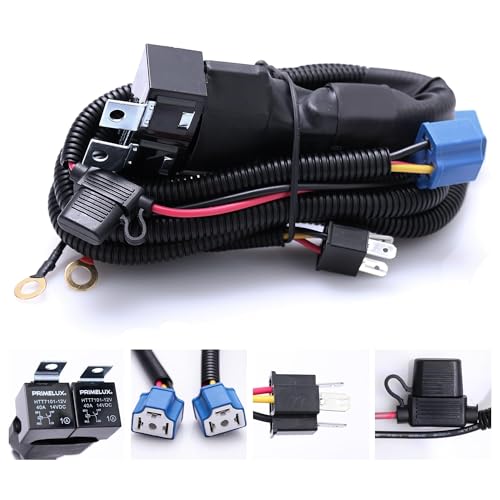
Universal Compatibility: Our h4 headlight harness is designed to work with both positive and negative switched headlight systems. The included adapter harness pack ensures compatibility with non-standard H4 sockets, seamlessly fitting our H4 plug

Compatible with Volkswagen Type 1 [ Beetle / Bug ] 1967-79,
Signs of a Failing Headlight Relay and Why Repairs Matter
Recognizing relay failure symptoms prevents electrical system damage and maintains safe vehicle operation. You’ll observe several diagnostic indicators during symptoms analysis: complete headlight failure when both lamps simultaneously lose power, flickering caused by degraded internal contacts disrupting circuit continuity, or headlights remaining energized after switch disengagement due to stuck-closed contacts. Dim or uneven illumination signals inadequate voltage distribution through compromised relay components. Audible clicking or buzzing indicates internal contact deterioration preventing proper circuit closure. Blown fuses may result from relay malfunction overloading the circuit protection system.
Understanding repair importance protects your vehicle’s electrical architecture. Failed relays create voltage irregularities that damage bulbs, wiring harnesses, and fuse panels. Stuck-closed relays drain batteries and generate excessive heat, risking insulation degradation per SAE J1113 thermal standards. Addressing relay failures immediately prevents cascading electrical failures and guarantees compliant headlight performance under FMVSS 108 regulations. Replace suspect relays before total circuit compromise occurs.
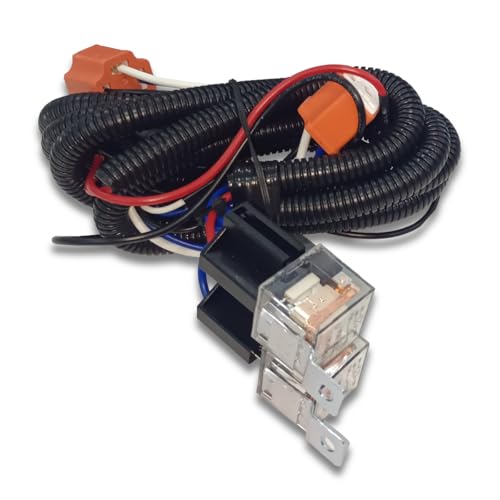
【Function】:This headlight relay harness is designed to fix dim headlights, flashing headlights, feedback power, headlight failures when using far/low lights, etc.
![[ALL STAR TRUCK PARTS] 4-Headlight Relay Wiring Harness H4 Headlamp Light Bulb Ceramic Socket Plugs Set](https://m.media-amazon.com/images/I/41vue+gemDL._SL500_.jpg)
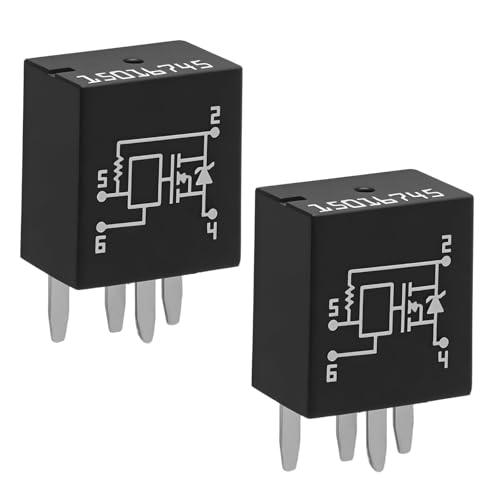
【Reliable Quality】Our headlamp driver module is made of durable materials. The shell is made of PBT materials with high insulation and temperature resistance, the metal part is made of copper and some part with nickel coating.