Adaptive headlights are electronically controlled lighting systems that automatically adjust beam direction and intensity based on real-time data from your vehicle’s steering angle, speed, and yaw sensors. The system pivots headlamp assemblies up to 15 degrees laterally to illuminate curved roadways as you turn, while advanced variants like matrix LED technology selectively dim beam sections to prevent glare for oncoming traffic. These systems integrate with your vehicle’s CAN bus architecture and ADAS components to enhance nighttime visibility and collision avoidance. The following sections explore the technical components, system types, and calibration requirements.
How Adaptive Headlights Work
When you turn your steering wheel, adaptive headlights deploy a network of electronic sensors that continuously monitor your vehicle’s speed, steering angle, and yaw rate to command directional adjustments in real time. The steering angle sensor tracks front wheel movement while speed sensors guarantee activation only above predetermined thresholds. A multipoint control unit processes this data stream, coordinating signals across system components through precise algorithms. The headlights pivot up to 15 degrees from center, creating a 30-degree operational range that follows your steering input. Beam modulation occurs simultaneously, with individual LEDs adjusting intensity and pattern to reduce glare for oncoming traffic. Sensor calibration maintains accurate tracking of vehicle orientation, while vertical tilt compensates for elevation changes and load variations, guaranteeing peak illumination across dynamic driving conditions. The system remains inactive when stationary or when the vehicle is in reverse to prevent blinding other drivers.

[Universal for 12V Vehicles]: Universal compatibility with all standard 12V vehicles, easy installation that won’t disrupt your car’s lighting or electrical system

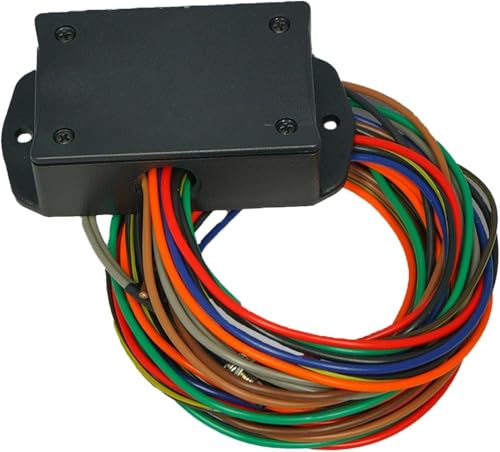
SMART DAY/NIGHT DETECTION: Modernize your older vehicle with intelligent "Set & Forget" technology. The sensitive UV light sensor detects low-light conditions, automatically triggering your headlights and parking lights at dusk or when entering tunnels/parking garages.
Key Components and Technology
Adaptive headlight systems rely on five integrated component categories that work in concert to deliver dynamic beam control. Sensor technologies capture steering angle, vehicle speed, axle position, and environmental conditions through cameras that detect oncoming traffic and weather patterns. Control hardware processes this data via integrated software, executing real-time adjustments through voltage regulation and pulse width modulation to manage brightness and directional parameters. The headlamp housing provides a sealed, replaceable module that withstands shock, vibration, and environmental extremes while supporting mechanical articulation. Optics and actuators employ lenses, reflectors, and stepper motors to pivot assemblies up to 15 degrees and shape beam patterns. Light sources—including LEDs and HID lamps—enable independent zone control, dimming specific segments to create dynamic shadows around detected vehicles while maintaining ideal illumination elsewhere. These systems prevent overheating of light sources and electronics through dedicated thermal management components that maintain efficiency during operation.

COMPATIBILITY VERIFICATION: Only fits BMW 5 Series F10 / F07 GT / F11, OEM Part Number 63117316217. Fit for BMW 5 Series,for BMW F07 535i, for BMW F10 528i, for BMW F10 535d, for BMW F10 550i. Suitable for adaptive xenon headlight systems. Not fit halogen or non-adaptive headlights.

Replace Part Number: Replaces 63117214939, 63117214940, 7214939, 7214940. This headlight LED module includes low beam and high beam LED boards for both driver and passenger side headlights, suitable for the front left / front right sides

OE-SPEC ADAPTIVE TMS CONTROL: Restores low beam, high beam, dynamic cornering, auto leveling, and turn signal functions on factory Adaptive Xenon headlight assemblies.
Types of Adaptive Headlight Systems
Modern automotive lighting incorporates five distinct adaptive headlight architectures, each engineered to address specific visibility challenges through targeted beam manipulation.
Curve adaptive headlights pivot 15 degrees laterally based on steering input and yaw sensors, delivering a 30-degree swivel range that illuminates the direction of travel on winding roads. Static bending lights complement this system by activating fixed supplemental illumination at 90 degrees during low-speed turns and intersections.
Adaptive driving beam technology uses camera-based detection to selectively dim high-beam sections when oncoming vehicles approach, maintaining ideal field illumination without causing glare. Matrix LED headlights advance this concept through individually controllable LED arrays that create high-resolution beam patterns. High Beam Assist automates the shift between high and low beams based on traffic detection. Some systems integrate GPS or navigation data to anticipate upcoming curves or elevation changes before the vehicle reaches them.

Easy Headlight Restoration Kit: The Sylvania Headlight Restoration Kit is easy to use and includes everything needed to repair two headlight lenses and restore light output with no tools needed

Professional-Grade Headlight Restoration Kit – Get crystal-clear headlights with Rain-X's headlight lens restore kit. It erases scratches and smooths the surface, delivering a polished finish at a fraction of the professional cost.
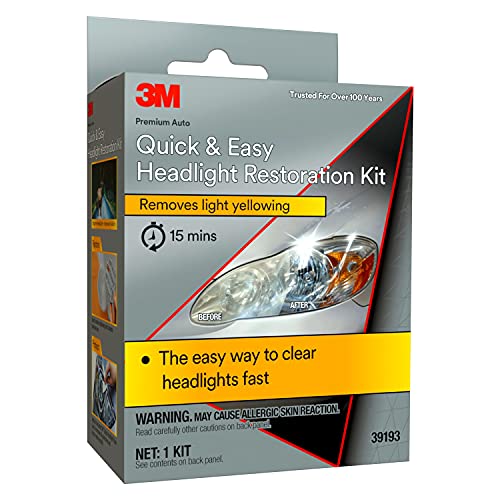
KIT INCLUDES: 3M Trizact Refining Disc 3000 grit (2) 3M Quick Headlight Clear Coat Wipes
Safety and Visibility Advantages
By extending the illuminated zone into the vehicle’s travel path during cornering maneuvers, adaptive headlight systems deliver quantifiable detection-range improvements that translate directly into enhanced crash-avoidance capability. Field testing documents object-detection increases of approximately 15 feet at 30 mph on curves compared with fixed halogen systems, yielding one-third-second earlier target recognition. This nighttime visibility enhancement correlates with measurable crash reduction: adaptive high-beam configurations demonstrate approximately 6.7% fewer nighttime collisions, while curve-adaptive systems reduce curve-related incidents by 2–3%. Insurance data corroborate these findings, showing lower claim rates—including injury claims—for vehicles equipped with adaptive technology. Proper beam alignment ensures that adaptive systems function optimally to deliver these safety benefits. Adaptive driving beam (ADB) architectures sustain high-beam illuminance while selectively shading oncoming traffic, maximizing forward visibility without imposing glare penalties on other road users. Research employing pedestrian and bike simulators has demonstrated that projected spotlights and warning icons enable earlier driver braking responses while improving crossing safety for vulnerable road users.
Adaptive Headlights vs. Traditional Headlights
Traditional headlights employ fixed-position reflector or projector assemblies with static beam patterns that remain aligned straight ahead regardless of steering input, whereas adaptive systems integrate steering-angle sensors, yaw-rate sensors, and vehicle-speed sensors to dynamically adjust illumination direction and intensity. Adaptive headlights benefits include earlier object detection in curves—IIHS data shows approximately 0.33-second gains at 30 mph—plus selective beam-zone masking to eliminate glare without sacrificing overall high-beam reach. Traditional headlights drawbacks encompass inability to illuminate curved paths, lack of granular beam control, higher halogen-bulb energy consumption, and complete glare-or-no-glare switching modes. However, adaptive assemblies introduce calibration dependencies after suspension or alignment service, elevated repair costs for multi-LED modules and actuators, and camera-sensor vulnerability to weather interference that traditional fixed systems avoid through mechanical simplicity. Adaptive headlights reduce blind spots during nighttime and adverse weather conditions by continuously adjusting beam direction to match the driver’s path of travel.

Tailored Rear Axle Fitment: Premium under-chassis suspension leveling component. Perfectly compatible with Honda Fit / Jazz 3rd Gen (2015-2020 GK5 models) and HR-V / Vezel SUV (2015-2021 RU series) equipped with factory automatic adaptive headlight leveling systems.

【❗Fitment (Vehicle Compatibility)❗:】 Suited For 2021 Toyota Rav4 2.5L Hybrid (Fhev) North America Built Vehicles Without Adaptive Headlights; Includes Driver And Passenger Side Units And Parking Aid Sensor Openings Where Applicable.
【❗Fitment (Vehicle Compatibility)❗:】 Direct-Fit For 2019 Toyota Rav4 2.5L Hybrid (Fhev) North America Built Models Without Adaptive Headlights; Includes Driver And Passenger Side Components And Parking Aid Sensor Openings.
Evolution and Market Adoption
Although adaptive headlight technology appears synonymous with twenty-first-century electronic systems, the fundamental concept emerged during the 1920s and 1930s when luxury manufacturers experimented with Pilot Ray systems—rudimentary mechanisms that foreshadowed directional illumination. Historical advancements accelerated post-1940s: Citroën’s 1948 manual leveling system, Cadillac’s 1952 Autronic Eye automatic hi/lo switching, and Cibie’s 1954 automatic leveling for Panhard Dyna Z established foundational capabilities. The 1962 halogen lamp consortium and subsequent xenon HID integration expanded beam intensity parameters. Sealed beam headlights became mandatory in the US from 1940 to 1983, utilizing parabolic reflectors with sealed filaments that offered water resistance but required complete replacement when damaged. Market trends shifted dramatically when 2004’s Audi A8 W12 introduced LED daytime running lights, followed by 2006’s Lexus LS 600h with LED low beams. LED technology offers superior brightness and efficiency advantages that accelerated its adoption in premium automotive applications. Mercedes-Benz’s 2011 intelligent adaptive LED system represented peak luxury integration before Hyundai democratized LED technology, converting adaptive systems from premium segments to mainstream applications through current Adaptive Driving Beam implementations.
Integration With Driver Assistance Systems
Modern adaptive headlight systems function as integrated nodes within vehicle ADAS architectures, exchanging data through Controller Area Network (CAN) bus protocols to synchronize illumination with active safety features. Your headlights now receive inputs from lane departure warnings, collision avoidance systems, and adaptive cruise control modules to preemptively adjust beam patterns. The ECU processes steering angle, GPS coordinates, and speed data for traffic prediction, enabling directional pivoting before you complete turns. V2V and V2I communication protocols allow synchronized responses with infrastructure and nearby vehicles. When ADAS detects hazards, the headlight control module simultaneously executes selective dimming while HMI interfaces deliver driver alerts. Matrix light source technology enables precise control over the light beam’s shape and intensity for refined adaptive performance. This integration guarantees your illumination system actively supports collision mitigation, pedestrian detection, and automated driving functions through continuous sensor fusion and instantaneous ECU processing.
Considerations for Vehicle Owners
Several critical factors demand evaluation before integrating adaptive headlight systems into your vehicle ownership strategy. You’ll encounter higher initial purchase costs, as these systems remain premium features with complex actuators and sensor modules. Cost implications extend to repairs, though LED longevity may offset expenses for frequent nighttime drivers. Maintenance challenges include mandatory professional calibration after headlamp removal, sensor replacement, or suspension modifications. You’ll need specialized diagnostic tools and vehicle-specific service protocols for proper alignment. Performance degrades in extreme weather conditions—fog, heavy rain, and snow compromise sensor accuracy. While NHTSA-approved adaptive driving beam systems are federally legal, you must verify regional compliance for full functionality. These systems enhance safety through glare reduction and improved visibility, but they don’t replace attentive driving in low-visibility scenarios. The systems utilize inputs from cameras to coordinate with other components for optimal headlight positioning and beam control.

1 unit of front headlight adjustment screw driver tool ONLY for 2018-2022 JL.

Applications: Audi A4 8K, A6 4G, A5 8T; Volkswagen Passat B8, Touarag II.

Fitment: Headlight Adjusters Kit is compatible with Chevy Impala, Biscayne & Belair 1962 Impala,1963 Impala, 1964 Impala ,1965 Impala,1966 Impala ,1967 Impala.