Headlight bulbs fall into three main categories: halogen (H1, H4, H7, H11, 9005/9006), HID/Xenon, and LED configurations. You’ll encounter single-beam bulbs requiring separate high/low beam units and dual-beam designs like H4/H13 with two filaments. Standard halogens operate at 12V with 55-60W power ratings and 1000-1500 lumens output, while HID systems produce 3-5 times brighter light. Critical compatibility factors include base design, locking tab configuration, and wattage ratings—H11 interchanges with H8/H9/H16, but H11B doesn’t. Understanding these specifications guarantees you’ll select the correct replacement for your vehicle’s lighting system.
Understanding Halogen Headlight Bulb Specifications and Base Types
Halogen headlight bulbs operate on standardized electrical specifications that directly impact their compatibility and performance in automotive lighting systems. You’ll find 12V nominal voltage for passenger vehicles and 24V variants for commercial trucks. Standard power ratings include 55W single-filament and 60/55W dual-filament H4 configurations, with higher-wattage options available for specific applications.
When conducting halogen emissions analysis, expect color temperatures ranging 3200–3700K for stock bulbs, producing warm white light. Typical H7/H1 types deliver 1000–1500 lumens per bulb. Bulb longevity comparison reveals rated lifetimes spanning 500–2000 hours depending on design and operating conditions. To maintain optimal headlight performance over time, applying a UV sealant can help protect bulbs from oxidation and degradation. Premium halogen options like the SilverStar Ultra deliver greater brightness and whiter light for enhanced visibility compared to basic OEM bulbs.
Common base types include H1 (metal base, 55W), H4 (three-contact dual-filament), H7 (PGJ19-2 base), and 9005/9006 (plastic-based North American variants). Each features keyed mounting designs ensuring correct filament positioning for ideal beam patterns. Performance metrics are measured in LUX for both low and high beams, with values varying significantly across different bulb models and manufacturers.

Get the best lighting performance and an increased visibility and comfort on the road compared to basic bulbs

Plug and Play Installation: 4 Pack 9003/H4 halogen headlight bulbs, 12V 60/55w, Manufactured by the International Standard, CE, DOT. Same bulbs size as original ones with same bases and plugs. Easy to install. Street Legal

[Ultra Bright White Light]: H4/9003 Halogen headlight bulb, filled with 25% xenon which lead to 80% more light output than standard bulbs. 4300K warm white light provides perfect light pattern and excellent performance.
Single-Beam Vs Dual-Beam Bulb Applications for High and Low Beams
When selecting replacement headlight bulbs, you’ll encounter two fundamental system architectures: single-beam and dual-beam configurations. Single beam applications utilize separate bulbs for high and low functions—examples include H7, H11, and 9005 bulbs, each containing one filament with two-pin connectors. These systems require dedicated optical housings per beam pattern, offering precise light distribution but necessitating two bulbs per headlight assembly.
Dual beam advantages include simplified replacement and reduced component count. Bulbs like H4, H13, and 9007 feature two filaments within one housing, controlled by three-pin connectors (ground, low beam, high beam). You’ll identify these by visible dual filaments inside halogen envelopes. While dual-beam bulbs cost more individually, they eliminate the need for separate high-beam bulbs. Note that single-beam and dual-beam systems aren’t interchangeable due to incompatible base designs and pin configurations. Using incorrect bulbs leads to wasted time and money.
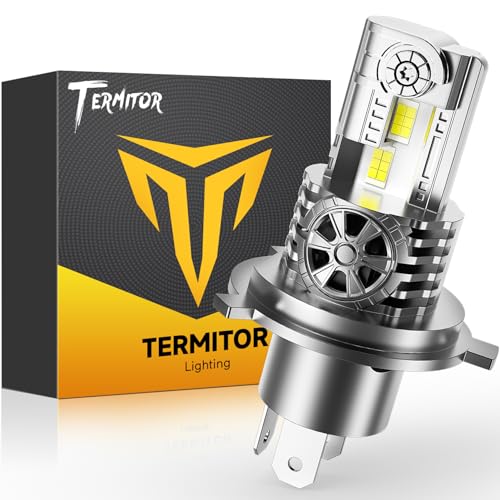
800% Brighter Than Halogen: Equipped with upgraded high-efficiency chips, the Termitor H4/9003 bulb delivers exceptional light output with a 6500K sharp xenon white glow, dramatically improving nighttime visibility and road safety for motorcycle riders

【800% Hyper Bright Illumination】Built with premium high-density CSP chips, our H4/9003/HB2 LED bulbs output ultra-high 40000LM luminous flux and crisp 6500K cool white light. It sharpens night vision, strengthens penetrating power, and fully safeguards your night driving, fog travel and off-road driving safety

🔦 【1400% Brighter with 2026 Pro-Grade Chips—𝟏𝟒𝟎,𝟎𝟎𝟎𝐋𝐌 Ultra-Visibility】 Designed for uncompromising quality, the Ursprung H4 LED bulb (9003/HB2) features high-power LED chips engineered with advanced 2026 Pro-Grade technology—delivering 13X brighter illumination than stock halogen bulbs and a staggering 140,000 lumens per pair. This pro-grade brightness eliminates dark spots and extends your field of vision by 800m+, ensuring crystal-clear visibility for nighttime driving, rainy, foggy, or snowy conditions. Say goodbye to dim factory bulbs and drive with confidence, even on the darkest rural roads.
Fog Light and Auxiliary Lighting Bulb Options
Fog lights demand specialized bulb configurations distinct from standard headlight applications, with H10, H8, H11, and 9006 representing the most prevalent fitments across modern vehicles. Understanding fog light types requires recognizing base designs: H10/9140/9145 feature L-shaped PY20d bases, while H11/H8/H16 utilize nested prong configurations for plug-and-play installation. Single-filament 9005 (HB3) and 9006 (HB4) halogens serve dual fog/high beam purposes. Modern aftermarket fog light assemblies incorporate projector lens technology to enhance beam focus and reduce glare for oncoming traffic.
LED advantages include 6000-lumen output at 6500K color temperature, delivering crisp white beams that outperform traditional halogen’s warmer tones. You’ll benefit from integrated cooling fans, IP65 waterproof ratings (-45 to 85°C operation), and CANbus compatibility that prevents dashboard errors. Premium LED fog bulbs incorporate Thermal Separation Technology and RFI/EMI protection, ensuring reliable performance with 5-year warranties while drawing just 2.1A at 12V-24V voltage compatibility, accommodating both standard automotive and commercial vehicle electrical systems.

Upgraded 96 LED Chips/Set: Marsauto H11/H8 LED Fog Light Bulb deliver 10,000LM/set luminous output with 6,000K white light, improving visibility by up to 600%—the ideal choice for fog, rain, snow, and other harsh weather conditions, (Clear Lens Side Marker)

Superior Visibility in Bad Weather: Equipped with 54 cutting-edge LED chips and enhanced top convex lens, the F1 Series H11 LED Fog Light Bulb provides 360° illumination, projecting 400% upgraded light over greater distances with precision. H11 fog light bulb led focused lights ensures safe and comfortable visibility during driving in rainy and foggy conditions

Exceptional 600% Brightness: h16 led fog light bulb illuminate the road with 12,000 lumens of bright white light (6500K), providing 600% more brightness than standard bulbs. Ideal for challenging weather conditions like fog, rain, and snow
Cross-Compatibility and Bulb Replacement Guidelines
Understanding bulb cross-compatibility prevents costly mistakes and guarantees proper lighting system function, as seemingly similar designations often hide critical physical differences. You’ll find H11 interchanges with H8, H9, and H16 (L-shaped) sockets, but H11B’s protruding prongs eliminate standard H11 compatibility. While 9005 (HB3) and H11 share L-shapes, differing bases and locking tabs prevent direct swapping. Similarly, H11’s pin configuration differs from 9006 (HB4), blocking interchange despite physical similarities.
Always verify wattage ratings across the H8/H9/H11/H16 family to prevent overheating damage and shortened bulb lifespan. HB3 operates at 12V 60W, while HB4 runs 12V 51W. You’ll risk thermal failure installing 9005 halogens in H10 sockets. Replace headlight bulbs in pairs for consistent brightness and ideal visibility, consulting reference charts for base matches and locking tab designs. HID bulbs require dedicated systems and cannot function in halogen-designed assemblies.

Lights Dim Over Time, Replace In Pairs: Be sure to replace both H11 headlights at the same time for optimum performance. If one bulb burns out, the other isn't far behind. Replacing in pairs allows for premium visibility

100% New & Genuine Osram Made in Germany - Pack of 2 bulbs.

⭐【Super Bright H11 Bulbs】Our H11 headlight bulbs deliver over 1000LM brightness and a 3800K color temperature, ensuring optimal visibility in foggy and rainy conditions. Upgrade your automotive headlight bulbs for safer nighttime driving.
HID and Xenon Discharge Bulb Technology Explained
High Intensity Discharge (HID) technology fundamentally differs from halogen systems by eliminating the traditional filament in favor of an electrical arc that ignites xenon gas within a sealed bulb chamber. You’ll find this arc-based design produces light 3-5 times brighter than halogen while consuming half the energy. The ballast regulates voltage to initiate and maintain the arc between electrodes, creating intense white light at 4,000–6,000K color temperature.
HID advantages include superior illumination with wider, longer-range beam patterns that enhance road safety. The xenon lifespan reaches 3,000 hours, remarkably reducing replacement frequency. You’ll notice D1S bulbs feature series-specific designations: D for discharge, 1 for generation, S for shield integration. True bi-xenon systems utilize a single capsule with movable shutters for both high and low beams, ensuring consistent color output. HID headlights have a lifespan up to 10 times longer than halogen bulbs, making them more cost-effective over time despite higher initial costs. Proper headlight alignment is essential to prevent glare that could affect other drivers on the road. Available temperature options range from 3000K to 12000K, allowing you to select the appropriate color temperature for different driving conditions and preferences.

Perfect Beam Quality:D1S Xenon HID Bulbs ultra-bright light with 99.99% pure xenon gas and APL capsules—no glare, no dark spots. Higher efficiency and pure color for crisp visibility. Fit for RV Light Bulb.
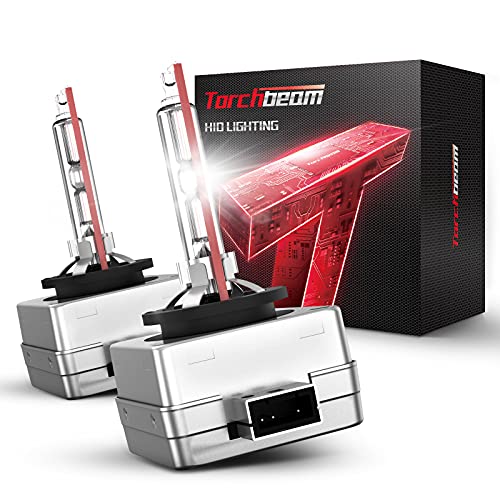
Safer Night Driving: Torchbeam d1s bulbs made with German xenon gas, 300% much brighter than halogen bulbs. Replacement OEM Part Number: 66140, 66140CBI, 66144, 66144CBI, 85415C1, 85415WX, 85415XV, 85410C1, 85410WX, ect.

Size: D1S (not D3S)