HID headlights outperform halogen with 3,000-5,000 lumens versus 700-1,200 lumens, while consuming less power (35W vs. 55-65W). You’ll get 2-3x longer lifespan (2,000-3,000 hours compared to 450-1,000 hours) and superior visibility through cooler 4300K-6000K light temperatures. However, you’re looking at $50-$200+ installation costs versus halogen’s simple $15-$50 replacement, plus potential legal compliance issues with aftermarket conversions. The performance advantages come with higher upfront investment and regulatory considerations that warrant closer examination of your specific needs.
Brightness and Light Output Comparison
When comparing raw light output, HID headlights deliver a substantial performance advantage over halogen technology in controlled measurements. Your HID system generates 3,000-5,000 lumens compared to halogen’s 700-1,200 lumens—up to five times greater lumen efficiency. In wall tests, HID measures 10,300 Lux while halogen registers 5,386 Lux, demonstrating twice the brightness levels.
At 25 feet, a 35W HID kit reaches 1,254 max Lux versus OEM halogen’s 407 Lux. A 55W HID configuration pushes this to 2,000 Lux. Your 35W HID system produces thousands of lumens per watt, creating exuberant output from modest power consumption. These controlled test results confirm HID’s superiority in pure light generation metrics, though actual road performance involves additional factors beyond raw brightness measurements. Unlike HID technology, LED headlights offer instant-on capability without requiring a warm-up period. However, halogen headlights demonstrate a significant brightness increase from low beam at 11 Lux to high beam at 79 Lux—seven times more intense. When upgrading headlight technology, it’s important to ensure proper beam pattern compatibility to avoid safety issues and maintain legal compliance on the road.

[Ultimate Beam Precision]Our H1 HID car lighting kits are meticulously engineered to replicate the factory halogen beam pattern, with extensive calibration to achieve optimal light distribution. Enjoy a focused, even beam that eliminates dark spots and reduces glare for oncoming drivers, ensuring a safer and more comfortable night drive.

[90,000LM Ultra-Bright Output & Daylight Clarity] Termitor 9007/HB5 HID car lighting kits deliver 90,000 lumens of crisp 6500K Daylight White light, dramatically improving contrast on trails and roads. Whether in dense fog, heavy rain, or darkness, you get a wide, clear field of view for safer off-road driving. Pack of 2 offers a complete upgrade for your lighting needs.

Crisp 6500K Cool White Light: Enjoy a crisp, daylight-like glow with the 9005 HB3 lights. The 6500K cool white beam cuts through the darkness, ensuring you see road signs and potential hazards with ease, even on dimly lit country roads
Color Temperature and Visibility Differences
Beyond raw lumen output, color temperature fundamentally shapes your visibility experience on the road. Halogen bulbs produce warm yellowish light at 2700K–3000K, while HID systems emit cooler, whiter light from 4300K–6000K. This difference drastically affects color perception and light clarity.
HID’s neutral white spectrum (4300K–5000K) mimics natural daylight, improving contrast and object distinction. You’ll notice reduced eye strain and faster reaction times compared to halogen’s yellow tones, which increase fatigue during extended driving. The whiter HID light appears brighter to your eyes despite similar lumen outputs. LED headlights produce even greater brightness at around 2,000 to 2,600 lumens compared to halogen’s 670 to 1,200 lumens, demonstrating the brightness advantage of modern lighting technology.
However, halogen’s 3000K golden yellow excels in fog, rain, and snow conditions. Halogen’s warm color temperature penetrates moisture more effectively, making it perform better in foggy conditions. Before upgrading your vehicle’s lighting system, ensure you’ve identified your specific lighting package type to select compatible bulbs for your model. For peak performance, 4300K–6000K HID delivers maximum road clarity in city and rural environments, though higher Kelvin ratings (6000K+) risk glare in poor weather.

2pcs packaged; Replacement part number: 66144 66140 85140 85415 (If there is any problem in the product,please feel free to contact us)

【IMPORTANT】Replacement for factory D2S HID bulb only, NOT fit if your car stock Halogen headlight bulb even system say "fits".
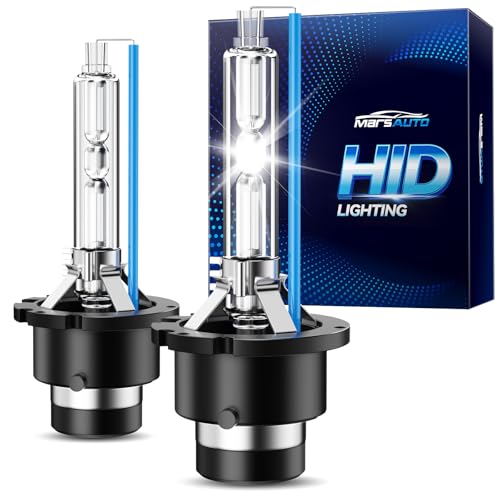
Perfect Beam Quality:D4S Xenon HID Bulbs ultra-bright light with 99.99% pure xenon gas and APL capsules—no glare, no dark spots. Higher efficiency and pure color for crisp visibility.
Durability and Longevity Analysis
HID headlights deliver 2,000–3,000 hours of service life in typical applications, roughly tripling halogen’s 450–1,000 hour operational window. You’ll encounter different failure modes with each technology: halogen bulbs fail primarily through filament fracture, while HID systems experience ballast failures and electrode degradation. Degradation patterns differ markedly—halogen shows 70–80% lumen loss over its lifespan versus HID’s 40–50% decline. Thermal cycling and vibration accelerate wear in both systems, but HID’s complex ballast/igniter architecture introduces additional failure points beyond the bulb itself. Real-world conditions—voltage fluctuations, contamination, moisture ingress, and corroded connections—considerably reduce manufacturer-rated lifespans. To maintain optimal performance, regular inspection and maintenance of electrical connections and housing seals can help prevent moisture-related failures that compromise both systems. When replacing headlight bulbs, avoid touching the bulb glass with fingers to prevent shortening bulb life and ensure consistent brightness. Aftermarket HID retrofits increase failure risk due to non-OEM components and inadequate thermal protection in mismatched housings. HID systems require a ballast to stabilize the electrical current, adding complexity but contributing to their extended operational life compared to simpler halogen designs.

FIT THE FOLLOWING VEHICLE - W3T19371 ballast replacement for 2006-2014 Acura TL TL-S | 2006-2014 Acura TSX | 2012-2014 Acura ILX | 2010-2013 Acura ZDX | 2013-2014 Acura RDX | 2010-2013 Acura MDX | 2009-2011 Acura CSX | 2011-2013 Honda CR-Z | 2004-2014 Honda Odyssey | 2012-2014 Mazda CX-5 | 2007-2012 Mazda CX-9 | 2007-2009 Mazda 3 | 2009-2012 Mazda 5 | 2007-2009 Mitsubishi Out lander | 2008-2012 Mitsubishi Lancer Evolution

35W HID Ballast: New DC Chip sest, IP68 Water Seald. It will work in any weather conditions. 0-30% brighter light than the standard ballast.

35W HID Ballast: This HID ballast adopts New DC Chip sest. It has over-voltage protection, low-voltage protection, no-load protection, short-circuit protection, etc. IP68 waterproof grade, which can work in any weather conditions
Energy Consumption and Efficiency
Power consumption separates these technologies decisively: HID systems draw 35 watts per bulb while halogen units require 55–65 watts for baseline operation. You’ll achieve substantial energy savings with HID—a 35W kit produces 3,500 lumens compared to halogen’s 900–1,000 lumens at 55 watts. That’s triple the light output at nearly half the electrical load.
The efficiency gap widens further with 55W HID kits delivering 5,000 lumens—five times halogen output at equivalent wattage. Your alternator and battery experience reduced strain with HID’s lower draw, while halogen’s higher consumption generates excess heat without proportional brightness gains. HID systems demonstrate superior lumens-per-watt ratios: 3,000 versus halogen’s 1,400. Though startup requires peak power, HID stabilizes to consistent low-energy operation, minimizing long-term electrical system impact. Modern HID technology also enables projector-style beam designs that optimize light distribution for improved visibility. HID headlights require a ballast for voltage regulation, which stabilizes power consumption throughout operation. This xenon gas-filled design enables the efficient arc discharge that produces the intense white-blue light characteristic of modern HID systems.

Each bundle contain 2 bulbs, 2 ballast, and accessories, this bulb is not dual xenon, high beam is halogen (for dual xenon, please select bixenon option)

Easy and Simple installation. Usually takes less than 20 minutes! Literally "Plug-and-Play" in most vehicles.Pre-assembly maybe required before installation, professional installation recommended.
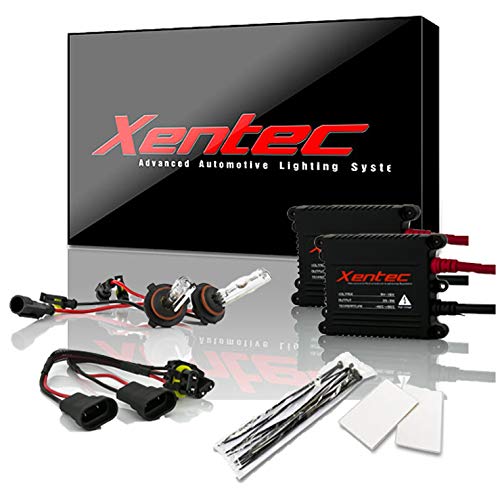
Each bundle contain 2 bulbs, 2 ballast, and installation accessories
Installation Costs and Legal Considerations
Upfront investment for HID conversion kits starts at $50–$200 per pair, with professional installation adding $50–$200 depending on vehicle wiring complexity and required modifications. The installation process demands ballast integration and proper headlight housing alignment—aftermarket HID conversions often fail legal compliance without DOT/SAE certification. You’ll face potential fines in jurisdictions prohibiting non-factory xenon systems. Halogen replacements cost $15–$50 per pair with straightforward plug-in installation, requiring minimal labor. Proper bulb socket removal and reinsertion, achieved by turning the bulb socket counterclockwise, helps ensure compatibility during aftermarket installations.
Over five years, HID totals approximately $300 (2,000–3,000-hour lifespan), while halogen reaches $150 despite frequent replacements every 500–1,000 hours. Factory HID dealership bulbs exceed $300 each. Ballast failures add maintenance expenses for HID systems. Aftermarket ballasts typically cost around $100, though dealership replacements can surpass $300, creating significant variability in total ownership costs. You must confirm headlight aiming post-installation to prevent glare violations and guarantee regulatory adherence regardless of technology chosen.

1000% Brighter Illumination – AUXITO D3S bulbs deliver 30,000 lumens per pair with 60 high-intensity LED chips, casting a crisp 6000K white light. Experience exceptional nighttime visibility, even in rain, fog, or dark backroads.
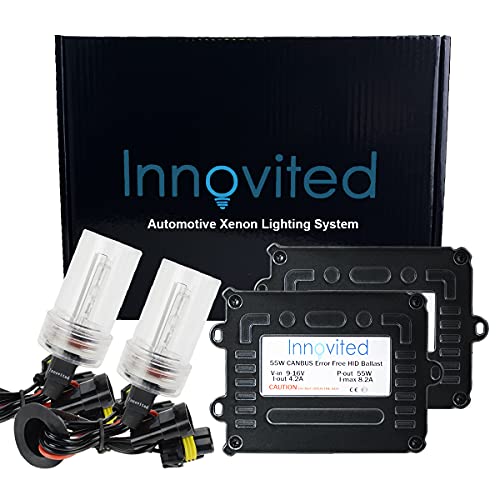
Each bundle contain 2 bulbs, 2 55W Canbus Error ballast, and accessories

Each bundle contain 2 bulbs, 2 55W Platinum ballast, and accessories