You’ll find four main headlight technologies in modern vehicles: halogen bulbs produce 700–1,200 lumens with a 500–1,000 hour lifespan at $10–$25; HID xenon generates twice the brightness while consuming less power; LED delivers up to 10,000 lumens using 80% less energy with 50,000-hour durability; and laser headlights provide 600-meter range, doubling LED performance. Each pairs differently with reflector or projector housings, affecting beam control and glare reduction. Understanding these specifications helps you select the best lighting system for your driving conditions and safety requirements.
Halogen Headlights: The Most Common Choice
Halogen headlights dominate the automotive lighting market through a straightforward incandescent design: a tungsten filament sealed inside a quartz envelope filled with halogen gas (typically iodine or bromine) and inert gases. When current flows through the filament, it heats to approximately 2,500°C, producing light at 2,700–3,500 K color temperature. The halogen cycle redeposits evaporated tungsten onto the filament, extending bulb life.
Standard bulbs deliver 700–1,200 lumens with typical 500–1,000 hour halogen lifespan comparison against LED alternatives. Bulb wattage effects are evident: common 55W systems draw more power than modern LED replacements per lumen produced. You’ll find replacement bulbs priced at $10–$25, with standardized H-series fitments enabling straightforward DIY installation. Halogen bulbs produce light across the visible spectrum with a warm color temperature that many drivers prefer for night driving comfort. This low upfront cost explains halogen’s continued market dominance despite lower efficiency than newer technologies. While halogen headlights remain affordable, LED headlights offer significantly longer lifespans of up to 45,000 to 50,000 hours compared to halogen’s limited duration. Halogen headlights generate significant heat, which places added demand on your vehicle’s electrical system and reduces overall energy efficiency.

Lights Dim Over Time, Replace In Pairs: Your lights are a pair, one is never turned on without the other. If one bulb burns out, the other isn't far behind. Replace your 9003 XtraVision Halogen bulbs in pairs for optimum performance.

BRIGHT, CONSISTENT OUTPUT: Provides clear, reliable illumination for everyday driving conditions
HID Xenon Headlights: Brighter and More Efficient
While halogen systems rely on heated filaments, HID (High Intensity Discharge) xenon headlights generate illumination through an electrical arc between two electrodes within a pressurized xenon gas chamber. This plasma-based technology produces 4,000-6,000 Kelvin color temperature, matching natural daylight spectrum.
HID advantages include superior lumen output—up to twice halogen brightness—while consuming less electrical power. You’ll experience wider beam patterns that enhance peripheral visibility of pedestrians, signage, and road hazards. The daylight-quality illumination performs exceptionally in adverse weather conditions including rain, fog, and snow.
Bulb lifespan greatly exceeds conventional halogen alternatives, reducing replacement frequency. Standard HID configurations require separate capsules for low and high beams, whereas Bi-Xenon systems utilize a single capsule with mechanical shutter mechanism. Installation kits specify color temperature ratings and lumen measurements for precise performance matching. Most installation processes take as little as 15 minutes per headlight with basic consumer skills.

Each bundle contain 2 bulbs, 2 ballast, and installation accessories
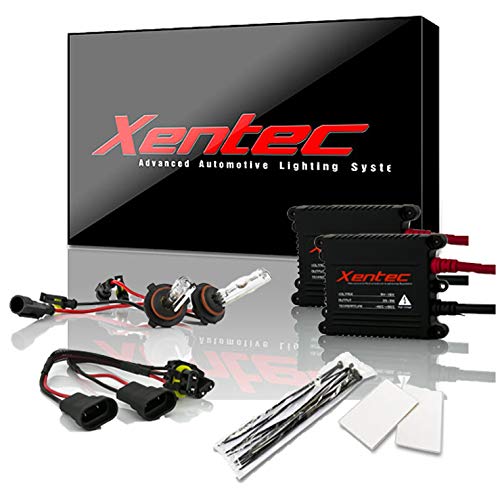
Each bundle contain 2 bulbs, 2 ballast, and installation accessories
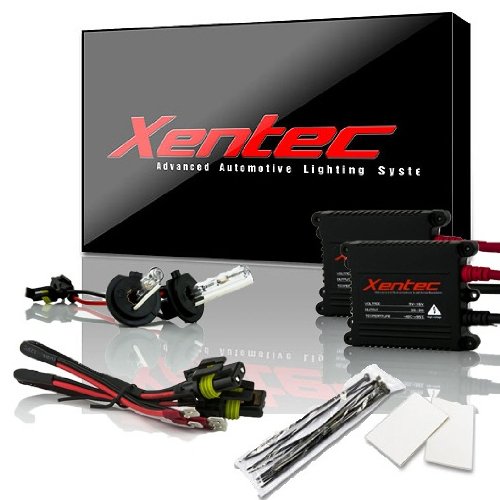
Each bundle contain 2 bulbs, 2 ballast, and installation accessories
LED Headlights: Modern Technology for Maximum Performance
LED headlights represent the latest advancement in automotive lighting technology, utilizing semiconductor diodes that emit photons through electron movement across a junction. You’ll benefit from their superior LED efficiency, consuming up to 80% less power than halogen bulbs while delivering up to 10,000 lumens per set. These units produce bright white light at approximately 6,000 Kelvin color temperature, providing exceptional visibility without warm-up time.
The technology operates as a cold-light source with minimal heat generation, ensuring consistent performance throughout a 50,000-hour lifespan. Adaptive lighting systems adjust beam patterns in real-time based on speed, steering angle, and traffic conditions. Matrix LED configurations enable individual control of multiple diodes for precise illumination. You’ll experience reduced electrical system strain, improved fuel economy, and virtually maintenance-free operation over a decade of use. LED headlights also demonstrate superior durability compared to traditional halogen options, maintaining their brightness output and beam quality throughout their extended operational life. When switching from halogen to LED technology, drivers gain improved visibility, energy efficiency, and a longer lifespan that reduces replacement frequency. The focused beam pattern enhances night driving safety by improving color rendering and road visibility compared to traditional lighting options.

【800% Breakthrough Brightness】Marsauto H11 bulb shine 800% brighter than traditional bulbs. M1S H11 H8 H9 bulb uses non-traditional chip technology, and its light output is much higher than other chips on the market. At the same time, the number of lamp beads on a single side has been increased from one to two, which solves the problem of low lumen caused by one lamp bead and can also increase the width of illumination, escorting car owners at night.
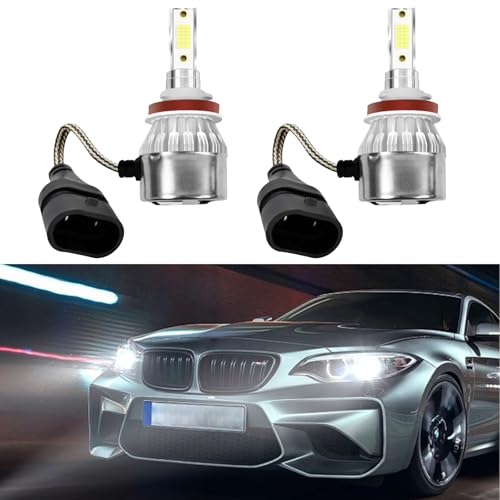
💡Wide Application: The 9005 led headlight bulbs are widely used and can be used as high beam, low beam, etc. After purchase, you will receive two 9005/HB3 LED bulbs, which are suitable for most cars, SUVs, sedans and other vehicles on the market.
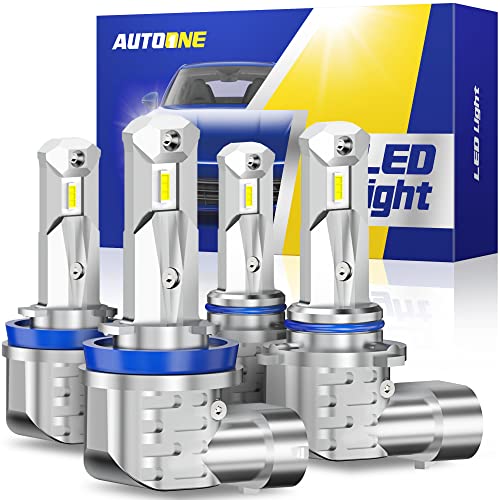
Huge Improvement in Visibility: AUTOONE H11 9005 led bulbs combo are equipped with high luminous efficacy csp chips. And 1:1 halogen bulbs’ beam pattern, spread out the light more to help in the side and front vision but no endangering others
Laser Headlights: The Future of Automotive Lighting
Laser headlights employ solid-state blue laser diodes that fire concentrated beams at a yellow phosphor coating, converting the laser energy into intense white light with 1,000 times greater illumination power than LED systems. You’ll get 600-meter range—double conventional LED high beams—while consuming less power to extend your electric vehicle’s range. The laser headlight technology uses mirrors to redirect beams into the phosphor lens, with reflectors channeling generated light outward.
BMW and Audi pioneered production implementations, integrating adaptive lighting systems that redirect beams away from oncoming traffic. You’ll find three-laser configurations in BMW’s high-beam systems, developed with OSRAM for autobahn speeds. Safety features include twin light sensors and metal blocking arms. The compact design enables sleeker vehicle profiles, and manufacturers are developing GPS-integrated matrix systems for automatic beam adjustment around curves and hills. These systems dynamically respond to real-time driving conditions by modifying light shape and brightness to enhance nighttime visibility on winding roads. Unlike traditional halogen and HID options, laser technology offers superior brightness and efficiency for next-generation vehicles. The technology operates across extreme temperature ranges from -40°C to +50°C, withstanding harsh automotive environments with high vibrations.
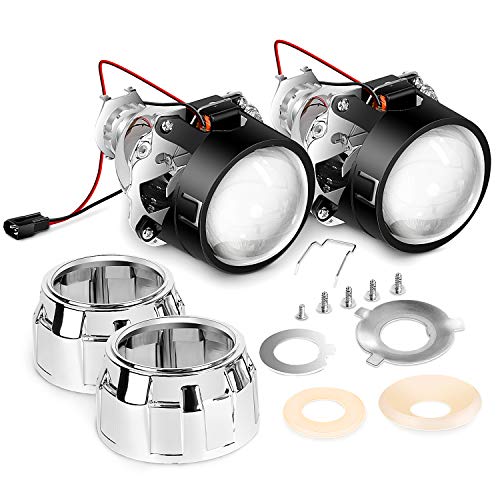
H1 mini projector kits (low/high beams), fit in tight spaces for quad retrofits or fog lamp upgrade

【Unique Angel Eyes Shrouds】3.0 Inch angel eyes switchback Shrouds comes with turn signal feature,unique appearance makes your car look more attractive.
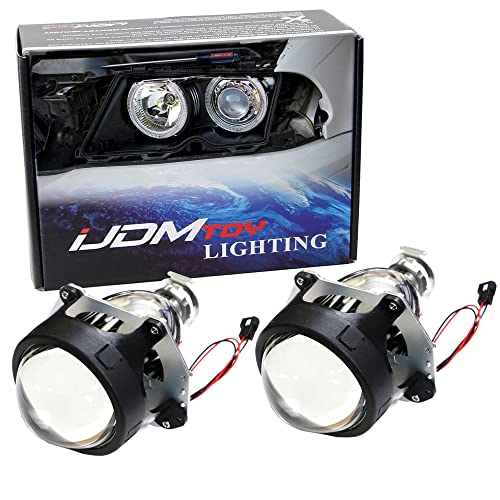
One pair of 3.0-inch front road illuminating light dual-beam projectors (lenses only, no shrouds nor bulbs included)
Reflector Vs Projector Designs: Understanding Beam Control
Advanced laser technology represents just one approach to light distribution—the physical design of your headlight assembly determines how effectively any light source reaches the road. Reflector assemblies position the bulb within a curved mirrored bowl, utilizing faceted surfaces to create wide beam distribution across broad areas. You’ll find these in most vehicles due to their simpler structure and lower production costs.
Projector designs incorporate a lens-focused system with a cutoff shield, delivering concentrated light intensity through a narrower, more controlled pattern. Think shower spray versus jet stream. While reflectors scatter light output with potential glare, projectors focus beams precisely, eliminating dark zones. The projector’s shutter or cutoff shield creates a sharp line that prevents light from rising into the eyes of oncoming drivers. Reflectors pair efficiently with halogen bulbs like H4 and H13, whereas projectors optimize HID and LED performance, offering superior visibility without blinding oncoming traffic. When selecting replacement bulbs, it’s important to consider brightness levels measured in lumens and color temperature to ensure compatibility with your specific headlight design. Modern vehicles across various manufacturers utilize standardized bulb types such as H11 for optimal compatibility across different headlight designs.

Superior Visibility in Bad Weather: Equipped with 54 cutting-edge LED chips and enhanced top convex lens, the F1 Series H11 LED Fog Light Bulb provides 360° illumination, projecting 400% upgraded light over greater distances with precision. H11 fog light bulb led focused lights ensures safe and comfortable visibility during driving in rainy and foggy conditions
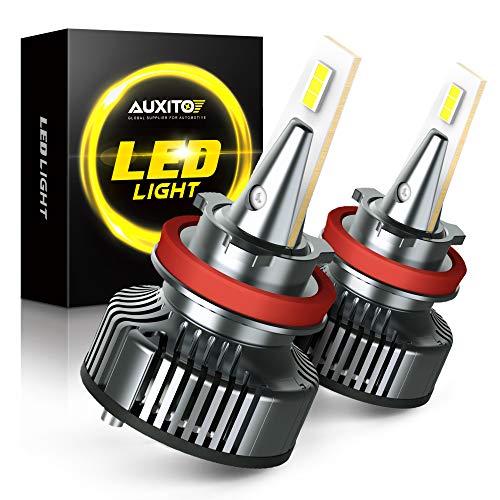

Night & Day Difference - AUXITO H11 LED fog light bulbs adopt 12 pcs highly bright CSP LED chips each bulb, providing total 120W, 60000LM light output per set. 1200% brighter than stock bulbs. 6500K cool white. Let you see everything at night. A huge upgrade for halogen bulbs.