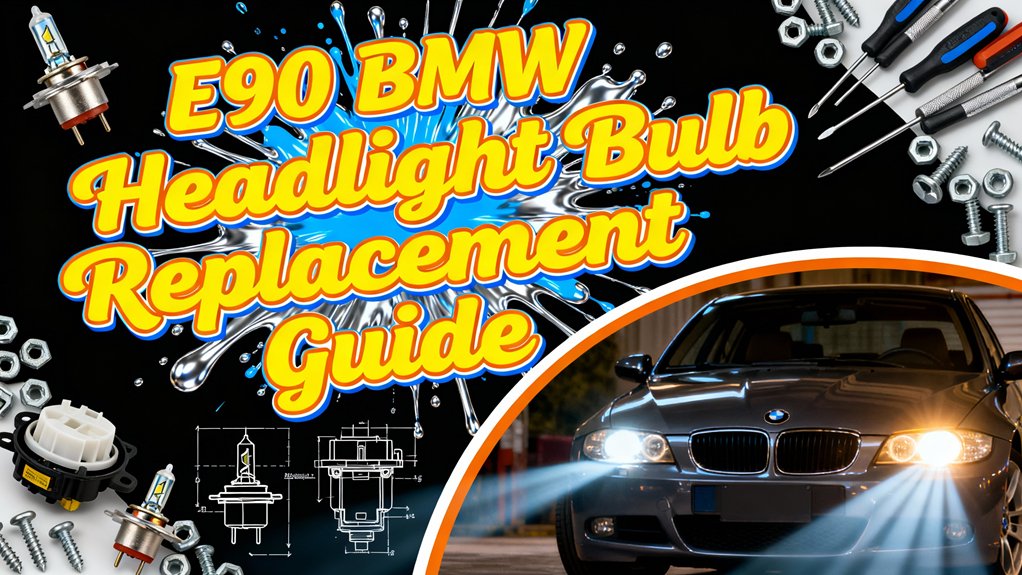
To replace your E90 BMW headlight bulb, you’ll first turn the steering wheel fully and remove 6-8 fasteners from the fender liner using an 8mm socket and trim tool. Pull the liner aside, then disconnect the electrical connector from the bulb housing. Release the metal spring clip by pushing inward, extract the H7 halogen or D1S xenon bulb, and install the replacement while avoiding glass contact. Reconnect everything and test both beams—the complete procedure includes critical aiming adjustments and compliance verification steps ahead.
Gathering Tools and Preparation
Successful E90 headlight bulb replacement begins with assembling the correct tools before you touch a single fastener. Your essential kit includes an 8 mm and 10 mm socket set for wheel liner fasteners, T-20 and T-30 Torx drivers for ballast modules, and long-nose pliers for connector clips. Tool selection strategies demand verification of bulb type—halogen H7 versus xenon D1S—since HID systems require ballast handling and ESD precautions. Workspace safety protocols include engaging the parking brake, placing wheel chocks, and disconnecting the battery’s negative terminal when servicing electrical modules. Organize small fasteners in magnetic trays to prevent loss. Pre-label connectors or photograph their positions for accurate reassembly. Confirm replacement bulb compatibility through your owner’s manual before disassembly to avoid mid-job delays. Park the vehicle on a flat surface to ensure stability during the replacement process.

【OE Part Number】: 63117159570; Includes two corresponding models of light bulbs, All products have passed the manual quality testing to ensure that they can work properly

Reference Number : 6925638 61136925638 61132359991
Removing the Fender Liner
Before you access the E90 headlight assembly, you’ll need to remove the fender liner to expose the rear bulb housing. Start by turning the steering wheel fully to expose the liner’s inner surface. Locate and remove the fasteners—typically six to eight 8mm hex bolts and plastic push rivets positioned along the wheel arch lower lip and where the liner meets the bumper. Use a trim removal tool for stubborn push rivets to prevent shearing. Begin at the bottom, working upward systematically. Once all fasteners are removed, gently pull the liner outward to disengage any retention tabs. Understanding these fastener types aids in proper fender liner maintenance. Apply penetrating oil to corroded bolts if necessary, allowing soak time before extraction. After accessing the headlight assembly, you may also want to consider applying protective coatings or wax to your lenses to maintain clarity and prevent yellowing. Proper headlight bulb selection, including considering brightness levels measured in lumens, ensures optimal nighttime visibility once you’ve completed the fender liner removal.
Accessing the Headlight Housing
With the fender liner detached, you’ll now gain access to the headlight housing’s securing hardware. Move the flap aside to locate two T30 screws positioned on the right side of the housing. Remove these screws using the appropriate Torx driver. Next, extract the 10mm bolt at the rear of the headlight assembly, followed by two 10mm bolts at the front using an extension for proper reach. Remove the two T30 screws securing the top of the headlight assembly. These headlight accessibility tips guarantee proper housing removal techniques. After accessing the fender liner foam piece, remove one additional screw on the headlight mount. Once all securing hardware is detached, carefully slide the headlight housing forward from its mount, maintaining awareness of any connected wiring harnesses. During this process, take care to transfer essential components like gaskets and bulb sockets to your new headlight assembly. For improved lighting performance, consider whether you plan to upgrade your bulbs from halogen to HID or LED systems during this replacement process.
Removing the Old Headlight Bulb
After sliding the headlight housing forward from its mount, you’ll now address the bulb removal process itself. Begin by pulling the electrical connector straight off the bulb base—wiggle gently if resistance occurs. Let the connector dangle freely to prevent wire strain.
Locate the metal spring clip securing the bulb holder. Push the clip’s top edge inward toward center, then slide it sideways to unhook from the retainer. Swing the clip downward, maintaining control to prevent it dropping into the housing.
Extract the bulb by pulling straight out, jiggling slightly if needed. Note the orientation tab for reinstallation reference. This procedure applies across different headlight types, though configurations vary by trim level. Verifying your specific bulb type based on vehicle year ensures compatibility with your E90 model before beginning removal. Proper bulb maintenance requires avoiding direct glass contact throughout removal.

[Product Features]: ZIYOLIGHT LED bulb utilizes advanced surface mount technology, Made with two 1W class middle-high power LED chips and precision resistors capacitors, that are specifically selected for their exceptional color rendering capabilities, ensuring a superior quality of light output.


Compatible with 2006 2007 2008 BMW E90 E91 3 Series 325i 330i (Pre-LCI models)
Installing the New Headlight Bulb
Once you’ve extracted the failed bulb, prepare the replacement by verifying its specification matches your E90’s configuration—H7 for halogen systems or D1S for xenon-equipped models. Align the metal tab with the plastic housing slot, noting proper bulb orientation to match the previous installation. Apply dielectric grease to the base and contacts for corrosion prevention, avoiding glass contact with bare hands to prevent oil contamination. Insert the bulb pegs into the bottom housing grooves first, then position the top slotted piece into its corresponding hook. Rotate until secure without forcing. Push the electrical connector straight onto the bulb base firmly—reconnect ballast wiring for xenon applications. Secure the bulb with the metal hinge, ensuring it fits snugly by pushing it back into place. Replace the dust cover and tighten fasteners evenly. For optimal performance, consider that LED headlights offer superior performance in cold weather conditions compared to standard bulbs. Cycle headlights to confirm proper illumination before completing reassembly.

Lights Dim Over Time, Replace In Pairs: Your lights are a pair, one is never turned on without the other. If one bulb burns out, the other isn't far behind. Replace your H7 XtraVision Halogen bulbs in pairs for optimum performance.
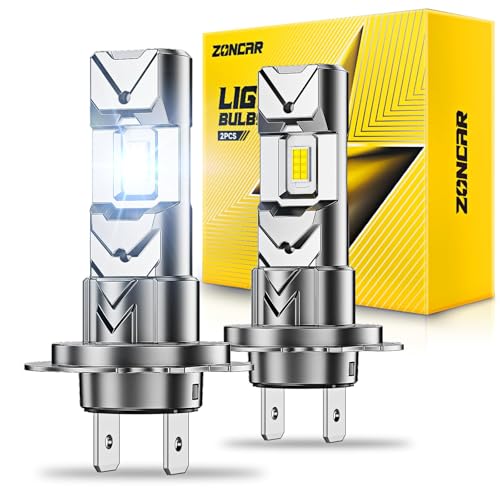
【60000LM, 10X, 6500K Brightness 】: ZonCar H7 LED bulbs feature premium-grade chips, delivering a powerful 6500K cool white light with an impressive 50,000LM output. With 10x the brightness of standard bulbs, they ensure superior visibility, allowing you to clearly spot road signs, wildlife, and potential hazards for safer nighttime driving

【Visual Enhancement】: The OKOENIEO H7 halogen bulbs are 200% brighter than other halogen bulbs, providing drivers with a wider and farther field of vision. Offering a greater visibility, they allow drivers to spot deer, wildlife, falling rocks, or obstacles ahead of time, ensuring safer nighttime driving.
Reassembling the Components
Before proceeding with headlight assembly reinstallation, verify the new bulb illuminates correctly by cycling the headlight switch through low and high beam positions. Begin securing connectors by aligning keyed tabs on the main harness and depressing push clips until audible engagement. Re-seat ballast module connectors with attention to offset alignment, avoiding bent pins. Route wiring back to factory retainers along the headlight body.
When aligning components, confirm locating pins engage their body apertures before fastening. Install top T-30 screws and 10 mm bolts hand-tight first, then torque incrementally while alternating mounting points. Reposition the fender liner, aligning all clip bosses before inserting the seven 8 mm screws, two 7 mm screws, and one 10 mm plastic nut to firm hand torque. After completing the installation, check for leftover screws to ensure all fasteners have been properly reinstalled.
Testing Your New Headlight
Proper verification begins the moment you reconnect the vehicle’s battery and cycle the headlight switch to the “on” position. Conduct a visual inspection to confirm beam illumination for both low and high functions, checking for uneven patterns, flicker, or dim sections that indicate misalignment or poor connection. Inspect HID/Xenon bulbs for visible arcing, discoloration, or cracked glass. Proceed with electrical testing by measuring voltage at the headlight connector—verify ~12–14V supply with headlights on. Check connector pins for corrosion or bent contacts. Perform static aim verification at 7.6–10 m against a vertical reference, adjusting horizontal and vertical aim to manufacturer specifications. Consider DOT compliance requirements to ensure your bulb upgrades meet safety standards. Complete on-road validation by testing low/high beam shift under engine load, monitoring for CAN/FRM errors and confirming adaptive functions operate correctly. If issues persist on one side only, swap the bulbs between sides to determine whether the fault follows the bulb or remains with the headlight assembly.