You can disable your vehicle’s daytime running lights (DRLs) through several methods depending on your model: locate and remove the DRL-labeled fuse in your fuse box, use your light stalk’s control switch if available, engage the parking brake on certain models, or access ECU settings with diagnostic tools. However, you should know that DRLs reduce fatal crashes by 5% and pedestrian fatalities by 12% according to NHTSA studies. Additionally, disabling factory-installed DRLs may violate local regulations in jurisdictions like the EU. The following sections explain vehicle-specific procedures and critical safety considerations.
Understanding Daytime Running Lights and Their Purpose
Daytime Running Lights (DRLs) are low-intensity front-facing lights that automatically activate when your vehicle’s engine runs, designed specifically to increase your vehicle’s visibility to other road users during daylight hours. Unlike headlights, they don’t illuminate the road ahead but make your vehicle more conspicuous to drivers, pedestrians, and cyclists.
The primary DRL benefits include reducing daytime crash rates by 5–10%, with notable decreases in head-on collisions and pedestrian fatalities. Visibility enhancement occurs through peripheral vision detection, enabling others to judge your vehicle’s speed and distance more accurately. DRLs prove especially effective during dawn, dusk, and overcast conditions when ambient light levels drop.
These systems use minimal power through LED or low-wattage technology, consuming considerably less energy than full headlights while maintaining detection capability without causing glare. Research indicates that DRLs help prevent accidents by improving vehicle visibility to other drivers on the road.
Methods to Disable DRLs on Your Vehicle
While DRLs provide significant safety advantages, certain situations may require you to disable them—whether for off-road use, custom lighting installations, or compliance with specific regulations.
Fuse Removal: Locate your vehicle’s fuse box and identify DRL-labeled fuses. Removing these interrupts power while maintaining other lighting functions.
Battery Disconnection: Disconnecting the negative terminal cuts all electrical power temporarily, serving as a preliminary step before electrical modifications.
Control Switches: Some vehicles feature light stalk settings allowing temporary DRL deactivation, though effectiveness varies by manufacturer.
Parking Brake Method: Engaging the parking brake with headlights off, turning the engine off, then restarting the vehicle will turn off exterior lights including daytime running lights on certain models like the Honda CR-V.
ECU Configuration: Professional diagnostic tools can reprogram your vehicle’s computer to disable DRLs through software coding.
Bulb Modification: Physical removal of DRL bulbs or disconnecting dedicated modules provides permanent disabling, though this may void warranties and violate local regulations.

2 Types of Blade Fuses: This assortment kit covers Standard and Mini Fuses, they are commonly used in most of vehicles such as Cars, Trucks, SUVs, ATVs, UTVs, Campers, RVs, Motorcycles, etc. This set is the best one to get if you are unsure what size fuses you should get for your car or if you have multiple cars.

Improve Safety: Our automotive fuse pulling tool set makes it easier to reach tight fuses or relays than other removal tools. It provides a more effective and safe way to deal with broken or aged fuses, which reduces the risk of electrical accidents and keeps you safe

Package Includes: The car fuse assortment kit includes 4 types of fuses, 520Pcs standard blade fuse(2A 3A 5A 7.5A 10A 15A 20A 25A 30A 35A 40A), 680Pcs mini blade fuse(2A 3A 5A 7.5A 10A 15A 20A 25A 30A 35A 40A), 10Pcs low and tall/stand profile fuses(20A, 30A, 40A, 50A, 60A), 1Pcs fuse puller and 1Pcs Circuit testers,Totally 1212Pcs
Legal and Safety Considerations Before Disabling DRLs
Before you disable your vehicle’s DRLs, you must understand the legal framework governing automotive lighting in your jurisdiction. Legal implications vary greatly: the EU mandates DRLs on vehicles manufactured after February 2011, while the U.S. has no federal requirement. However, disabling factory-installed DRLs may violate local vehicle equipment regulations, resulting in fines or failed inspections. You’ll also face safety concerns—NHTSA studies confirm DRLs reduce opposite-direction fatal crashes by 5% and pedestrian fatalities by 12%. Check your state’s specific legislation before proceeding, as some jurisdictions permit disabling DRLs only on older vehicles predating DRL regulations. Modern vehicles often integrate DRLs within the electrical system, creating technical challenges when attempting to disable them. For optimal visibility and safety, consider upgrading to LED headlights as an alternative that provides superior performance while maintaining compliance with lighting regulations. Additionally, alterations to lighting systems can void warranties or insurance policies if they’re not legally authorized.
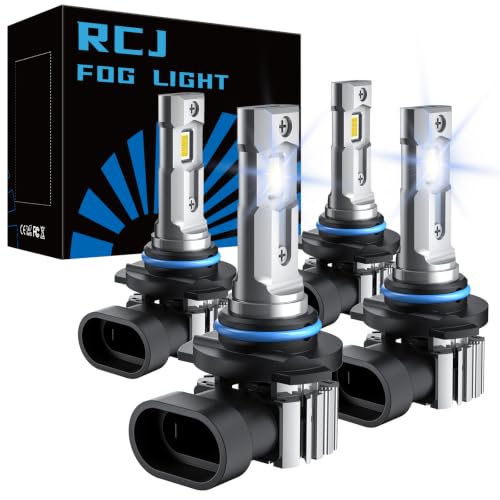
Ultimate Brightness: RCJ 9005 9006 bulbs combo use high-end 16 CSP chips to deliver up to 600% brighter light than OEM halogen bulbs. With 6000K cool white colour temperature, HB3 HB4 bulbs combo allows you to see further and clearer on the road at night, improving driver safety

【Package Include】This item include pair H4/9003 high low dual beam LED headlight bulbs and pair 7 inch H6024 Glass Round Headlight Housing.Please confirm your original housing model before purchasing.

Each bundle contain 2 bulbs, 2 55W Platinum ballast, and accessories
Vehicle-Specific Controls and System Limitations
Understanding your vehicle’s DRL configuration requires consulting the owner’s manual, as control options vary dramatically across manufacturers, models, and production years. Most vehicles lack manual DRL controls—the system activates automatically when you start the ignition. Select manufacturers like Volkswagen, Subaru, and Toyota offer “DRL OFF” positions on headlight switches in specific models (Toyota 4Runner 2000, Camry 1999-2000), but this feature remains rare. Vehicle model compatibility determines whether you’ll find factory controls or need aftermarket solutions. User manual guidance provides essential technical specifications for your DRL system’s design and integration points. Factory systems typically employ microprocessor-controlled modules integrated within headlight circuits, making unauthorized modifications complex. When considering upgrades, you may want to explore compatible bulb options that enhance visibility while maintaining DRL functionality. Some vehicles permit DRL disabling only under limited conditions, such as when parked with the engine running. The specific headlight bulb type for your vehicle affects both DRL performance and replacement procedures. Aftermarket daytime running lights controllers are available for both 12V and 24V vehicle systems to manage headlight activation with ignition.

Designed for universal fit on most cars, including JDM, KDM, Euro, and American Muscle, making it a versatile universal choice for a wide range of vehicles

【Smart and intuitive】: With a smart controller design, car LED daytime running light switch controller feature constant light, dimming, delay and automatic switch functions, you can easily adjust and customize their daytime running lights to their liking.

[HIGH POWER CAPACITY] Maximum power of 48 (W) and current of 0.8 A for efficient performance.
Technical Impact of Turning Off Your DRLs
After determining whether your vehicle allows DRL deactivation through factory controls or requires aftermarket modifications, you must consider the technical consequences this change creates throughout your vehicle’s systems. Modern DRLs impose minimal electrical load on your vehicle’s architecture, and disabling them won’t greatly impact battery longevity under normal driving conditions. However, removing fuses to disable DRLs may trigger dashboard errors or affect other lighting functions depending on your vehicle’s make and model. Your electric systems incorporate fail-safe mechanisms that prevent DRL failure from impairing critical components. Smart DRL circuits already prevent battery drain during extended idle periods. While deactivation eliminates the less-than-1% fuel consumption increase associated with LED-based DRLs, you’ll sacrifice the statistical safety benefits these systems provide. Beyond fuel savings, turning off DRLs eliminates their role in brand recognition and your vehicle’s distinctive visual identity.
Common Reasons Drivers Choose to Disable DRLs
Several critical factors motivate drivers to deactivate their vehicle’s DRLs despite manufacturer recommendations and potential safety trade-offs. You might disable DRLs due to safety concerns about excessive glare affecting oncoming traffic, particularly with high-intensity General Motors systems. Driver preferences often stem from visual clutter issues that obscure turn signals and reduce motorcycle conspicuity on roadways. You may experience frustration when DRLs prevent proper rear lighting activation during low-visibility conditions, creating hazardous situations where tail lights remain unlit. Technical considerations include extending bulb lifespan and reducing eye strain from constant exposure to bright daytime lighting. Some drivers report that DRLs create distorted distance perception, making vehicles appear closer or farther than their actual position and potentially causing hazardous traffic maneuvers. The NHTSA’s neutral position on DRL safety benefits further validates skepticism, while regulatory differences across regions influence your decision to modify factory lighting configurations for improved vehicle control.