

To replace your Hyundai Elantra’s headlight bulb, you’ll first need to identify the correct type—H11 for 2023-2024 models or H7 for older variants. Open your hood, disconnect the battery’s negative terminal, then twist the dust cap counterclockwise. Press the electrical connector’s release tab, twist the bulb counterclockwise, and remove it. Install the new bulb by aligning the tabs, twisting clockwise, and reconnecting the wiring harness. Always wear gloves to prevent skin oils from damaging the bulb’s glass surface, and test both headlights afterward for proper function and alignment.
Understanding Bulb Types and Specifications for Your Elantra
Selecting the correct headlight bulb for your Hyundai Elantra requires knowing your vehicle’s specific model year and trim level. Recent models (2023-2024) typically use H11, H8, H9, or 9005/HB3 bulbs, while older Elantras (2009-2010) commonly require H7 and H1 sizes. Verifying bulb compatibility prevents electrical issues and guarantees proper beam pattern alignment.
When conducting a performance comparison between LED and halogen options, you’ll find LEDs offer superior energy efficiency, reduced heat generation, and extended lifespan. However, LED upgrades may require CANbus adapters to prevent flickering in your vehicle’s electrical system. Proper beam alignment is essential to avoid blinding oncoming drivers when upgrading to LED technology. Different bulb technologies vary significantly in their light output measured in lumens, brightness levels, and color temperatures, which directly impact nighttime driving safety. High beam assemblies often utilize 9005 bulbs, whereas low beams typically need H11 or H7 types depending on your model year. Original factory (OEM) fittings should be your primary reference when selecting replacement bulbs, as aftermarket sizes may vary based on manufacturer specifications. Always replace both headlight bulbs simultaneously to maintain balanced light output and consistent visibility during nighttime driving.

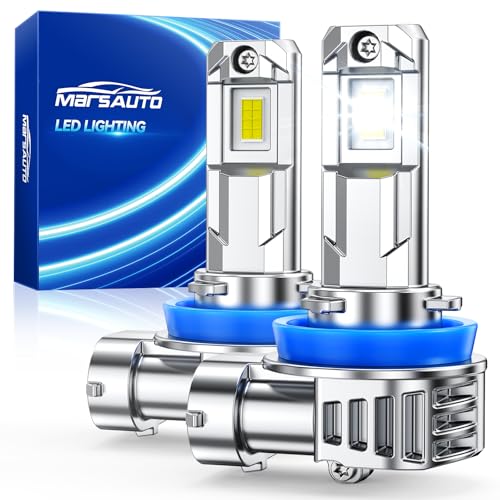
Superior Night Vision by 15 Times – Purpose-built for low-visibility scenarios, our H11 LED Bulbs project an intense, far-reaching beam that easily pierces through rain, fog, and snow, so you can navigate challenging roads with absolute assurance.

16 Premium LED Chips for Super Brightness: 80000LM per pair, 15X brighter than halogen, covers road thoroughly, ensures quick response to obstacles for safe night driving.
【Ultimate Night Vision】 Engineered with elite automotive-grade chips delivering an astounding 30,000LM per bulb, the M1L series casts a 6500K cool white beam that outperforms stock bulbs by 600%. Its precision-focused pattern ensures maximum road coverage without blinding oncoming traffic. For Top Clearance Marker Assemblies.
Gathering the Right Tools and Preparing Your Vehicle
Before you begin replacing your Elantra’s headlight bulbs, gather the necessary tools to complete the job efficiently. Your tool checklist should include a socket wrench with 10mm and 12mm sockets, a Phillips head screwdriver, and rubber gloves to prevent skin oils from contaminating the new bulbs. Confirm you’ve purchased the correct H11 replacement bulbs for your model year. Note that some Elantra trims may use HID or LED headlight technologies instead of halogen bulbs, which requires different replacement bulb types.
For proper vehicle preparation, open your driver’s door and pull the primary hood release, then disengage the secondary latch. Secure the hood fully open before starting work. Verify your work area is well-lit and the vehicle is on level ground. Disconnect the battery’s negative terminal if you’re concerned about electrical shorts. Keep a soft cloth nearby to organize removed bolts, clips, and washers by position for correct reassembly, and ensure you have proper headlight alignment tools available after installation to verify correct beam positioning.

Fit Hyundai Elantra 2011 2012 2013,High Beam H1, Low Beam H11 Lights 6000k White

Fit Hyundai Elantra without Projector 2014 2015 2016, High Beam H7, Low Beam H11 Lights 6000k White

⭐【Super Bright H11 Bulbs】Our H11 headlight bulbs deliver over 1000LM brightness and a 3800K color temperature, ensuring optimal visibility in foggy and rainy conditions. Upgrade your automotive headlight bulbs for safer nighttime driving.
Step-by-Step Bulb Removal Process
Once you’ve prepared your workspace and gathered your tools, you’ll need to access the headlight assembly to begin the bulb removal process. Release your hood using both latches, then remove the protective dust cap by twisting counterclockwise. Disconnect the electrical connector by pressing the release tab and pulling straight back—avoid jerking to prevent wiring damage. Next, twist the bulb counterclockwise to disengage it from the socket, then gently wiggle and pull it straight out. For bulb longevity tips, always wear gloves to prevent skin oils from contacting the glass. When troubleshooting bulb issues, verify you’re using the correct bulb type (typically H7 or 9005) before removal. The headlight housing contains three bulbs, including the main headlight, highbeam, and side marker. Keep all fasteners organized and avoid forcing components during disassembly.
Installing Your New Headlight Bulb
Installing your new headlight bulb requires precision and care to guarantee proper function and longevity. Begin aligning bulbs by inserting the new bulb into the socket with the electrical connector end pointing down, slightly tilted right. Match the locating tabs with the socket’s slots by feel, ensuring the bulb sits flush before twisting clockwise until locked. Twist the bulb holder a quarter turn to secure.
Next, focus on securing connectors by sliding the electrical connector onto the bulb until it clicks. Verify proper orientation—it typically fits only one way. Clip any locking tabs to prevent disconnections.
Replace the dust cover by twisting clockwise until locked, ensuring no gaps remain. Avoid touching the bulb’s glass surface with bare fingers; use gloves or a clean cloth to prevent oil contamination. Handle the bulb carefully using a towel or rag to avoid leaving oil deposits that could reduce bulb lifespan. For some model years, you may need to remove inner fender liners to access the bulbs more easily. If your headlights fail to work after installation, consult the fuse system to troubleshoot potential electrical issues.

Fit Hyundai Elantra 2017 2018,High Beam H7, Low Beam 9005 Lights 6000k White

Fit Hyundai Elantra 2019 2020 2021 2022,High Beam and Low Beam 9005 Lights 6000k White

Fit Hyundai Elantra Sedan GL GLS L Limited SE 2007 2008 2009 2010,High Beam H1, Low Beam H11B Lights 6000k White
Testing Your Work and Model-Specific Tips
After installing your new headlight bulb, you’ll need to verify proper function through systematic testing before reassembling components and closing the hood. Turn the headlights on and confirm both beams illuminate evenly. If issues persist, use a multimeter in voltage mode to check for 12V at the socket while the lights are on. Set the multimeter to continuity mode to verify filament integrity—a beep indicates proper function. For Hyundai Elantra models, make certain the bulb’s locking tabs engage correctly by twisting clockwise until secure. When selecting replacement bulbs, consider LED and HID conversions for improved visibility and enhanced aesthetics compared to factory halogen options. LED technology offers longer lifespan and reduced energy consumption compared to traditional halogen bulbs. Safety precautions include keeping the engine off during testing and wearing gloves to prevent skin oils from contaminating the bulb surface. Testing your headlights regularly helps maintain vehicle safety and ensures reliable performance on the road. These testing techniques validate proper installation and help identify any remaining electrical issues requiring attention.


