No, fog lights and headlights aren’t the same bulb. You’ll find they use different bulb types like H11 or H16 for fog lights versus H1, H4, H7, or 9005/9006 for headlights. Each bulb’s filament positioning matches its housing’s reflector geometry to create distinct beam patterns—fog lights produce wide, low-spread beams with sharp cutoffs, while headlights generate focused long-range illumination. Their electrical specifications, connectors, and wattage requirements differ too. Swapping them compromises safety and creates hazardous light scatter that’ll affect your visibility and potentially violate regulations, though understanding these technical distinctions helps you maintain proper vehicle lighting performance.
Understanding the Core Differences Between Fog Lights and Headlights
Fog lights and headlights occupy fundamentally different positions on your vehicle, and this mounting distinction directly impacts their performance capabilities. Your fog lights sit low on the bumper, projecting a wide, flat beam with sharp cutoff between 50-100 feet. This fog light design minimizes reflection in moisture-laden air by directing illumination beneath weather particles. Conversely, your headlights mount higher at hood level, delivering focused beams that reach 200-350 feet for low beams and beyond for high beams. The headlight function centers on long-range visibility during normal driving conditions, while fog lights serve as auxiliary lighting specifically for adverse weather. You’ll find that while both systems occasionally use identical bulb models, their housings, reflectors, and beam patterns remain distinctly engineered for separate operational requirements. Modern projector housings create more focused beam patterns compared to traditional reflector designs, offering superior light control and reduced glare in both headlight and fog light applications. LED headlights provide longer-lasting performance with significantly extended operational hours compared to traditional halogen options. Low beams remain the safer option in foggy conditions, as they cut through moisture more effectively than high beams without creating dangerous glare.

300% Much Brighter: Sealight 9006 led fog lights is brighter than the original lights, 5000 lumens per group. These lights provide reliable and efficient illumination for optimal nighttime driving.

SEALIGHT Advantages: Firstly, the lens design projects the light farther away while forming a focused beam, which will not dazzle oncoming vehicles. Secondly, each bulb is equipped with 27 LED chips (most bulbs have only 6 chips) to achieve 360-degree illumination
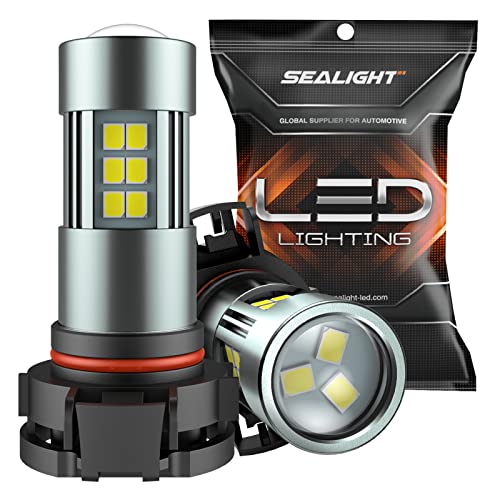
SEALIGHT Advantages: Firstly, the lens design projects the light farther away while forming a focused beam, which will not dazzle oncoming vehicles. Secondly, each bulb is equipped with 27 LED chips (most bulbs have only 6 chips) to achieve 360-degree illumination
Beam Patterns and How They Affect Visibility
When you activate your vehicle’s lighting systems, the beam pattern determines what portion of the roadway receives illumination and how effectively you’ll navigate adverse conditions. Fog lights deliver a wide horizontal spread (60° to 100°) with minimal vertical projection, featuring a sharp upper cutoff that prevents light from reflecting off airborne moisture particles. This design represents key fog light advantages—illuminating road edges and the immediate path while minimizing glare in heavy rain, snow, or mist.
Conversely, headlight limitations become apparent in fog conditions. Their broader vertical and forward beam disperses light upward, causing reflection from suspended water droplets that reduces visibility. Headlights prioritize distance coverage (25-150 feet), while fog lights complement them by filling the low, near-field zone. The low positioning of fog lights on the vehicle ensures the beam stays beneath fog layers, maximizing ground illumination without scattering light into moisture-laden air. Understanding these distinct patterns helps you optimize visibility across varying weather conditions.
Bulb Types: What Fits Where and Why It Matters
Your vehicle’s lighting system relies on specific bulb types engineered for distinct optical housings and beam requirements. Fog lights commonly use H11, H16, or 9140 bulbs, while headlights employ H1, H4, H7, 9005, or 9006 variants. These designations aren’t interchangeable—each bulb’s filament or LED positioning matches its housing’s reflector geometry to produce correct beam patterns.
Bulb compatibility extends beyond socket fit. Fog light bulbs generate wide, flat beams with sharp upper cutoffs, whereas headlight bulbs focus light for long-range illumination. Wattage specifications differ too, with fog lights operating at lower power to minimize glare. Installing incorrect bulbs compromises lighting performance and creates hazardous beam scatter. Different headlight bulb types, such as halogen, LED, and xenon options, each produce distinct light characteristics that affect visibility and safety. Your vehicle’s owner’s manual provides the most reliable reference for determining compatible bulb sizes for each lighting application.
Different sockets prevent accidental swapping, but selecting LED upgrades requires housing-specific designs. Your manufacturer’s specifications determine proper bulb selection—ignoring this causes misaligned beams and reduced visibility. Fog lights are mounted low on the vehicle to optimize their unique beam pattern for adverse weather conditions.

Exceptional 600% Brightness: h16 led fog light bulb illuminate the road with 12,000 lumens of bright white light (6500K), providing 600% more brightness than standard bulbs. Ideal for challenging weather conditions like fog, rain, and snow
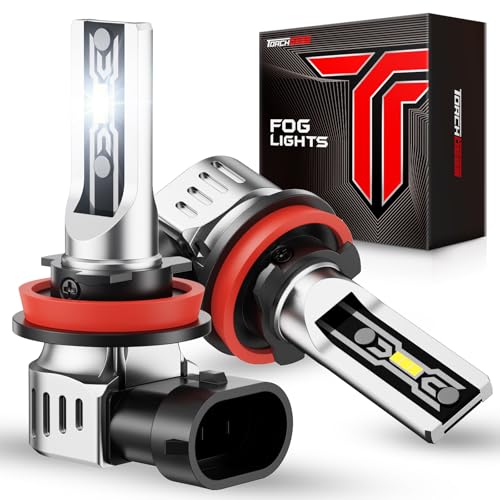
12,000 Lumens Ultra-Bright for All Weather Driving: Cut through dense fog, heavy rain, and snowy roads with 12,000LM of brilliant output—600% brighter than original fog lights. The TF2 Series H11 LED bulb deliver crystal-clear visibility for cars, trucks, and SUVs, keeping you safe in even the toughest driving conditions.
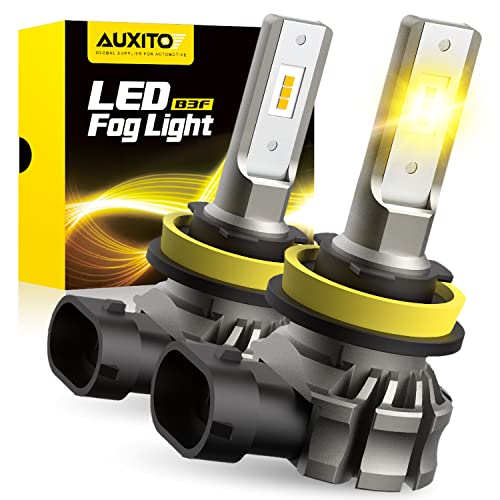
300% Brighter Than Halogen: Each AUXITO H11 LED fog light bulb has equipped with high-quality CSP LED Chips, giving 6000LM/Set light output. 300% brighter than stock yellow halogen. 3000K golden yellow has better penetration and softer light. Works steadily in rain, snow or fog, giving you a clearer, wider view in bad weather
When and How to Use Each Lighting System Properly
Understanding proper activation protocols for each lighting system prevents both safety hazards and legal violations. You’ll use low beams for standard city and suburban night driving, providing 30-40 meters of illumination without blinding oncoming traffic. High beams extend visibility to 100 meters on dark rural roads but require immediate dimming when approaching vehicles. Headlight safety demands continuous use during nighttime and reduced visibility conditions. Modern vehicles with automatic headlight sensors enhance safety by detecting ambient light conditions and activating headlights without driver intervention.
Fog light usage applies exclusively to severe weather—dense fog, heavy rain, or snowstorms where visibility drops below 100 meters. You’ll activate them only when headlight reflection off moisture particles creates glare. Their low, wide beam pattern illuminates road surfaces without scatter. The focused beam aimed lower positioning distinguishes fog lights from the elevated mounting of standard headlights. Never use fog lights during clear conditions; their inadequate forward projection compromises safety and often violates regional regulations requiring headlights as primary illumination systems. If you need to replace any bulbs in your vehicle, consult DRL bulb replacement guides specific to your model year for proper installation instructions.

(Set of 2) 360° Full Light Output with high illumination light output, LED Chips: Equipped with high quality 33pcs high power 5730 SMD per PSX24W/2504 LED fog lights bulb. Each LED bulb is about 1400 lumens, total 2800Lms for both 2504/PSX24W LED fog light bulbs.

(Set of 2) 360° Full Light Output with high illumination light output, LED Chips: Equipped with high quality 33pcs high power 5730 SMD per H10 9145 LED fog lights bulb. Each LED bulb is about 1400 lumens, total 2800Lms for both H10/9145 LED fog light bulbs.
Can You Swap Bulbs Between Fog Lights and Headlights?
While some vehicles employ identical bulb models like H11 for both fog lights and headlights, direct interchangeability remains largely impractical due to fundamental differences in electrical specifications, housing geometry, and beam pattern requirements. Bulb compatibility concerns extend beyond physical fitment—fog lights utilize wide, low-mounted beams with minimal backscatter, while headlights project focused, long-range illumination. Swapping creates significant safety implications: headlight bulbs in fog housings produce excessive glare, whereas fog bulbs in headlight assemblies deliver inadequate distance visibility. You’ll risk electrical stress from mismatched wattage ratings, voided warranties, and regulatory violations. Fog lights and headlight bulbs are designed for specific vehicle requirements and must match the manufacturer’s specifications for each lighting system. Manufacturer guidelines explicitly recommend exact replacement specifications. Consult your vehicle manual and a licensed technician before attempting any bulb substitution to verify proper beam geometry, electrical compatibility, and compliance with lighting standards.