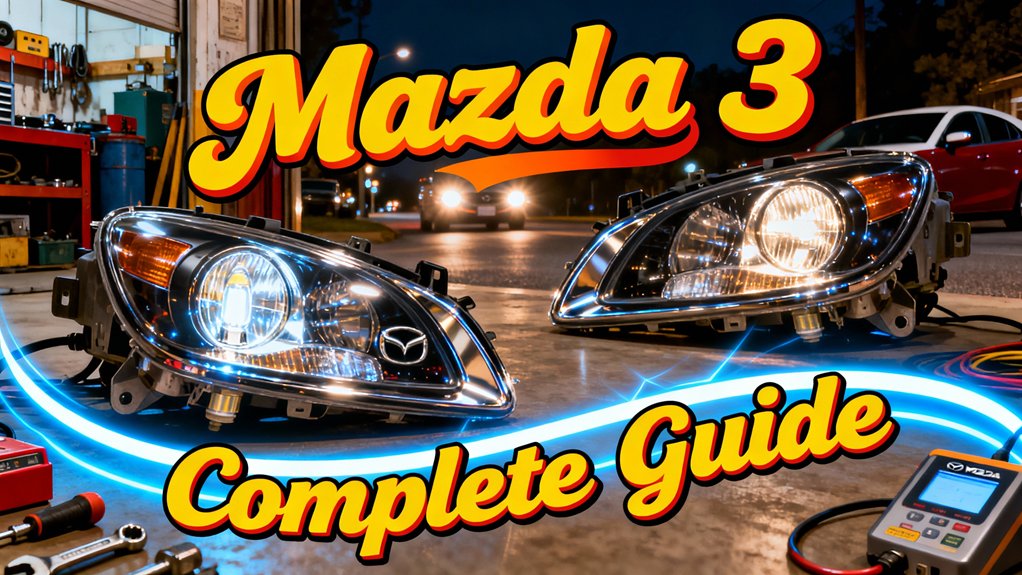
Your Mazda 3’s headlight bulb type depends on its generation and trim level. Models from 2004-2013 typically use H11 low beams and 9005 high beams in halogen configurations, while D2S bulbs equip factory HID systems. The 2014-2018 generation maintained these specifications for halogen variants but introduced non-replaceable integrated LED assemblies on premium trims. From 2019 onward, adaptive LED systems became standard across most variants. Understanding your specific year and trim guarantees you’ll select the correct OEM replacement or compatible aftermarket upgrade for peak performance and compliance.
Understanding Mazda 3 Headlight Systems Across All Generations
When diagnosing headlight issues on your Mazda 3, you’ll need to identify which generation you own, as bulb types and electrical architectures differ considerably across the model’s four-generation lifespan. Second-generation models (2010-2013) feature conventional halogen setups with clear-lens tail-lights across all trims. Third-generation variants (2014-2018) introduced integrated assemblies where halogen bulbs last 500-1,000 hours, while LED retrofits require CANbus resistors to prevent error codes. Fourth-generation Mazda 3 technology (2019-present) employs adaptive LED systems with 20 units per headlight, delivering 2,500-4,000 lumens and exceeding 15,000-hour lifespans. The adaptive headlights adjust illumination intensity based on vehicle speed and steering input to enhance safety during night driving. When upgrading to LED or HID options on earlier generations, consider color temperature and brightness levels to ensure optimal visibility and legal street compliance. Top-rated aftermarket bulb brands offer improved brightness and longevity compared to factory halogen options while maintaining DOT compliance standards. Headlight maintenance complexity escalates with each generation—hatchback and sedan housings aren’t interchangeable, and post-2019 assemblies differ fundamentally from pre-facelift 2014-2018 designs, demanding trim-specific and region-specific component matching.
First Generation Mazda 3 (2004-2009) Bulb Specifications
Four primary bulb types serve the first-generation Mazda 3’s headlight system, each designated for specific beam functions that you’ll need to match exactly during replacement. The 9005 (HB3) handles high-beam duties at 65W, while H7 bulbs provide low-beam output at 55W on halogen-equipped models. Factory HID systems use D2S bulbs for low-beam only, maintaining superior headlight brightness through high-voltage ballast ignition. You’ll find H11 or 9006 bulbs in fog lamps depending on your model year—2004–2006 variants typically specify H11, while 2007–2009 models often use 9006.
Verify your exact configuration before ordering, as 2004–2005 models show market-specific variations. Consider color temperature preferences when selecting replacement bulbs, as this factor significantly impacts nighttime visibility and driving safety. The replacement process typically requires only basic tools and hands-on work, taking approximately 15–20 minutes to complete. Exceeding OEM wattage ratings compromises bulb lifespan and risks thermal damage to housings, while LED conversions require CAN-bus adapters to prevent electrical warnings. Always reference original factory assemblies when selecting replacement bulbs to ensure compatibility and avoid issues common with aftermarket lighting components.
Second Generation Mazda 3 (2010-2018) Bulb Specifications
The second-generation Mazda 3 standardizes its headlight architecture around H11 low beams and 9005 (HB3) high beams across the 2010-2018 model range, eliminating much of the first generation’s year-to-year variation. You’ll find H8 and H9 bulbs offer direct compatibility with H11 sockets, maintaining proper wiring compatibility without modifications. HID-equipped models utilize D2S capsules for low beam applications. Front fog lights use H11 capsules (2014-2018) or H11/9006 variants (2010-2013).
LED upgrades deliver enhanced bulb longevity with options including SL2 (1400 lumens, 14W) and SL2 Pro (2400 lumens, 21W) for low beams, while high beam kits range from 90W/pair to N52 series 50W configurations. All aftermarket LED systems operate within 9-32V DC parameters, ensuring wiring compatibility across trim levels. Installation typically requires 20-30 minutes with basic tools and features plug-and-play connectivity through OEM-size connectors. When selecting LED bulbs, prioritize DOT regulations to ensure your nighttime visibility upgrades remain street-legal. Verify your exact specification by inspecting existing bulb base markings.
Third Generation Mazda 3 (2019+) Bulb Specifications
Mazda’s third-generation platform (2019+) bifurcates headlight architecture into halogen-serviceable and sealed-LED configurations, requiring owners to identify their factory specification before attempting bulb replacement. Halogen-equipped models use H11 low-beam and 9005 high-beam bulbs operating at 55W nominal draw; LED assemblies employ non-replaceable integrated modules. You’ll find fog lights accommodate H11 or 9006 sockets depending on trim. Aftermarket LED retrofits demand CANbus decoders to prevent dashboard errors and IP68-rated housings for bulb longevity in moisture-prone environments. Projector housings designed for halogen filaments produce compromised beam patterns when fitted with LED/HID bulbs—verify headlight alignment post-installation to prevent glare and maintain legal cutoff standards. When replacing halogen bulbs, use gloves to avoid transferring skin oils that can damage the filament and shorten bulb lifespan. Popular aftermarket brands like Sylvania, Philips, and HIKARI offer direct fit replacements that balance cost, performance, and durability. Premium LED conversion kits utilize CSP 3570 automotive-grade chips that deliver enhanced luminous output compared to standard halogen bulbs. Factory LED configurations integrate DRL and position lamps; conversion requires complete assembly replacement rather than socket-level bulb swaps.
Halogen Vs LED Vs HID Headlight Options
Choosing between halogen, LED, and HID headlights for your Mazda 3 demands understanding fundamental differences in how each technology generates light and interacts with factory optical assemblies. Halogen efficiency remains lowest at 10–20 lm/W versus LED’s 50–150 lm/W, directly affecting light output and energy consumption. LED advantages include extended lifespan (10,000–30,000+ hours) and superior thermal management when properly installed. HID longevity typically reaches 2,000–5,000 hours with progressive lumen depreciation. Beam precision depends critically on emitter placement relative to reflector focal points—aftermarket retrofits often fail here. Retrofitting challenges include electrical compatibility, housing design constraints, and regulatory compliance issues. OEM HID/LED systems deliver consistent beam patterns; non-certified conversions risk glare and inspection failures. LED headlights produce a whiter, crisper light that significantly improves visibility and road marker recognition compared to halogen’s yellower output. LED technology provides enhanced road safety during night driving and adverse weather conditions through superior brightness and beam control. Most Mazda 3 models from 2004 through 2019 utilize H11/H8/H9 and 9005/HB3 bulb types for their LED headlight configurations. Your upgrade choice must match housing specifications and local lighting regulations.

⭐【Super Bright H11 Bulbs】Our H11 headlight bulbs deliver over 1000LM brightness and a 3800K color temperature, ensuring optimal visibility in foggy and rainy conditions. Upgrade your automotive headlight bulbs for safer nighttime driving.

【High-Efficiency 6500K Light Output】 Delivers 60,000LM cool white light (30,000LM for H11 + 30,000LM for 9005) for enhanced road-edge awareness and nearby visibility in foggy, rainy, and low-visibility conditions. Optimized chip placement ensures consistent light distribution, helping drivers maintain clearer visibility in adverse weather.

800% Brighter Illumination: Utilizing advanced M2S technology, Marsauto H11/H9/H8 and 9005/HB3 bulbs produce eight times more light than stock halogen bulbs, delivering a wider field of vision and quicker reaction time for safer, clearer driving.
Upgrading to LED Headlight Bulbs: What You Need to Know
Before upgrading to LED headlight bulbs in your Mazda 3, you’ll need to verify three critical compatibility factors that determine installation success. First, consult your owner’s manual to identify the exact bulb type—H11 for low beams or 9005 for high beams. Second, confirm the LED kit matches your vehicle’s electrical connector type and system voltage. Third, verify physical fitment within the OEM housing assembly.
Installation tips include securing the driver box away from heat sources using zip ties, applying dielectric grease to all connections, and routing cables away from moving engine components. LED benefits deliver 500% brighter illumination than halogens with lifespans exceeding 5000 hours. LED bulbs typically cost between $50-$150 and offer plug-and-play installation as direct replacements for halogen sockets. Some Mazda 3 models require anti-flicker modules for proper function. Always wear gloves when handling to prevent surface contamination, and ensure your LED upgrades meet DOT and ECE regulations to maintain road safety compliance and visibility standards.

Easy Installation: 1:1 design, no external driver or connector required, plug and play

【Compatible with Mazda 3 (2010-2018), Mazda 5 (2012-2017) , Mazda 6 (2014-2017) 】Norveyu Lights bulbs package includes 1x Pair Hi & Lo Beam Bulbs, 1x Pair fog light bulb. Each bulb delivers exceptional quality and superior brightness.
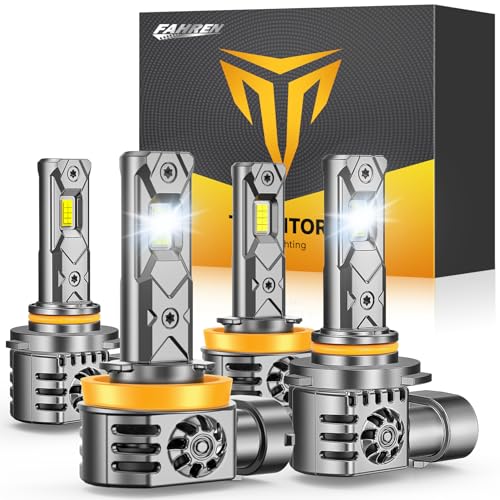
【1200% Brighter Than Stock Bulb– Drive with Superior Clarity】Termitor H11 9005 bulbs Combo are equipped with 16 high-output CSP chips per bulb, delivering up to 1200% more brightness than stock bulbs. The 6500K cool white light provides visibility and reduces eye strain, helping you see farther and at night for , more confident driving in any low-light condition.
Complete Bulb Chart for All Mazda 3 Exterior Lights
Beyond headlight upgrades, you’ll need accurate bulb specifications for every exterior lamp on your Mazda 3 to maintain proper visibility and legal compliance. Your fog lights typically use H11 (2010–2018) or 9006 (earlier trims), while turn signals employ 7440/7443 dual-filament designs. Brake and tail combinations share W21/5W (7443) sockets on halogen-equipped models. Reverse lights require 7440/7443 or T15/921 variants depending on your sedan or hatchback configuration. Position and side markers use W5W/T10 wedge bulbs, with identical T10/194/168 types for license plate illumination. High-mount stop lamps specify 7443 or factory LED assemblies. When selecting LED replacements, color temperature options range from 3000K yellow for fog applications to 5000K-6000K pure white for optimal headlight performance. However, when upgrading halogen fixtures to LED, ensure the housing design accommodates the different light emission patterns of LED diodes to avoid creating blind spots. Bulb longevity factors include operating voltage, thermal cycling, and moisture ingress; aftermarket options must match OEM wattage ratings to prevent harness degradation and guarantee BCM compatibility across all exterior lighting circuits.

Superior Visibility in Bad Weather: Equipped with 54 cutting-edge LED chips and enhanced top convex lens, the F1 Series H11 LED Fog Light Bulb provides 360° illumination, projecting 400% upgraded light over greater distances with precision. H11 fog light bulb led focused lights ensures safe and comfortable visibility during driving in rainy and foggy conditions

Upgraded 96 LED Chips/Set: Marsauto H11/H8 LED Fog Light Bulb deliver 10,000LM/set luminous output with 6,000K white light, improving visibility by up to 600%—the ideal choice for fog, rain, snow, and other harsh weather conditions, (Clear Lens Side Marker)

Exceptional 600% Brightness: h16 led fog light bulb illuminate the road with 12,000 lumens of bright white light (6500K), providing 600% more brightness than standard bulbs. Ideal for challenging weather conditions like fog, rain, and snow
Interior and License Plate Light Bulb Replacements
Your Mazda 3’s interior and license plate lighting circuits employ standardized miniature wedge-base bulbs that maintain distinct specifications across model years. License plate replacements require W5W bulbs (5W rating), with T10/194/168 equivalents compatible in 2014-2018 sedans. You’ll access holders by twisting counterclockwise, extracting the bulb, then reversing the procedure. Interior bulb upgrades encompass dome, map, and trunk lights—all charted for 2004-2009 and 2017-2018 generations. Map lights above your rearview mirror accept 194-type bulbs, while dome and luggage compartment lights share identical specifications. Understanding bulb base types ensures proper fitment when selecting replacements for your vehicle. Access requires prying overhead console lenses or removing trunk trim’s 10 push pins. LED conversion kits offering 6000K white illumination fit T10/194/168 sockets directly, enhancing visibility without electrical modifications. Upgrading to superior LED replacement options provides improved brightness and longevity compared to factory halogen bulbs. Sylvania cross-reference charts verify OEM equivalents for maintaining factory specifications. Boot light configurations in saloon variants and luggage compartment lights in hatchback models follow the same replacement procedures as standard trunk lighting systems.

Note: Our 25 pieces set includes 24 LED bulbs and a pry bar, 8 for T10/194 bulbs, 8 for DE3175 bulbs, 8 for 211-2/212-2/578 bulbs, various enough to satisfy your different demands in daily life. Before purchasing, please confirm whether the exact bulb model and specifications required are consistent with the product details page based on the vehicle's user manual or original bulb information.

Product Includes: 42PCS LED interior car lights in 6 different sizes, including T10, 31mm, 36mm, 41mm, and other sizes, to meet various needs for car interior lighting.

This Mazda 3 LED Interior Light Kit is compatible with 2014 2015 2016 2017 2018 Mazda 3 Sedan.
Choosing the Right Color Temperature and Brightness
When selecting aftermarket headlight bulbs for your Mazda 3, color temperature (CCT) directly affects visibility, glare control, and legal compliance. For peak performance, choose 4000–5000K, which balances contrast in adverse weather and color rendering for road signs while minimizing scattering. Warmer 2700–3500K reduces glare in fog and rain but sacrifices sign visibility. Cool 6000–6500K appears brighter psychophysically yet increases scatter and oncoming-driver glare without improving measured illumination.
Brightness levels matter less than beam pattern integrity. Claims of 10,000 lumens per bulb often reflect aggregate or idealized measurements; SAE/ISO candela distribution determines roadway performance. For H11-equipped Mazda 3 models, verify LED emitter positioning matches halogen filament geometry to preserve cutoff sharpness. Uncontrolled output blinds traffic and violates regulations regardless of lumen ratings. All LED and HID bulbs are street legal for fog lights in the USA but not approved for headlight applications.

【Visual Enhancement】: The OKOENIEO H11 halogen bulbs are 200% brighter than other halogen bulbs, providing drivers with a wider and farther field of vision. Offering a greater visibility, they allow drivers to spot wildlife, falling rocks, or obstacles ahead of time, ensuring safer driving in all conditions.
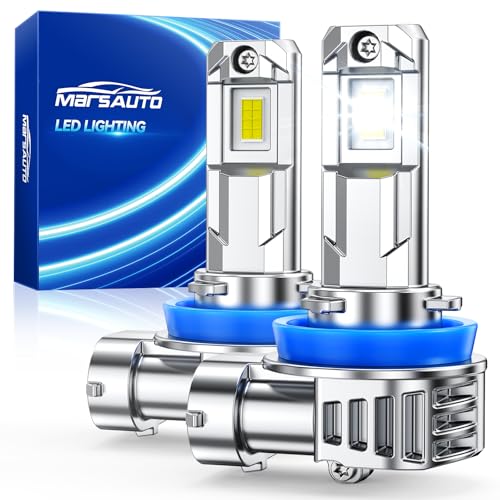
【Ultimate Night Vision】 Engineered with elite automotive-grade chips delivering an astounding 30,000LM per bulb, the M1L series casts a 6500K cool white beam that outperforms stock bulbs by 600%. Its precision-focused pattern ensures maximum road coverage without blinding oncoming traffic. For Top Clearance Marker Assemblies.

70,000LM Super Brightness: SEALIGHT H11 bulbs ensure up to 1600FT visibility through advanced CSP chip technology, delivering 70,000LM ultra-focused illumination paired with a 6500K crisp white that enhances road clarity and safety in dim nighttime driving scenarios