You’ll need 9005 bulbs for high beams and 9006 for low beams—they’re not interchangeable due to different locking bases (P20d vs. P22d). The 9005 delivers 1700 lumens at 65W, projecting 300-400 feet for highway driving, while the 9006 produces 1000 lumens at 55W, illuminating 150-200 feet for urban conditions. Though 9005 burns brighter, it lasts only 320 hours compared to 9006’s 1000-hour lifespan. Your driving environment and fixture requirements determine the right choice, with LED upgrades offering enhanced performance for both configurations.
Understanding the Key Technical Specifications
The 9005 and 9006 bulbs operate at distinctly different power levels, with the 9005 drawing 65W compared to the 9006’s 55W—a specification that directly impacts their respective performance capabilities. These wattage variations translate to significant brightness differences: you’ll get 1700 lumens from the 9005 versus 1000 lumens from the 9006. The beam patterns reflect their intended applications—9005 bulbs deliver long-range illumination for high beams, while 9006 units provide controlled close-range light for low beams and fog lights. You’ll notice the 9005’s higher output comes at a cost: approximately 320 hours of lifespan compared to the 9006’s 1000 hours. The base designs also differ mechanically, with the 9005 featuring a P20d base that locks counter-clockwise and the 9006 using a P22d base that locks clockwise. Both utilize single-filament designs and are available in halogen or LED configurations, with LED upgrades offering extended durability beyond traditional halogen technology.

Illuminate Your Path With Enhanced Brightness: With 6500K cool white light, the SEALIGHT bulbs offer a visibility range up to 1600FT, helping you drive more safely and comfortably at night.

[140,000LM Ultra-Bright Output & Daylight Clarity] Termitor 9005 9006 powersports light bulbs deliver 140,000 lumens of crisp 6500K Daylight White light, dramatically improving contrast on trails and roads. Whether in dense fog, heavy rain, or darkness, you get a wide, clear field of view for safer off-road driving. Pack of 4 covers both sets in one complete upgrade.
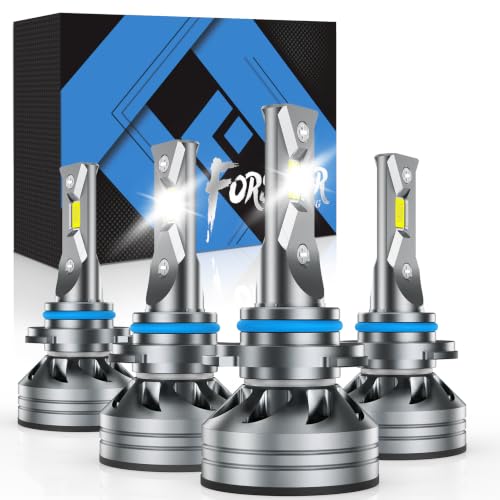
【1500% Brighter Light – Advanced CSP Chips】 FORENNER 9005 9006 fog light bulbs feature upgraded 16 CSP chips that deliver 15 times more brightness than stock lamps. The 9005 9006 bulbs emit 6500K cool white daylight illumination to restore true object colors, offering wide long-range road vision to clearly spot road signs, obstacles and roadside hazards at night. They greatly improve nighttime road visibility and driving safety.
Base Design and Physical Compatibility
While both bulbs may look similar at first glance, their base designs incorporate critical differences that prevent interchangeability. The 9005 features a P20d base with its smallest locking tab rotating counterclockwise, while the 9006 uses a P22d 90° base with clockwise tab orientation. These opposing design differences guarantee you’ll only install each bulb in its designated socket—9005 for high beams, 9006 for low beams and fog lights.
The base construction isn’t just about preventing mistakes; it’s engineered for peak performance in specific applications. You can’t swap these bulbs without modifications, and forcing incorrect installation will cause abnormal lighting and compromise safety. The P20d maximizes high beam socket connection, while the P22d 90° configuration suits low beam requirements perfectly, maintaining secure electrical contact throughout operation. Both bulbs feature encapsulated power pins that ensure stable socket connections during vehicle vibration and temperature changes. Understanding beam pattern differences between high and low beam applications helps you appreciate why these base designs are purpose-built for their respective functions. It’s essential to consult bulb size charts or manufacturer-supported lookup tools when replacing bulbs to ensure you’re selecting the correct base type for your vehicle’s specific headlight housing.

【Super Bright】Our 9005 headlight bulbs deliver a brightness of more than 1500LM, up to 5000K color temperature, providing the best visibility in foggy and rainy weather, Our headlight bulb filled with more than 45% Xenon gas to be more brighter and whiter, Blue ion membrane filters yellow light and gets super white light.

[Areas of Application]: Front headlight bulbs, High Beam, Low Beam, Fog Lights and Some Other Exterior Lights of 12V Passenger Cars.

【Super Bright & High Performance】These 9005/hb3 bulbs use top-tier automotive-grade chips. With a cool white color temperature of 60,000LM, they produce a super bright beam that outshines your original bulbs—giving you better visibility and a safer drive
Brightness and Power Consumption Comparison
Power consumption separates these bulbs considerably, with 9005 bulbs drawing 65 watts compared to the 9006’s 55-watt rating—a 10-watt difference that directly impacts both brightness output and electrical system load. This wattage variance translates to measurable lumen output differences: 9005 halogens produce 1700 lumens (ranging up to 2000), while 9006 models emit 1000 lumens (up to 1500 in variants). You’ll notice 9005’s superior distance visibility, whereas 9006 excels at near-field spread.
LED upgrades change this dynamic entirely. Both configurations achieve up to 9000 lumens with identical energy efficiency improvements over halogens. Your choice hinges on beam function—9005 for intense high-beam projection, 9006 for balanced low-beam distribution. LED bulbs demonstrate significantly improved color temperature consistency across various weather conditions compared to traditional halogen options. Proper beam pattern alignment after installation ensures optimal visibility without blinding oncoming drivers. The higher consumption of 9005 generates more heat, potentially affecting bulb lifespan and battery load during extended operation. The 9006’s longer approximately 1000-hour lifespan significantly outlasts the 9005’s 320-hour rating, making it more cost-effective for frequent drivers.

6500K & 190,000LM – Experience a daylight-like white beam that reaches deeper and wider into darkness. Highway exits, roadside animals, and construction zones become visible sooner, giving you more time to react

🔥【1200 FEET OF SUPER VISION】Each bulb is upgraded with 16 PCs Blade-S chips, total 40,000 lumen high output arms your car with a farther & wider lighting field. The 9005 9006 combo bulbs fuse super brightness with good affordability, providing 600% more light and 250% more night vision than original halogen bulbs for confident driving anytime. Say goodbye to those yellow dim stock halogen bulbs and see clearly with super bright light.

【Super Bright-Cool White Light, All-Weather Vision Upgrade】The RCJ 9005/9006 Fog Light Kit features high-performance LED chips, delivering 60W per bulb and 6000K cool white light for significantly enhanced brightness. Provides a wide, clear beam pattern with no dark spots or glare—ideal for rain, fog, snow, or off-road conditions. Improves nighttime and bad-weather driving safety without blinding oncoming traffic.
Primary Uses: High Beam Vs Low Beam Applications
Understanding how each bulb functions in your vehicle’s lighting system reveals why manufacturers engineered these specifications differently. 9005 bulbs serve exclusively as high-beam headlights, leveraging their 65-watt power draw to project concentrated illumination 300-400 feet ahead—essential for highway speeds and rural roads where distance visibility prevents collisions with obstacles, wildlife, or road hazards.
High beam advantages include maximum brightness for off-road driving and rural conditions requiring extended range. Conversely, 9006 bulbs function as low-beam headlights, utilizing 55 watts to deliver controlled, downward-angled light that illuminates 150-200 feet without blinding oncoming drivers. Low beam benefits center on everyday safety—providing adequate close-up visibility for city streets and highways while maintaining traffic courtesy. Some vehicles deploy 9006 bulbs in fog lights, where their wider spread and reduced intensity improve adverse-weather visibility without reflective glare. The P20d connector type on 9005 bulbs physically differs from the P22d socket on 9006 bulbs, preventing accidental installation in incompatible housings.

【Visual Enhancement】: The OKOENIEO 9005 HB3 halogen bulbs are 200% brighter than other halogen bulbs, providing drivers with a wider and farther field of vision. Offering a greater visibility, they allow drivers to spot deer, wildlife, falling rocks, or obstacles ahead of time, ensuring safer nighttime driving.

Extended Lifespan: These 9005 fanless bulbs offer a long lifespan of up to 50,000 hours. Made from aviation-grade aluminum, their compact design ensures excellent heat dissipation, reducing replacements and enhancing performance

110,000LM High Output 6500K White: Each bulb delivers 96,000LM of 6500K Cool White light. The focused beam pattern enhances road visibility without creating excessive glare for oncoming traffic, ensuring safer night driving conditions
Expected Lifespan and Long-Term Value
Selecting between 9005 and 9006 bulbs demands more than understanding their immediate performance—you’re making a cost decision that compounds over years of ownership. Halogen 9005 high-beams typically deliver 320–450 hours, while 9006 low-beams reach 850–1,000 hours under manufacturer specs. However, real world longevity depends heavily on usage patterns: your low-beams accumulate hours nightly, while high-beams see intermittent duty. This differential cycling means you’ll replace low-beams more frequently despite their longer rated life. The cost implications shift dramatically with LED upgrades—20,000+ hour lifespans slash replacement frequency and labor costs. LED bulbs can extend operational life to 30,000 to 50,000 hours, delivering exceptional long-term value compared to halogen alternatives. Calculate cost-per-hour, not just purchase price. Heat buildup, vibration, and on/off cycling all degrade filament life regardless of socket type, making quality selection and proper installation critical for maximizing your investment. Leading manufacturers like Philips, Sylvania, and HIKARI offer proven options across bulb technologies that can significantly impact both initial investment and long-term durability. Beyond bulb selection, protecting your headlight lenses through UV-protective sealant application extends the clarity and effectiveness of your lighting system over time.
Performance in Different Driving Conditions
When asphalt conditions shift, your headlight bulb choice determines whether you navigate confidently or squint through uncertainty. For highway visibility, 9005’s 1,700 lumens and 65W output deliver stadium-like intensity, detecting obstacles far ahead at high speeds. In contrast, 9006’s controlled 1,000 lumens excel at urban safety, illuminating curbs and intersections without blinding pedestrians or oncoming drivers.
Foggy conditions demand 9006’s wider, less intense beam—lower lumens reduce backscatter, while 9005’s brightness creates glare off moisture particles. Rain requires 9006’s focused pattern to minimize water droplet reflection and maintain road edge detection. Rural nighttime driving reverses priorities: 9005’s long-throw beam blasts through darkness on unlit roads, whereas 9006’s foreground focus fails to cover extended horizons effectively. Both bulb types support LED or HID upgrades that enhance brightness and extend operational lifespan beyond standard halogen configurations. Match bulb characteristics to environmental demands for ideal performance.
Upgrade Options and Cross-Compatibility Considerations
Your headlight performance doesn’t stop at choosing between 9005 and 9006—aftermarket upgrades amplify output and lifespan beyond factory halogen limits. LED conversion kits like Lasfit LSplus deliver 13,000 lumens per set at 6000K, offering 700% brighter output with dual copper heat pipes and ball-bearing fan cooling. Prioritize anti-glare optics, sharp cutoffs, and CANbus readiness to prevent flicker. Never interchange 9005 high beam with 9006 low beam roles; different locking tabs and bases prevent cross-compatibility. For halogen alternatives, Philips 9011 fits 9005 sockets and delivers substantial brightness gains, while Sylvania XtraVision doubles stock output. Combo kits like Nilight E20 (100W, 20,000LM) pair both bulb types at competitive pricing. Premium combo packages featuring 9005 and 9006 LED bulbs emit 12,500 lumens total with intelligent cooling systems that extend operational life beyond 30,000 hours. LED technology offers improved visibility and energy efficiency compared to traditional halogen bulbs. Proper headlight alignment techniques ensure beam integrity and prevent glare from affecting oncoming drivers. Always re-aim headlights post-installation to preserve beam integrity and avoid blinding oncoming drivers.
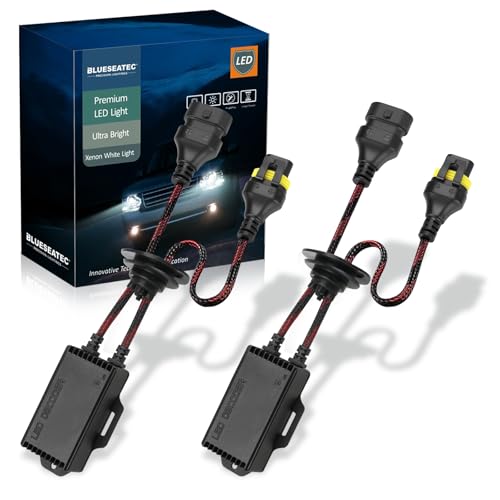
🚗【Fitment List】: The canbus decoders are compatible with 9005 9006 H10 HB4 9012 plug, used for LED lights and fog lights. Not suitable for HID lights. Wide voltage DC 9V-16V, wide operating temperature range -40℃~+85℃, power 5W/13.5V, capacitance 10000UF. (Please make sure our Canbus socket type is suitable for your car before purchasing)

[Compatible with]Headlight Bulb Conversion Plug and Play Wire Adapter Sockets Compatible with JDM/EDM headlight conversions, Compatible with 9005 and 9006 headlight bulbs

【500%+ Brighter & Advanced Fanless Cooling】 Upgrade your 9005 9006 LED bulbs to Marsauto M1C combo. 60,000LM 6500K cool white light (30,000LM high beam + 30,000LM low beam) – 500%+ brighter than halogen. Fanless passive cooling system provides 0 dB quiet operation with no moving parts to fail. Perfect for long night highway driving.