Sealight LED headlights offer decent value for budget-conscious buyers, but you’ll encounter exaggerated performance claims—their advertised lumen outputs typically exceed real-world measurements by 30-50%. You’ll get functional CSP chip technology, proper beam cutoff geometry, and reliable aviation-grade aluminum construction with IP67 waterproofing. The 90-degree base design mimics OEM halogen positioning reasonably well, though CAN-Bus vehicles may require anti-flicker adapters. Their thermal management systems work adequately, and warranty coverage spans 90 days to three years depending on the product line. Understanding the specific technical nuances reveals whether they’ll meet your particular needs.
Product Lineup and Technical Specifications
Sealight’s LED headlight portfolio spans seven distinct product lines, each engineered with specific technical parameters for different vehicle applications and performance requirements. The product variety includes the S1 (fanless, 6000K), S2 (fan-cooled, 6500K), S1-Pro (IP68-rated), G2 (headlight/fog combo), X1, S3, and S7S series. You’ll find bulb types covering 9005/HB3, H11/H9/H8, 9006, H13, 9007, H4, H7, and specialized configurations. Power outputs range from 50W to 260W per pair, while luminous flux varies between 6,000LM and 40,000LM depending on the series. All models feature CSP chip technology, CANBus compatibility, and documented lifespans exceeding 60,000 hours. The S2 series exemplifies this engineering approach with its 600% brightness increase over standard halogen bulbs while maintaining compatibility with 99% of vehicles in the US market. Cooling systems differentiate between passive aluminum heat dissipation and active 10,000 RPM temperature-controlled fans, with premium lines offering IP68 waterproof protection.

60,000 Hours Lifespan: Thanks to the fanless, aerospace-grade aluminum body with a hollow-carved structure, heat is dissipated naturally and efficiently without any moving parts. This advanced passive cooling system eliminates the risk of fan failure, ensuring long-term reliability and consistent performance. Enjoy a durable, maintenance-free lighting solution.

【800% Breakthrough Brightness】Marsauto 9005 bulb shine 800% brighter than traditional bulbs. M1S 9005 HB3 bulb uses non-traditional chip technology, and its light output is much higher than other chips on the market. At the same time, the number of lamp beads on a single side has been increased from one to two, which solves the problem of low lumen caused by one lamp bead and can also increase the width of illumination, escorting car owners at night.

14X BRIGHTER THAN HALOGEN - AUTOONE 9005 led bulbs feature high-performance LED chips, delivering a crisp 6500K cool white light that is up to 14X brighter than standard halogen bulbs. The superior illumination and enhanced visibility ensure safer and more confident night driving
Brightness Performance: Claims vs. Reality
While manufacturer specifications advertise the X4i series at 56,000LM per set with 220W power consumption—marketed as “800% brighter” than halogens—independent lux measurements reveal substantial discrepancies between claimed and measured output. The Scoparc S7S delivered 1,456 lux initially in projector housings but dropped to just 104 lux after 27 minutes, retaining minimal usable light. Reflector performance proved stronger at 3,420 lux initially, maintaining 69% output at 2,360 lux sustained. User feedback confirms the brightness comparison gap, with the Xenower X2 achieving approximately 80% of 55W HID performance—far below the “800% brighter” marketing claim. While Sealight models outperform competing all-in-one LEDs like Laxmas L2 in reflector applications, they rank fourth among tested projector lights, demonstrating below-average light retention characteristics. LED technology offers longer lifespan benefits compared to traditional halogen alternatives. The X4i’s 12 pcs LED chips are designed to enhance night visibility by eliminating shadows and dark spots in the beam pattern.
Beam Pattern Quality and Glare Control
Raw lumens matter little if the light pattern fails to deliver usable road illumination without blinding oncoming drivers. Sealight’s S2 bulbs employ CSP chips (Y19, Y22, 1860) that replicate halogen filament positioning within 1-4mm width, ensuring beam consistency through focused concentration. The 90-degree base design matches OEM halogen geometry precisely, producing the critical 45-degree low-beam cutoff that prevents oncoming traffic glare.
You’ll achieve ideal glare reduction by aiming headlights downward and rightward post-installation, measuring cutoff height against pre-installation baselines. The 6500K color temperature minimizes light scatter while the concentrated LED source eliminates the diffused patterns common to inferior COB chips. Sealight’s lower profile maintains factory beam focus, with the super-focused hotspot delivering wider road coverage without flashing other drivers—provided you’ve adjusted alignment correctly. If the new headlight bulb fails immediately after installation, professional electrical diagnosis may be necessary to identify underlying vehicle issues. LED headlights provide 50-80% power reduction compared to halogen bulbs, making efficient beam pattern control especially valuable for vehicles requiring reliable nighttime visibility. The asymmetric beam shape directs one side higher than the other, optimizing road illumination while preventing glare for drivers in oncoming lanes.
Installation and Vehicle Compatibility
Before purchasing any Sealight LED headlight kit, you’ll need to cross-reference your vehicle’s exact bulb type against the manufacturer’s compatibility chart—mismatched socket designations like confusing H11 for H8 or 9005 for 9006 will result in physical incompatibility or improper beam patterns. Projector versus reflector housing design affects bulb orientation requirements; align LED chips to mimic halogen filament position per Sealight’s installation guide. CAN-Bus-equipped vehicles may trigger dashboard warnings without anti-flicker drivers or inline resistors. Common fitment issues include insufficient clearance for heat sinks, inability to rotate locking tabs, and dust-cover interference—verify behind-housing depth before ordering. Understanding beam pattern technology ensures that your LED upgrade maintains proper light distribution and avoids creating unsafe glare for oncoming drivers. Always disconnect the battery during installation, secure all wiring away from moving parts, and perform on-vehicle beam alignment checks to confirm proper output angle and eliminate flicker before road use. For Nissan Rogue owners specifically, LED headlight assemblies typically cost significantly more than halogen alternatives, ranging from several hundred dollars depending on LED versus halogen pricing. Protective gloves should be worn throughout the installation process to prevent oil contamination from your skin, which can reduce bulb lifespan and performance.

Upgraded Metal Housing Strong decoding Genuine Can-Bus decoder, eliminated error code on dash for 98% of the cars.

Upgrade Canbus Decoder: Xprite H7 LED canbus decoder adopts resistor and capacitor error-free design to provide a more stable and reliable performance. The heavy-duty case enhances heat dissipation and safety protection, ensuring a longer lifespan.

(Set of 2 9008 H13 LED decoders) CAN Bus Error Free for 9008 H13 LED Headlights/DRL Kits Bulbs Anti-Flickering/Blinking PLZ check the bulb size is 9008 H13 before purchasing. Easy Installation: All-in-One Design. Plug and Play Setup for LED Headlight Conversion Kits. Average Installation time: 15-20 minutes
Cooling Systems and Heat Management
Successfully mounting your Sealight LEDs into the headlight housing represents only half the battle—sustained brightness and longevity depend entirely on the thermal management system‘s ability to evacuate the intense heat these high-output chips generate. Sealight offers two distinct approaches: passive cooling and fan technology. The S1’s sunflower-design heat sink maximizes air contact area without moving parts, while the S2S utilizes all-in-one aluminum construction with Temperature Controlled Compensation System. Fan-equipped models deliver superior performance—the S2’s 12000RPM turbofan provides 60% better cooling than fanless designs, and the S3’s 14000RPM silent fan works alongside thermostatic copper plate and single copper tube. This four-layer cooling architecture extends lifespan beyond 60,000 hours. Both systems achieve IP68 waterproof ratings, maintaining performance across extreme conditions while preventing the brightness degradation inadequate heat dissipation causes. Quality LED bulbs must balance high lumens output with efficient heat management to ensure consistent nighttime visibility. Understanding color temperature preferences helps you select the model that best suits your visibility needs and driving conditions. Proper heat management directly impacts lumens per watt output, ensuring your bulbs maintain optimal efficiency throughout their operational life.
Build Quality and Durability
Sealight’s construction methodology prioritizes material selection that balances thermal conductivity with structural resilience—the housing units employ aviation-grade aluminum alloy for ideal heat transfer while maintaining IP67 waterproofing standards that shield internal electronics from moisture and particulate infiltration. Materials assessment reveals components that mimic traditional halogen architecture while integrating fanless passive cooling systems that eliminate mechanical failure points. The compact all-in-one design secures components without vibration or displacement during operation, evidenced by zero movement over rough terrain where HID alternatives demonstrate instability. Durability testing projections indicate 5,000+ operational hours, translating to potential 20-year service spans at standard usage intervals. However, sustained runtime reveals output retention at 69% after 27 minutes, suggesting thermal degradation affects long-term performance stability despite robust encapsulation protecting against environmental degradation. Unlike HID technology which requires a warm-up period before reaching full brightness, Sealight LED headlights deliver immediate illumination upon activation. The superior lifespan of LED technology compared to traditional halogen bulbs contributes to the extended durability these headlights provide. The manufacturer backs these headlight bulbs with a 90-day defect coverage warranty, providing consumers with protection against manufacturing flaws during the initial usage period.
Warranty Coverage and Customer Support
The warranty infrastructure establishes a tiered protection system that segments coverage based on product classification—standard LED headlight bulbs receive 90-day coverage from purchase date, while BargeSafe™ Series and area lighting products extend to 12-month protection periods. Electronic failures in LED lights qualify for repair or replacement service up to three years, though you’ll need purchase documentation and serial numbers for activation. The warranty duration structure favors specialized products over basic headlight bulbs, limiting consumer protection on core automotive applications.
Customer support operates Monday-Friday 9am-5pm EST through multiple channels: support@sealight-led.com for warranty claims, hi@sealight-led.com for general inquiries, and phone assistance at 1-626-602-1541. You’ll find troubleshooting guides, installation videos on YouTube channel “SEALIGHT Lighting,” and thorough FAQs accessible through their help center portal. The company offers installation kits for some models to facilitate easier setup for customers who may encounter compatibility challenges during the bulb replacement process. Additionally, Sealight provides guidance on beam pattern quality and cooling system maintenance to ensure optimal performance and longevity of your LED headlight upgrade.
Light Color Temperature and Visibility Trade-offs
Most Sealight LED headlight models emit light at 6000–6500 K, a cool-white spectrum that maximizes contrast for road signs and objects against dark backgrounds but introduces measurable trade-offs in adverse weather and glare perception. This color temperature enhances object definition in clear conditions yet increases light scatter in fog, rain, and snow compared to warmer 4500 K alternatives some product lines offer. The cool spectrum can produce higher perceived glare to oncoming drivers when beam patterns misalign with reflector housings. Mid-range 5000–5500 K options reduce eye strain during extended night driving while maintaining adequate contrast. Sealight pairs color temperature specifications with lumen ratings (18,000–36,000 lm per set), acknowledging that perceived brightness depends on both metrics—equal-lumen bulbs deliver different visibility trade offs based on Kelvin selection and environmental conditions. LEDs consume significantly less power than traditional halogen alternatives, which helps Sealight designs manage thermal output and maintain consistent color temperature performance. When installing Sealight LEDs in your Jeep, careful component alignment during reassembly ensures optimal beam pattern performance. The S3 series features advanced cooling technology that extends bulb lifespan beyond 60,000 hours, ensuring sustained performance of the 6500K output over years of use.
Price Point and Value Analysis
Across Sealight’s product lineup, pricing clusters into three distinct tiers—entry-level pairs at $36.99–$43.99, mid-range units at $59.49–$69.99, and premium models reaching $158.39—with frequent 10–20% discounts collapsing functional price differences between performance brackets. You’ll notice entry level models like the X1 H4/9003 routinely drop from $49.99 to $39.99, while S2 120W pairs reduce from $159.99 to $139.99, compressing price-to-performance ratios. Discount patterns erase competitive advantages: the Xenower X2 delivers 954 lux at $59.99, nearly identical to Laxmas L2’s 963 lux at $39.99. Testing confirms wattage-to-output efficiency remains consistent across Sealight’s range, making sale-priced mid-tier options—particularly 60W pairs averaging $62.99–$69.99—the empirical value sweet spot when brightness retention and IP68 weatherproofing factor equally. When comparing LED options, consider that color temperature significantly impacts visibility and safety during night driving. Installation difficulty varies by vehicle model, so consulting step-by-step replacement procedures for your specific Impreza year ensures you select bulbs compatible with your existing connector type.
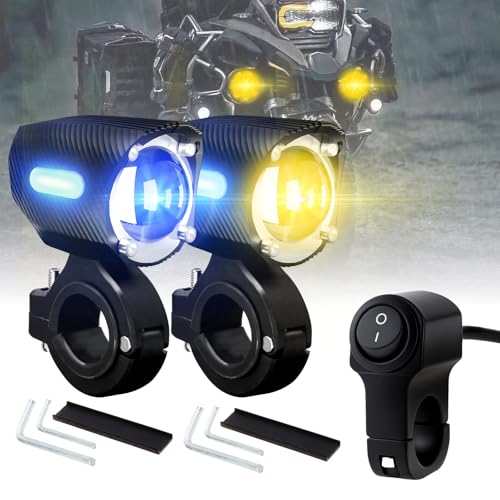
5 MODES WITH BLUE DRL: Offers five selectable modes: blue DRL (default), yellow low beam, white high beam, mixed yellow/white, and alternating flashing. Connect lights in...
Street Legality and Safety Considerations
While Sealight markets several LED models as “DOT-compliant,” legal installation hinges on three non-negotiable criteria: emitting white or amber light within 5000K–6000K, maintaining factory beam patterns without glare, and—critically—carrying DOT certification stamps when retrofitted into halogen-designed housings.
Street legality varies by enforcement jurisdiction. California and New York reject retrofits lacking proper beam patterns, while gray areas exist in states with minimal inspection protocols. You’ll face $238+ fines and insurance surcharges if your LEDs produce excessive glare or exceed 4,000-lumen caps.
Safety implications center on photometric compliance. Misaligned beams blind oncoming drivers, and installations violating NHTSA FMVSS No. 108 standards compromise visibility for all road users. Premium aftermarket brands maintain OEM-quality beam patterns comparable to factory specifications, ensuring safer visibility for all drivers. Most manufacturers like Sylvania and Philips design their premium LED options to meet brightness and beam pattern requirements that balance enhanced illumination without creating excessive glare for oncoming vehicles. Verify your Sealight unit maintains proper cutoff lines and height restrictions (22–54 inches in most states) before daily operation. Federal DOT standards mandate that front headlights emit only white or amber light, reinforcing the color temperature requirements for legal LED installations.