Whether you’re legally required to have daytime running lights depends on your vehicle’s manufacturing date and location. In the European Union, DRLs became mandatory for new passenger cars in February 2011 under ECE Regulation 87, while Canada federally mandated them in 1990. The United States permits but doesn’t require DRLs. Pre-mandate vehicles typically aren’t required to retrofit. Non-compliance in jurisdictions with DRL mandates exposes you to penalties and potential liability risks in accident scenarios, particularly when collision data demonstrates 10-15% crash reductions. Further exploration reveals critical distinctions across vehicle categories and enforcement mechanisms.
Understanding Daytime Running Lights and Their Purpose
Daytime Running Lights (DRLs) represent a distinct category of automotive lighting designed exclusively to enhance vehicle visibility during daylight hours, operating at substantially lower intensity than conventional headlights. You’ll find DRLs automatically activate when your vehicle’s engine runs, requiring no manual intervention and thereby eliminating driver error in daylight visibility protocols. DRL design principles prioritize forward-aimed positioning rather than downward road illumination, distinguishing them from headlights functionally and legally. DRL lighting technology typically employs energy-efficient LEDs that minimize fuel consumption and battery drain while maintaining sufficient luminosity to create vehicle-environment contrast without causing glare. Research from Monash University Accident Research Centre demonstrates DRLs reduce frontal collision risk by approximately 9%, with overall crash reduction rates ranging from 3.2% to 7%, particularly benefiting intersection and head-on collision prevention scenarios. The concept of daytime running lights was first invented in Sweden by automotive manufacturers Saab and Volvo in 1977 to address visibility challenges in Northern Europe’s low-light conditions.
DRL Requirements Across the European Union
Since February 2011, all new passenger cars and small delivery vans manufactured for the European market must feature factory-installed Daytime Running Lights under EU Regulation 2008/89/EC, with this requirement extending to trucks and buses from August 2012 onward. This DRL history reflects evolving safety regulations aimed at reducing daytime collisions through enhanced vehicle visibility. You’re not required to retrofit older vehicles predating these cut-offs. However, September 22, 2024 marked a critical regulatory shift: newly approved models must now illuminate rear tail lights simultaneously with front DRLs, addressing dangerous visibility gaps for following drivers. Research reveals that thousands of vehicles operate without rear lights in low light conditions, creating increased accident risks on the road. ECE Regulation 87 governs technical compliance standards for light intensity, color (white or amber only), and installation specifications. Preparations advance toward 2027 legislation mandating continuous rear light operation across all vehicles, fundamentally transforming European automotive lighting requirements.
Nordic Countries: Pioneers of Mandatory DRL Legislation
Four Scandinavian nations established the world’s first extensive DRL mandates between 1977 and 1990, driven by their extreme northern latitudes and corresponding seasonal darkness challenges. Sweden led as DRL pioneers, requiring lights on all vehicles from October 1977, followed by Norway (1985), Iceland (1988), and Denmark (1990). This Nordic legislation emerged from documented safety concerns regarding daytime accidents during extended twilight periods and overcast conditions affecting daylight visibility.
You’ll find that Swedish regulations specified DRL intensity between 300-800 candelas, while Norway implemented phased requirements for new versus older vehicles. Though a 1981 Swedish study reported 11% accident reductions, subsequent analyses questioned these findings’ validity. Nevertheless, these countries maintained their requirements, prioritizing vehicle safety and conspicuity. Nordic manufacturers Saab and Volvo subsequently influenced global automotive standards through DRL integration. The original DRL concept was based on lighting deficiencies present in Scandinavian countries during winter months, which distinguished these northern regions from countries with more natural light availability.

❤️ High brightness --- Imported high-purity LED high-power light source five lamp beads structure design;

Universal fitment for any vehicle with LED DRLs, ensuring compatibility with most car models

Universal fit miniature size (4.40 x 1.10 x 0.40"), comaptible with most cars, SUVs, trucks, etc
North American DRL Laws: Canada vs. United States
While Nordic nations pioneered mandatory DRL legislation, Canada established North America’s first extensive federal mandate in 1990, requiring daytime running lights on all vehicles manufactured or imported into the country under Federal Motor Vehicle Safety Regulations. You’ll face penalties like British Columbia’s $109 fine if you’re caught driving without operational DRLs. Nova Scotia requires DRLs or lighted headlamps at all times, with limited antique vehicle exceptions. Despite proven DRL effectiveness in reducing collisions during poor lighting conditions, the United States hasn’t mandated DRLs federally, only permitting them since 1995. This creates regulatory challenges for cross-border drivers and manufacturers. Canada’s 2021 regulations further require automatic tail lights or headlights that activate in low-light conditions, addressing safety gaps when drivers rely solely on DRLs in darkness. Vehicles manufactured prior to 1990 are exempt from DRL requirements, though they must still maintain functional lighting systems.
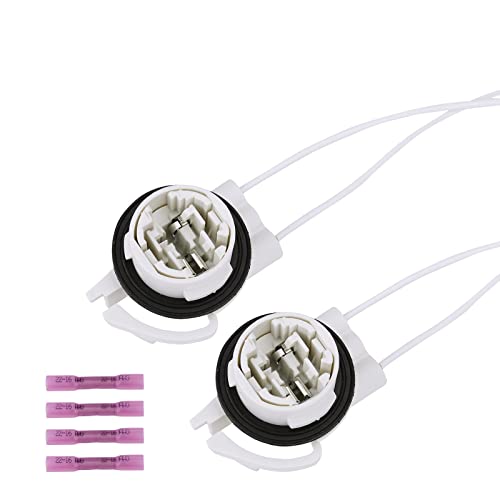
REPLACEMENT Light Socket Repair Kit-Heavy duty bindings offer a greater hold against vibration, abrasions, and moisture

【High-quality materials】The light bar is made of high-quality silicone and LED, waterproof and durable, and has a long service life. High quality can not only provide a safer guarantee for your life, but also high quality materials can prolong the service life of the product.

▼▼▼IMPORTANT NOTICE: 1. We have upgraded the appearance of these 3157/3156 led bulbs, you may randomly receive the old or new bulbs. 2. Please add 50W 6ohm load resistor to solve hyper flash/fast blinking/no flash/error message on dashboard if it occurs. 3. The bulbs Don’t built in resistor and package Doesn’t come with resistor!!!
United Kingdom and Regional DRL Regulations
Following the European Union’s regulatory framework, the United Kingdom mandates daytime running lights on all new passenger cars and small vans registered from 2011 onwards, though you’ll find buses, lorries, coaches, and motorcycles specifically exempted from this requirement. Your vehicle’s DRLs must activate automatically when the engine starts and can’t be manually disabled, ensuring DRL Compliance without driver intervention. You’re prohibited from using DRLs as substitutes for headlights during darkness or reduced visibility—misuse may result in fines or accident liability. Enforcement Challenges arise when drivers improperly rely on DRLs instead of required dipped headlights, potentially causing dazzlement. Pre-2011 vehicles aren’t legally required to retrofit DRLs, though ‘RL’-marked approved kits remain available. These low-energy lights are specifically designed to enhance vehicle visibility during bright daytime conditions without consuming excessive power. The Highway Code distinctly separates DRL usage from mandatory sidelight and headlight requirements.
Country-Specific Variations in DRL Laws
Beyond the UK’s implementation of EU standards, daytime running light requirements vary considerably across global jurisdictions, creating compliance challenges for international drivers and vehicle manufacturers operating across borders. Sweden mandated DRLs in 1977, followed by Finland, Norway, and Denmark establishing country-specific enforcement between 1972 and 1990. Canada requires all vehicles manufactured since 1990 to feature DRLs, while the United States maintains voluntary adoption with brightness limits capped at 3,000 candela per lamp. Eastern European nations including Czech Republic, Slovakia, Hungary, and Romania enforce daytime headlight or DRL use year-round, demonstrating regional compliance variations. Australia and New Zealand permit but don’t require DRLs. Spain recommends rather than mandates DRL usage despite EU regulations, illustrating inconsistent enforcement even within harmonized regulatory frameworks. Germany enforces DRL or low beam requirements with fines applicable for non-compliance, ensuring adherence to daytime visibility standards.
Vehicle Categories Subject to DRL Mandates
Vehicle category classifications significantly impact DRL compliance obligations, with regulatory frameworks imposing distinct requirements based on vehicle type, weight class, and intended use. You’ll find passenger cars and MPVs face mandatory DRL installation in Canada and the European Union, while U.S. federal regulations permit but don’t require them. Commercial vehicles, trucks, and buses generally aren’t subject to Federal Motor Carrier Safety Administration DRL mandates, though some jurisdictions enforce fleet-level requirements. Motorcycles present varied obligations—certain countries mandate dedicated daytime running lamps meeting ECE standards, prohibiting headlamp substitution. Agricultural and off-road vehicles typically aren’t subject to DRL mandates, though public road operation may trigger compliance obligations. Emergency and special purpose vehicles face distinct lighting requirements potentially superseding standard DRL regulations. For vehicles requiring DRL replacement, such as accessing DRL bulbs on newer models, the process can often be completed without extensive disassembly. Studies indicate that DRLs increase the distance at which other drivers can see fleet vehicles, enhancing overall road safety. Energy-efficient lighting technologies, particularly LEDs, increasingly satisfy DRL standards across all vehicle classifications.
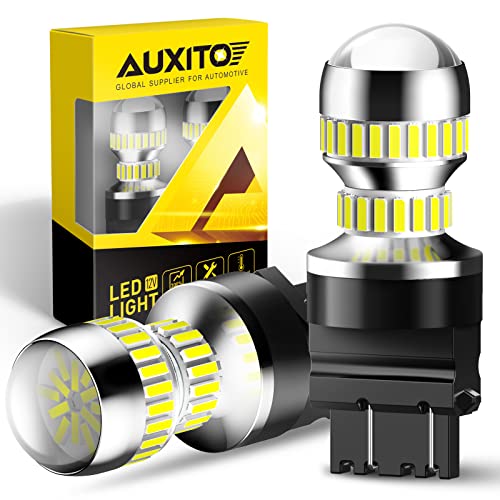
Resembling halogen bulb shape design and sequencing 54 pieces 4014-SMD LED chips precisely around the 3157 led bulb. Delivering 360° high luminous efficiency with full 6000K white light, see more clearly and safely when reversing

【700% Brightness Boost】: AUTOONE 3156 3157 LED bulbs feature 16 high-quality SMD chips. Each pair delivers 6500K pure white light output with 700% increased illumination, significantly enhancing nighttime driving and reversing visibility for safer, more comfortable journeys.

700% Brighter Than Traditional Halogen Bulbs:With the lens boosting light utilization, the 1156 led bulb emits 6000K cool white light—700% brighter than traditional halogen bulbs. 360°full-angle light output with 66 high-precision SMD chips provides clear and bright illumination, enhancing visibility on the road and improving driving safety at night or in bad weather.
Energy Efficiency and Technical Specifications of DRLs
Understanding which vehicles require DRLs doesn’t complete your compliance picture—you’ll need to guarantee installed systems meet stringent technical specifications governing energy consumption, photometric performance, and optical characteristics. Your DRLs must emit between 400 and 1200 candela intensity while maintaining energy efficiency through LED technology (8-20 watts) versus traditional filament bulbs (42+ watts). The luminous surface area must span 25-200 cm², positioned 250-350 mm above ground level with symmetrical front mounting. You’re restricted to white, amber, or selective yellow emissions under ECE Regulation 87, with turn signals and fog lamps prohibited as DRL substitutes. High-power DRL systems consuming over 200W when utilizing standard headlamps significantly increase fuel consumption and CO2 emissions compared to dedicated low-power alternatives. Non-compliance risks regulatory penalties, as systems must achieve 73.75% energy reduction compared to full headlight operation while ensuring 140-meter daytime visibility.

Super bright and low consumption: 3157 LED bulb Adopt 24pcs high quality 2835 LED chips, unique 360 degree lighting design, high brightness, perfect beam pattern, no blind spot, 400% brighter than halogen light.

【500% Brighter for Safer Reversing】Upgraded with high-output LED chips and an HD projector lens, these 3156 3157 LED reverse light bulbs deliver up to 500% brighter illumination than halogen bulbs. The 6000K White light improves rear visibility, helping you back up more safely at night, in rain, or in low-visibility conditions
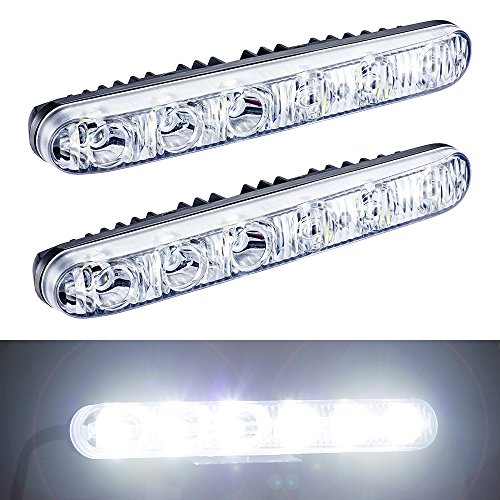
Powered by 6 pieces xenon white LED lights — 3 LED High Beam and 3 LED Low Beam .
Safety Impact Studies and Crash Reduction Data
While technical specifications establish your DRL system’s legality, empirical crash data quantifies the actual safety returns on your compliance investment. Safety statistics demonstrate DRLs reduce multi-party daytime accidents by 10-15% for equipped vehicles, with meta-analyses confirming 3-12% population-level reductions. Crash analysis reveals greatest efficacy in opposite-direction collisions (15% reduction) versus angle crashes (2.5% reduction). Fatal crash rates prove 1.48 times higher in non-DRL vehicles, though larger studies show mixed statistical significance. Non-motorist protection data indicates 12% reductions in pedestrian-cyclist fatalities, with one study documenting 71% cycling accident risk reduction in dark conditions. Unlike headlights, daytime running lights do not illuminate the road but increase conspicuity to reduce accidents by helping other road users better perceive a vehicle’s presence and movement. Norwegian and Danish datasets corroborate approximately 10% declines in multiple-vehicle daytime crashes post-adoption. A randomized controlled trial involving 5,380 voluntary cyclists in Denmark found that while overall daytime risk reduction was statistically insignificant, nighttime protection benefits were substantial. These evidence-based findings validate regulatory mandates requiring DRL implementation across jurisdictions.
Global Trends and Future of DRL Legislation
Beyond empirical safety outcomes, you must consider how evolving regulatory frameworks will reshape DRL compliance obligations across jurisdictions. The UNECE actively pursues global harmonization to unify vehicle lighting standards, yet divergent regional requirements—mandatory EU specifications versus voluntary U.S. adoption—complicate multinational compliance strategies. Technological advancements, particularly LED and OLED integration with ADAS, are driving legislative evolution toward intelligent lighting systems that adapt to ambient conditions. The projected market expansion from USD 2.99 billion (2025) to USD 4.38 billion (2030) reflects manufacturer-driven standardization pressures. Emerging vehicle-to-infrastructure communication trials indicate future regulations may mandate DRL compatibility with autonomous driving technologies. You face increasing complexity as China accelerates LED DRL requirements alongside EV growth, while emerging markets introduce retrofit solutions absent extensive legislation, creating fragmented compliance landscapes requiring continuous monitoring. Canada’s pioneering mandatory DRL implementation since 1989 demonstrates the long-term viability of comprehensive legislative approaches to daytime vehicle visibility.