To replace your Jeep Wrangler’s headlight bulbs, you’ll need to disconnect the battery and remove the front grille by extracting six push clips and bolts. Use a T15 Torx screwdriver to detach the headlight retaining ring, then twist the bulb socket counterclockwise to access the old bulb. Disconnect the wiring harness, install the new bulb without touching its glass surface, and reverse the process to reassemble. The complete procedure below covers proper alignment and testing techniques for ideal nighttime visibility.
Tools and Safety Preparation
Replacing headlight bulbs on a Jeep Wrangler requires specific tools and careful preparation to guarantee a safe, efficient job. Your essential tools checklist includes a T15 Torx screwdriver, flat blade screwdriver, clip removal tool, 10mm socket wrench, and protective gloves. Before starting, follow these critical safety tips: disconnect your vehicle’s battery to prevent electrical shock, and allow headlights to cool completely to avoid burns. Park on a flat surface with the parking brake engaged. Wear safety glasses and gloves—the latter prevents oil contamination on new bulbs that reduces their lifespan. Prepare your workspace by working in a well-lit area with all tools within reach. Place removed fasteners in a container to prevent loss. Open and secure the hood fully before beginning disassembly. Pay attention to your headlight bulb type—whether halogen, LED, or HID—as each requires specific handling procedures. Proper maintenance of your vehicle’s lighting ensures safety and legal compliance on all roads. Consider upgrading to performance bulbs like Sylvania SilverStar Ultras, which provide 25% more brightness than stock versions.

❤What You Get: 1 Pcs Torx Screwdriver; Torx Size: T15; Handle Length: 78mm/ 3.1"; Overall Length: 178mm/ 7".

Magnetic tip for convenient installation: Our torx screwdrivers feature a magnetic tip, making installation and disassembly of screws more convenient and efficient. The magnetic design securely holds screws, preventing them from getting lost or dropped, thus improving work efficiency

Package Included: 1 x t15 torx security screwdriver. Shaft length: 3.93"/100mm, shaft diameter: 0.196"/5mm, handle length: 3.07"/78mm.
Accessing the Headlight Assembly
Before you can replace the headlight bulb itself, you’ll need to remove several components securing the headlight assembly to your Wrangler’s frame. For proper headlight access, start by removing three plastic retaining clips per side using a flathead screwdriver or needle-nose pliers. Next, locate and remove three 10mm bolts that secure the assembly to the frame. Use a T15 Torx screwdriver to extract screws holding the bezel or bracket. Once fasteners are removed, carefully pull the assembly forward—it may require gentle rocking motions to loosen from mounting points. During assembly removal, avoid disconnecting the wiring harnesses until the housing is sufficiently free. You may also need to remove the grill to fully access the headlight assembly on your 2015 Jeep Wrangler. Handle all plastic tabs gently, as they become brittle with age and break easily under excessive force. Be aware that aftermarket assemblies may require different bulbs or dealer service for LED factory units, so verify your specific model’s requirements before beginning removal.

All-in-One Tool Kit for Jeep Owners: Everything you need to quickly remove your Jeep’s hardtop, doors, and fold down the windshield—perfect for any adventure. Stay prepared for quick fixes or just to enjoy the open air.
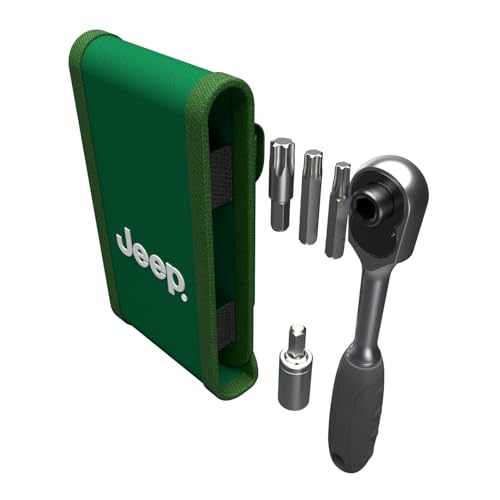
Tool Kit includes T-30, T-35, T-40 and T-50 torx bits, ratchet and storage pouch

[ Upgraded Leather Organizer ] Xislet Torx Tool Kit for Jeep Wrangler JL JK & Gladiator hard top hardware is made of high-quality chrome vanadium steel, provide over 60 HRC hardness after Heat treatment
Removing the Front Grille
On certain Jeep Wrangler models, you’ll need to remove the front grille to gain adequate access to the headlight assembly‘s rear mounting points and electrical connectors. Begin by opening the hood fully and removing six push clips along the grille’s top edge using a flathead screwdriver or nylon panel tool. Disconnect the negative battery terminal before unplugging headlight connectors. Remove the six bolts attaching the grille to each fender, then remove cowl brace bolts and the central body mount bolt underneath. Unplug any air temperature sensors and front camera wiring if equipped. Carefully pull the grille forward, watching for remaining attachments. Before reinstalling your grille, take time to inspect the retaining clips and screws that secure your headlight components to ensure they are in good condition. When reinstalling, ensure proper bulb alignment and securing to maintain optimal lighting performance. This removal provides opportunity for grille cleaning and grille modification before reinstallation. If you’re considering an upgrade, Royalty Core brand offers replacement grilles specifically designed for 1998-2006 Jeep Wranglers. Set the grille on a protected surface.
Detaching the Headlight Retaining Ring
With the grille removed or moved aside, you’ll now access the headlight retaining ring that secures the assembly in place. Locate the screws around the ring’s perimeter—typically requiring a T15 Torx driver for removal. Extract each screw and store them in a container to prevent loss. Once all fasteners are removed, gently pull the retaining ring away from the headlight housing. If clips are present, apply controlled pressure at the release points to disengage without breaking them. Check that no wiring remains attached before fully separating the ring. Clean any accumulated dirt from the contact surfaces before proceeding. Understanding proper installation techniques now will simplify reassembly later. Inspect the ring for cracks or damage that could compromise the headlight’s secure fit during reinstallation. Note that halogen and LED bulbs require different handling procedures depending on your vehicle’s headlight type. After removing the last screw, the headlight assembly should slide out smoothly from its housing.

【12" Extra Long T15 Torx Screwdriver】Shaft Length: 300mm / 12 inch; Total Length: 400mm / 16 inch. 12 Inch extra long size is ideal for hard to reach awkward areas.

What's in Package:1 x 12inch Extra Long T15 Torx Screwdriver. It‘s used to install or remove T15 Torx Tamper Proof screws.

Kraftform Plus TORX HF (Holding Function) screwdriver, TX15 HF x 3-1/8” shaft
Disconnecting the Old Bulb
Locate the headlight socket protruding from the rear of the headlight assembly—you’ll find it positioned directly behind the lens where the retaining ring was secured. Grip the socket firmly and twist it counterclockwise to release it from the housing, then pull it straight out. Inspect any rubber seals on the socket and set them aside for reinstallation.
Now disconnect the wiring harness from the bulb. Locate the locking mechanism—typically a red or colored tab on the connector. Use a small flathead screwdriver or your fingernail to lift or slide this safety lock, then press the release tab on the harness itself. Pull the connector away from the bulb socket gently; never tug on the wires directly. Remove the old bulb, observing safety precautions to avoid touching the replacement bulb’s glass surface. Consider applying dielectric grease on connections to protect against corrosion and ensure reliable electrical contact. Ensure you are using the correct bulb type for your specific model year to guarantee proper fit and performance. If you’re installing LED bulbs with canbus adapters, these can be zip tied securely or tucked away in available space near the headlight assembly.

[900% Brighter] Torchbeam Series H13/9008 Powersports Bulbs 900% brighter , 45,000LM ensuring safer nighttime travels. Thanks to its high-power chip, the illumination range extends up to 2000FT, with horizontal coverage 400% wider than regular halogen bulbs. Embrace the enhanced safety and confidence our light brings as it illuminates your path, revealing hidden details and potential hazards. Enhance to our superior lighting solution and enjoy unparallebrightness for your nighttime adventures!
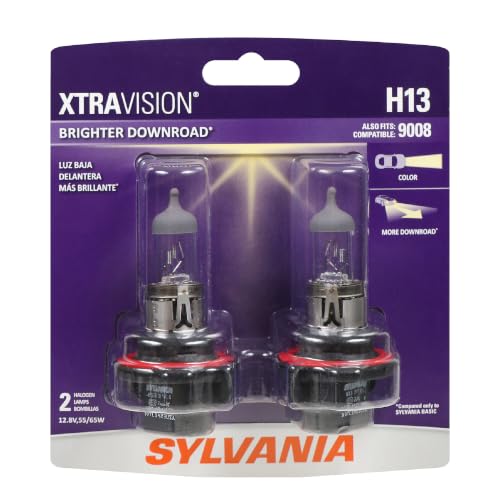
Lights Dim Over Time, Replace In Pairs: Your lights are a pair, one is never turned on without the other. If one bulb burns out, the other isn't far behind. Replace your H11 XtraVision Halogen bulbs in pairs for optimum performance.

Material & Build Quality: High-quality aluminum alloy housing with durable UV-resistant polycarbonate lens. Built for long-term reliability with strong impact resistance and stable performance across various driving conditions.
Installing the New Headlight Bulb
After removing the old bulb and setting aside the wiring harness, you’re ready to install the replacement. Start by checking bulb orientation tips—position the LED chips or filament horizontally (left to right) for proper beam pattern. Insert the new bulb into the socket without touching the glass surface, pushing firmly until you hear an audible click indicating it’s locked. Adjust connector pins if necessary to align with bulb terminals. For LED conversions, attach any separate drivers or capacitors before proceeding. Next, handle electrical connections by firmly seating the wiring harness plug onto the bulb base. Engage any red locking tabs or clips to prevent disconnection. Reinstall the rubber seal, then twist the headlight assembly clockwise to lock it into the housing. Turn the bulb a quarter turn to secure it in position. LED headlights require no warm-up time and deliver superior performance in cold weather conditions. Consider color temperature options ranging from warm yellow to cool white to match your driving preferences and visibility needs. Test illumination before final reassembly.

Compatible For -- These light bulbs combo compatible with Jeep Wrangler high and low beam and fog lights 2010 2011 2012 2013 2014 2015 2016 2017 2018 2019 2020 2021 2022. Our bulbs are suitable for Off-Road use only. If you need assistance or have any questions, please contact us via Amazon message for a free kit.

Perfect Fit: This High low beam and Fog light LED combo fits for the Jeep Wrangler 2010 2011 2012 2013 2014 2015 2015 2016 2017 2018 2019 2020 2021 2022 2023 2024 all models, ensuring a perfect fit and easy installation. (Please check you models before purchasing.)
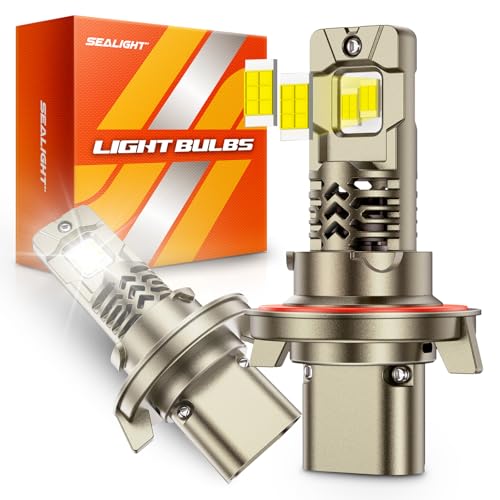
【12X Brighter - Newly Enhanced】SEALIGHT H13/9008 LED bulbs feature 24 high-performance chips, delivering up to 12X the brightness of standard halogen bulbs. Upgrade your nighttime driving experience by replacing dim, yellow stock bulbs with SEALIGHT H13/9008 LED Bulbs fog lights, offering superior illumination and enhanced visibility with a crisp 6500K cool white light for optimal light transmission
Reassembling the Headlight Components
Once you’ve confirmed the new bulb is functioning, begin reassembling the headlight components in reverse order of removal. Position the headlight lens over the bulb, aligning it with the socket’s tabs or grooves. Insert the chrome ring or bezel, ensuring the bottom tab connects properly—critical headlight alignment tips for proper seating. Don’t force components; they should sit flush naturally.
For retaining clip techniques, position plastic rivet-style clips with the central pin pulled outward before insertion. Press the pin down to lock securely. Use a flathead screwdriver to snap pull tabs into place, starting with the central tube portion. Secure the headlight assembly using your T15 Torx tool, tightening bolts evenly to prevent warping. Before proceeding with grill installation, reconnect the turn signal connectors to their respective slots. Verify all clips engage fully without gaps before final testing. After reassembly, perform a beam alignment adjustment to ensure optimal nighttime visibility and prevent glare to oncoming drivers. Ensure the LED bulbs you installed match the factory bulb type to maintain proper reflector function and achieve the correct beam pattern.
Securing the Grille Back in Place
With the headlight assembly fully restored and tested, your attention shifts to the grille that protects these components. Begin grille alignment by positioning the assembly near the vehicle’s front, matching tabs and clips with their corresponding slots on the core support. Perform a thorough wiring check, ensuring the harness routes through designated openings without pinching or trapping behind the grille. Insert original clips by aligning the base first, then pressing the centerpiece to expand and lock. Start fastening from top to bottom, distributing pressure evenly. Verify all connectors are fully seated and locked. Inspect for proper clearance around headlights and sensors, confirming the grille sits flush against body panels with even gaps before final tightening. Once positioned, reconnect the blinker light connectors by twisting them clockwise until they lock into place under the fenders.
Testing and Adjusting Your New Headlights
Before you return your Jeep to regular service, proper headlight testing and adjustment guarantee ideal visibility and road safety. Position your Wrangler 25 feet from a flat wall on level ground. Mark vertical and horizontal tape crosses aligned with each headlight’s center point. Turn on low beams and cover one headlight with opaque material. Locate the two T15 Torx adjustment screws on your headlight housing—the top screw controls vertical beam alignment, while the bottom manages horizontal positioning. Adjust the vertical screw until the brightest headlight brightness zone sits just below the horizontal tape line. Center the horizontal beam alignment on or slightly right of the vertical line. Repeat for the opposite headlight, then conduct a night test drive to confirm proper illumination without blinding oncoming traffic. Just as with Nissan Frontier headlights, changing bulbs in pairs ensures balanced and consistent lighting performance across both sides of your vehicle. Consider selecting H13 headlight bulbs with superior brightness and beam pattern quality to maximize your visibility during this adjustment process. Regular adjustments are recommended for maintaining optimal visibility and safety over time.