

To replace your Toyota 4Runner’s headlight bulbs, you’ll need H11 bulbs for low beams and 9005 for high beams, plus a 10mm socket wrench and trim removal tools. First, disconnect your battery’s negative terminal for safety. Remove the plastic trim panels and access caps behind the headlight assembly. Twist the old bulb counterclockwise, disconnect the electrical connector, and install the new bulb using gloves to avoid skin oils on the glass. Test both beams before reassembly, and verify proper alignment to prevent blinding oncoming drivers. Below, you’ll find detailed instructions covering every aspect of this essential maintenance task.
Bulb Types and Specifications for Toyota 4Runner Models
Headlight bulb replacement for your Toyota 4Runner requires understanding the specific bulb types used across different model years and lighting positions. Your 2006-2021 4Runner uses H11 halogen bulbs for low beams and fog lights, while high beams require 9005 bulbs. OEM H11 halogens produce approximately 1400 lumens at 55W, whereas 9005 high beams consume 65W for enhanced distance illumination.
LED upgrades offer significant brightness comparison advantages, delivering 1400-5000 lumens per bulb while reducing power consumption to 14-50W. These replacements provide 6000K cool white output versus halogen’s yellowish 3200K temperature. For bulb longevity, LED options substantially outlast traditional halogens. The SL2 model utilizes a fanless solution with thermally-optimized components for reliable performance. You’ll need CANbus decoders for 9005 LED high beams to prevent flickering. Understanding color temperature differences between bulb types helps ensure optimal visibility and aesthetic preferences for your 4Runner. All 4Runner trims—SR5, TRD Pro, and Limited—maintain these standardized bulb sizes throughout the fifth generation.
Tools and Materials Needed for Headlight Replacement
Before replacing your 4Runner’s headlight bulbs, gather the necessary tools to complete the job efficiently and prevent damage to electrical components or plastic assemblies. You’ll need a 10mm socket wrench with extension bars, Phillips head screwdriver, and plastic trim removal tools for disengaging clips without scratching surfaces. Keep a magnetic tray for tool organization to prevent losing small fasteners during disassembly.
Turn off your ignition and consider disconnecting the battery to avoid electrical shorts. Wear protective gloves when handling new bulbs—skin oils reduce bulb longevity by creating hot spots on the glass. Use a flashlight for visibility in tight spaces. Don’t apply dielectric grease to connectors, as this voids warranties and causes connection failures. Have replacement sockets available if existing harnesses show damage. Different bulb types such as 9005 or H7 may be required depending on your vehicle model year. When installing the new bulb, align the tabs and rotate clockwise to ensure proper seating in the socket. If you’re uncertain about any step in the replacement procedure, it’s advisable to seek professional help to ensure proper installation and avoid potential damage.

Complete 6-Bulb Upgrade for Brighter Driving: Upgrade your Toyota 4Runner with a complete 9005/HB3 + H11/H8/H9 + H11 LED fog light bulbs combo. Six LED bulbs provide a convenient way to refresh multiple lighting positions in one kit.
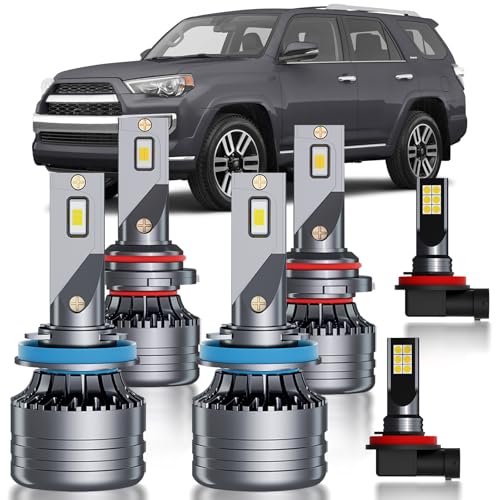
Fitment: This 4Runner multi beam and fog lights bulbs Combo fits for 2010 2011 2012 2013 2014 2015 2016 2017 2018 2019 2020 Toyota 4Runner all models

Compatible with 2006-2020 Toyota 4Runner: XFLHEHD 4runner halogen headlights bulbs are 1:1 same designed as original stcok bulbs, can perfect fit for toyota 4runner 2006 2007 2008 2009 2010 2011 2012 2013 2014 2015 2016 2017 2018 2019 2020 all models (Please check your 4runner models before purchasing.)
Accessing the Headlight Assembly
Getting to the 4Runner’s headlight assembly requires systematic removal of several components that block direct access to the mounting hardware. Start by detaching plastic trim panels using pry tools to expose mounting screws. Remove the radiator support cover by pressing mounting tabs. You’ll need to loosen or partially detach the front bumper by removing bolts from wheel wells and undercarriage—this creates essential clearance for headlight extraction.
Locate four to six 10mm bolts around the headlight housing perimeter, accessible from the engine bay, wheel well, and underneath. Disconnect fog light harnesses if equipped. Use flathead screwdrivers or trim tools to carefully depress plastic tabs securing the assembly. Before final removal, disconnect all electrical connectors—critical for both wiring considerations and headlight adjustments during reinstallation. Document the order of screws and connections to simplify the reassembly process. When extracting the assembly, wear safety glasses to protect your eyes from any debris or accidental contact with components. Slide the assembly outward carefully, noting alignment bracket positions.

Compatible with Tacoma 1995 1996; Compatible with 4Runner 1989-1995; Compatible with Pickup 1989-1995;

KIT INCLUDES: 1 - Disc Pad Holder, 3.25 in (8,2 cm) 6 - 3M Gold Sanding Discs 500 Grit, 3 in (7,6 cm) each 4 - 3M White Finishing Discs 800 Grit, 3 in (7,6 cm) each 1 - 3M Trizact Refining Disc 3000 Grit, 3 in (7,6 cm) 2 - 3M Quick Headlight Clear Co
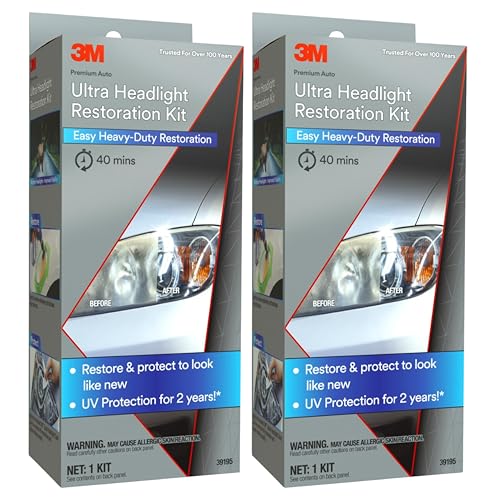
2-PACK VALUE: Includes 2 complete Ultra Headlight Restoration Kits (Part 39195) for restoring multiple vehicles or keeping a spare in your garage.
Removing the Old Low Beam Bulb
With the headlight assembly accessible, locate the circular dust and water cap on the back of the housing—it protects the low beam bulb from moisture and debris. Turn it counterclockwise 10-15 degrees until loose, then carefully remove it without damaging the rubber O-ring. Press the connector’s release tab and pull it straight off the bulb base. Rotate the bulb counterclockwise approximately 45 degrees to release it from the socket. Some models use a metal clip that must be unlatched first. Pull the bulb straight out without forcing it. For bulb longevity, never touch the glass with bare fingers—oils cause premature failure. Use gloves or grip the plastic base only. For consistent brightness and optimal performance, consider replacing bulbs in pairs to ensure both headlights maintain equal luminosity. These installation tips guarantee proper handling and prevent damage during replacement.

Lights Dim Over Time, Replace In Pairs: Your lights are a pair, one is never turned on without the other. If one bulb burns out, the other isn't far behind. Replace your 9003 XtraVision Halogen bulbs in pairs for optimum performance.


Fit to TOYOTA 4Runner 2006 2007 2008 2009 2010 2011 2012 2013 2014 2015 2016 2017 2018 2019 2020 2021 2022, 9005 for High beam,H11 for low beam.
Removing the Old High Beam Bulb
The high beam bulb replacement follows a similar process but sits in a different position within the headlight assembly. Locate the protective dust cap on the rear of the housing and twist it counterclockwise about 10-15 degrees to remove it. Turn the bulb base counterclockwise roughly 45 degrees to detach it from the socket. Pull the bulb straight out without forcing—a common mistake that damages the housing. Depress the retaining tab on the electrical connector while gently pulling to disconnect it. Proper bulb removal techniques require tracking the bulb’s orientation for correct reinstallation. Avoid touching the glass surface, as skin oils cause premature failure. No special tools are needed to complete this removal process. Common mistakes include forcing stuck bulbs or failing to release connector clips completely before removal.
Installing the New Low Beam Bulb
Before handling your replacement bulb, verify it matches the correct specification for your 4Runner’s model year—2006 and newer models require an H11 low beam bulb, while earlier generations use different configurations. Proper bulb handling techniques are critical: never touch the glass portion with bare hands, as skin oils cause premature failure. Use rubber gloves or a clean cloth to grip the base only.
Connect the electrical connector firmly until you hear or feel it click into place. These installation tips guarantee reliability: insert the bulb into the housing socket at approximately the 3 o’clock position, then rotate clockwise until it locks securely. Confirm the bulb seats completely—improper installation allows moisture ingress and creates poor electrical contact, compromising headlight function and safety. Understanding the beam pattern quality of your replacement bulb ensures optimal visibility and performance on the road. Once the bulb is properly installed, test the headlights by turning on your car to verify the new bulb functions correctly.

【Visual Enhancement】: The OKOENIEO H11 headlight bulb are 200% brighter than other halogen bulbs, providing drivers with a wider and farther field of vision. Offering a greater visibility, they allow drivers to spot deer, wildlife, falling rocks, or obstacles ahead of time, ensuring safer nighttime driving.

【1:1 Mini Size & 3 MINS Plug and Play】Sealight H11/H9/H16 bulbs or Fog Light Bulbs feature a near-identical 1:1 mini design as original bulbs, requiring no external drivers or wires for a true plug-and-play experience. 3 MINS quick installation

【Super Bright】Our H11 headlight bulbs deliver a brightness of more than 1500LM, up to 5000K color temperature, providing the best visibility in foggy and rainy weather, Our headlight bulb filled with more than 45% Xenon gas to be more brighter and whiter, Blue ion membrane filters yellow light and gets super white light.
Installing the New High Beam Bulb
After removing the old high beam bulb, you’re ready to install the replacement 9005 (HB3) bulb into your 4Runner’s headlight assembly. Handle the new bulb by its base only—avoid touching the glass surface, as skin oils reduce bulb lifespan. Align the bulb’s notches with the socket grooves and insert it fully into the housing. Proper bulb alignment guarantees secure installation and prevents moisture ingress. Turn the bulb clockwise until it locks with an audible click. Firmly reconnect the electrical connector, pressing until it seats completely. Replace the dust cap by positioning it over the housing and rotating clockwise approximately 10-15 degrees to seal. Verify the bulb sits flush and all components are tight. This prevents electrical issues and lens fogging, promoting ideal high beam performance. The halogen bulb can be upgraded to LED or HID options for improved visibility and brightness. When selecting replacement bulbs, consider color temperature ranging from 3000K to 6000K to match your desired lighting preferences and ensure DOT compliance. Leading brands like Philips, Sylvania, and HIKARI offer reliable performance across various weather conditions for 4Runner headlight upgrades.
Replacing Front Turn Signal and Side Marker Bulbs
Rapid blinking of your 4Runner’s turn signals signals a burnt-out front bulb requiring immediate replacement. Begin turn signal replacement by turning your wheel outward for better access. Remove approximately five screws from the wheel well liner and fold it back to reach the bulb socket. Twist the socket counterclockwise to release it, then carefully extract the bulb without touching the glass portion—oils cause premature failure. Your 2010-2024 4Runner uses 7443 or 7444 dual-filament bulbs. LED upgrades offer increased brightness and longevity but may require resistors to prevent hyperflashing. For side marker maintenance, access bulbs near the fender with minimal disassembly. Always wear gloves during installation to avoid transferring oils that can cause the same premature bulb failure you experience with factory incandescent bulbs. Halogen bulbs produce heat through incandescence, which makes them less energy-efficient than modern lighting alternatives. Verify proper seating, and test functionality before reassembling components. Consider replacing both driver’s and passenger’s side bulbs at the same time to ensure consistent brightness and avoid future mismatched lighting.
Testing Your New Headlight Bulbs
Once you’ve installed your new headlight bulbs, verify they function correctly through systematic testing before reassembling the headlight housing. Turn on your vehicle’s headlight switch and check both low and high beam functions. Compare the light output against your previous bulbs to detect dimness or flickering that indicates failure.
For thorough bulb performance testing, use electrical diagnostic tools like a multimeter set to DC volts mode. Measure voltage at the bulb contacts with headlights activated—you should read approximately 12V. If the bulb doesn’t illuminate despite proper voltage, set your multimeter to continuity mode and test the filament. A low resistance reading confirms a good bulb, while infinite resistance (OL) indicates a broken filament requiring replacement. Verify that your replacement bulbs match the correct bulb size specified in your vehicle’s owner’s manual to ensure proper fit and function. Always wear protective gloves when handling electrical components to prevent injury and avoid damaging sensitive bulb elements. Ensure your replacement bulbs meet DOT regulations to maintain legal compliance with safety standards.
Safety Tips and Best Practices
Replacing headlight bulbs on your Toyota 4Runner requires strict adherence to safety protocols that protect both you and your vehicle’s electrical system. Before starting, turn off the ignition and disconnect the negative battery terminal to prevent electrical shock. Always wear gloves when handling bulbs—skin oils contaminate the glass, causing premature failure or explosion. Replace both headlights simultaneously to maintain equal brightness and prevent staggered failures.
After installation, verify proper beam alignment to avoid blinding oncoming drivers. Check that all caps and covers seal tightly against moisture ingress. If flickering persists, inspect electrical connections for corrosion. Minimize contact with the bulb glass surface to ensure longevity and proper operation. These safety precautions guarantee reliable operation. Add maintenance reminders to your calendar for regular inspections of headlight lenses, which degrade over time and reduce light output. Dispose of old bulbs according to local hazardous waste regulations. Confirm proper beam patterns for enhanced visibility after completing the installation to ensure optimal nighttime driving performance.


