To replace your BMW headlight bulb, first disconnect the negative battery terminal to prevent electrical hazards. Access the headlight assembly through the engine bay or wheel well, depending on your model. Disconnect the electrical connector, release the bulb’s retention mechanism by twisting counterclockwise, and remove the old bulb. Handle the replacement bulb only by its metal base to avoid oil contamination. Install the new bulb, secure the retention clip, reconnect the connector until it clicks, and test both beam settings to verify proper installation and alignment.
Safety Precautions Before You Begin
Before replacing your BMW headlight bulb, disconnect the negative battery terminal to eliminate electrical hazards. This step is critical, especially for BMWs equipped with HID systems that generate high voltage. Allow sufficient time for the electrical system to de-energize completely before proceeding.
Prepare your workspace by parking on a level surface with the parking brake engaged. Ascertain you’re working in a well-lit, clean area with adequate access to the headlight assembly. Work in a safe, warm, and clean environment to ensure optimal conditions for the replacement procedure. Never touch the glass portion of replacement bulbs—oils from your skin create hotspots that cause premature failure. Always wear clean gloves and handle bulbs by their metal base or connector plate. Following these safety procedures protects both you and your BMW’s electrical components from damage. Ensure you use the correct bulb type specified in your vehicle manual, as non-interchangeable bulb designs like different plug configurations can affect proper fitment and safety. Remember that DOT-approved headlights meeting federal standards are required for legal operation on public roads.
Tools You’ll Need for the Job
Replacing your BMW headlight bulb requires five essential tool categories to guarantee safe, efficient completion. First, you’ll need protective gear—clean microfiber cloths and rubber gloves prevent oil contamination that reduces bulb lifespan, particularly critical for HID/Xenon headlight types. Second, acquire Torx 25 and 30 bits with magnetic screwdrivers for housing disassembly. Third, gather 8mm ratchets with extensions to remove brackets and navigate engine bay constraints. Fourth, assemble access tools including trim removal implements, flashlights for socket illumination, and mirrors for confined compartment alignment. Fifth, consider precision aids like multimeters for electrical continuity testing. E90 models typically require coins for access caps, while F-series vehicles need full wheel lock and fender panel removal. Once your bulb is replaced, you may want to restore headlight clarity if the lenses have yellowed over time by applying protective coating or wax to maintain brightness and prevent oxidation. For optimal results, consider upgrading to HID or LED systems to improve your lighting performance beyond standard bulb replacements. OEM bulb pairs maintain 4300K color matching across headlight types. Always verify the correct replacement bulb using your owner’s manual or VIN to ensure compatibility with your specific BMW model.
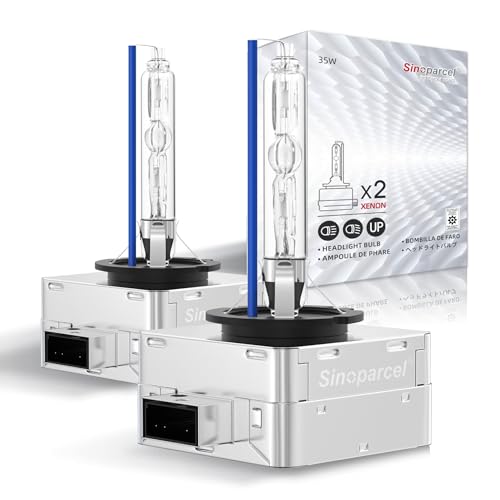
Life time support,2pcs packaged; Replacement part number: 66144 66140 85140 85415 (If there is any problem in the product, please contact us via Account Center,we will reply you within 24 hours)

Lights Dim Over Time, Replace In Pairs: Your lights are a pair, one is never turned on without the other. If one bulb burns out, the other isn't far behind. Replace your 9003 XtraVision Halogen bulbs in pairs for optimum performance.
Identifying Your BMW Bulb Type
With your tools assembled, you’ll need to determine which bulb type your specific BMW model uses before purchasing replacements. Check your owner’s manual for the exact bulb size specifications—common types include H7, H11, 9005, or HID variants like D2S/D3S. Examine the outer headlight housing for inscriptions reading “BMW LED,” “BMW Adaptive LED,” or “BMW Laser” to identify your technology type. Observe the light color when illuminated: white-blue indicates HID/Xenon systems, while yellow suggests halogen. Inspect the projector housing—HID bulbs hide within projector assemblies, whereas halogen bulbs remain visible. You can also remove the existing bulb to read the size printed on its base. For BMW X3 models from 2019 to 2021, the headlight high beam uses an H21W bulb. Understanding color temperature options ranging from warm yellow to cool white light can help you select bulbs that match your driving preferences and visibility needs. Verifying your bulb type based on vehicle year ensures compatibility with your specific BMW generation. Manufacturer sites like SEALIGHT or PowerBulbs offer year/make/model finders for precise identification.

Super Brightness: This light bulb adopts a 100-watt high-power design, which can provide stronger brightness and lighting effects. It produces a stronger beam than ordinary light bulbs, giving drivers better visibility at night or in adverse weather conditions.

800% Brighter Night Vision Powered by advanced chip technology, Marsauto H7 bulbs deliver 8x the brightness of standard halogen bulbs, producing crisp 6500K white light for enhanced visibility and faster reaction time—whether driving at night or in low-light conditions.
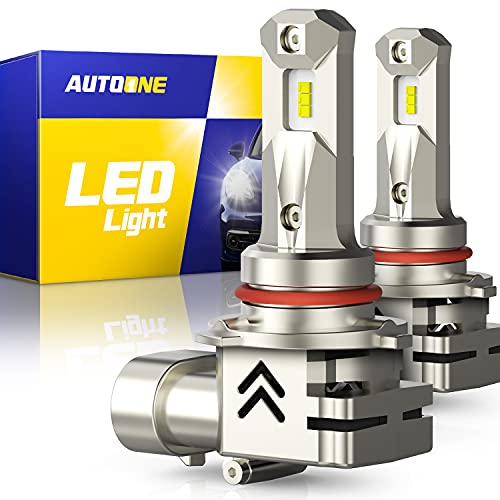
Compatible with Toyota 2003-2022 4Runner, 2004-2020 Sienna, 2007-2013 Tundra/Venza, 1992-2018 Camry/Corolla, 2008-2018 Sequoia, 1995-2012 Avalon, 1998-2005 RAV4/Celia, 1991-2017 Land Cruiser, 2003-2013 Matrix, 2010-2015 Prius; For Jeep Compass 2011-2021, Cherokee 2016-2019, Grand Cherokee 2005-2018, Commander 2006-2010; For Ram 1500/2500/3500 2011-2022; For Honda Accord 1990-2022, Pilot 2006-2022, Ridgeline 2017-2022, Civic 1988-2021, C-RV 2015-2020, Crosstour 2012-2015, CR-Z 2011-2016, HR-V 2019-2022, Odyssey 2005-2020; For GMC Yukon 2002- 2020 Sierra 2500 HD 2001-2020; For Ford F-150 2015-2022, Taurus 2008-2018,Explorer 2002-2019, Expedition 2003-2021
Accessing the Headlight Assembly
Accessing your BMW’s headlight assembly requires removing several exterior components in a specific sequence to prevent damage. Begin by removing the wheel—loosen lug nuts, jack the vehicle, then extract 8mm bolts from the wheel well liner‘s bottom. Detach the liner to expose the headlight area while maintaining proper electrical grounding connections.
Remove the bumper by addressing all retention points: lift headlight washer nozzles with a plastic pry tool, extract T30 screws from the assembly top, and remove 8mm and 10mm bolts from the undercarriage. Disconnect fog light harnesses before full separation. Gradually wiggle the bumper off to avoid damaging wiring harnesses during removal.
Access the headlight by removing two front 10mm bolts, one rear 10mm bolt, and T30 screws. Depress push clips to unplug connectors. This methodical approach preserves headlight alignment during reassembly.

COMPATIBILITY: Universal socket removal tool designed for H8, H9, H10, H11, H12, H13, 9005, 9006, and 9012 headlight and fog light bulbs

Broad Compatibility: Compatible with BMW E82, E84, E87, E88,E90, E91, E92, E93 M3 ,130i ,135i ,330i, 335i, N54, Used to remove factory bushings from above platforms. Also doubles as installation tool for OEM M3 bushings, delrin bushings, or solid aluminum bushings

Product Size: Total length: 100mm Long with T60 Torx End, 1/2" Drive. You can use with 1/2" square drive tools. Used for dual mass flywheel mount bolts.
Removing the Old Bulb
Before extracting the bulb itself, you must first disconnect the electrical connector from the bulb assembly. Pull the connector straight off, wiggling gently if there’s resistance to avoid damaging the retaining clip. Confirm power’s disconnected before proceeding.
Next, release the retention mechanisms securing the bulb. Depending on your BMW model, you’ll either pinch the bottom tabs together, twist the bulb holder counterclockwise, or push the retaining clip back before turning it right. Pay attention to bulb orientation during removal—H7 bulbs require pulling in a specific direction. Unlike the straightforward process on many Honda models, BMW headlight replacement may require removing obstructing components such as battery cables or fuse boxes to gain adequate access to the bulb assembly.
Once released, carefully extract the bulb from the housing without touching the glass. Grab the metal plate near the connector during separation. Position your hands on the bottom portion only to prevent oil contamination or scratches.
Installing the New Bulb
After removing the old bulb, prepare the replacement by gripping only the metal base or plastic connector—never touch the glass surface with bare hands. Skin oils cause premature burnout. For proper bulb handling with H7 bulbs common in 3 Series models, use clean cloth or gloves if contact’s unavoidable.
Follow orientation guidelines by positioning the bulb’s tab or metal plate at 12 o’clock. Insert the top slotted piece into the housing’s corresponding slot, ensuring upward orientation matches removal position. Align bottom pegs into respective slots.
Push the bulb holder in and turn right to lock. Hook the retaining clip downward, lifting the metal tab with your thumb. Align connector pins straight onto the bulb and push firmly until you hear a click. Replacing bulbs in pairs maintains consistent lighting performance across both headlights. Test lights immediately before proceeding with housing reassembly. If the bulb fails shortly after installation, further electrical diagnosis by a professional may be necessary to identify underlying issues.

【Perfect Beam Focus】FORENNER H7 Light bulbs or Headlight Covers feature an ultra-thin 0.03-inch chip pitch, significantly enhancing beam focusing performance. They project a concentrated, precise beam that forms a super-focused light pattern with no dark zones or shadows, effectively eliminating glare for oncoming vehicles. This ensures a wider and longer nighttime field of vision, enhancing driving safety.

Lights Dim Over Time, Replace In Pairs: Your lights are a pair, one is never turned on without the other. If one bulb burns out, the other isn't far behind. Replace your H7 XtraVision Halogen bulbs in pairs for optimum performance.

Each bundle contain 2 bulbs, 2 ballast, and installation accessories
Reconnecting the Electrical Connector
Inspect the electrical connector and socket for signs of heat damage or melting before reinstallation. BMW E46 Xenon headlights commonly exhibit cracked wiring insulation and deteriorated connectors. Check for electroplating transfer from the bulb base to the copper socket, indicating poor connection and excess current. If you’ve identified damage, connector maintenance requires replacement with ceramic connectors for superior heat resistance over plastic alternatives. Apply WD40 to the socket to prevent moisture infiltration, which exacerbates poor connections and causes overheating. Water or condensation inside the headlight housing can damage the adaptive headlight module and compromise electrical connections. For optimal results, ensure both bulbs are replaced simultaneously to maintain balanced lighting performance across your vehicle. Align the connector lugs properly with the bulb contacts. Push the plug firmly into position until you hear an audible click, confirming secure seating. Broken clips can cause the headlight to flicker intermittently during operation. Tug gently to verify the connection’s integrity before proceeding with headlight assembly reinstallation.
Testing Your New Headlight
Once you’ve secured the electrical connector, verify proper bulb operation through systematic testing methods before reassembling the headlight housing. Turn the ignition to accessory position and activate low beam, then high beam separately to confirm both filaments illuminate. Use a multimeter to measure 12–14 volts at the connector under load; lower readings indicate wiring or grounding issues. Check for stable illumination without flickering while slightly revving the engine to detect voltage fluctuations. Inspect the beam pattern by parking on level ground facing a wall at 25 feet, comparing cutoff sharpness and hotspot symmetry against the opposite headlight. Verify bulb performance matches OEM specifications—aftermarket bulbs often vary in output. Before conducting final verification, ensure you have identified whether your vehicle uses HID or halogen lighting packages, as different bulb types require distinct testing protocols. Ensure your replacement bulbs meet DOT and SAE compliance standards to guarantee proper beam pattern and safe operation on public roads. Conduct a final visual inspection ensuring no moisture, correct bulb orientation, and proper seating within the housing reflector. In resistance mode, a properly functioning halogen bulb should display 0.5-5 ohms when tested with the multimeter probes on its metal contacts.
Common Mistakes to Avoid
While replacing your BMW headlight bulb appears straightforward, five critical errors can compromise both installation quality and component longevity. First, verify bulb compatibility—BMW models require specific types like H7 halogen or xenon, and mismatched sizes cause improper fit or glare patterns. Second, never touch halogen glass with bare hands; skin oils create hotspots causing premature failure. Third, disconnect your battery’s negative terminal before starting—HID systems carry dangerous high voltage. Only the ground cable needs to be disconnected for safe electrical work. Fourth, master the installation technique for clips and retainers; BMW’s xenon clips push down then left to release, while H7 bulb tabs must point upward for correct seating. Finally, inspect housing for cracks and confirm gaskets remain clean—moisture ingress degrades bulbs and causes expensive damage. Choosing the correct headlight wiring harness that matches your vehicle’s factory specifications ensures all adaptive lighting features function properly. Remember that proper beam patterns prevent blinding other drivers while maintaining your vehicle’s safety and legal compliance.
When to Replace Both Bulbs
Although one headlight’s failure might tempt you to replace only the burnt-out bulb, BMW technicians recommend simultaneous replacement of both H7 halogen or D1S xenon bulbs for peak performance and safety. Since bulb lifespan averages 450-1,000 hours for halogens, paired installation guarantees uniform aging. When one bulb fails, the opposite side nears end-of-life within weeks.
Single replacements compromise visual symmetry—you’ll notice color temperature differences between new and aged bulbs, creating yellowish tints on the older side. This aesthetic imbalance produces uneven beam patterns that reduce nighttime visibility. Proper headlight alignment after installation ensures optimal light distribution and prevents oncoming drivers from experiencing glare.
Simultaneous replacement prevents voltage imbalance risks and CANbus errors common with LED upgrades. You’ll also halve labor costs by accessing both assemblies during one service interval. For E90 and E92 platforms, where bulb replacement is particularly challenging, performing both sides in one session maximizes efficiency. Replace pairs preventively every two years for prime illumination consistency.

【Visual Enhancement】: The OKOENIEO H7 halogen bulbs are 200% brighter than other halogen bulbs, providing drivers with a wider and farther field of vision. Offering a greater visibility, they allow drivers to spot deer, wildlife, falling rocks, or obstacles ahead of time, ensuring safer nighttime driving.

BRIGHT, CONSISTENT OUTPUT: Provides clear, reliable illumination for everyday driving conditions
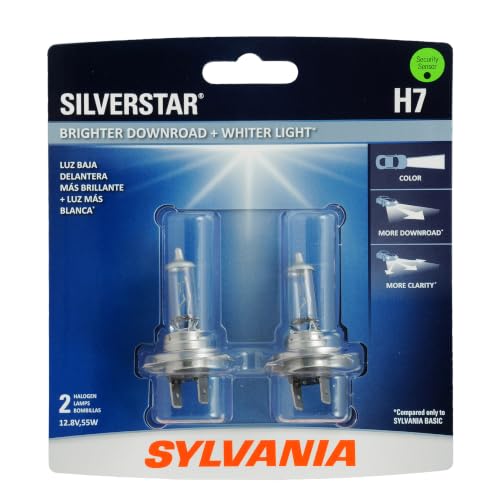
Lights Dim Over Time, Replace In Pairs: Your lights are a pair, one is never turned on without the other. If one bulb burns out, the other isn't far behind. Replace your H7 SilverStar Halogen bulbs in pairs for optimum performance.