LED and projector headlights aren’t mutually exclusive—projectors are housings that work with halogen, HID, or LED bulbs. You’ll get superior performance combining LED bulbs with projector housings, which produce sharp cutoff lines that reduce glare by 23% and improve distance visibility through focused beam concentration. Standard LED reflector assemblies offer wider light distribution but lack precision targeting. IIHS data confirms good-rated projectors reduce nighttime pedestrian crashes by 23% and single-vehicle accidents by 19%. Your specific driving conditions and budget will determine which configuration maximizes your safety benefits.
Understanding the Core Technology Behind Each System
When comparing projector headlights to LED technology, you’re actually examining two different classification systems that often overlap in modern automotive lighting. Projector headlights define a beam formation system with specific core components: an elliptical reflector, cutoff shield, and focusing lens that work together to shape light output. This assembly can use various light sources—halogen, HID, or LED bulbs. LED technology, conversely, describes the light generation method itself through electroluminescence in semiconductor chips. You’ll find LEDs producing whiter, brighter illumination than halogen while consuming less power. The ideal configuration combines both: LED bulbs as the light source within projector housing. This pairing delivers the efficiency and color temperature of LEDs with the precise beam control that projector assemblies provide through their reflective bowl and condenser lens system. Different bulb sizes such as H1, H4, H7, and 9005/HB3 must be matched to your vehicle’s specifications to ensure proper fit and performance. Over time, headlight clarity can diminish due to oxidation and yellowing, which may necessitate restoration to maintain optimal visibility. Projector headlights were first developed in the early 1980s by Citroën and introduced on their luxury CX model.
How Beam Patterns Differ Between Projector and LED Reflector Headlights
The physical arrangement of optical components directly determines how light reaches the road surface and impacts both your visibility and the comfort of oncoming traffic. Projector housings produce a sharp horizontal cutoff that confines high-intensity light to the roadway, preventing upward scatter and glare. Their beam shape concentrates luminous intensity into a narrower, elongated hotspot with controlled lateral spread, improving distance illumination. LED reflector systems lack a dedicated cutoff lens, resulting in gradual shifts between lit and unlit zones. Light distribution from reflectors creates wider, more diffused patterns favoring peripheral illumination but reducing throw distance. When you install LED sources in reflectors not designed for them, improper source geometry produces stray light and excessive glare. Projector optics maintain repeatable cutoff geometry across different bulb types, while reflector performance depends heavily on exact filament positioning, similar to how halogen bulb alignment affects output in traditional assemblies. For traditional reflector systems, careful headlight assembly alignment during installation is critical to achieving optimal beam patterns. Reflectors deliver scattered light output that covers a greater area but lacks the precise beam control of projector assemblies.
Brightness and Visibility Performance Comparison
Although both systems aim to illuminate the road ahead, projector headlights consistently outperform LED reflector setups in measured light output and effective visibility range. You’ll notice projectors achieve superior brightness intensity through concentrated beam control, particularly when paired with LED or HID bulbs. This focused approach delivers medium-high throw distances, illuminating obstacles farther down the road compared to reflectors’ low-medium range capability.
The key advantage lies in how projectors direct light. You’re getting maximum photometric efficiency with minimal scatter, translating to better highway performance through concentrated hot spots. Reflectors distribute light wider but sacrifice brightness intensity across the pattern, creating potential dark spots. LED projectors particularly excel in adverse weather conditions, offering enhanced contrast and cooler color temperatures that improve depth perception and obstacle detection at extended visibility distance ranges. Laser headlights can extend visibility up to 600 meters, providing even greater range for high-speed driving scenarios. Reflector headlights, while sufficient for standard driving conditions, may struggle to provide the same level of performance in challenging environments. Additionally, LED headlights generate less heat for improved durability and safer operation during extended use.
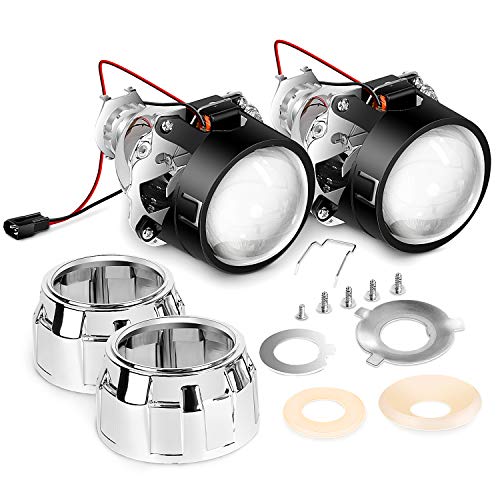
H1 mini projector kits (low/high beams), fit in tight spaces for quad retrofits or fog lamp upgrade

【Non-destructive Installation】 Bi-led projector lens features a threaded-shaft style mount on the back that allows the projectors to be locked on their car headlight hardware,it can be mounted in H4/H7/9005/9006 reflectors with none or minimal modifications,decrease the risk during installing.

Fit for most H1/H4/H7/H11/9005/9006/9007/H13 housings with modifications
Safety Considerations for You and Oncoming Traffic
Safety on nighttime roads depends critically on your headlights’ ability to illuminate your path while protecting oncoming drivers from debilitating glare. Projector headlights excel at glare management through their sharp cutoff shields, preventing scattered light that blinds approaching vehicles. This controlled beam pattern delivers superior down-road visibility—IIHS data shows good-rated headlights reduce nighttime pedestrian crashes by 23% and single-vehicle crashes by 19%.
Reflector housings create broader scatter patterns, particularly when retrofitted with LEDs that disrupt beam control. The bowl-shaped reflective surface in reflector headlights directs light through multiple reflections, which can produce a less controlled beam compared to the lens-based system in projectors. LED headlight bulbs offer longer lifespan and improved energy efficiency compared to traditional halogen alternatives. Since half of traffic deaths occur during dark conditions, your headlight choice directly impacts nighttime safety. Properly aimed projector low beams illuminate the road ahead without compromising oncoming driver vision, while curve-adaptive systems further enhance performance. Scientific testing consistently demonstrates projector housings outperform reflectors in real-world safety scenarios.
When Projector Headlights Outperform LED Reflectors
In adverse weather, focused projector beams reduce backscatter in fog and minimize veiling glare on wet pavement. Integrated thermal management in projector-LED assemblies sustains output longer than passive reflector retrofits, preventing premature dimming. The sharp cutoff line from projector headlights improves visibility without blinding oncoming drivers. Premium LED bulbs like the GTR Lighting Ultra 3 can achieve significantly greater brightness when paired with projector housings compared to reflector designs.

What You Will Get: After purchase, you will receive 2 pieces of LED halo fog lights, With mounting accessories 2 brackets.When installing, there is no need to drill or weld, just tighten the screws,main White light Wihte light angel eyes

【Super Bright】Super bright COB LED lamp beads + Red angel eye halo, high brightness, even in heavy rain and fog, it can let you drive safely

Advanced Projector Lens Design: The specialized top projector lens tightly focuses the light beam onto the road, maximizing forward visibility in bad weather without blinding oncoming traffic
Where LED Reflector Headlights Have the Edge
When cost-effectiveness meets performance requirements, LED reflector headlights deliver measurable advantages over projector systems. You’ll achieve superior energy efficiency with power consumption 40-60% lower than projector-housed HIDs, reducing electrical system load and improving fuel economy. The longevity durability factor proves significant—50,000+ operating hours eliminate frequent replacements that plague halogen reflectors while matching or exceeding projector LED lifespans at lower installation costs.
You gain instant full-brightness activation without HID warmup delays, critical for rapid response scenarios. The compact LED design resists moisture and vibration damage better than complex projector assemblies. LED reflectors offer broader light spread that illuminates more area around your vehicle, enhancing peripheral visibility on winding roads. Premium LED headlights distinguish themselves through advanced heat dissipation technology that maintains optimal performance in demanding driving conditions. LED technology provides superior illumination quality compared to traditional halogen systems, ensuring better nighttime visibility and road safety. For fleet applications, you’ll realize substantial total cost of ownership reductions through decreased maintenance intervals and energy savings. When your priority balances budget constraints with reliable nighttime visibility, LED reflectors provide quantifiable operational benefits without projector complexity.

VEHICLE FITMENT: The LED DRL headlights are Compatible with 1999-2007 GMC Sierra 1500;Compatible with 2001-2007 GMC Sierra 2500 HD / 3500 / 1500 HD;Compatible with 1999-2004 GMC Sierra 2500;Compatible with 1999-2006 GMC Yukon;Compatible with 2000-2006 GMC Yukon XL 1500 / 2500;Does NOT Compatible with All Denali Trims. For 2007, Fits Classic Models Only;9005 High / 9006 Low Beam;Bulbs NOT Included

【Up to 1500% More Light – Unmatched Nighttime Clarity】Each Termitor H11/9005 light bulb kit packs 16 high-output CSP LEDs, boosting brightness by up to 15 times compared to standard halogens. The crisp 6500K cool-white beam improves road visibility and eases eye fatigue, so you can spot hazards farther ahead and drive more assuredly in any dimly lit environment.

Compatibility: LED DRL Headlights assembly compatible with 2009-2014 Ford F150(Not for stock HID Model); High beam bulb type: H13; Low beam bulb type: H13; Turn signal: 3157NA; Side light: W5W; Bulbs are not included; Professional installation would be highly recommended
Cost Analysis and Retrofit Installation Requirements
Budget constraints drive headlight selection as decisively as performance specifications, with initial investment and lifecycle costs varying dramatically across technologies. Reflector headlights offer minimal upfront expense but generate higher long-term costs through frequent replacements and energy inefficiency. Projector systems occupy the middle ground at $40-$250, while LEDs command premium pricing ($50-$350)—typically 30% above comparable HID options. However, LED’s 45,000-50,000+ hour lifespan delivers superior cost breakdown value over time. Quality D1S bulbs and other premium xenon options should meet DOT and ECE regulations to ensure compliance and optimal performance.
Installation challenges escalate with complexity. Reflector swaps remain straightforward, while projector retrofits demand specialized lens alignment and shield positioning, increasing labor expenses. LED retrofits into projector housings aren’t recommended without complete assembly replacement—mismatched components create suboptimal beam patterns. You’ll need compatible bulb selection and housing verification for successful upgrades, though post-installation maintenance remains minimal across both technologies. Many modern LED headlights also incorporate daytime running lights that automatically activate when the engine runs, providing additional safety benefits during daylight hours. For fleet operators, bulk ordering of LED headlights can eliminate reordering costs while securing better unit pricing through supplier negotiations.

【Unique Angel Eyes Shrouds】3.0 Inch angel eyes switchback Shrouds comes with turn signal feature,unique appearance makes your car look more attractive.

800% Brighter & 99% Brightness Retention - Somaer H4/9003 LED Fog Bulb Lights deliver 50000LM 6000K cool white light, 8x brighter than original halogen bulbs, with a 1200FT super long illumination distance. Unlike halogen bulbs that only retain 10% brightness after 6000H, our LED fog bulbs keep 99% brightness—almost zero light decay, greatly reducing replacement frequency and saving your cost

Upgrade Canbus Decoder: Xprite H7 LED canbus decoder adopts resistor and capacitor error-free design to provide a more stable and reliable performance. The heavy-duty case enhances heat dissipation and safety protection, ensuring a longer lifespan.
Choosing the Right Headlight System for Your Driving Needs
Performance requirements and usage patterns determine ideal headlight architecture more than price alone. If you frequently drive rural highways at night, projector systems deliver superior long-range visibility through concentrated beam focus and sharp cutoffs. Urban commuters benefit from reflector housings‘ wider peripheral spread for cross-traffic detection. Among headlight types, factory Bi-LED projectors outperform retrofit LED-in-halogen conversions by matching optics to source geometry, eliminating hot spots and glare risks. Evaluate driving conditions systematically: heavy rain or fog favor 4000–5000K CCT over cooler temperatures that scatter blue light. Frequent off-highway use demands robust thermal management; confined projector enclosures accelerate LED degradation without adequate heatsinks. LED headlights offer 10,000 to 100,000 hours of operational life, dramatically outlasting traditional halogen bulbs and reducing long-term maintenance costs. Regulatory compliance matters—high-output retrofits often violate beam-intensity standards. Match technology to mission-critical needs rather than maximum advertised lumens.

【Fashion Football Style】The upgrade fashion honeycomb design,makes your car stand out from numerous cars and makes your car looks more attractive

KIT INCLUDES: 1 - 3M Trizact Refining Disc 1000 grit, 3 in/7.6 cm 1 - 3M Trizact Refining Disc 3000 grit, 3 in/7.6 cm 2 - 3M Quick Headlight Clear Coat Wipes 1 - Foam Pad with 3M Hookit Attachment, 3 in/7.6 cm 1- Disposable Glove
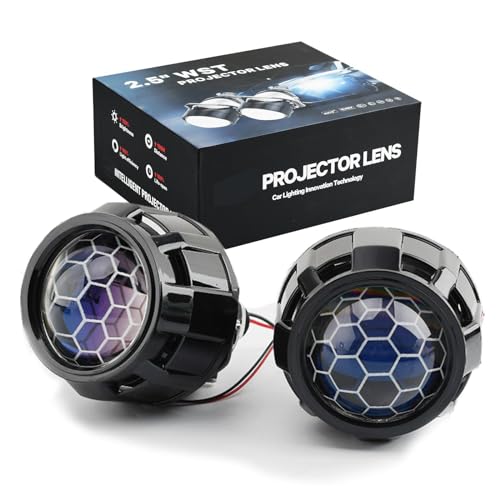
【NON-DESTRUCTIVE INSTALLATION】With threaded shaft,direct replacement for H1 H4 H7 9005 9006 bulbs with none or minimal modifications.