Xenon headlights use high-intensity discharge (HID) technology that generates light through an electric arc between electrodes in pressurized xenon gas. You’ll get approximately 3,000 lumens of output—more than double halogen’s 1,400 lumens—with color temperatures ranging from 4,300K to 6,000K that mimic natural daylight. The system requires a ballast delivering 23,000-24,000 volts for ignition before stabilizing at 85 volts, consuming about 35 watts while lasting 2,000-3,000 hours. Understanding the technical mechanisms, performance metrics, and comparative advantages reveals how these systems balance visibility, efficiency, and longevity.
How Xenon Headlights Work
When you activate xenon headlights, they generate light through an electric arc discharge rather than heating a filament like conventional halogen bulbs. The ballast delivers a high-voltage pulse of 23,000-24,000 volts to ionize the xenon gas inside the sealed quartz capsule, creating a plasma arc between tungsten electrodes. This arc discharge reaches temperatures up to 10,000°C, producing intense white light similar to natural sunlight. After ignition, the ballast reduces voltage to approximately 85 volts to maintain stable operation. The xenon bulb construction includes a pressurized quartz tube containing xenon gas, mercury vapor, and metal halide salts, with electrodes mounted on thermal-expansion-resistant alloy strips. Unlike filament-based systems, the entire light output originates from ionized gas plasma, enabling superior efficiency and approximately 3,000 hours of operational lifespan. These headlights consume only 35 watts of power, making them significantly more energy-efficient than the 55 watts required by standard halogen bulbs.
Superior Brightness and Enhanced Visibility
The plasma discharge mechanism that powers xenon headlights directly translates into measurable performance advantages on the road. You’ll experience light output reaching 8000 lumens at 55W—a 600% increase over halogen’s 1400 lumens. This brightness extends your visibility range substantially, particularly critical for highway driving.
The color temperature of 4300K to 6000K mimics natural daylight, enhancing contrast and reducing eye strain during nighttime operation. You’ll detect road signs and hazards faster, with improved target recognition times compared to halogen systems. Independent testing confirms 2-3% better light penetration in fog conditions. Xenon HID headlights also offer a significantly longer lifespan than traditional halogen bulbs, reducing the need for frequent replacements.
These performance metrics directly correlate with enhanced road safety outcomes. The system’s whiter light spectrum maintains natural depth perception while providing superior peripheral vision coverage, enabling earlier obstacle identification in challenging driving environments. The longer illumination range proves especially beneficial during high-speed driving on highways and rural roads. Proper headlight cover maintenance ensures the xenon system continues to deliver optimal brightness and performance throughout its operational life.

2pcs packaged; Replacement part number: 66144 66140 85140 85415 (If there is any problem in the product,please feel free to contact us)
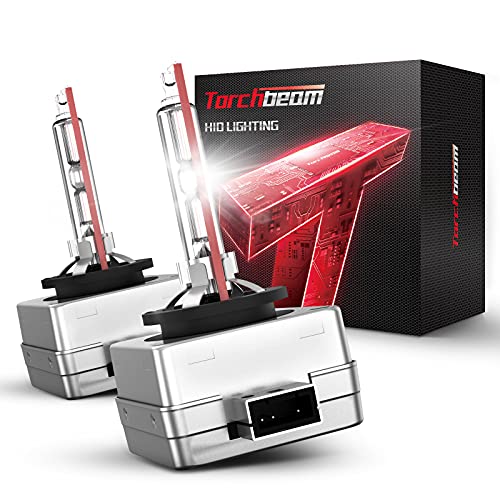
Safer Night Driving: Torchbeam d1s bulbs made with German xenon gas, 300% much brighter than halogen bulbs. Replacement OEM Part Number: 66140, 66140CBI, 66144, 66144CBI, 85415C1, 85415WX, 85415XV, 85410C1, 85410WX, ect.

【IMPORTANT】Replacement for factory D2S HID bulb only, NOT fit if your car stock Halogen headlight bulb even system say "fits".
Longevity and Reliability of Xenon Bulbs
Operating between 2,000 to 3,000 hours under standard driving conditions, xenon bulbs deliver exceptional longevity that translates to approximately 10 years of service life for typical vehicle usage patterns. This lifespan comparison reveals xenon technology greatly outperforms halogen alternatives, which deteriorate within 200-600 hours. You’ll notice xenon bulbs gradually dim rather than fail abruptly, shifting from white-blue to yellowish hues as bulb degradation progresses. Environmental factors including vibrations, temperature extremes, and UV radiation accelerate wear patterns, though xenon’s arc-based design resists shock better than filament systems. Xenon bulbs are typically used in projector headlight designs that optimize their precise light distribution capabilities. For 2016 Nissan Rogue owners considering xenon upgrades, it’s important to verify that HID conversions comply with local vehicle modification regulations before installation. Selecting approved manufacturers like OSRAM or Philips mitigates degradation rates while maintaining stable light output. Despite higher initial costs, reduced replacement frequency and enhanced operational reliability offset expenses, though eventual replacement remains more expensive than halogen equivalents. Xenon headlights also demonstrate superior energy efficiency compared to halogen bulbs while producing greater light output.
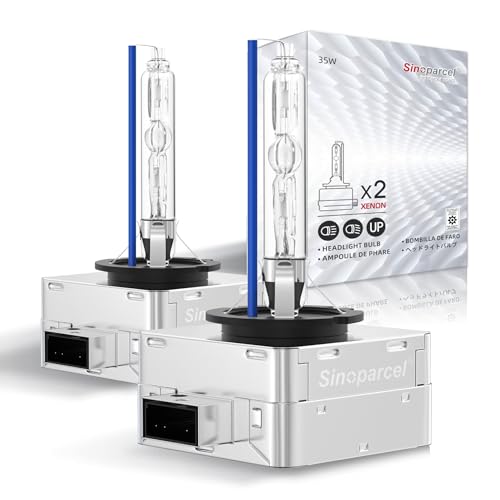
Life time support,2pcs packaged; Replacement part number: 66144 66140 85140 85415 (If there is any problem in the product, please contact us via Account Center,we will reply you within 24 hours)
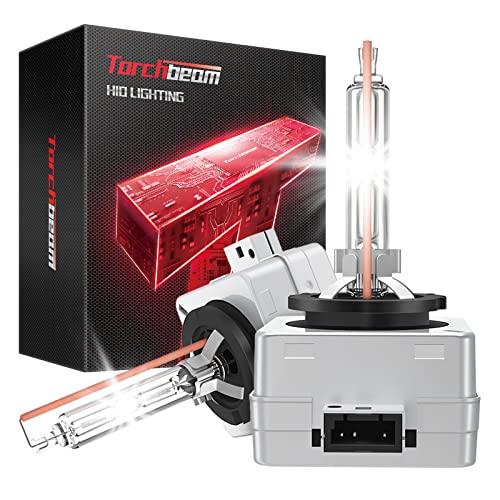
Safer Night Driving: Torchbeam d3s bulbs made with German xenon gas. Replacement OEM Part Number: 42302C1, 42302(WX/XV), 42403(C1), 66340, 66340CBH, 66340CBI, ect.

【IMPORTANT】Replacement for factory D1S HID Bulb only, NOT fit if your car stock Halogen headlight bulb even system say "fits".
Energy Consumption and Electrical Requirements
Consuming approximately 35 watts per bulb during steady-state operation, xenon headlights draw roughly 50% less power than their 55-60 watt halogen counterparts while delivering double the luminous output at 3,000 to 5,000 lumens per unit. Your vehicle’s 12V or 24V electrical system requires specialized ballasts for proper power management, converting standard voltage into the 20-50 kV pulse needed for xenon gas ionization at startup. Following ignition, these ballasts maintain stable current flow, preventing flickering and thermal instability inherent to xenon’s negative temperature coefficient. While initial startup demands higher power briefly, continuous operation stabilizes at nominal wattage, reducing alternator load compared to halogens. The white-blue light produced by xenon systems closely resembles natural daylight, enhancing road visibility and contrast recognition. This energy efficiency advantage positions xenon between halogen and LED technologies, though LEDs consume up to 95% less power while producing 8,000-10,000 lumens. Proper wiring harnesses and connectors ensure reliable electrical connections between your vehicle’s electrical system and xenon headlight components, maintaining consistent power delivery and preventing voltage drops that could compromise performance.

HID HEADLIGHT BALLAST REPLACEMENT - Also known as headlight control unit, a crucial part of hid lighting system, provides the voltage needed to start the lamp and regulates the electrical current of the light once it is lit. A failed ballast will cause your bulb to burn. When the voltage is input, the output power of the ballast can be kept constant at about 35W or 50W to protect the HID bulb from damage. The ballast fits either the left or right hid headlights.

【KDLT003 Ballast replacement】Also known as Headlight Control Unit, a crucial part of HID lighting system, provides the voltage needed to start the lamp and regulates the electrical current of the light once it is lit. A failed ballast will cause your bulb to burn. It is a perfect solution for 2004 2005 2006 2007 2008 2009 2010 2011 2012 2013 2014 Lexus SC430 ES350 ES350h LS460 LS460L LS600h RX350 RX450h GX460 GS300 GS350 GS430 GS450h Gs460 IS250 IS350 IS350F IS250C

[Vehicle Fitment]: Compatible with 2002 2003 2004 2005 Acura TL, 2002-2005 Acura TL Type-S, 2004-2005 Acura TSX, 2004 2005 2006 2007 2008 2009 Honda S2000,2004-2006 Mazda 3 (2006 Mazda 3 Pls check OEM before purchasing).
Key Components and System Variants
At the heart of every xenon headlight system lies a precisely engineered trio: the HID bulb, ballast assembly, and optical housing—each component fulfilling distinct technical requirements for reliable high-intensity discharge operation.
The bulb contains xenon gas and metal salts within a sealed quartz arc tube, producing light through ionized plasma between tungsten electrodes. Your ballast transforms 12V vehicle supply to 24kV ignition voltage while regulating current for stable arc discharge. Component interaction determines system efficiency: ballasts integrate igniters for initial gas ionization, while reflector or projector optics control beam patterns. When selecting xenon systems, drivers should consider color temperature preferences, as this affects both visibility and aesthetic appeal.
You’ll encounter two primary variants: standard HID systems using separate high and low beam bulbs, and bi-xenon configurations employing movable shields with single bulbs. OEM installations optimize these integrated units for compliance and reliability. Advanced xenon systems incorporate levelling motors that automatically adjust beam height based on vehicle suspension changes to prevent glare for oncoming traffic.

Each bundle contain 2 bulbs, 2 ballast, and installation accessories
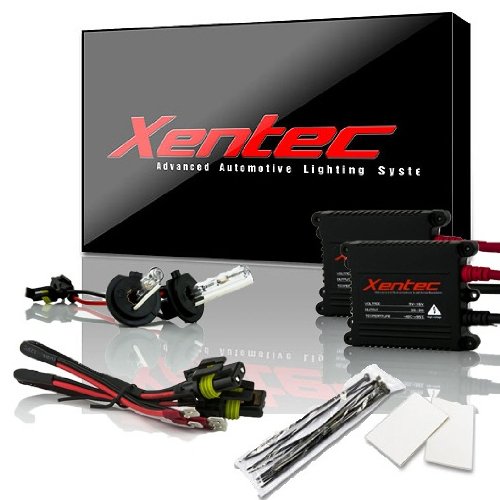
Each bundle contain 2 bulbs, 2 ballast, and installation accessories

Each bundle contain 2 bulbs, 2 55W Platinum ballast, and accessories
Xenon vs. Halogen and LED Headlights
When comparing headlight technologies, xenon HID systems occupy a middle ground between traditional halogen and modern LED architectures—each delivering distinct performance characteristics that affect illumination output, energy consumption, and operational longevity.
Xenon advantages include considerably brighter output at 3000 lumens versus halogen’s 1400 lumens, superior color temperature (4000K-6000K), and extended lifespan of 2,500 hours. Halogen drawbacks encompass poor energy efficiency with excessive heat waste, frequent bulb replacements every 200-400 hours, and yellowish illumination reducing nighttime contrast.
LEDs surpass both technologies in efficiency and durability, achieving 5,000+ hour lifespans with minimal heat generation. However, xenon systems deliver comparable lux measurements—averaging 1100 lux versus halogen’s 650 lux—while maintaining lower cost than LEDs. Unlike LEDs, which reduce power consumption by 50-80% compared to traditional bulbs, xenon systems still consume considerably more energy than LED alternatives. Xenon headlights typically produce around 3,000 to 8,000 lumens with raw brightness that can potentially cause more glare for oncoming traffic. You’ll find xenon requires ballasts and leveling systems, increasing complexity beyond halogen’s simplicity. The Insurance Institute for Highway Safety evaluates headlights using ratings of good, acceptable, marginal, or poor based on light reach and side illumination performance.

Each bundle contain 2 bulbs, 2 ballast, and installation accessories
Each bundle contain 2 bulbs, 2 55W Platinum ballast, and accessories
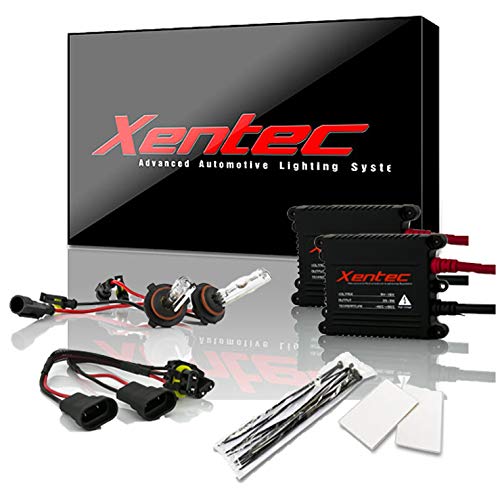
Each bundle contain 2 bulbs, 2 ballast, and installation accessories