

You’ll find H7 headlight bulbs in numerous vehicles across multiple manufacturers, including BMW 3/5 Series, Audi A3/A4/A6, Mercedes-Benz C-Class and E-Class, Volkswagen Golf MK6/MK7 and Passat, Toyota Corolla (2002-2013) and Camry (2000-2012), Ford Focus and Mondeo, Hyundai Sonata and Elantra, and Kia Optima models. These standardized 55W single-filament bulbs deliver focused beam patterns that meet strict automotive lighting regulations. Whether you’re driving a German luxury sedan or a Japanese economy car, understanding H7 compatibility, LED upgrade options, and regional specifications will help optimize your vehicle’s lighting performance.
German Luxury Vehicles That Rely on H7 Bulbs
While newer luxury vehicles shift to full LED systems, H7 halogen bulbs remain the standard low beam solution across numerous German luxury models from the 2000s and early 2010s. You’ll find H7 bulbs in BMW’s E90/E46 3 Series, E39/E60 5 Series, and X3/X5 generations, where luxury performance meets practical serviceability. Audi’s A3, A4, A6, and Q5 from earlier production years utilize single-filament H7 configurations for low beam applications. Mercedes-Benz C-Class (W204), E-Class (W211), and Sprinter vans also employ H7 bulbs as their primary low beam solution.
H7 retrofitting requires careful consideration of CANbus compatibility. You’ll need decoders or adapters when upgrading to LED variants, as these vehicles feature advanced electrical monitoring systems that detect non-OEM resistance values. Performance halogen options like Osram NIGHT BREAKER deliver up to 220% increased brightness while maintaining factory specifications. The compact size of H7 bulbs has contributed significantly to their widespread adoption among European automakers.

【Vacuum Precision Optical Blue Film Technology】Engineered with a micron-level optical blue coating to reduce the deep-yellow appearance of conventional halogen bulbs and deliver a clearer, less-yellow warm-white beam. The coating also acts as a thermal insulator with enhanced UV protection, effectively slowing oxidation, yellowing, and premature aging of the headlight housing. Please note: this bulb delivers an enhanced warm white halogen output — not the cool white appearance of HID lighting

UP to 300% Brighter—Clearer Warm White Light Vision: Littlelucky H7 halogen bulbs output a 3800K,4000LM warm white light, experience up to 300% brighter for clearer vision in low-light and fog etc conditions, enhancing driving safety and visibility

【Visual Enhancement】: OKOENIEO H7 headlamp bulbs are brighter than ordinary halogen bulbs. The upgraded version of halogen bulbs provides precisely focused light, with a transparent center area that enhances transmittance and penetration, concentrates the beam output, and eliminates common issues such as glare or light scattering.The blue-zone coating filters out yellow light to deliver purer, brighter white light, while also protecting the lampshade from heat damage.
Popular Volkswagen Models Equipped With H7 Headlights
Volkswagen’s mainstream lineup relies heavily on H7 single-filament bulbs for low beam applications, particularly across models manufactured between 2002 and 2017. Your Golf MK6 (2008-2014) and MK7 (2012-2017) utilize standard 55W H7 configurations, with GTI variants benefiting from LED aftermarket solutions delivering 3000 lumens at 6000K. Passat B7 generation (2011-2014) maintains H7 bulb applications with CANbus-compatible upgrades preventing electrical errors. Tiguan models (2007-2017) require proper retainer clips for secure H7 installation, while Scirocco Mk3, Touran 1T3, and Polo variants share this specification. Jetta compatibility extends from 1999-2014 models. To ensure proper installation and function, carefully disconnect the wiring harness before removing the old bulb. Modern LED replacements offer 30,000+ hour lifespans with plug-and-play integration across these Volkswagen models, requiring verification of base retainer types for ideal Tiguan features and Passat integration before purchasing aftermarket solutions. LED bulbs provide enhanced night vision capabilities that improve visibility and safety during low-light driving conditions. Premium upgrade options provide 25000 LM total output through dual-bulb configurations operating at 120W combined power for significantly enhanced visibility.

【500%+ Brighter & Advanced Fanless Cooling】 Upgrade your H7 LED bulbs for night highway driving and dark rural roads. Marsauto M1C delivers 30,000LM of 6500K cool white light – 500%+ brighter than halogen H7/H7LL bulbs. Our fanless passive cooling system provides 0 dB quiet operation with no moving parts to fail.

Worry-Free Fanless Cooling: Fanless H7 LED design means no fan failure—stable light output, safer long-term use
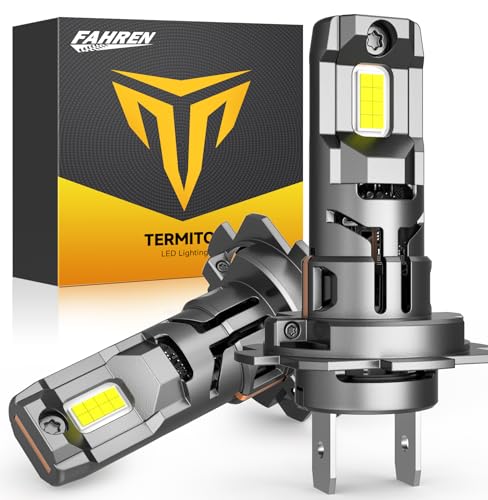
Outstanding 90000LM & 6500K Natural White: Built with high-efficiency luminous chips, these H7 bulbs Accessory Light Kits output stable 1300% brightness and 6500K standardized cool white color temperature. Precision beam shaping eliminates astigmatism and dark zones, with accurate cutoff line controlling stray light. It significantly improves night visibility without dazzling oncoming vehicles for safer driving.
Japanese Car Brands Using H7 Bulb Technology
Japanese automotive manufacturers standardized H7 bulb technology across their mainstream models throughout the 2000s and early 2010s, prioritizing compatibility with 12V, 55W halogen systems using PX26d socket bases. You’ll find H7 bulbs in the Toyota Corolla (2002-2013 international variants) and Camry (2000-2012), delivering 1100-1500 lumens for low-beam applications. The Nissan Altima and various models adopted this configuration to meet Japanese OEM lighting standards. Honda Civic implementations favored H7 bulbs in older generations and international markets, while newer North American models transitioned to H11 halogen bulbs for low beam and 9005 bulbs for high beam applications. The Subaru Forester utilized them in specific model years for balanced light distribution. Koito, Japan’s premier OEM supplier, manufactures most factory-installed H7 bulbs for these brands, ensuring durability and performance longevity. The RAV4 (2006-2012) and Yaris (2005-2011) complete Toyota’s H7 adoption pattern. These H7 installations feature a twist-lock mechanism for secure bulb mounting in the headlight housing assembly.
Hyundai and Kia Vehicles With H7 Compatibility
Korean automotive giants Hyundai and Kia implemented H7 bulb technology across their mid-range sedans and SUVs from the early 2000s through the late 2010s, though their adoption patterns differ markedly from Japanese manufacturers. Hyundai models like the Sonata (2002-2005), Elantra (2004-2006), and Tucson (2016) standardized H7 low beams, while Kia models including the Optima (2014-2015) and Sedona (2012-2018) followed suit with specific trim variations.
H7 bulb installation in these vehicles presents unique challenges due to proprietary OEM retainers incompatible with universal clips. You’ll need specialized adapters or integrated-adapter bulbs for proper fitment, particularly for LED upgrades. Without compatible retainers, you’ll risk loose mounting, poor thermal management, and water ingress. High-performance LED replacements deliver 3,000-13,200 lumens with IP67 waterproofing and 50,000-hour lifespans, vastly exceeding halogen performance. Consider factors like color temperature and beam pattern when selecting LED upgrades to ensure optimal visibility and safety for your driving conditions. Certain Hyundai and Kia models may require additional resistors to prevent dashboard error codes when upgrading to LED bulbs.

Material: This H7 bulb holder is made of high-strength and high-temperature resistant plastic, featuring outstanding mechanical strength and flame retardancy. It can operate stably in extreme temperature environments, is waterproof and corrosion-resistant, and is durable

Fits: 2017 Mitsubishi Outlander SE/2018 Mitsubishi Outlander PHEV/2016 Kia Optima /2014 Cadenza/Kia Optima 2012 Korean version/2015 Kia Optima/2014 2016 Kia Sorrento/genesis coupe 2.0t 2013 premium/2017 Forte/Kia K5 Corean/2013 Veloster/2016 Mitsubishi Outlander SEL/2013 2014 2016 Hyundai Veloster/2017 KIA (K7)Cadenza/2013 Hyundai Genesis coupe/2012 Valositer/2014 Genesis coupe/2013 Genesis/2016 Veloster turbo/2014 2015 veloster/2017 hybrid low beam/2012 Hyundai Genesis sedan

H7 halogen upgraded to bulb, easy to install, plugs into existing factory headlight assembly. Please check your vehicle model before purchasing. If you are unsure if this product is compatible with your vehicle, simply open the hood and compare this product to the stock headlight socket.
Ford and Jaguar Models Featuring H7 Bulbs
While Hyundai and Kia dominated the Asian market’s H7 adoption, Ford Motor Company integrated this bulb standard extensively across its global lineup from the mid-2000s through 2018, with its premium Jaguar subsidiary following parallel implementation timelines. Ford bulb compatibility spans the Mondeo Mk4 (2007-2014), Focus (2004, 2012-2018), Fusion (2006-2016), Escape (2005-2007), and Explorer (2011-2015) models, utilizing single-filament H7 assemblies for low or high beam configurations. Jaguar bulb upgrades prove straightforward across XF (2008-2015), XJ (2003-2009), S-Type (1999-2007), and XK (2006-2014) platforms. LED conversions require anti-flicker modules and wiring adaptors to prevent dashboard warnings. The energy-efficient LED variants deliver superior performance compared to traditional halogen options while consuming less power, with proper beam alignment being essential to avoid blinding oncoming traffic. Both manufacturers offer Motorcraft-branded OEM replacements through dealership channels, ensuring DOT-compliant beam patterns and headlight assembly integrity across their H7-equipped vehicle ranges.
European Car Manufacturers and Their H7 Applications
European automotive manufacturers established H7 standardization earlier than their global counterparts, implementing single-filament PX26d base assemblies across mass-market and premium segments beginning in the late 1990s. BMW’s 3 and 5 Series leverage H7 bulb applications for optimized low beam focus, while Mercedes-Benz halogen-equipped models employ identical socket configurations. Volkswagen Group brands—including VW, Audi, Seat, and Skoda—standardized H7 across Golf, Jetta, Passat, A3, A4, and A6 platforms for consistent beam pattern control. Volvo integrates H7 systems requiring manufacturer-specific adapters for LED retrofits. European car brands prioritize single-filament H7 design over dual-filament alternatives, maximizing light output efficiency and regulatory compliance. Road-legal LED upgrades like Philips Ultinon Pro6000 and Osram Night Breaker LED maintain EU approval status, though CANbus decoders and retainer adapters verify electrical compatibility across varying manufacturer specifications. When selecting H7 bulbs, drivers should evaluate brightness output, beam pattern quality, and longevity to ensure optimal performance. Premium H7 bulbs offer advanced lighting technologies that enhance night visibility while maintaining compliance with European safety standards. The Philips Ultinon Pro6001 H7-LED has become the first road-legal LED headlight bulb in France, granted homologation certificate TP LED 21072 in accordance with national regulations.
Technical Advantages of H7 Single Filament Design
Single-filament architecture positions H7 bulbs as precision instruments rather than general-purpose lighting components, delivering focused beam patterns that dual-filament designs can’t match. Your vehicle’s reflector housing aligns specifically to the single filament position, maximizing beam precision for long-distance illumination while minimizing scatter and glare.
The PX26d base configuration guarantees correct installation every time, eliminating interchangeability errors that compromise performance. You’ll achieve superior energy efficiency with consistent 55-watt halogen consumption or dramatically reduced power draw when upgrading to LED variants.
Simplified mechanical design reduces failure points within the bulb structure, while improved heat dissipation extends operational lifespan—LED H7 bulbs deliver 30,000-50,000 hours. You can upgrade individual beam functions independently, maintaining ideal light output without affecting complementary systems. For drivers seeking enhanced visibility and safety, pairing H7 bulb upgrades with brightness and longevity improvements ensures optimal headlight performance across various driving conditions. For drivers with cloudy or oxidized lenses, consider pairing H7 bulb upgrades with UV-protective clear coat treatments to maximize overall headlight performance. This standardized single-filament format supports both OEM and aftermarket applications across global markets. German automotive brands like BMW and Mercedes Benz prominently feature H7 bulbs in their lighting systems, requiring separate base plates for high and low beam functions.
LED Vs Halogen H7 Bulb Options
The performance gap between LED and halogen H7 bulbs extends far beyond simple brightness comparisons—you’re choosing between fundamentally different lighting technologies with distinct thermal, electrical, and optical characteristics. LED bulb advantages include superior luminous output (2,500-24,000 lumens versus halogen’s 1,200-1,500), dramatically extended lifespan (10,000-50,000 hours compared to 400-1,000), and notably reduced power consumption (14-40W versus 55W). Advanced LEDs incorporate aviation-grade aluminum heat sinks, IP67-rated environmental protection, and CANbus compatibility for modern vehicles. Halogen bulb disadvantages center on filament-based construction vulnerability to shock damage, excessive heat generation, and accelerated degradation. However, road-legal LED selection requires DOT or ECE certification—beam pattern compliance matters as much as raw brightness when evaluating replacement options for your vehicle’s lighting system. Improper LED installations in halogen housings can create uneven light distribution that produces blind spots and glare for oncoming drivers, making professional conversion kits essential for safe upgrades. Modern LED technology produces a whiter, bluer light that mimics daylight, which enhances visibility while requiring careful beam alignment to prevent the glare and discomfort issues experienced by other motorists. Both LED and halogen H7 bulbs operate at 12 volts standard, making them compatible with most modern vehicle electrical systems.

【900% Brighter】 Quality over quantity, SEALIGHT S2 series is a new series of high power, high lumen bulbs, The H7 bulbs focus on the refinement of each of chips, featuring a meticulously crafted design with 8 large high-performance chips. SEALIGHT H7 led bulb delivers 95000LM of light output, 6500K cool white, which is 900% brighter than original light bulbs, providing more crisp and precise light, ensuring safety at night driving and severe weather conditions.

Upgrade Canbus Decoder: Xprite H7 LED canbus decoder adopts resistor and capacitor error-free design to provide a more stable and reliable performance. The heavy-duty case enhances heat dissipation and safety protection, ensuring a longer lifespan.

Each bundle contain 2 bulbs, 2 55W Platinum ballast, and accessories
Regional Differences in H7 Bulb Adoption
Global automotive markets demonstrate sharply divergent H7 bulb adoption patterns driven by regulatory frameworks, economic development levels, and regional manufacturing standards. North America commands 32% global market share, while Asia-Pacific holds 42.6% of car bulb revenue, with China representing 59.8% within APAC. Market trends show Europe’s fastest growth at 11.3% CAGR through 2032, influenced by UN ECE R149 regulations favoring LED technology. Regional adoption varies greatly—emerging markets in India and Southeast Asia increasingly deploy H7 halogens due to affordability, whereas Europe’s mature automotive sector gradually shifts toward energy-efficient alternatives. Middle East and Africa markets demonstrate 7.34% CAGR, with harsh climates favoring durable halogen variants. Economic factors considerably influence regional preferences, as middle-income populations in Asia and South America sustain H7 demand in mass-market vehicles. Strategic investments in R&D for innovative lighting technologies are reshaping regional headlight markets as manufacturers respond to evolving consumer demands for safety and performance.
Upgrading to Modern H7 LED Replacements
Modern H7 LED replacements deliver transformative performance upgrades over conventional halogen technology, achieving lumen outputs approaching 32,000 lumens while consuming up to 80% less power. LED advantages include 50,000+ hour lifespans—25 times longer than halogens—plus superior shock resistance and reduced thermal load on headlight assemblies. You’ll benefit from crisp white light distribution that enhances nighttime visibility while maintaining proper beam patterns through precise emitter positioning. The 6500K color temperature produces a natural daylight appearance that reduces eye strain during extended driving. These superior brightness levels and color temperatures significantly improve driving safety compared to traditional halogen bulbs.
Installation tips require battery disconnection, careful bulb handling without glass contact, and proper alignment verification. Some vehicles demand CANBUS decoders or anti-flicker modules to address dashboard errors from reduced power consumption. Premium units integrate aluminum heat sinks and silent turbofans for thermal management. Proper heat dissipation technology ensures optimal performance and longevity in demanding driving conditions. Verify local regulations regarding brightness and beam pattern compliance before upgrading, as not all LED replacements meet regional standards.
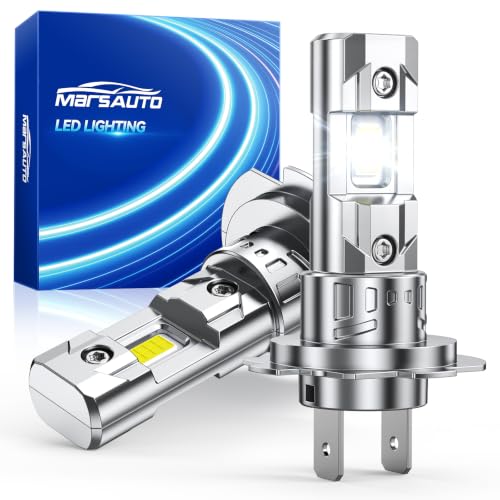
【30,000LM Ultra-Intensity & 6500K Daylight Clarity】Engineered to dominate the darkness, these H7 bulbs unleash a staggering 30,000LM of raw luminous power, offering a 600% brightness surge over stock lighting. The 6500K pure white output renders road signs and obstacles with surgical precision, piercing through heavy precipitation and midnight gloom. This extreme output expands your peripheral vision and increases reaction time, redefining the limits of nocturnal driving safety. For Top Clearance Marker Assemblies.
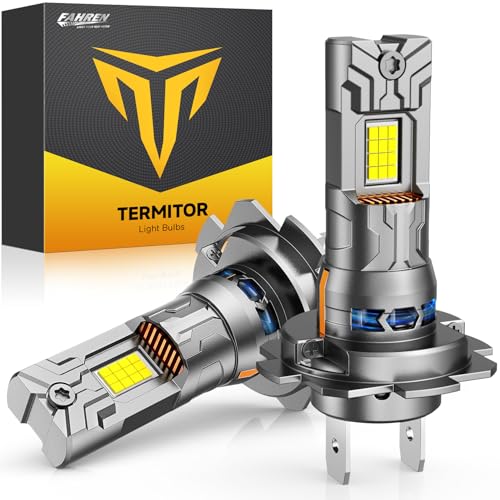
【13X Light Boost, 6500K True Day White】Packed with 24 advanced light cores to sustain steady light output, these H7 daytime-running-light-modules cranks up visibility tenfold over stock factory lamps. Its 6500K natural white glow restores authentic road tones, cutting through mist and wet pavement effortlessly. Flawless even light coverage gets rid of shadowed blind areas so roadside dangers pop up sooner on dim drives.

[1000% Increased Brightness Output] The AUXITO H7 bulb boasts an impressive 10 times the brightness of standard units, delivering a stunning 6000K cool white spectrum with an astounding 60,000 lumens for superior road visibility and hazard detection


