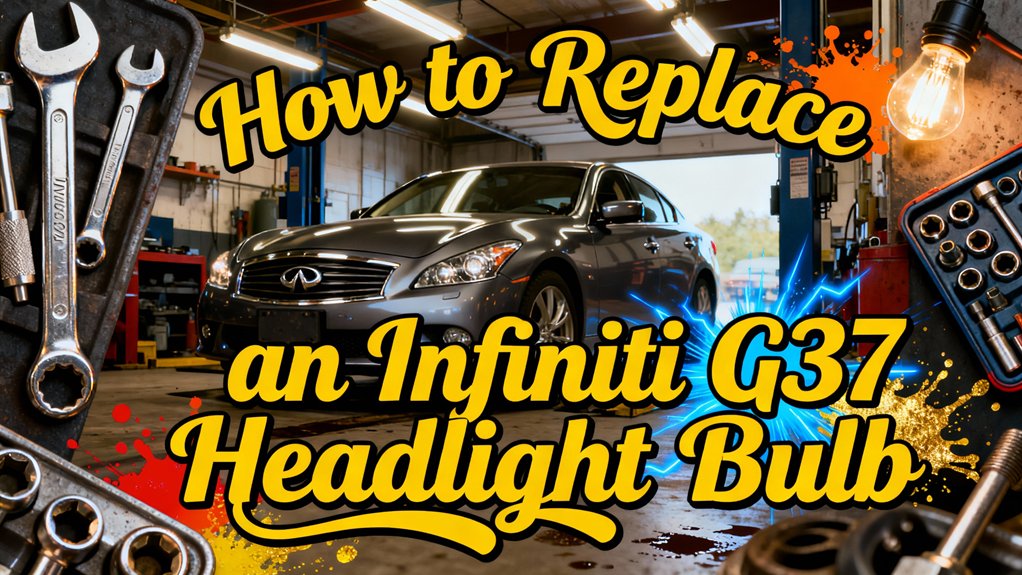
To replace your Infiniti G37 headlight bulb, you’ll need to access the assembly through the wheel well or by removing the front bumper. Turn the wheels for better access, then remove the dust cap by rotating counterclockwise. Disconnect the electrical connector and release the spring clips to remove the old D2S HID bulb. Install the new bulb wearing gloves to prevent oil contamination, reconnect all components, and test both low and high beams. The following sections provide detailed instructions for each step.
Gather the Right Tools and Replacement Bulbs
Before beginning the headlight bulb replacement process, you’ll need to assemble the correct tools and identify the proper replacement components for your Infiniti G37. Your G37 uses D2S HID bulbs as the OEM standard, with variants like Sylvania D2S available at $104.99. Bulb specifications require replacing both units simultaneously, as 20% dimming occurs over time. For tool selection, gather a 10mm socket and wrench for bumper fasteners, a 21mm socket for headlight assembly nuts, and socket extensions for tight spaces. Include a Phillips head screwdriver for ballast screws, trim tools for push pins, and needle nose pliers for cable clips. Essential safety items include gloves to prevent oil contamination on bulb glass and safety glasses for eye protection during disassembly. Selecting high-quality D2R bulbs enhances visibility and safety during night driving while ensuring legal compliance with vehicle lighting standards. Modern LED headlight technology offers improved visibility and longer lifespan compared to traditional bulbs, though HID bulbs remain standard for your G37 model. If purchasing bulbs from auto parts retailers, you may receive free installation services with your purchase.

2pcs packaged; Replacement part number: 66144 66140 85140 85415 (If there is any problem in the product,please feel free to contact us)

1.5X brightness up d2s hid bulbs upgrade for 2003 2004 2005 2006 2007 2008 2009 2010 2011 2012 2013 infiniti fx 35 37 45 50 headlights bi-xenon bulbs, and many other ex g m q qx series models with xenon headlamp(note: never fit any halogen bulbs/single high beam/reflector type headlamp models)

HID HEADLIGHT BALLAST REPLACEMENT - Also known as headlight control unit, a crucial part of hid lighting system, provides the voltage needed to start the lamp and regulates the electrical current of the light once it is lit. A failed ballast will cause your bulb to burn. When the voltage is input, the output power of the ballast can be kept constant at about 35W or 50W to protect the HID bulb from damage. The ballast fits either the left or right hid headlights.
Prepare Your Vehicle and Workspace
Proper workspace preparation ascertains safe and efficient headlight bulb replacement on your Infiniti G37. Begin by parking on a level surface, engaging the parking brake, and shifting to park. Turn off the engine and all lights. For critical safety precautions, disconnect the negative battery terminal using a 10mm wrench to prevent electrical shorts—avoid positive terminal contact throughout the procedure.
Pull the hood release, lift fully, and secure the prop rod. Remove any obstructing rubber hood gasket. Clear debris from the engine bay and wipe headlight assembly surfaces clean. Lay protective cloth on fenders to prevent paint damage.
Essential vehicle maintenance practices include wearing gloves when handling bulbs—skin oils degrade glass surfaces. Use safety glasses for eye protection and ascertain adequate workspace lighting. Gather the necessary tools including a 21 mm socket for lug nuts if wheel removal becomes necessary during the process. Consider upgrading to HID or LED systems for improved lighting performance beyond standard halogen bulbs. Note that some vehicles may have daytime running lights that remain illuminated even when the engine is off, so verify all exterior lights are completely disabled before beginning work.
Access the Headlight Assembly
Accessing the Infiniti G37 headlight assembly requires partial bumper disassembly to expose mounting hardware. Begin by positioning your vehicle on a flat, stable surface. Turn the wheels to access the wheel well liner. Remove screws and clips securing the fender liner using a screwdriver and pry bar, then peel it back to reveal deep 10mm bolts requiring an extension. Locate the upper bumper clips and screws, removing them gently with your screwdriver. After clip removal, identify and remove four 10mm bolts under the upper area using a socket or ratchet. Release the bumper tabs and pull the bumper away carefully to disengage all tabs. When detaching connectors, use a flathead screwdriver to carefully release clips without breaking them. For headlight assembly access alone, you can leave splash shield bolts in place, completing bumper access in approximately five minutes per side.
Remove the Old Headlight Bulb
With the bumper pulled away from the headlight assembly, you’ll gain clear access to the bulb housing from either the wheel well or engine bay approach. Locate the dust cap at the bulb’s rear and rotate it counterclockwise to remove. Next, identify the electrical connector at the bulb base and pull the release tab gently outward, wiggling it free without straining the wires. Press the two silver spring clips inward toward the tire direction, then release them to open wide. Once freed, snap the bulb straight out. Critical safety precautions include avoiding finger contact with the glass surface—skin oils create hot spots that considerably reduce bulb lifespan. Disconnect the battery beforehand when possible, and always replace bulbs in pairs to maintain consistent headlight intensity. The entire process can often be completed in under 10 minutes using simple hand tools or even by hand. Before ordering replacement parts, identify your vehicle’s lighting package type to ensure compatibility with your headlight assembly. If you notice your high beams still work, the issue is isolated to the low beam bulb, which is a common failure pattern in headlight systems.

【IMPORTANT】Replacement for factory D2S HID bulb only, NOT fit if your car stock Halogen headlight bulb even system say "fits".
【IMPORTANT】Replacement for stock D2S HID bulb only, NOT fit if your car stock Halogen bulb even system say "fits".

Lights Dim Over Time, Replace In Pairs: Your lights are a pair, one is never turned on without the other. If one bulb burns out, the other isn't far behind. Replace your H7 XtraVision Halogen bulbs in pairs for optimum performance.
Install the New Headlight Bulb
Grasp the new bulb by its plastic base while wearing latex or nitrile gloves to prevent skin oils from transferring to the glass surface. Align the bulb with the socket and twist clockwise approximately ¼ turn until it clicks securely. For HID bulb types, hold the retaining clip hinged from the top out of the way, slide the bulb into position, then pinch and release the tabs for a secure fit. Press down the locking tab to secure HID bulbs completely. These installation tips prevent hot spots that reduce bulb lifespan greatly. Reattach the ballast by twisting and locking it into position for HID systems. Replace the dust cover on the headlight housing. Align the electrical connector with the bulb socket and twist clockwise until locked. Ensure that components are properly aligned before finalizing the installation. Replace bulbs in pairs for uniform light intensity.
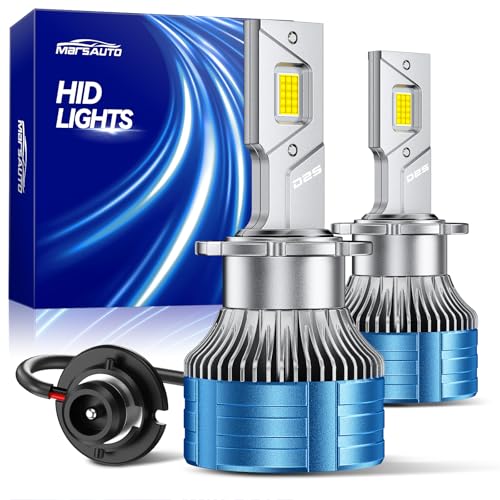
8X Brighter Like Daylight: Marsauto D2S HID bulb equipped with the latest 2026-generation 30-CSP chip technology, delivers up to 6500K pure white light. The D2S HID Light Bulbs outperforms original HID bulbs by 8x brightness, ensuring you can clearly see and anticipate potential hazards on the road ahead and react in a timely manner.

Compatible with: 2003-2007 Infiniti G35 Coupe, 2005-2006 Infiniti G35 Sedan, 2007-2013 Infiniti G35 / G37 (Coupe and Sedan), 2003-2013 Infiniti M35 / M37 / M45 / M56, 2013 Infiniti FX37, 2005-2006 Infiniti Q45, 2011-2013 Infiniti QX4, 2004-2013 Infiniti QX56, 2012-2015 Infiniti QX60, 2014-2016 Infiniti QX70, 2012-2013 Infiniti JX35, 2004-2013 Infiniti FX35 / FX45 / FX50.
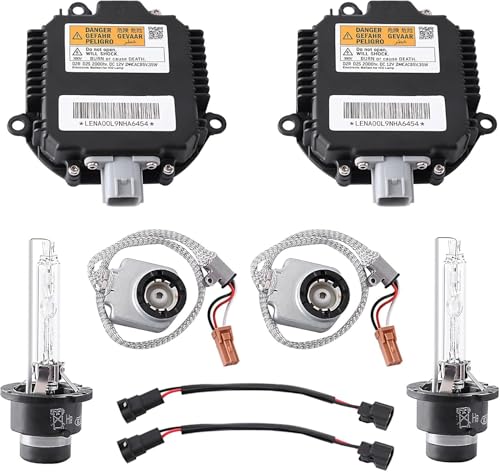
【REPLACE PART NUMBER】28474-89904 2847489904 28474-8991A 284748991A 28474-8991B 284748991B 28474-89907 2847489907,NZMNS111LANA NZMNS111LBNA NZMNS111LANH NZMNS111LANG.Come with D2S Bulbs and Igniter.
Test the Headlight Function
After installation, verify proper headlight operation before reassembling the vehicle completely. Turn on your Infiniti G37’s headlights and check both low and high beams. Observe bulb brightness to guarantee it matches the opposite side’s output. Uneven illumination indicates improper bulb seating or a defective component. Activate the headlights and inspect for flickering, which signals loose connections at the bulb socket. Check headlight alignment by parking ten feet from a wall or garage door. Both beams should project at equal heights and angles. If one appears lower or misaligned, the bulb may not be fully seated in its housing. Test turn signals and fog lights simultaneously to confirm you haven’t disturbed adjacent wiring during replacement. Replacing bulbs in pairs ensures consistent lighting output across both sides of your vehicle. LED and HID conversions can provide superior brightness and longevity compared to factory halogen bulbs. For additional verification, use a multimeter in continuity mode to test the bulb socket connection. No illumination requires checking fuses and socket voltage before proceeding with final reassembly.
Reassemble the Components
Begin reassembly by reconnecting the electrical connector to the new bulb’s socket. Align the connector properly and twist clockwise until it locks, ensuring no loose wires or pins remain. Position the electrical harness correctly to prevent interference.
Next, secure the dust cover by twisting it clockwise over the socket, maintaining the OEM seal’s integrity to prevent water entry. Reattach the ballast connector if your model requires it. Proper sealing is essential to prevent moisture intrusion that can compromise your headlight assembly over time.
Reinstall the headlight assembly using proper alignment precision—line up clips and tabs, then push forward until you hear clicks. Install upper and lower 10mm bolts loosely first, then tighten without overdoing it. Before securing the headlight completely, ensure hood latch cables are properly aligned. Use trim tools to carefully manipulate any remaining clips or fasteners during reassembly.
Complete the process using appropriate fastening techniques: replace top plastic clips with a flathead screwdriver, reinstall bottom tabs or screws, and position the hood gasket seal properly. Double-check all fasteners for tightness.
Troubleshoot Common Issues
Headlight failures in the Infiniti G37 stem from several identifiable root causes that require systematic diagnosis. Start by inspecting the tungsten filament for breaks or blackening, confirming bulb compatibility with OEM specifications. Test fuses using a test light with headlights energized, as blown fuses indicate short circuits. Swap the headlight relay with a similar-rated component to isolate relay failure. Conduct wiring inspections from socket to fuse box, using a multimeter to verify voltage at the bulb socket. Examine socket contacts for white or green corrosion that reduces conductivity. Clean degraded contacts with electrical contact cleaner, then apply dielectric grease. Check bulb fitment—oversized LED upgrades often require extended dust covers. Never operate without dust covers, as moisture intrusion causes accelerated component degradation and repeated failures. Before replacing any fuse, diagnose and repair the underlying issue to prevent repeated fuse blowouts.

Make Your Vision Brighter:This 2026 New Automotive Headlight Restoration Kits effectively clears up yellowing and cloudiness, shine your car headlamp in just minutes, instantly improving brightness and visibility
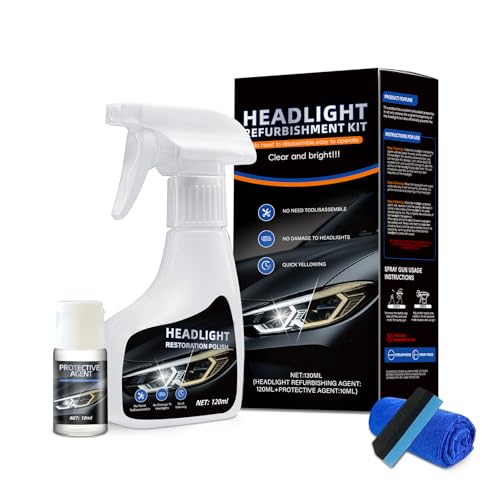
Make Your Vision Brighter:This New Automotive Headlight Restoration Kits effectively clears up yellowing and cloudiness, shine your car headlamp in just minutes, instantly improving brightness and visibility

Restore Headlight Clarity: This 2026 New Automotive Headlight Restoration Kits effectively clears up yellowing and cloudiness, shine your car headlamp in just minutes, instantly improving brightness and visibility