When replacing your Audi’s headlights, you’ll need to identify your vehicle’s specific lighting system—halogen, xenon, LED, or matrix LED—through chassis code and production date verification. Compatibility is critical since these architectures aren’t interchangeable; for instance, A3 models shifted from H11 to H7 bulbs between 2008 and 2016. Expect costs ranging from $15 for basic aftermarket halogen bulbs to over $1,800 for OEM assemblies, plus $79-$400 in labor. Modern systems require software calibration using specialized diagnostic tools post-installation. The sections below provide detailed protocols for selection, installation, and compliance requirements.
Understanding Different Types of Audi Headlight Technologies
Over the past three decades, Audi’s headlight technology has progressed through five distinct generations, each representing a measurable leap in photometric performance and control precision. You’ll find Xenon systems from the 1990s established the baseline, followed by LED units offering superior efficiency and response rates. Matrix LED lighting innovations introduced segmented beam control through individually addressable diodes—16 per high-beam module in HD configurations. Digital Matrix LED systems deploy 1.3 million micromirrors via DMD chips, executing adjustments 5,000 times per second for pixel-level precision. The DMD technology facilitates dynamic light adaptation to communicate various messages to drivers and pedestrians. OLED technology provides surface-emission capabilities with segment-specific control for taillights. Laser supplements extend high-beam range beyond conventional limits. For those seeking modern styling combined with practical performance improvements, aftermarket LED headlight solutions offer plug-and-play installation options that enhance nighttime visibility without requiring extensive modifications. LED headlights demonstrate longer lifespan and reduced energy consumption compared to traditional halogen systems. Each generation maintains backward compatibility considerations, but you’ll need to verify electrical architecture requirements and control module specifications before retrofitting advanced systems into older chassis platforms.
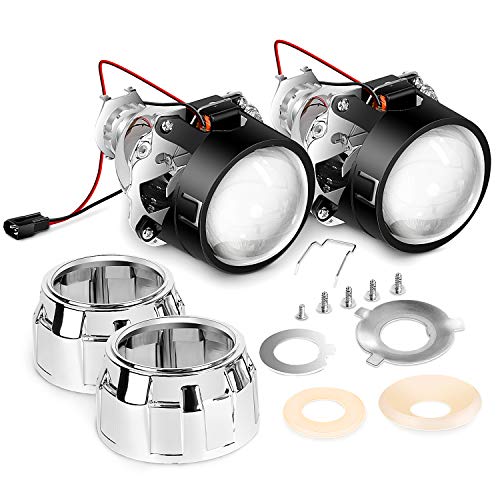
H1 mini projector kits (low/high beams), fit in tight spaces for quad retrofits or fog lamp upgrade

One relay wiring harness set includes a 4-pin SPST relay module box, in-line safety fuse box, input +/- terminals, single wire input trigger and dual 9006/HB4, 9005/HB3 H10 9145 9140 outputs for reliable and efficient electrical connections
How to Determine the Right Replacement Headlight for Your Audi Model
Selecting the correct replacement headlight for your Audi requires a systematic verification process anchored to three technical identifiers: chassis code, production date, and installed lighting package designation. Headlight compatibility factors extend beyond model name—an A3 produced in 2008 uses H11 low beams, while 2016-2022 variants specify H7 bulbs. You’ll need to cross-reference trim-specific equipment, as halogen, xenon, and LED systems operate on incompatible architectures. Bulb specification verification demands matching base type, wattage, and voltage parameters from your existing assembly. Bi-Xenon configurations utilize D1S bulbs with mechanical beam switching, requiring different replacement protocols than reflector-based halogen units. Quality D1S bulbs meeting DOT and ECE regulations ensure your replacement components deliver proper beam patterns and road safety compliance. For A4 models spanning 2000-2022, verify bulb compatibility against original factory OEM assemblies rather than aftermarket specifications, as component variations can result in incorrect fitment. Consult your VIN-decoded equipment list or physically inspect existing bulb markings before procurement. When replacing bulbs, avoid touching the bulb glass to prevent premature failure and consider replacing bulbs in pairs to maintain consistent lighting performance. Aftermarket assemblies require DOT/ECE certification verification to ascertain legal beam pattern compliance and proper mount point alignment with factory specifications.
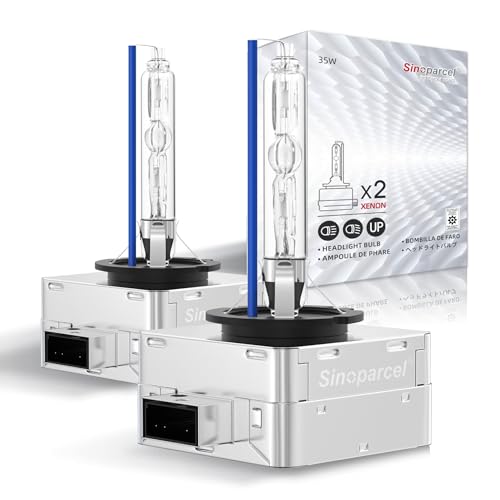
Life time support,2pcs packaged; Replacement part number: 66144 66140 85140 85415 (If there is any problem in the product, please contact us via Account Center,we will reply you within 24 hours)

2pcs packaged; Replacement part number: 66144 66140 85140 85415 (If there is any problem in the product,please feel free to contact us)

【Brighter Light for Safer Night Driving】Marsauto 6000K cool white D1S HID bulb provides 10X brighter than original bulbs. Extended 1500FT visibility spots hazards earlier, ideal for highway or suburban driving. Enhances confidence during night trips.
Halogen vs. HID vs. LED: Which Headlight System Is Best?
Understanding which headlight technology suits your Audi requires evaluating three performance-critical parameters: luminous output characteristics, operational efficiency metrics, and total cost of ownership.
Light quality differs substantially: halogen produces yellowish illumination (500-1,000 hours bulb longevity), while LED generates daylight-spectrum output with superior contrast detection. HID systems deliver maximum field coverage—33% broader than LED—with intense white light but slower activation times.
Energy consumption follows a clear hierarchy: LEDs consume minimal power through semiconductor architecture, HID systems operate at moderate efficiency, and halogens waste significant energy as thermal output. LED systems achieve 80% energy efficiency, contributing to improved fuel economy in conventional vehicles. Different vehicle models require specific bulb sizes and types to ensure proper fitment and performance.
Cost analysis reveals trade-offs: halogen’s $10-25 replacement cost versus LED’s premium pricing (20,000+ hours lifespan). HID occupies the middle ground in both expense and durability (5,000-15,000 hours).
For electric Audis, LED’s reduced electrical load proves ideal. Performance-focused drivers benefit from HID’s expansive illumination pattern.
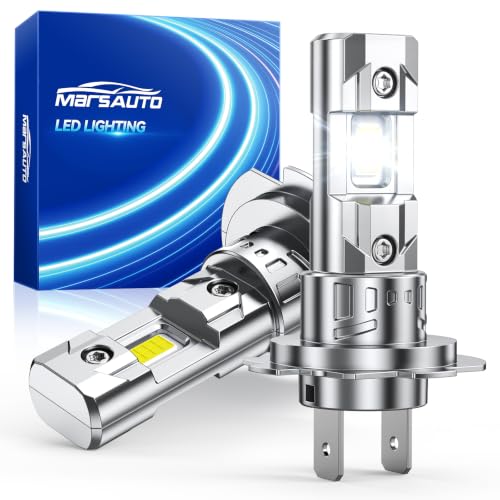
【30,000LM Ultra-Intensity & 6500K Daylight Clarity】Engineered to dominate the darkness, these H7 bulbs unleash a staggering 30,000LM of raw luminous power, offering a 600% brightness surge over stock lighting. The 6500K pure white output renders road signs and obstacles with surgical precision, piercing through heavy precipitation and midnight gloom. This extreme output expands your peripheral vision and increases reaction time, redefining the limits of nocturnal driving safety. For Top Clearance Marker Assemblies.
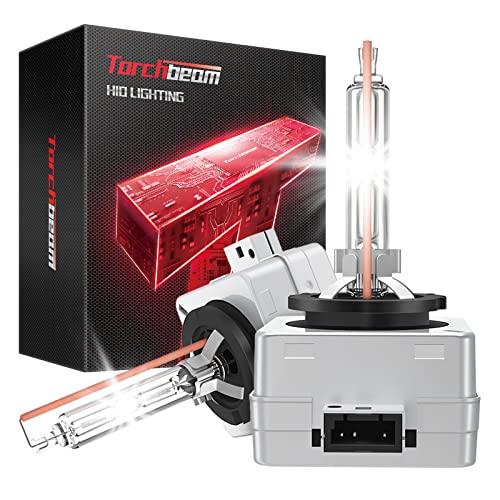
Safer Night Driving: Torchbeam d3s bulbs made with German xenon gas. Replacement OEM Part Number: 42302C1, 42302(WX/XV), 42403(C1), 66340, 66340CBH, 66340CBI, ect.

Worry-Free Fanless Cooling: Fanless H7 LED design means no fan failure—stable light output, safer long-term use
Price Ranges and What to Expect When Shopping for Replacement Headlights
When budgeting for Audi headlight replacement, expect expenditures ranging from $15 for basic aftermarket halogen bulbs to $1,800+ for complete OEM assemblies on luxury models. Labor costs add $79–$400 depending on assembly complexity and installation tools required. Audi A4 bulb replacements average $351–$388 total, while Q5 and Q7 models frequently exceed $1,000 due to advanced lighting systems. OEM parts guarantee factory specifications but command premium pricing ($200–$1,800 per assembly). Aftermarket alternatives reduce costs but may compromise headlight warranties and durability. Model year notably impacts pricing—pre-2005 A4 replacements run $85–$300, whereas recent A4 Quattro and A5 Quattro variants reach $337–$800+. Verify exact compatibility before purchasing. Source pricing varies considerably between OEM dealers, online retailers, and salvage yards. Modern Audi vehicles feature replaceable halogen or HID bulbs that provide different illumination characteristics and cost structures. To maintain long-term clarity and performance, consider applying UV protection to your new headlights after installation. When comparing upgrade options, consider that enhanced brightness levels and color temperature can affect both performance and total cost of ownership.

OE Number:1J0973837, Vehicle Waterproof Connector Plugs Set

15x Brighter – See the Road Like Never Before: Upgrade from weak HID light to brilliant 6500K white with AUXITO D1S bulbs. Featuring 60 high-performance chips, these bulbs deliver 15 times the brightness of standard D1S xenon HID bulbs—so you can finally see clearly and drive with confidence at night.

Instructions for Use: The first yellow drill attachment installed on the drill, cushion pad white surface and drill attachment black surface paste, use the first in the lamps on the spray water and then use the cleaning pad to dry in a circle, and then according to the grain size from small to large in order to use the waterproof abrasive disc on the lamps for polishing, and finally use the sponge polishing pad for polishing
Advanced Features: Adaptive Lighting and Matrix LED Technology Explained
Modern Audi Matrix LED headlights deploy arrays of individually controlled micro-LED segments that adjust beam patterns in real-time based on sensor and camera inputs. Each LED element operates independently, enabling precise illumination control that selectively dims zones targeting oncoming traffic while maintaining full high-beam intensity elsewhere. The adaptive performance activates above 30 km/h, optimizing highway and rural driving conditions.
GPS integration enables predictive lighting, preemptively illuminating upcoming curves before arrival. Camera systems detect vehicles and pedestrians, triggering selective dimming to eliminate glare while preserving maximum road visibility. The technology’s ultra-low latency guarantees instantaneous environmental response. Unlike conventional systems that rely on mechanical components prone to wear and vibration, Matrix LED technology uses semiconductor-based LEDs for enhanced reliability and longevity.
You’ll benefit from enhanced contrast in adverse weather, reduced driver fatigue through consistent lighting, and minimized manual beam switching. The superior brightness output of Matrix LED systems compared to traditional halogen bulbs ensures optimal visibility in all driving conditions. High-resolution capability supports customizable digital signatures and dynamic animations tied to vehicle functions like locking/unlocking sequences.
Ensuring Proper Fitment: Driver Side vs. Passenger Side Compatibility
Attempting cross-side installation compromises beam cutoff angles, violates CAPA certification standards, and may trigger inspection failures. Audi’s adaptive lighting systems further complicate swapping, as AFS motors and electronic modules are position-dependent. You’ll need to verify your vehicle’s production year and exact part numbers, since assemblies vary between model years despite appearing visually identical. The replacement headlight is specifically designed for the left-hand driver side of the vehicle, ensuring proper mounting and electrical connections.
Step-by-Step Installation Tips for Audi Replacement Headlights
After confirming you’ve sourced the correct side-specific assembly for your Audi model, the installation process requires methodical attention to electrical interfaces and mechanical mounting sequences. Begin your installation checklist by disconnecting the battery and removing the airbox or adjacent components for unobstructed access. Document electrical connector positions before unplugging HID or halogen harnesses to streamline reassembly. Remove all mounting bolts systematically, noting their torque specifications for proper reinstallation. When seating the new assembly, align mounting studs precisely before tightening fasteners in a cross-pattern sequence to guarantee even pressure distribution. Ensure the rubber dust boot seals properly around the connection to prevent moisture ingress into the headlight housing. For troubleshooting tips, verify all connectors achieve full insertion with audible clicks, then conduct functional tests of low beams, high beams, and turn signals before final alignment adjustments at twenty-five feet from a reference surface. Keep a flashlight nearby for better visibility when working in dimly lit areas of the engine compartment.

Applicable for Audi S4 2013-2016;S5 2013-2017;A4 2013-2016;A4 Quattro 2013-2016;A5 Quattro 2013-2017;A5 2013-2016;allroad 2013-2016;RS5 2013-2016;

Part Number:8R0998121A, please confirm the product model before purchasing

Fit for Audi Q7 2007-2010; for Buick Enclave 2008-2012; for Dodge Durango 2011-2013
Calibration and Programming Requirements for Modern Headlight Systems
While traditional halogen headlights demanded only mechanical beam alignment, today’s Audi headlight systems integrate sensors, control modules, and adaptive technologies that mandate software-based calibration following replacement or front-end service. You’ll need specialized diagnostic tools like VAS621001 or compatible scan tools to execute calibration processes for LED Matrix and adaptive lighting systems. These procedures involve programming control modules, performing sensor adjustments for radar and camera arrays, and conducting dynamic driving tests to verify system accuracy. Headlight alignment now extends beyond manual aiming screws—you’re configuring independent light segments and driver-assistance functions. When diagnostic codes indicate “No or incorrect basic setting/adaption,” recalibration becomes mandatory. Wheel alignments, front bar replacements, or windscreen changes can trigger calibration requirements, particularly with head-up display integration affecting headlight operation parameters. Suspension component changes may also require adaptive lighting calibration to ensure the system accurately adjusts headlamps vertically and horizontally based on vehicle height and driving conditions.
Maintenance Practices to Extend Your Headlight’s Lifespan
Because Audi headlight assemblies represent sophisticated electro-optical systems with interdependent components, systematic maintenance protocols directly correlate with operational longevity and photometric performance retention. Implement lens care through monthly cleaning with pH-neutral soap and microfiber cloths, avoiding abrasive materials that compromise anti-reflective coatings. Apply UV-resistant sealants quarterly to prevent oxidation-induced yellowing. Execute bulb replacement every 12-24 months using OEM-specification units; handle halogen and HID bulbs with lint-free gloves to prevent thermal stress fractures from skin oils. Consider the brightness levels and longevity of different bulb variants when selecting replacements to optimize your vehicle’s lighting performance. Inspect electrical connections biannually, treating contacts with dielectric grease to mitigate corrosion-related resistance increases. Perform wet-sanding restoration (400-3,000 grit progression) when transmissivity degrades beyond 15%. Verify ground integrity at chassis attachment points, ensuring voltage stability across the lighting circuit. Understanding headlight types enables proper selection of compatible replacement components and maintenance approaches. Professional diagnostics resolve persistent electrical anomalies efficiently. Proper bulb socket and locking clip handling during maintenance prevents damage to delicate electrical connections and ensures secure reassembly.
Safety Standards and Legal Compliance for Replacement Headlights
Replacing your Audi’s headlights requires strict adherence to Federal Motor Vehicle Safety Standards (FMVSS) 108, which establishes mandatory photometric performance benchmarks, beam pattern geometry, and durability thresholds for all automotive lighting systems. You must verify that replacement units bear Department of Transportation (DOT) and Society of Automotive Engineers (SAE) certification markings to guarantee legal on-road operation. Non-compliant aftermarket headlights will result in failed vehicle inspections, traffic citations, and compromised safety compliance.
The National Highway Traffic Safety Administration (NHTSA) enforces strict glare reduction protocols to prevent temporary blindness of oncoming drivers. Your replacement headlights must meet precise low-beam aiming specifications and light-dark zone boundaries. OEM-equivalent components provide guaranteed regulatory compliance, while advanced technologies like Audi’s Digital Matrix LED systems remain restricted under current U.S. regulations despite their sophisticated beam-shaping capabilities. While 2022 legislation introduced allowances for adaptive driving beam technology, implementation requirements remain overly restrictive for many advanced lighting innovations.