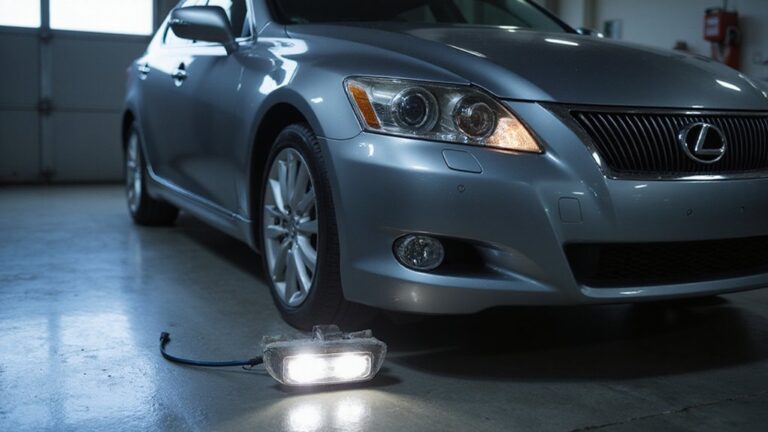
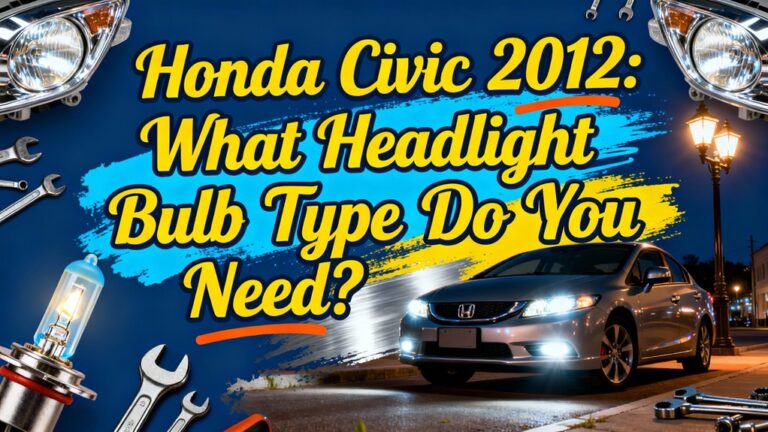
Xenon headlights deliver superior performance with 3,000-3,500 lumens versus halogen’s 1,000-1,500 lumens, providing three times greater hazard detection distance. You’ll get 10,000-20,000 hours of lifespan from xenon compared to halogen’s mere 450-1,000 hours, while consuming less energy at 35-55 watts versus 55-65+ watts. However, xenon’s $100-300 ballast costs and professional installation requirements greatly increase upfront investment. Your choice ultimately depends on whether you prioritize immediate savings or long-term performance gains, and understanding the technical distinctions clarifies which technology aligns with your specific driving conditions.
How Halogen and Xenon Headlights Work
When electric current flows through a tungsten filament in a halogen headlight, the filament heats to incandescence and produces light through thermal radiation. The halogen gas—iodine or bromine—redeposits evaporated tungsten onto the filament, extending operational life. This filament technology typically delivers 200-400 hours before degradation occurs. The reflector or projector lens then shapes and focuses this warm, yellowish light for road illumination.
Xenon headlights operate differently. You’ll find no filament here—instead, a 24kV pulse ionizes xenon gas between two electrodes, creating an electric arc. Light emission comes from this gas discharge and vaporized metal salts, producing 4000K-6000K color temperatures. The ballast regulates current throughout operation. Legal xenon systems must comply with federal safety standards to ensure proper beam patterns and brightness levels.
Performance metrics favor xenon: 35W power consumption versus halogen’s 55W, 2,000-3,000 hour lifespan, and superior luminous efficiency. Xenon’s whiter light output at 4000K-6000K provides improved visibility and road marker recognition similar to advanced lighting technologies. However, xenon systems require warm-up time, while halogen illuminates instantly.

Each bundle contain 2 bulbs, 2 ballast, and installation accessories

Each bundle contain 2 bulbs, 2 55W Platinum ballast, and accessories
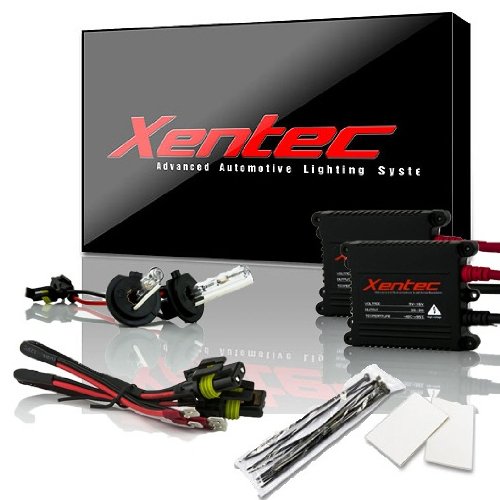
Each bundle contain 2 bulbs, 2 ballast, and installation accessories
Brightness and Road Visibility Comparison
Although both technologies illuminate the road ahead, xenon headlights deliver 3,000-3,500 lumens per bulb compared to halogen’s modest 1,000-1,500 lumens—a performance gap that translates directly to road visibility. This brightness comparison reveals xenon’s substantial advantage: you’ll see road hazards up to three times farther than with halogen systems.
Xenon’s 4,000K-6,000K color temperature produces whiter light that enhances contrast sensitivity, making lane markings and obstacles more discernible. The broader beam pattern provides superior peripheral illumination, improving your reaction time in critical situations. You’ll experience visibility enhancement in fog, rain, and snow conditions where halogen’s dimmer yellowish output struggles. Xenon bulbs maintain consistent brightness throughout operation, while halogen performance degrades as heat buildup reduces light output and accelerates component wear. For optimal performance, ensure your headlights are properly aligned using headlight beam alignment techniques to maximize visibility on the road. Unlike halogen systems that heat a tungsten filament, xenon headlights create an electric arc through gas-filled chambers for more efficient light production. Pairing xenon headlights with daytime running lights further enhances vehicle visibility and helps reduce daytime collisions.

2pcs packaged; Replacement part number: 66144 66140 85140 85415 (If there is any problem in the product,please feel free to contact us)

【IMPORTANT】Replacement for factory D2S HID bulb only, NOT fit if your car stock Halogen headlight bulb even system say "fits".

【IMPORTANT】Replacement for factory D1S HID Bulb only, NOT fit if your car stock Halogen headlight bulb even system say "fits".
Lifespan and Long-Term Durability
Beyond brightness specifications, lifespan comparison separates these technologies dramatically: xenon bulbs deliver 10,000-20,000 hours of operation compared to halogen’s 450-1,000 hours—a durability advantage of 10-40 times that directly impacts your maintenance schedule and total ownership costs.
This performance gap stems from fundamental durability factors. Halogen’s tungsten filament degrades under heat stress and vibration, making it vulnerable to shock damage on rough roads. Xenon’s electric arc design eliminates filament-related failure modes entirely, providing superior shock resistance and thermal management. The xenon gas ballast powers the ignition system, creating the characteristic electric arc that produces the distinctive blue-tinted illumination.
You’ll replace halogen bulbs every 9-24 months versus xenon’s 3-10 year replacement interval. While xenon systems require ballast maintenance and costlier professional installation, their extended service life reduces downtime and long-term maintenance frequency. Factors such as vehicle electrical system health can significantly influence how long either bulb type performs in your specific vehicle. OEM xenon units consistently outperform aftermarket alternatives across all durability metrics. Additionally, color temperature differences between xenon and halogen bulbs affect both the visual appearance and perceived longevity of each lighting system.
Energy Consumption and Heat Output
Energy efficiency distinguishes these headlight technologies through measurable electrical consumption differences: xenon systems operate at 35-55 watts per bulb while halogens demand 55-65+ watts—yet xenon delivers 3,000 lumens compared to halogen’s 1,000-1,500 lumens. This disparity reflects fundamental conversion efficiency: halogens waste over 85% of input energy as heat, while xenon converts substantially more electricity into visible light. You’ll experience this difference through reduced alternator load with xenon, marginally improving fuel economy. Heat generation creates secondary impacts—halogen assemblies reach higher temperatures, potentially degrading nearby components and reducing headlight housing longevity. Xenon’s lower thermal output minimizes stress on lens materials and seals. The operational advantage extends beyond brightness: you’re drawing less power from your vehicle’s electrical system while achieving superior illumination, reducing both energy consumption and heat-related component wear. HID headlights also benefit from a lifespan up to 10 times longer than halogen bulbs, making them more cost-effective over time despite higher initial costs. Halogen headlights remain popular due to their simplicity and affordability, making them accessible options for basic lighting needs.
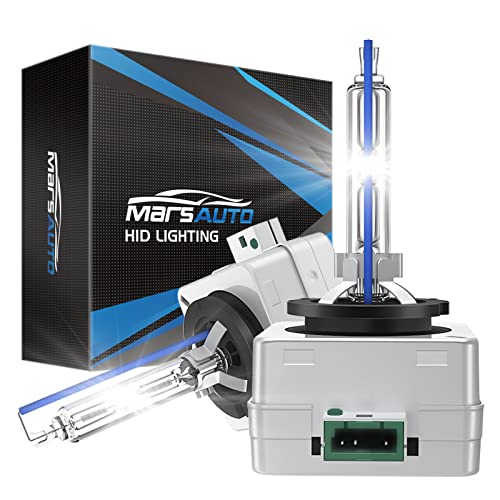
Replace Only HID Bulbs: Fit for stock D3S HID Xenon bulbs only, NOT ADAPT if your auto has stock Halogen/LED lights
2pcs packaged; Replacement part number: 66144 66140 85140 85415 (If there is any problem in the product,please feel free to contact us)

Perfect Beam Quality:D3S Xenon HID Bulbs ultra-bright light with 99.99% pure xenon gas and APL capsules—no glare, no dark spots. Higher efficiency and pure color for crisp visibility.
Cost Analysis and Installation Requirements
Initial purchase costs separate these technologies by a 2-3x multiplier: you’ll spend $20-50 for halogen bulb pairs versus $30-150 per xenon bulb, but lifespan differentials alter the economic equation. Halogens last 500-1,000 hours while xenons deliver 2,000-3,000 hours, reducing replacement frequency despite higher upfront costs.
Cost comparison extends beyond bulbs: xenon systems require ballasts ($100-300) and potential full assembly replacement when damaged. Installation difficulty creates another gap—you’ll handle halogen swaps yourself with zero labor costs, whereas xenon installations demand professional calibration to prevent dangerous glare. Dealerships charge $300+ for xenon replacements including labor; independent shops offer lower rates but still exceed halogen costs substantially. Factor in limited xenon availability at standard retailers, and total ownership costs escalate considerably compared to halogen’s widespread accessibility. Xenon headlights provide brightness 2-3 times greater than halogen bulbs, making them superior for nighttime visibility and safety.

35W HID Ballast: New DC Chip sest, IP68 Water Seald. It will work in any weather conditions. 0-30% brighter light than the standard ballast.

HID HEADLIGHT BALLAST REPLACEMENT - Also known as headlight control unit, a crucial part of hid lighting system, provides the voltage needed to start the lamp and regulates the electrical current of the light once it is lit. A failed ballast will cause your bulb to burn. When the voltage is input, the output power of the ballast can be kept constant at about 35W or 50W to protect the HID bulb from damage. The ballast fits either the left or right hid headlights.

35W HID Ballast: This HID ballast adopts New DC Chip sest. It has over-voltage protection, low-voltage protection, no-load protection, short-circuit protection, etc. IP68 waterproof grade, which can work in any weather conditions
Choosing the Right Headlight for Your Needs
Your driving patterns dictate which headlight technology delivers ideal value—matching lumens, color temperature, and operational characteristics to specific usage scenarios prevents both overspending and underperformance. For urban driving in well-lit areas, halogen’s 1,000-1,500 lumens and instant illumination suffice at lower cost, with frequent replacement accessibility offsetting their 400-1,000 hour lifespan. Conversely, rural or highway driving demands Xenon’s 3,000-3,500 lumens and 4,000-6,000K color temperature for superior night visibility, particularly when identifying road signs, lane markings, and obstacles at extended ranges. If you’re covering high annual mileage in dark conditions, Xenon’s 2,000-5,000 hour lifespan and wider beam pattern justify the initial investment through reduced maintenance frequency and enhanced safety margins during critical reaction scenarios. LED headlights offer an alternative approach by providing whiter, more focused beams that further enhance driver visibility compared to both halogen and Xenon options. When evaluating performance metrics, brightness levels measured in lumens provide the most objective comparison across different headlight technologies. Xenon systems require a ballast to step up voltage from the vehicle’s standard 12 volts to approximately 24,000 volts to generate the spark between electrodes that produces light.

Each bundle contain 2 bulbs, 2 ballast, and accessories, this bulb is not dual xenon, high beam is halogen (for dual xenon, please select bixenon option)

Each bundle contain 2 bulbs, 2 ballast, and installation accessories

Easy and Simple installation. Usually takes less than 20 minutes! Literally "Plug-and-Play" in most vehicles.Pre-assembly maybe required before installation, professional installation recommended.