To replace your VW Jetta’s daytime running light bulb, you’ll first need to identify the correct bulb type for your model year—typically 7506 for 2015-2018 models or 1156 for earlier variants. Turn your wheels inward, then access the bulb housing through the wheel well using a Torx T25 screwdriver to remove the cover. Twist the bulb socket counterclockwise a quarter turn, disconnect it, and install your new bulb with proper orientation. This guide covers everything from bulb specifications to troubleshooting common DRL issues.
Understanding VW Jetta DRL Bulb Types and Specifications
When selecting replacement daytime running light bulbs for your VW Jetta, you’ll encounter several distinct bulb types that vary by model year and trim configuration. Common specifications include 1156 (BA15S P21W) and H15 types for 2015-2021 models, while some 2018+ variants utilize halogen mini bulbs like 7506 or 2825. LED replacement options deliver superior bulb brightness, typically exceeding halogen output while consuming under 5 watts compared to halogen’s 21 watts. You’ll need to verify bulb compatibility with your specific socket type—BA15S bayonet bases being most prevalent. LED upgrades may require CAN bus adapters to prevent error codes. Newer Jettas increasingly feature dual-function bulbs combining DRL with turn signal duties, while performance GLI trims often specify different bulb assemblies than standard models. The 2015-2018 Jetta models equipped with HID headlamps use D2S bulbs for high beam functions.
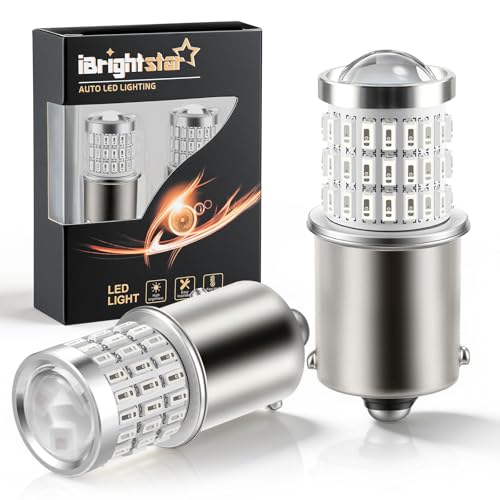
(Set of 2 Bulbs) 54SMD 3014 & 3SMD 3030 high brightness chips per bulb, Working Voltage: 9v-30v (fit 12V, 24V vehicles).

【700% Brightness Boost】: AUTOONE 1156 LED bulbs feature 16 high-quality SMD chips. Each pair delivers 6500K pure white light output with 700% increased illumination, significantly enhancing nighttime driving and reversing visibility for safer, more comfortable journeys.
Identifying the Correct Bulb Size for Your Jetta Model Year
Identifying your VW Jetta’s correct DRL bulb size depends primarily on three factors: model year, trim level, and factory lighting package. For 2015-2018 models without HID headlights, you’ll need 7506 bulbs. HID-equipped variants use OEM LED DRLs instead of replaceable incandescent bulbs. Earlier 2013-2014 Jettas typically require 1156 (BA15S P21W) or H15 bulbs depending on configuration, while 2010-2012 models standardize on 1156/1157 sizes. Jetta bulb variations occur across different lighting packages—higher trims with LED assemblies don’t use traditional bulbs. Jetta trim differences greatly affect DRL specifications. You can identify HID-equipped vehicles by looking for a visible projector lens in the headlight assembly when viewed from the front. Confirm your exact bulb size by consulting your owner’s manual, checking online bulb databases using your VIN, or examining the removed bulb’s base type and socket configuration before purchasing replacements.

Kadiby 2 pack 7506 Bulb 1156 Brake/Back Up/Reverse Light Bulbs 1156 P21W Ba15s Daytime Running Lights(DRL) Rear Turn Signal for VW Jetta Beetle Eurovan Passat Corrado Golf

LIGHTS DIM OVER TIME, REPLACE IN PAIRS: Your lights are a pair, one is never turned on without the other. If one bulb burns out, the other isn't far behind. Replace your 1156 SilverStar Mini bulbs in pairs for optimum performance.

International products have separate terms, are sold from abroad and may differ from local products, including fit, age ratings, and language of product, labeling or instructions
Tools and Preparation for DRL Bulb Replacement
Successful DRL bulb replacement requires minimal but specific tools to access and handle the bulb assemblies in your VW Jetta. You’ll need a Torx T25 screwdriver for housing screws, gloves to prevent oil contamination, pliers for socket manipulation, and a flashlight for illumination in tight spaces. Before beginning, park on level ground with the ignition off and turn your front wheels fully inward to expose hidden access panels. Proper workspace setup includes organizing fasteners in magnetic trays, positioning replacement bulbs within reach, and clearing surrounding clutter. Regular tool maintenance guarantees reliable performance during the procedure. Disconnect the negative battery cable if concerned about electrical shorts, and use eye protection against debris. Avoid touching the glass of replacement bulbs to prevent corrosion and contamination during installation. Keep in mind that some vehicle models may have daytime running lights that cannot be fully disabled, so verify your Jetta’s specific DRL design before starting. Position yourself beside the vehicle facing forward to optimize access near the wheel well cavity. Once properly positioned, you’ll need to unthread the bolt to lift and pull out the access hatch.

Sizes laser etched on blade

High Quality Material: The shaft of torx screwdriver is made of chrome-molybdenum steel, corrosion resistant and durable. And the handle is made of non-slip plastic handle, which improves comfort and control.

Cushion-Grip handle for greater torque and comfort with color coded handle end for quick and easy identification
Step-by-Step DRL Bulb Replacement Process
With your tools gathered and workspace prepared, you’re ready to access the DRL bulb housing. Turn the front wheel fully right (for left-side access) and remove the Torx T25 screw securing the wheel well panel. Remove the cover to expose the bulb housing. Grip the bulb socket by its plastic knobs and twist counterclockwise a quarter turn, then pull straight out. Wear gloves to prevent finger oils from reducing bulb lifespan. Before handling the bulb, disconnect your vehicle’s battery to ensure safety during the replacement process.
For installation tips, align the new bulb’s pins with the socket—some feature orientation markings like a “V” pointing upward. Push firmly and twist clockwise to lock. When replacing your DRL bulb, replace both bulbs simultaneously to ensure consistent lighting intensity across both sides. Reattach dust covers and the access panel. Start your ignition to verify proper illumination. If the bulb doesn’t light, recheck connections before assuming defect, and check fuses if the issue persists. Ensure proper headlight alignment by testing both sides to confirm correct aiming of your daytime running lights.
LED Vs Incandescent: Choosing the Right DRL Bulb
When selecting replacement DRL bulbs for your VW Jetta, you’ll face a fundamental choice between traditional incandescent technology and modern LED alternatives. LED advantages include superior energy efficiency, converting 90-95% of power into light while consuming only 5-10 watts—approximately 80% less than incandescent equivalents. LEDs deliver 15,000-50,000 hour lifespans compared to incandescent’s 750-1,000 hours, drastically reducing replacement frequency and maintenance costs. Their solid-state construction withstands shock and vibration better than fragile filaments. Incandescent downsides encompass rapid burnout cycles, 90% energy waste as heat, increased battery load, and limited color temperature options. While LEDs cost 2-5 times more initially, total ownership economics favor LED technology through reduced electrical demand, extended service intervals, and enhanced durability in automotive applications. LED bulbs also produce superior beam patterns that enhance nighttime visibility compared to traditional incandescent options. Proper installation techniques ensure optimal performance and prevent damage to your vehicle’s lighting system. Look for bulbs with ENERGY STAR® certification to ensure compliance with performance and energy savings guidelines.

5X High brightness, The 1156 LED bulb is made of high-quality heat dissipating aviation aluminum alloy material, and its brightness can reach 5 times that of halogen bulbs. The stunning brightness is impressive.

Compatible with 2012-2015 Volkswagen Passat or Beetle w/ standard halogen trim for daylight (not headlight bulbs)

Check Fitment Before Purchase: This is a 1156 / 7506 / BA15S / P21W single contact LED bulb. Please check your original bulb number and socket type before ordering. It does not replace 1157 / BAY15D dual contact bulbs.
Where to Buy Replacement DRL Bulbs and What to Expect
After you’ve determined whether LED or incandescent technology suits your VW Jetta’s DRL requirements, you’ll need to source compatible replacement bulbs from appropriate retail channels. Auto parts retailers like AutoZone and O’Reilly Auto Parts stock 7506 and 1156 bulbs for most Jetta model years. Retailer comparisons reveal that online platforms including Amazon and specialty suppliers such as LASFIT offer broader selection with competitive pricing strategies. Expect $8-$25 per bulb depending on technology and brand positioning. OEM options through VW dealerships command premium pricing but guarantee exact fitment. Verify CAN bus compatibility for LED variants to prevent dashboard errors. When evaluating aftermarket brands, consider factors like light output measured in lumens, color temperature, durability, and ease of installation to ensure optimal performance. Confirm bulb size against your specific model year’s requirements, as 2015-2018 Jettas typically use 7506 while 2011 models require 1156. Consider warranty coverage and return policies before purchase. Consulting a Bentleys maintenance manual can provide comprehensive bulb specifications when owner’s manuals lack detailed charts. Following DOT compliance standards ensures your replacement DRL installation meets regulatory requirements for road safety and legal operation.

【Perfect Fit for VW Jetta (2006–2019)】Tailored H7 bulbs precisely fit for VW Jetta (2006–2019), designed for direct socket replacement with factory-quality performance.

Vehicle Fitment: Replacement Headlights Assembly for 2011 2012 2013 2014 2015 2016 2017 2018 VW Jetta MK6 Sedan and Hatchback. Not fit for Jetta Sport Wagon

Compatible Vehicles: Stop/brake drl daytime light bulb fit for Mini F54 F55 F56 F57 Cooper Clubman 2014 2015 2016 2017 2018 2019
Troubleshooting Common DRL Problems and Solutions
For single-side DRL failure, these DRL troubleshooting tips apply: swap bulbs between sides to isolate bulb versus socket issues. If the problem follows the bulb, replace it; if it stays on the same side, inspect the socket for burnt contacts or damaged wiring. Common symptoms of bilateral DRL failure include blown fuses caused by wiring shorts or failing sockets. Test fuse integrity first, then inspect harnesses for damage. Persistent warning lights post-replacement indicate stored ECU error codes requiring professional diagnostic scanning. Loose ambient light sensors prevent activation—verify all connectors are secured before electrical troubleshooting. After resolving electrical issues, consider applying protective wax coating to your headlights to maintain clarity and prevent future oxidation problems. If problems persist after basic checks, a warning light inspection by a certified mechanic can identify deeper electrical system issues.