Your F150’s headlights likely remain on due to the “Follow Me Home” delay feature, which keeps lights illuminated for 15-120 seconds after you’ve turned off the ignition. Alternatively, you’re dealing with a faulty ambient light sensor sending incorrect voltage signals to the Body Control Module, or a stuck headlight relay with welded contacts that won’t break the power circuit. Less common causes include incorrect Autolamp delay settings, aftermarket wiring creating feedback loops, or security system interactions maintaining lighting circuits. The diagnostic steps below will help you pinpoint the exact cause.
Understanding the “Follow Me Home” Automatic Headlight Delay Feature
The “Follow Me Home” feature maintains headlight power through the body control module (BCM) after ignition shutoff, delivering illumination for a preset duration—typically 15 to 120 seconds. You’ll activate it by flashing the headlight stalk before locking your F150, which signals the BCM to energize the low beam circuit. Feature benefits include safe egress lighting in dark environments and automatic power cutoff to prevent battery drain. The user experience centers on configurable delay settings—10, 20, or 120 seconds—accessible through your steering wheel controls under vehicle settings. The BCM manages timing and relay control, ensuring the headlamp circuit disengages precisely when programmed. This explains why your headlights remain on briefly after shutdown; it’s intentional operation, not electrical malfunction, provided they extinguish within the configured interval. The illuminated path to your destination can serve as a vandalism deterrent by discouraging potential threats in parking areas.
How Auto Mode and Ambient Light Sensors Control Your Headlights
When your F150’s headlight switch sits in Auto mode, the body control module (BCM) processes continuous voltage signals from a photosensitive diode positioned at the dashboard-windshield junction to regulate the lighting circuit. This sensor placement guarantees ideal detection of ambient light intensity without driver-side obstructions interfering with readings.
The BCM activates headlamps when light intensity drops below approximately 1,000 lux—typical of dusk or tunnel entry. During bright conditions, the system maintains only DRLs while keeping main headlamps off. The sensor’s resistance changes proportionally to external light levels, generating voltage variations the BCM interprets as switching commands.
Obstruction of the sensor by dash covers or accumulated debris disrupts voltage input, causing false activation. You’ll notice headlights engaging during daylight or remaining off when darkness falls if sensor function becomes compromised. The system also activates lights when wiper-activated headlights detect moisture on the windshield, ensuring compliance with regulations requiring headlights during precipitation.
Dirty or Malfunctioning Light Sensors Triggering False Activation
As contaminants accumulate on your F150’s ambient light sensor surface, the photosensitive diode receives degraded voltage signals that the BCM misinterprets as low-light conditions. This triggers unnecessary headlight activation even in bright daylight. Perform sensor cleaning with a microfiber cloth and isopropyl alcohol to restore accurate photodiode resistance values. During sensor inspection, check for cracks in the housing that allow moisture intrusion, which degrades sensor accuracy. Diagnostic scans will reveal fault codes when sensor outputs deviate beyond threshold parameters. Environmental factors like fog and reflections amplify false readings when lenses are dirty. To maximize sensor accuracy, consider using progressively finer grit sandpapers on the lens surface if oxidation or haziness is present, which can interfere with light detection. If cleaning doesn’t resolve persistent activation, the sensor requires replacement. A malfunctioning headlight switch with worn contacts can also send incorrect signals to the lighting system, causing the headlights to remain active despite proper sensor function. Technicians recommend validating sensor voltage output before condemning the component, as proper sensor inspection eliminates unnecessary parts replacement and reduces diagnostic time.
Software Updates and Default Vehicle Setting Changes
Recent firmware revisions from Ford have fundamentally altered the BCM’s headlight control logic, extending post-shutdown delay intervals from instantaneous deactivation to prolonged illumination periods exceeding three minutes in some F150 models. These updates reset your configured “Follow Me Home” parameters to new factory defaults without notification, causing user confusion. Your SYNC system‘s updated firmware modifies how exit delay software features interact with Auto mode, overriding previous manual settings. The ambient light sensor thresholds have been recalibrated, affecting when headlights disengage post-shutdown. You’ll need to access the vehicle settings menu—often relocated or restructured after updates—to manually adjust headlight exit delay duration. Navigate to Lighting Controls and disable extended delay features. When accessing these controls, you may need to depress a small tab or safety catch similar to disconnecting electrical connectors to reset the system. Verify DRL configuration hasn’t changed, as this interacts with Auto mode logic, potentially preventing complete headlight deactivation. Aftermarket installations can introduce additional circuits that interfere with BCM headlamp communication, causing the module to default to keeping headlights illuminated even when the switch is off. Consider consulting headlight bulb specifications to understand how your vehicle’s lighting system is designed to operate under standard conditions.
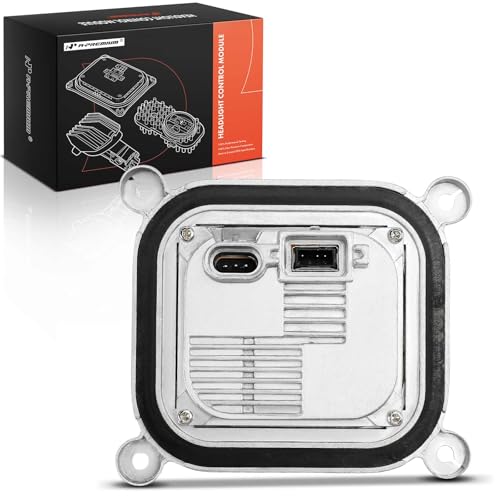
[Vehicle Fitment]: Compatible with Ford F-150 2013-2014, Explorer 2011-2012, Edge 2011-2015, fit for Mustang 2010-2020, Taurus 2010-2019, Flex 2009-2012, Police Interceptor Sedan 2013-2019, Police Responder Hybrid 2019, Special Service Police Sedan 2014-2018, SSV Plug-In Hybrid 2019, Compatible with Lincoln MKX 2011-2018, MKC 2015-2019, Navigator 2015-2017, MKS 2009-2016, MKT 2010-2012

Improved Illumination: Headlight Unit Controller Part ensures that xenon bulbs receive sufficient voltage and maintain a stable operating current at start-up, providing brighter, clearer illumination and significantly improving driving visibility at night or in poor weather conditions

For Chevrolet Corvette 2005-2013
Incorrect Autolamp Delay Configuration in Your Settings Menu
If your F150’s headlights remain illuminated for extended periods after shutdown, you’re likely experiencing misconfigured Autolamp Delay parameters within the BCM’s user-accessible settings interface. Navigate to Settings → Vehicle → Lighting → Autolamp Delay via your touchscreen or steering wheel controls. Factory defaults typically configure 20-second delays, but software updates occasionally reset this to 120 seconds without notification. For effective autolamp troubleshooting, verify your current delay setting and implement configuration adjustments by selecting shorter intervals or disabling the feature entirely. This parameter controls post-ignition headlamp retention independent of ambient light sensor response timing. The control knob must be positioned at the Autolamp setting for these delay configurations to function as programmed. If headlights persist beyond your configured delay threshold, cycle through available settings to reestablish BCM recognition of your preferences. Document baseline configurations before updates to expedite restoration of ideal lighting control parameters and prevent unnecessary battery discharge conditions. Consider consulting professional service if persistent headlight issues suggest potential headlight assembly complications beyond software configuration.
Aftermarket Modifications Interfering With Headlight Circuits
Aftermarket headlight installations compromise F150 electrical integrity through three primary failure mechanisms: incompatible control module communication protocols, disrupted wiring harness signal paths, and parasitic current draws that bypass BCM shutdown commands. LED or HID conversions trigger fault codes when current signatures don’t match factory specifications, preventing proper BCM deactivation sequences. Aftermarket wiring splices create unintended feedback loops—especially when DRL circuits tap into headlight power supplies without isolation relays. Your BCM can’t control lights it doesn’t recognize electrically. Electrical modifications introducing polarity reversals or mismatched connector pins send contradictory signals, overriding switch-off commands. Moisture infiltration through poorly sealed aftermarket heat sinks creates partial shorts maintaining circuit activation. Non-OEM modules lacking adaptive lighting protocols fail handshake verification with your headlight control module, defaulting to fail-safe “on” states that ignore manual inputs. Replacement headlights from non-dealer sources may lack adaptive function capabilities despite appearing physically identical, causing the headlight control module to generate persistent DTCs that prevent proper shutdown sequences.

Package: 1 Pair 9008 H13 headlight bulb male & female socket connector.

Compatible With: This H13 / 9008 headlight connector pigtail wire harness fits Ford F-150 / F150 models from 2004 to 2019, designed to restore proper headlamp connectivity and eliminate issues caused by worn or corroded connectors.
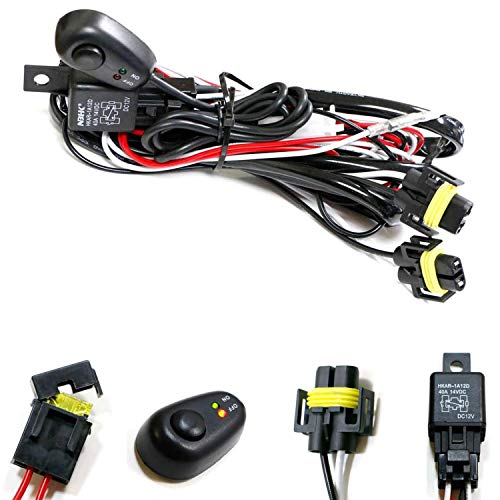
One relay wiring harness set includes a 4-pin SPST relay module box, in-line safety fuse box, pushbutton switch, input +/- terminals, and dual H11/H8/H9 outputs for reliable and efficient electrical connections
Faulty Relays, Switches, and Electrical Short Circuits
When headlight relays fail, their internal contacts weld together or stick in closed positions, maintaining continuous power delivery to your F150’s headlight circuits regardless of switch commands. Since Ford F-150s employ separate low beam and high beam relays, relay testing both circuits is essential. Swap suspect relays with identical units from other systems or use a relay tester to confirm proper coil and contact operation. You can locate these relays in your vehicle’s fuse box compartments, typically found under the dashboard or in the engine bay.
Headlight switches develop stuck or corroded internal contacts that prevent circuit disconnection. Check continuity with a multimeter during switch operation; abnormal readings indicate switch replacement is necessary. Modern LED alternatives require proper beam pattern quality to ensure headlights focus correctly and don’t remain on due to optical misalignment issues. Short circuits in your wiring harness create unintended current paths bypassing switch control entirely. Inspect wire insulation for chafing against chassis components, particularly near mounting points. Corroded connectors disrupt proper switching operation—clean terminals with contact cleaner and apply dielectric grease to restore functionality. Additionally, trailer connection accessories can trigger extended lighting duration through the 7-pin connector, so disconnect any aftermarket LED hitch covers or similar devices if lights remain on excessively after locking.
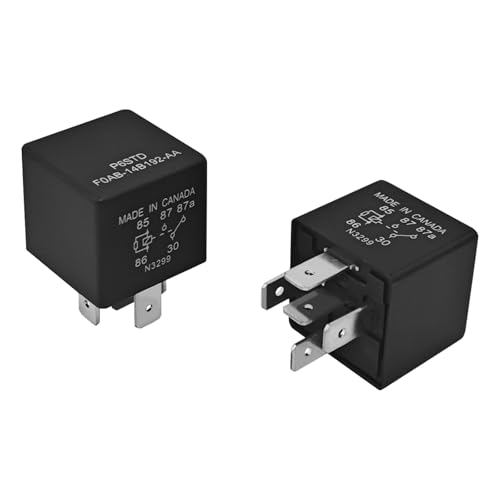
【High Performance】This relay is rated at 12V and has a maximum load current of up to 40A. It adopts a 5-pin (single-pole double-throw) design to provide precise circuit control, and can maintain fast response and low energy consumption even in high-voltage and high-temperature circuit environments

EP27 LED Electronic Flasher Realy Module, Direct Replacement for EFL-4.

Specification: This 9007 headlight relay harness with 2pcs 9007 plug headlamps,14AWG wire gauge,built-in two durable relays, high-temperature ceramic headlight sockets, can well proect the car circuit if there is any abnormal situation occur. Wiring harness only, not a Headlight
Security System and Door Lock Interactions With Lighting
Your F150’s security system maintains direct control pathways to exterior lighting circuits, creating scenarios where headlights remain illuminated independent of manual switch positions. Remote start integration keeps parking lights active as confirmation the engine is running, while alarm triggers activate headlights through dedicated wiring bypassing conventional switch control. Perimeter Plus systems energize lighting when shock sensors detect impact or intrusion attempts. Malfunctioning door lock actuators transmit false signals to security modules, commanding lights to stay on despite switch deactivation. Two-stage shock sensors and tilt detectors integrate with existing lighting circuits through security control modules. Programming errors during LEARN mode synchronization create persistent lighting activation. Aftermarket security installations with improper wiring harness connections establish unintended current paths. Door lock status signals link directly to lighting control modules, overriding manual headlight switch positions when security events occur. Modern vehicles rely on ambient light sensors to manage lighting automatically, yet security system overrides can prevent these from functioning properly. Inspect electrical connections periodically to identify corroded terminals or loose wiring that may cause lighting control modules to receive erroneous security system signals.
Model Year and Trim-Specific Headlight Control Variations
Different F150 generations employ distinct lighting control architectures that directly affect headlight persistence behavior. Pre-2015 models typically use manual switches with simple relay circuits, while post-2015 trucks integrate Lighting Control Modules (LCMs) that manage complex logic for auto-on/off functions. Your headlight control system varies greatly by trim—base work trucks feature basic manual operation, whereas Platinum and Limited trims incorporate ambient light sensors and ADAS integration. These trim variations require different LCM versions with unique programming parameters. Higher-end models may use LED matrices or adaptive lighting requiring specialized control modules that communicate with multiple vehicle systems. The lighting control switch must be set to the autolamps position for automatic high beam systems to function properly, which can contribute to headlights remaining illuminated even when you expect them to turn off. When diagnosing persistent illumination, you’ll need to identify your specific model year and trim combination, as LCM fault codes, wiring harness configurations, and sensor integration points differ considerably across the F150 lineup.
Diagnostic Tools and Professional Solutions for Persistent Issues
Since persistent headlight issues often stem from electronic control failures rather than simple mechanical faults, you’ll need specialized diagnostic equipment to accurately identify the root cause. FORScan diagnostic software allows direct modification of your F150’s lighting parameters, including DRL configuration and headlight operating modes. You can test changes through ignition cycles to verify proper shutdown behavior.
Professional technicians employ multimeters and circuit testers during wiring inspection to detect shorts or parasitic current flow, particularly at the 7-pin trailer connector where aftermarket devices frequently cause problems. They’ll scan for stored error codes in your Body Control Module (BCM) and Central Junction Box, checking voltage on specific circuits like the Light Green/Black wire. When selecting replacement components, technicians verify the correct bulb type matches your vehicle’s specifications to ensure proper operation. BCM firmware updates may resolve software-related malfunctions causing unintended headlight operation after shutdown. If headlights remain illuminated after removing fuse No. 16, this indicates a short circuit in the Light Green/Black wire that requires immediate repair.

CEL Doctor: The ANCEL AD310 is one of the best-selling OBD II scanners on the market and is recommended by Scotty Kilmer, a YouTuber and auto mechanic. It can easily determine the cause of the check engine light coming on. After repairing the vehicle's problems, it can quickly read and clear diagnostic trouble codes of emission system, read live data & hard memory data, view freeze frame, I/M monitor readiness and collect vehicle information.
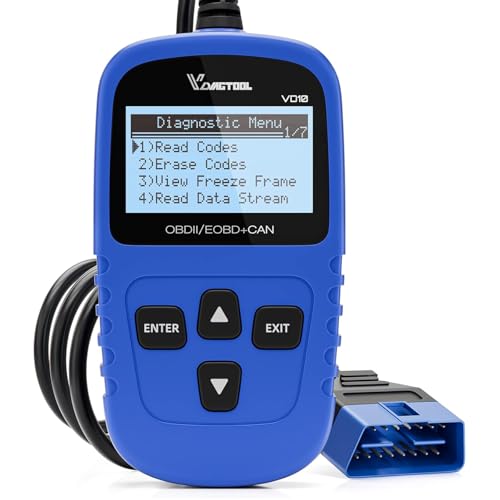
【A MUST-HAVE TOOL FOR DIYERS】 - VDIAGTOOL VD10 car code reader is an incredibly useful obd scanner for each car owner or hobbyist, even for those with little to no experience when it comes to vehicle mechanics! Similar to a fixd car diagnostic tool, using this car diagnostic scanner is extremely easy. All you have to do is attach it to your car OBDII port and you can diagnose car problems in seconds! Read Codes (DTCs); Clear Codes; Live Data; View Freeze Frame; I/M Readiness; Vehicle Information.

UNDERSTAND YOUR CHECK ENGINE LIGHT – The ANCEL AD410 OBD2 scanner helps everyday drivers quickly read and clear engine-related fault codes, view code definitions, and understand why the check engine light is on before visiting a repair shop. With 42,000+ built-in DTC lookups, this car code reader helps reduce guesswork and makes basic vehicle diagnostics easier for beginners and DIY users