HID headlights are legal only when they’re factory-installed or comply with FMVSS No. 108‘s photometric requirements—specifications most aftermarket conversions fail to meet. You’ll face fines exceeding $200, inspection failures, and potential negligence per se liability if your HID system violates federal standards governing luminous intensity (capped at 32 candlepower), color temperature (2500K-6000K), and beam patterns. Non-DOT-certified kits create unlawful glare that increases accident risk and exposes you to legal consequences. Understanding compliance requirements, state enforcement variations, and installation standards will help you avoid these costly violations.
Understanding Federal Standards for Automotive Headlights
Since 1968, Federal Motor Vehicle Safety Standard (FMVSS) No. 108 has governed all automotive lighting, signaling, and reflective devices in the United States, establishing mandatory design, performance, and durability requirements that manufacturers must certify their products meet before sale. The National Highway Traffic Safety Administration (NHTSA) administers this standard under 49 CFR § 393.24, requiring compliant headlamps to bear the “DOT” symbol indicating certification. You must verify your headlights meet specific headlight specifications including brightness levels, beam patterns, angle alignment, and color temperature limits (typically 2500K to 6000K). Non-compliant lighting creates significant safety implications and legal liability—headlights lacking DOT certification are illegal for on-road use, potentially resulting in inspection failures, citations, and civil liability if defective lighting contributes to accidents. For drivers seeking to maintain headlight clarity and visibility, restoring yellowed headlights with accessible methods can help preserve compliance with brightness standards, while understanding that LED bulb lifespan significantly exceeds halogen alternatives, making them a durable compliance option. Manufacturers bear compliance responsibility for ensuring their headlights meet FMVSS 108 standards, as the DOT does not directly approve products but rather relies on self-certification.
Factory-Installed vs. Aftermarket HID Systems
When evaluating HID headlight options, you’ll encounter critical distinctions between factory-installed (OEM) systems and aftermarket alternatives that carry profound legal and safety ramifications. OEM HID headlights utilize D-series bulbs (D1-D4) with type-specific ballasts and igniters engineered for vehicle-integrated optics, ensuring compliant beam patterns. Aftermarket systems, though marketed as universal-fit replacements, present installation challenges due to electrical incompatibilities and optical misalignment with non-HID housings. Performance disparities emerge considerably: while aftermarket bulbs may produce higher lumen output, they frequently generate scattered beams causing unlawful glare. Factory systems maintain FMVSS 108 design standards balancing brightness with cutoff precision. The ballasts incorporate igniters that convert power into AC current, delivering the super high voltage spark necessary to initiate the electric arc between contacts in the xenon-filled chamber. Installing aftermarket HIDs in halogen housings typically violates federal photometric requirements, exposing you to liability for noncompliant lighting equipment regardless of claimed “plug-and-play” compatibility.


HID HEADLIGHT BALLAST REPLACEMENT - Also known as headlight control unit, a crucial part of hid lighting system, provides the voltage needed to start the lamp and regulates the electrical current of the light once it is lit. A failed ballast will cause your bulb to burn. When the voltage is input, the output power of the ballast can be kept constant at about 35W or 50W to protect the HID bulb from damage. The ballast fits either the left or right hid headlights.

【KDLT003 Ballast replacement】Also known as Headlight Control Unit, a crucial part of HID lighting system, provides the voltage needed to start the lamp and regulates the electrical current of the light once it is lit. A failed ballast will cause your bulb to burn. It is a perfect solution for 2004 2005 2006 2007 2008 2009 2010 2011 2012 2013 2014 Lexus SC430 ES350 ES350h LS460 LS460L LS600h RX350 RX450h GX460 GS300 GS350 GS430 GS450h Gs460 IS250 IS350 IS350F IS250C
State Laws and Enforcement of Headlight Regulations
Although federal FMVSS 108 establishes baseline photometric requirements for vehicle lighting nationwide, enforcement mechanisms rest primarily with state authorities who’ve incorporated these standards into statutes with varying degrees of specificity and interpretive guidance. State enforcement intensity varies greatly across jurisdictions, with local police discretion influencing citation practices for non-compliant aftermarket HID installations. Headlight inspections conducted at state-mandated vehicle inspection stations typically flag non-DOT-compliant HID conversion kits, resulting in inspection failures and registration complications. You’ll face elevated citation risk with blue or purple-tinted bulbs exceeding approximately 4200K color temperature, as these hues trigger enforcement action due to emergency vehicle confusion concerns and glare complaints. Officers routinely exercise enforcement authority against aftermarket HID kits regardless of explicit statutory language, relying on broader prohibitions against lights causing excessive glare or mimicking emergency equipment. Some jurisdictions apply general faulty equipment clauses to prosecute illegal HID violations when specific headlight modification statutes prove insufficient. Legal headlights must comply with standards for color, brightness, and beam pattern to avoid blinding other drivers and ensure compliance with safety requirements. When replacing headlights yourself, it’s important to install only DOT-compliant bulbs to maintain legal compliance and avoid enforcement issues.
Brightness and Color Temperature Requirements
Beyond procedural enforcement mechanisms, the substantive parameters governing HID headlight legality center on quantifiable photometric standards that establish mandatory brightness ceilings and color temperature ranges, with violations exposing vehicle owners to both citation liability and civil exposure in accident litigation. FMVSS No. 108 and SAE J578 impose brightness regulations capping luminous intensity near 32 candlepower at specified test points, preventing excessive glare while ensuring adequate illumination. You’re required to maintain color standards between 4300K and 6000K—temperatures producing white to slightly yellowish light—as chromaticity requirements prohibit bluish hues exceeding 6000K that compromise visibility and distract oncoming traffic. Xenon headlights produce light through high-intensity discharge technology, which creates a bright white-blue output that must still comply with these color temperature restrictions to remain street legal. Non-certified installations lacking DOT or E-Mark approval violate these photometric benchmarks, establishing negligence per se in tort claims where improper brightness or color temperature contributes to collisions. California Vehicle Code regulations such as CVC 25950 mandate that these photometric and chromaticity standards be met for all front-facing lights to ensure compliance with state safety requirements. Compliance with official markings such as DOT or E-Mark certifications confirms that headlight systems meet applicable regional safety standards and brightness regulations.

【Ultra Bright 6000K White】3 times brighter than halogen bulbs. This hid bulb emit 6000K super bright white light, much brighter than OEM bulbs.

ACK For Toyota Sienna 11-14 Headlight HID Driver Side | DOT Certified 81185-08040 | TO2518143
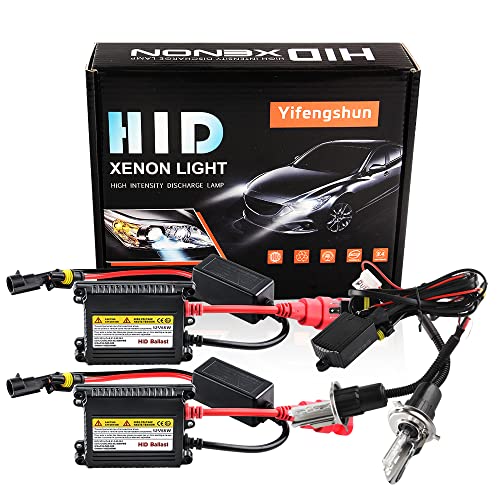
【Ultra Bright 6000K White】3 times brighter than halogen bulbs. This hid bulb emit 6000K super bright white light, much brighter than OEM bulbs.
Legal Risks of Non-Compliant HID Conversions
Installing aftermarket HID conversion kits in vehicles originally equipped with halogen headlamp assemblies violates Federal Motor Vehicle Safety Standard (FMVSS) 108 when those conversions lack DOT-approved housings, self-leveling mechanisms, and lens washers—three components federal regulators mandate for high-intensity discharge systems. HID compliance risks extend beyond fix-it tickets and fines exceeding $200; you’ll face potential license points, failed safety inspections, and vehicles deemed unroadworthy until corrected. Glare safety concerns create substantial liability exposure—improper beam patterns blind oncoming drivers, causing defensive errors and secondary collisions. Insurance carriers may deny claims or raise premiums when illegal modifications contribute to accidents, particularly if HID headlights three times brighter than halogen bulbs produced glare-related causes. Malfunctioning HID systems can cause lights to flicker unexpectedly, creating additional hazards for nighttime driving and reducing your ability to maintain consistent road visibility. States adopting federal standards guarantee non-compliant conversions remain illegal nationwide, increasing enforcement frequency and financial consequences.

COMPLETE 3-IN-1 HEADLIGHT COMBO FOR ACURA TSX 2004–2008: This all-in-one kit includes everything you need to upgrade your Acura TSX's front lighting. Contains H1 High Beam bulbs (2), D2S HID Low Beam bulbs (2), and H11 Fog Light bulbs (2) – a complete 6-piece solution for high beams, low beams, and fog lights. Specifically designed for TSX models 2004, 2005, 2006, 2007, and 2008.

【Compatible Models】 Please check compatibility to make sure this part fits for your vehicle before purchase. Luyizyo HID ballast kit with igniter and D3S bulb directly replaces OE numbers 13587843, 13503432, and 20928264. Compatible with: for Chevrolet Suburban 2014-2020, for Chevrolet Tahoe 2014-2020, for Chevrolet Silverado 1500 2014-2018, for Chevrolet Impala 2018-2020, for Chevrolet Malibu 2013-2015, for Chevrolet Blazer 2019-2020.

DOT COMPLIANCE, STREET LEGAL: This headlight conversion kit with DOT compliance designed reflector and focus lens, the focus beam with perfect cut off line will never blind oncoming driver, No Shadows, No Dark Spot, Maximize Ensuring you and other driver safety