

Headlight restoration is a reconditioning process that removes UV-induced oxidation and surface degradation from polycarbonate lenses, improving light output by up to 75%. You’ll use progressive wet-sanding techniques (400–2000+ grit), machine polishing with cutting compounds, and UV-resistant clear coat sealants to restore optical clarity. This cost-effective alternative ($100–$200) beats replacement costs while enhancing beam uniformity and reducing scatter for oncoming traffic. The complete process requires proper workspace preparation, PPE, and mastering specific sanding patterns to achieve factory-grade results through either DIY methods or professional services.
Understanding Headlight Restoration and Its Purpose
Headlight restoration is a reconditioning process that removes oxidation, hazing, and surface degradation from polycarbonate lens assemblies through controlled abrasion and protective recoating. You’ll restore usable light output by reversing clarity reductions that reach up to 75% in severe cases. The procedure addresses safety deficiencies by improving beam throw uniformity and reducing scatter that impairs oncoming drivers. Beyond visibility enhancement, restoration delivers cost-effectiveness versus replacement—typically $100–$200 compared to $500+ for new assemblies. You’ll achieve oxidation prevention through UV-resistant coatings that inhibit re-degradation of polished surfaces. Restoration extends headlight longevity by reestablishing the protective layer that reduces micro-abrasion and moisture ingress. The process supports regulatory compliance, enhances resale value through improved cosmetics, and diverts assemblies from waste streams by prolonging service life. Most restoration kits include chemical-based solutions, UV sealants, and abrasive polishing systems to address different types of headlight degradation. The restoration procedure involves sanding with progressively finer grits to systematically remove the oxidized layer from the lens surface. After sanding, you’ll apply rubbing compound and polishing compound to restore clarity and shine before finishing with a protective clear coat.
Common Causes of Headlight Damage and Deterioration
While polycarbonate lens assemblies provide superior impact resistance over glass, their molecular structure renders them vulnerable to multiple degradation mechanisms that progressively compromise optical performance. Understanding common causes of headlight deterioration enables you to implement preventive measures effectively.
UV radiation accounts for approximately 80% of lens degradation, breaking down factory-applied protective coatings and initiating surface oxidation. This chemical reaction with atmospheric oxygen creates the characteristic cloudy appearance that reduces light output. Physical damage from road debris—rocks, sand, and particulates—creates micro-scratches that accelerate oxidation susceptibility through a gradual sandblasting effect.
Temperature fluctuations induce thermal cycling, causing expansion and contraction that generates micro-cracks. Chemical contaminants including acid rain, road salts, and pollutants further compromise lens integrity, while improper cleaning products strip remaining protective layers. Neglecting regular maintenance allows contaminants to build up, creating an environment that substantially accelerates the oxidation rate and compounds existing damage. Applying a UV-resistant clear coat after cleaning helps prevent re-yellowing and maintains headlight clarity over time, providing long-lasting protection against future oxidation.
Benefits of Restoring Your Headlights
Restoration of degraded headlight assemblies delivers measurable improvements across five critical performance dimensions: visibility, safety, economics, aesthetics, and asset value.
Performance enhancement begins with visibility improvement—restored lenses increase light output by up to 300%, extending your line of sight during nighttime and adverse weather conditions. You’ll spot obstacles earlier, enabling faster hazard response.
Safety metrics improve correspondingly. Enhanced detectability reduces collision risk while maximizing your reaction time to road hazards. Clear headlights also improve visibility for pedestrians and other drivers, creating safer conditions for all road users. Expert technicians use advanced eco-friendly techniques to remove oxidation and restore maximum brightness safely. Protecting restored headlights with UV sealant application prevents future yellowing and oxidation from recurring.
Economic analysis reveals restoration costs $100-$200 versus $500+ for replacement assemblies—delivering immediate ROI.
Aesthetic restoration eliminates oxidation and yellowing, projecting proper maintenance standards. This cosmetic improvement directly impacts resale value, as clear lenses signal meticulous vehicle care to prospective buyers, commanding premium pricing in secondary markets.
Essential Preparation Before Starting the Restoration Process
Successful restoration outcomes depend entirely on meticulous preparation across workspace setup, material staging, and substrate assessment. Establish a shaded, well-ventilated area maintaining 50–85°F ambient temperature to guarantee proper curing of activators and UV clear coats. Your preparation checklist must include complete abrasive sequences (400–2000+ grit), polishing compounds, backing pads, surface activators, and UV-block sealers. Mask surrounding paint with automotive tape using double layers at lens-paint interfaces to prevent accidental damage. Inspect lens condition—differentiating UV oxidation from structural damage like cracks or delamination—to determine restoration viability versus replacement necessity. Verify polycarbonate material compatibility with wet-sanding protocols. Stock adequate PPE: nitrile gloves, safety glasses, and organic vapor respirators. Arrange diffuse lighting for defect inspection and maintain clean rinse water supplies. Wash the headlights thoroughly to ensure surfaces are completely dry and free from contaminants before beginning any sanding procedures. Apply a UV-protective sealant after polishing to prevent future yellowing and extend the clarity of your restored headlights. For cases where restoration is not viable, replacement headlights offer factory and custom style options to restore your vehicle’s lighting performance. Photograph lenses pre-restoration for progress documentation and abrasive-sequence calibration.

KIT INCLUDES: 1 - Disc Pad Holder, 3.25 in (8,2 cm) 6 - 3M Gold Sanding Discs 500 Grit, 3 in (7,6 cm) each 4 - 3M White Finishing Discs 800 Grit, 3 in (7,6 cm) each 1 - 3M Trizact Refining Disc 3000 Grit, 3 in (7,6 cm) 2 - 3M Quick Headlight Clear Co

KIT INCLUDES: 1 - 3M Trizact Refining Disc 1000 grit, 3 in/7.6 cm 1 - 3M Trizact Refining Disc 3000 grit, 3 in/7.6 cm 2 - 3M Quick Headlight Clear Coat Wipes 1 - Foam Pad with 3M Hookit Attachment, 3 in/7.6 cm 1- Disposable Glove

KIT CONTENTS: Each headlight restoration kit includes (8) Step 1 Oxidation Removing Wipes, (1) Step 2 Sanding Kit, and (2) Step 3 Ceramic Coating Wipes
Step-by-Step Sanding Techniques for Damaged Lenses
Because headlight lens restoration depends on systematic abrasive removal of oxidized polycarbonate layers, you’ll execute a progressive grit progression that shifts from aggressive material removal to surface refinement. Begin with 400-grit dry sanding in horizontal strokes until the lens appears uniformly hazy. Progress to 600-grit wet sanding in perpendicular lines, maintaining constant water lubrication to prevent scratching. Advance through 1,000-grit and 2,000-grit stages, alternating direction each time while checking for uniform scratch patterns. These sanding techniques require consistent even pressure and fresh paper per headlight to avoid cross-contamination. You’ll notice gradual clarity improvement after 1,000-grit, with complete smoothness achieved at 2,000-grit. Wipe periodically to verify oxidation removal. Optional 3,000-grit refinement enhances final polishing results. For severe headlight deterioration, consider whether professional restoration services might deliver better long-term results than DIY sanding alone. After completing the sanding progression, apply a protective clear coat to seal the lens and prevent future oxidation from returning. Clean with alcohol before proceeding to compound application. Use masking tape protection around the headlight perimeter to shield your vehicle’s paint from accidental sanding damage during the restoration process.

Full-Cycle Sanding Support - The car drill polishing kit featuring 3 inch sanding discs range 60/80/120/240/400/800/1000/1500/2000/3000/5000/10000 grit sandpaper for dry and wet use, with orbital sander pads, imitation wool buffing pad, and upgraded backing pads for 1/4 and 1/8 inch shank. Seamlessly transition from sanding to polishing.
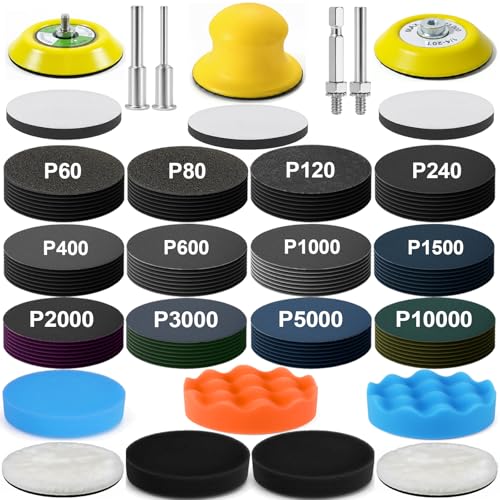
Complete 137PCS Sanding Kit: This all-in-one sanding and polishing kit includes 120pcs 3-inch sandpapers (60–10000 grit), 1 handheld sanding pad, 3 buffer pads, 2 wool pads, 5 sponge pads, 2 backing plates (inner & outer thread), and multiple adapter rods (6.35mm, 5.8mm, 3mm). Ideal for both professionals and DIY users who need precision from coarse sanding to fine polishing.

192 PCS Drill Polishing Workflow Set - Includes 175 hook and loop sanding discs range 60/80/120/240/320/400/600/800/1000/1500/2000/3000/5000 grit sandpaper, plus 17 accessories for drill sanding attachment use: backing pad, soft interface pad, foam polishing pads, wool pad, adapter shanks, masking tape strips and microfiber cloths. Seamlessly transition from sanding to polishing.
Polishing Methods to Restore Crystal Clear Clarity
After completing the 2,000-grit sanding stage, you’ll shift to machine polishing using a rotary polisher or drill-mounted cutting pad to eliminate residual scratches and restore optical clarity. Attach an orange Hex-Logic cutting pad to your drill, then apply rubbing compound directly to the lens surface. Start at low speed to distribute the product without splattering, then increase to full speed. Execute horizontal overlapping passes followed by vertical passes, maintaining constant pad movement to prevent heat buildup that damages plastic. Keep the pad flat against the lens while working in circular motions until cloudiness disappears. Wipe away residue with a microfiber towel, then optionally switch to a foam pad with finishing polish for mirror-like results. Hand-polish outer edges to protect surrounding paint from pad contact. Chemical Guys’ headlight restoration solutions use active ingredients specifically formulated to remove oxidation and yellowing that can occur during the polishing process. For optimal results, ensure your headlight bulbs meet proper brightness and color temperature specifications after restoration is complete. This one-step process typically takes 10-15 minutes per headlight to complete.

SEE CLEARLY: Renew your plastic without replacement with Meguiar's PlastX Plastic Cleaner. This clear plastic scratch remover quickly improves long-term wear and tear on a variety of uncoated plastics, leaving behind water-resistant polymers

HEADLIGHT RESTORATION AND PROTECTION (GAP11516) – All-in-one formula cleans, restores, and protects plastic headlights, removing yellowing, oxidation, and haze for improved clarity and visibility

BUFF OUT IMPERFECTIONS: Meguiar's Ultimate Compound removes scratches, swirls & oxidation for a clear, perfect finish
Sealing and Protecting Your Restored Headlights
Your polishing work means nothing without proper sealing—unprotected polycarbonate oxidizes within months, returning headlights to their clouded state. Sealer types include spray-on urethane clear coats with cross-linking polymers and UV inhibitors, or Paint Protection Film (PPF) for permanent clarity. For spray application techniques, mask surrounding areas, then hold the can 3-4 inches away, applying thin coats in overlapping left-to-right patterns. Allow 5-7 minutes between coats. Alternatively, apply urethane horizontally using a shop towel, letting it cure for 30 minutes. PPF installation requires slip solution on the lens surface before positioning the film with a squeegee. Both methods seal micro-imperfections while providing UV protection. Most sealants require reapplication at regular intervals to maintain their protective barrier against sun damage and environmental contaminants. Ensuring DOT compliance and proper light output should be verified after any restoration work to maintain both safety and legal requirements. Before applying any sealer, prepare the headlight surface by wet sanding with 600 grit abrasive to ensure proper adhesion. For housing reassembly, use automotive-grade butyl sealant rope in cleaned channels, ensuring weather-tight moisture protection for years.

DURABLE, FAST DRYING ACRYLIC FORMULA: Delivers a long-lasting, attractive finish on indoor and outdoor surfaces including metal, wood, plastic and more

Wipe-on fluid is excellent for lightly yellowed or recently restored lenses

Use to quickly customize metal, chrome or wood on vehicles with on trend color and finishes
DIY Vs Professional Headlight Restoration Approaches
While professional restoration delivers factory-grade results, DIY methods offer cost-effective solutions when you’re equipped with proper materials and technique understanding. You’ll spend $3 for sandpaper packs (800-4000 grit) versus professionals using Rodac sanders with precision discs. DIY approaches require 30-45 minutes total, progressing through wet sanding stages and applying rubbing compound manually. Professional tools like machine polishers maintain consistent pressure, eliminating sanding scratches completely through color-coded pad systems and specialized compounds (Refinish 5000, Ultra Finish 12000). Your DIY results depend on technique mastery—toothpaste works for light hazing, but heavy oxidation demands multiple compound rounds. Professionals achieve superior gloss through powered overlay coverage at controlled speeds, preventing heat buildup while matching factory-new clarity standards consistently. Two-step and complete restoration kits from trusted brands provide structured approaches for DIY enthusiasts seeking professional-quality outcomes. Proper preparation requires thoroughly cleaning and drying both the car and headlights, with masking around the headlight if removal isn’t possible.
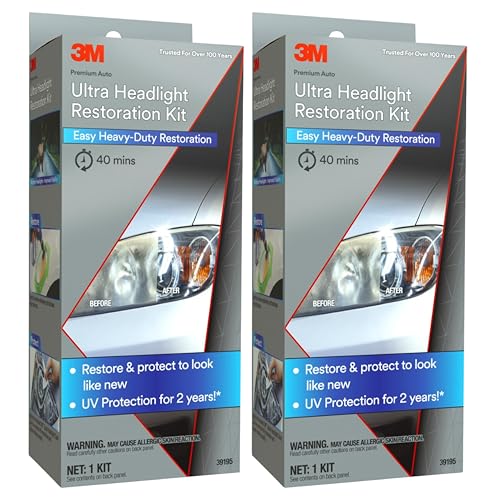
2-PACK VALUE: Includes 2 complete Ultra Headlight Restoration Kits (Part 39195) for restoring multiple vehicles or keeping a spare in your garage.

RESTORES FOGGY HEADLIGHTS: Quickly restore and eliminate oxidized and yellowed lenses for a crystal clear, like-new appearance

ENHANCE YOUR VISIBILITY: Our Car Headlight Restoration Polishing Kit effectively tackles yellowing and cloudiness, ensuring your headlights shine brightly. Experience improved brightness and visibility in just minutes with our headlight restoration kit designed for all vehicle types. It's safe, fast, and permanently effective, boosting both the sleek look of your vehicle and your visibility during night driving.
Maintaining Your Headlights After Restoration
Restored headlights require systematic maintenance protocols to preserve optical clarity beyond the initial two-year degradation threshold. You’ll need to implement headlight longevity tips including monthly washing with mild soap and water using soft cloths, followed by thorough drying to prevent water spotting. Apply UV-resistant coatings in thin urethane clear coat layers periodically, ensuring even coverage without runs. Inspect lenses regularly for oxidation indicators like yellowing, haziness, or clouding. For visibility improvement techniques, utilize plastic polish with compound pads at low speeds, applying uniform pressure through overlapping passes to avoid heat buildup. Address minor degradation with gentle buffing before full sanding becomes necessary. Regular car washing removes dirt and debris that can accumulate on headlights and compromise their clarity over time. Consider applying a UV headlight sealant periodically to help maintain clarity and prevent future yellowing or hazing. A two-step restoration system combining cleaner and polish with protective coating provides a comprehensive maintenance approach. Refresh protective coatings before oxidation reappears, selecting durable formulations over temporary kit sealants. This integrated approach—combining cleaning, coating, and inspection cycles—extends restoration durability markedly.


