Your vehicle’s headlights mount high at hood level and project concentrated beams 200-350 feet forward at 1,000-1,500 lumens for primary nighttime navigation. In contrast, fog lights position 10-24 inches above ground, emitting wide horizontal patterns at 400-700 lumens within 50-100 feet to illuminate beneath fog, rain, or snow. Headlights produce white-to-bluish light (4300-6000K), while fog lights generate yellow-amber output (2500-3000K) that penetrates moisture more effectively. Understanding these distinct optical systems’ mounting positions, beam patterns, and intensity specifications will help you optimize visibility across all driving conditions.
Purpose and Primary Functions
Headlights and fog lights serve fundamentally different roles in vehicle lighting systems, each engineered for specific visibility requirements. Your headlights provide primary illumination for night driving, projecting focused beams 200 to 350 feet ahead with controlled headlight distribution to prevent blinding oncoming traffic. They’re legally required for nighttime operation and illuminate road features, lane markings, and obstacles under normal conditions. Headlight bulbs vary in lifespan depending on type, with halogen bulbs lasting 450 to 1,000 hours, HID bulbs around 2,000 to 3,000 hours, and LED bulbs offering significantly longer life of 15,000 to 30,000 hours or more.
Fog light functionality differs considerably—these auxiliary lights emit wide, low-intensity beams with sharp cutoffs positioned close to the ground. They’re specifically designed for adverse weather conditions where fog, heavy rain, or snow create visibility challenges. The flat beam pattern cuts beneath moisture particles, minimizing glare reflection while illuminating immediate road edges and lane boundaries within 50 to 100 feet. Fog lights are mounted low on the vehicle, typically near the bumper, to optimize their performance in poor visibility situations. You’ll use fog lights supplementary to low beams during inclement weather, not as standalone lighting.
Mounting Position on Your Vehicle
Mounting location fundamentally determines each lighting system’s operational effectiveness, with positioning engineered to optimize beam performance for distinct visibility scenarios. Your fog lights mount low on the vehicle, typically 10-24 inches above ground level, positioned on or below the front bumper. This mounting height directs illumination beneath fog layers that hover around 18 inches, minimizing light reflection and glare. In contrast, your headlights install at hood level or higher front grille positions, enabling long-range beam projection of 200-350 feet for clear-condition visibility. Fog lights position near bumper edges approximately 24 inches apart, creating wide, flat beam patterns. Headlights center symmetrically higher, maintaining focused forward illumination. Each mounting location serves specific functional requirements—low positioning cuts through fog, elevated positioning maximizes distance visibility. The wide beam patterns of fog lights make them particularly effective at illuminating the road’s immediate width during low visibility conditions. Over time, headlight clarity can diminish due to oxidation, so maintaining your headlights with UV protectant sealing helps preserve their brightness and visibility performance. Regular wet sanding and polishing can restore oxidized headlights to their original clarity and effectiveness.
Beam Pattern and Light Distribution
Beyond installation placement, each lighting system employs distinct optical engineering to address specific visibility challenges through beam geometry and light dispersal mechanics. Your fog lights produce a wide horizontal beam (approximately 36°) with minimal vertical dispersion (around 6°), featuring a sharp top cutoff that directs illumination downward onto the road surface. This configuration maximizes beam efficiency by preventing light scatter into airborne particles, reducing glare and back reflection in adverse conditions.
In contrast, your headlights utilize concentrated light focus designed for long-range visibility, projecting 200-350 feet ahead. The beam pattern features center-weighted intensity with controlled spread, optimized for standard driving conditions. Low beams deliver wider, downward-angled distribution, while high beams produce straight-ahead projection. This fundamental difference in light distribution determines each system’s effectiveness: fog lights excel at near-field, lateral illumination, whereas headlights prioritize forward distance penetration.

Superior Visibility in Bad Weather: Equipped with 54 cutting-edge LED chips and enhanced top convex lens, the F1 Series H11 LED Fog Light Bulb provides 360° illumination, projecting 400% upgraded light over greater distances with precision. H11 fog light bulb led focused lights ensures safe and comfortable visibility during driving in rainy and foggy conditions
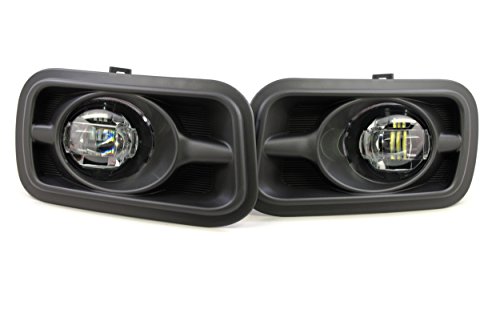
Powered by 3X Philips Luxeon-T LED's for a total of 2400 Lumens

【Anti Glare & Road Safe Beam】 Advanced reflector + Glass Fisheye Optical Lens design reduces glare by 70%, ensuring SAE/DOT compliant illumination that protects oncoming drivers.
Light Intensity and Color Differences
While beam geometry defines spatial distribution characteristics, the optical power and spectral output of each lighting system determine visibility effectiveness across environmental conditions. Your headlights produce 1,000-1,500 lumens per bulb at 4300-6000K color temperature, creating white-to-bluish illumination for 200-350 feet range. This high brightness contrast enhances distant object detection on clear roads. Conversely, your fog lights output 400-700 lumens at 2500-3000K, generating yellow-amber light that penetrates moisture-laden air more effectively. The lower color temperature reduces backscatter from water droplets, minimizing glare while maintaining adequate color perception for nearby road markings. You’ll find fog lights mounted lower with reduced intensity specifically calibrated to illuminate 50-100 feet without reflecting light back into your field of vision during adverse weather operation. Over time, plastic headlight lenses can develop oxidation and yellowing that reduces light output and clarity, requiring periodic maintenance to restore optimal brightness. Many vehicles use halogen bulbs in both headlight and fog light applications for their affordability and quick light emission. Understanding the distinct roles of each lighting type is essential for enhancing driving safety in varying conditions.

1:1 Original Size & Seamless Fit: Featuring as 1:1 OEM size and light source, G2S Series H10 9140 9145 LED fog lights are designed to fit your vehicle seamless without any modifications or adapters. They seamlessly integrate with your vehicle's design, maintaining its original design. Fit for RV Light Bulbs

(Set of 2) 1900 lumens per 889 881 LED Bulb, total 3800 lumens for both 881 LED bulbs; Each 889 881 white LED bulb is equipped with high illumination and high power 56 pieces ETI LED chips.

When to Use Each Light Type
Understanding ideal activation protocols for each lighting system guarantees maximum visibility effectiveness while maintaining legal compliance and road safety. You’ll deploy headlights from 30 minutes post-sunset until 30 minutes pre-sunrise, or when visibility drops below 1000 feet. Low beams suit urban environments, precipitation conditions, and situations with nearby vehicles, while high beams maximize detection range on dark, unlit rural roads without traffic within 500 feet ahead or 300 feet when following. Fog lights‘ strategic light placement delivers superior close-range visibility enhancement during dense fog, heavy rain, or snow through their wide, low-beam pattern. You’re required to activate headlights whenever windshield wipers operate continuously. In rain, use low beams to enhance visibility and avoid glare. Switch off fog lights when conditions improve, preventing unnecessary driver distraction and maintaining peak visibility enhancement protocols.

HD NIGHT VISION LENS: Polarized yellow tinted lens with special anti-reflective coating, effectively reduce glare caused by oncoming intense headlights and bright streetlights, enhance night clarity and alleviate eye fatigue, making night driving safer

PLUG-AND-PLAY REPLACEMENT FOR IS250 AND IS350 2006–2010 – Designed to be a 1:1 size match for the fog light housing. This replacement unit installs without any modifications or specialised tools—simply remove the old bulb and connect the new unit. Installation typically takes around 5 minutes. A practical upgrade for weekend DIYers and car enthusiasts who prefer to handle vehicle maintenance themselves.

HD NIGHT VISION POLARIZED LENSES: HD polarized yellow lenses come with a special anti-reflective coating to effectively reduce glare from oncoming headlights and bright street lights, enhancing night vision performance and ensuring safe driving. Anti-glare lenses also provide greater clarity in foggy, overcast, rainy, night-time, and other low-light conditions, making them the perfect choice for night driving, motorcycle riding, cycling, running, walking, fishing, and other outdoor activities
Legal Requirements and Restrictions
Federal and state regulations establish distinct legal frameworks for headlight and fog light operation, with headlights classified as mandatory safety equipment under Federal Motor Vehicle Safety Standard (FMVSS) 108 and fog lights designated as optional supplemental lighting. You’ll face traffic citations if you operate without functioning headlights during required periods—typically 30 minutes after sunset to 30 minutes before sunrise, or when visibility drops below 500-1,000 feet depending on your state. Legal compliance demands DOT-certified headlights producing 4,000-6,000 lumens for low beams and 8,000-12,000 lumens for high beams. When upgrading your lighting system, selecting leading headlight brands ensures you maintain compliance with brightness and color temperature standards. Many aftermarket LED headlight bulbs are not DOT-approved aftermarket replacements and thus cannot be legally used on street-registered vehicles despite their popularity as upgrades. Fog lights must remain below 3,000 lumens, mount beneath headlights, and activate only during adverse weather conditions. Using fog lights in clear conditions violates most state regulations and risks enforcement action. Headlight violations are classified as a primary offense across all 50 states, enabling law enforcement to initiate traffic stops based solely on this infraction.
Performance in Different Weather Conditions
Headlights and fog lights deliver markedly different performance profiles across weather conditions due to their distinct beam patterns, mounting positions, and optical characteristics. In fog, your fog lights’ low-mounted, wide beam reduces backscatter glare while illuminating 50–100 feet effectively. Headlights create excessive reflection when positioned higher, particularly with high beams. For performance comparison, halogen headlights outperform LED and xenon types in fog penetration, though xenon offers 2–3% higher transmittance. In rain and snow, you’ll achieve ideal results combining fog lights with low-beam headlights—this configuration minimizes precipitation-caused glare while maximizing road surface visibility. Critical visibility factors include detection range: fog lights excel at immediate hazard identification (50–100 feet), while headlights provide essential long-range illumination (200–350 feet) for high-speed clear-weather driving. Some vehicles allow you to customize exterior light settings through their menu systems to optimize lighting performance for specific conditions. Fog significantly reduces visibility by creating a “white wall” effect due to light scattering and reflection, which adversely affects driver perception and reaction times.
Can Fog Lights Replace Headlights?
While fog lights provide valuable supplemental illumination in adverse conditions, they cannot legally or functionally replace headlights in any driving scenario. State regulations, including California Vehicle Code § 24403 and Minnesota Statutes § 169.56, explicitly prohibit fog light usage without accompanying low beams. Headlight alternatives don’t exist because headlights serve as mandatory primary lighting systems, delivering 2400-lumen output with wide, long-range beam patterns essential for safe operation. Fog lights produce 3000-lumen maximum output through horizontal, low-mounted beams designed specifically for fog penetration—not general visibility. You’ll face $50-$500 fines, potential vehicle impoundment, or license suspension for non-compliance. Fog lights lack the angular positioning and forward projection required to illuminate road curves, traffic signs, and distant hazards. Legal driving demands properly functioning headlights as your primary illumination source. Additionally, fog lights are mounted between 12 to 30 inches above ground level, which positions them too low to serve as effective primary lighting for standard nighttime driving conditions. Adaptive headlights with LED technology and sensors provide superior brightness control and safety by maintaining visibility while minimizing glare for oncoming traffic.
Modern LED Technology and Upgrades
As automotive lighting evolves beyond traditional halogen technology, LED (Light Emitting Diode) systems have become the dominant upgrade path for both headlights and fog lights due to measurable performance advantages and operational efficiency gains. LED upgrades deliver 2-3 times greater light output while consuming 60-80% less power, converting approximately 90% of electrical energy into illumination compared to halogen’s 60%. You’ll achieve instant full-brightness activation without warm-up delays, with operational lifespans extending 15,000-50,000 hours versus halogen’s 500-1,000 hours. Energy efficiency improvements reduce alternator load and electrical system strain while generating minimal heat (85-120°F versus halogen’s 1,000°F). The enhanced durability and weather resistance of LED construction provides superior performance against shock, vibration, and extreme environmental conditions compared to fragile halogen filaments. When comparing brightness levels and beam pattern quality, LED systems consistently outperform traditional options across diverse driving conditions. Selecting the right bulb brands and models based on performance testing ensures compatibility with your vehicle’s electrical system. However, proper installation requires compatible housings and driver modules—using LED bulbs in halogen-designed reflectors creates beam scatter and glare issues that compromise safety and regulatory compliance.
![True Mods H6054 H4 LED Headlight Wiring Harness [Negative Switched Conversion] [Fused] Universal H4 Head Light Relay Harness Kit for 9003 H6024 5x7 7x6 4x6 Subaru Toyota Jeep Sealed Beam Headlamp](https://m.media-amazon.com/images/I/51+wV9S2Q4L._SL500_.jpg)
YOUR VEHICLE NEEDS THIS - Swapping out old headlights for LED conversions on negative switched vehicles like Toyota, Subaru, Mitsubishi, or Suzuki, is not a simple job. But with our plug-and-play universal dual H4 headlight relay harness kit for high/low beam it can be! The compatible sockets include: 7x6 5x7 H6024 (2D1 H6054 H5054 H6054LL 6014 6052 6053)|H6024 (2D1)|4x6 6x4 (H4651, H4652, H4656, H4666, H6545)|H5006 (2C1) sealed beam headlights and more!

【11X Brighter for Further View】: Engineered to dominate poor visibility, our 100,000-lumen beams cut through fog, rain, and snow with absolute clarity. The Q36 Series is the definitive upgrade for ultimate safety on unforgiving roads.
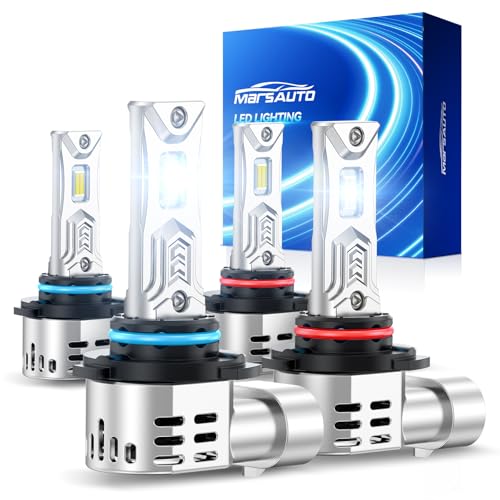
【1200% Brighter – 120,000LM for Daylight Clarity】 Experience unmatched road illumination with Marsauto 9005/HB3 and 9006/HB4 LED bulbs combo. Equipped with high-intensity CSP chips, this set delivers a staggering 120,000 lumens of 6500K cool white light, achieving a 1200% brightness increase over standard halogen bulbs. This extreme luminosity mimics natural daylight, allowing you to penetrate darkness, fog, and rain, and detect obstacles and road signs earlier for a safer and more confident night driving and off-road experience.
Optimizing Your Vehicle’s Lighting System
Maximum lighting effectiveness depends on proper system configuration across adjustment, power management, and maintenance protocols working in concert. You’ll achieve beam optimization through precise aiming: headlights should dip below horizontal at 7.5 meters, while fog lights aim lower for near-road illumination. Make light adjustments via housing screws after bulb replacements or impacts.
Select LED systems consuming 25-40 watts per unit to reduce electrical load while maintaining output. Calculate power requirements carefully to prevent alternator overload. Your vehicle’s specifications dictate compatible lumen ratings—passenger cars need 3,000-5,000 lumens, SUVs require 6,000-10,000. Advanced systems feature adaptive brightness control that automatically adjusts output based on ambient light conditions detected by onboard sensors.
Inspect housings bi-weekly for degradation. Clean lenses regularly since contamination drastically reduces transmission. Before ordering replacement parts, identify your vehicle’s lighting package type to ensure compatibility with your specific model. Replace bulbs in pairs before complete failure. Proper bulb installation with correct connector seating ensures optimal performance and longevity of your lighting system. Consult manufacturer guidelines to guarantee proper compatibility and system integration.

Creative DIY Mode: Choose from 16 million available colors or customize car led light effects to your liking in DIY mode via Govee Home app. Make your car stand out in unique style with creative freedom and outdoor decorations.

【Dynamic Demon Eye Light for Windshield】 This eye-catching Demon Eye Car Light & Devil Eye Car Light features a unique demon eye design, acting as vivid car eyes animated led & windshield eyes animated led.Add a bold and fun touch to your vehicle with this dynamic LED demon eye car light. Designed for windshield or window installation, it creates a unique glowing effect that stands out at night and enhances your car’s atmosphere.

Creative DIY Mode & Music Sync: Using the app to adjust brightness, change colors, and choose from multiple modes and musical rhythm styles. The music mode has a built-in microphone, allowing these LED lights for car interior to automatically change colors based on ambient sound or music, transforming your vehicle's atmosphere.