If your headlight isn’t working after bulb replacement, first verify you’ve seated the bulb correctly—listen for the audible click in the quarter-turn lock mechanism. Next, check electrical connections at the bulb socket with a multimeter; you should measure 12.4V at the terminals. Inspect the headlight fuse for continuity and test the relay by swapping it with an identical unit. Confirm you’ve installed the correct bulb type matching your vehicle’s specifications, as LED and HID bulbs require proper polarity orientation. The sections below provide thorough diagnostic procedures for each potential failure point.
Verify Proper Bulb Installation and Seating
The quarter-turn lock mechanism represents the most common failure point when headlights don’t illuminate after bulb replacement. You’ll need to verify the bulb’s tabs align precisely with the housing slots before executing the clockwise quarter-turn. Improper bulb alignment prevents electrical contact, rendering the new bulb non-functional. Listen for the audible click that confirms proper seating—absence of this sound indicates incomplete installation.
Remove and reinstall the bulb if initial testing fails. Examine the connector orientation; you may need to flip it 180 degrees for correct polarity. Push down the securing clip or cap firmly to maintain bulb base contact. Perform seating verification by gently attempting to rotate the bulb counterclockwise—resistance confirms proper lock engagement. For optimal bulb longevity, replacing bulbs in pairs ensures consistent lighting performance and balanced illumination on both sides of your vehicle. Use work gloves during this process to avoid transferring oils from your skin onto the bulb surface. After installation, clear any oxidation or haziness on the lens to maximize light output. Test both high and low beam functions immediately after securing all connections.
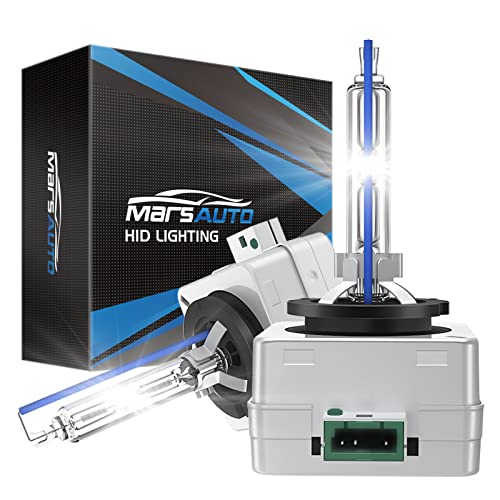
Replace Only HID Bulbs: Fit for stock D3S HID Xenon bulbs only, NOT ADAPT if your auto has stock Halogen/LED lights

Fit for 99% of vehicles - SYJIIP Halogen headlamp are close to the wattage of the original halogen headlamp bulb, which can reduce the occurrence of CANBUS problems, avoid erroneous and flickering. As long as your original light bulb model is the same as ours, then SYJIIP's light bulb will be suitable for your car.
Check Electrical Connections and Connectors
When bulb replacement fails to restore headlight function, electrical connectivity issues typically represent the underlying fault. Begin electrical troubleshooting by inspecting the headlight connector for melted, burnt, or spread pins—common failures in factory connectors exposed to high-beam heat loads. Wiggling the connector while observing for flickering confirms poor contact. Test voltage at both high and low beam terminals using a multimeter set to 20V DC scale, expecting 12.4V at the selected circuit and zero volts at the inactive terminal. Verify ground integrity by measuring voltage between positive terminals and the ground pin; consistent 12.4V readings confirm solid grounding. Ensure the grounding point is free of corrosion and secure to maintain accurate testing results. Address connector damage through proper connector maintenance: clean oxidized contacts, replace deteriorated terminals, and secure repairs with heat shrink tubing to prevent future failures.
Inspect Fuses and Relays
Moving beyond connector issues, fuses and relays constitute critical protection and switching components that’ll prevent headlight operation when compromised. Begin diagnostics with fuse identification—locate your headlight fuses in the engine compartment or under-dashboard fuse box using your vehicle manual’s diagram. Test each fuse for continuity with a multimeter or test light, replacing any blown units with identical amperage ratings. Keep spare fuses in your vehicle to ensure you have replacements readily available for emergency situations. For relay types, check labels marked “HEAD,” “HL,” or “HEADLIGHT RELAY” in your fuse box. Swap the headlight relay with an identical unit like your horn relay to verify functionality. Listen for clicking sounds when activating headlights—silence indicates relay failure. A rattling sound inside the relay also signals potential failure requiring replacement. Inspect terminals for corrosion, melting, or discoloration. If fuses blow repeatedly post-replacement, you’re facing underlying electrical faults requiring further investigation. Understanding brightness output specifications can help you determine if a replacement bulb was properly installed before troubleshooting electrical components.

Easy Identification: The fuse assortment kit is made of high-quality zinc alloy, featuring a transparent cover and color-coded labels for quick recognition.

【Meet all your needed size】-- The fuse kit includes micro size 50pcs, mini size 160pcs and standard size 90pcs. Three styles of auto fuses have 11 current specifications (2A /3A / 5A/ 7.5A/ 10A/ 15A/ 20A/ 25A / 30A/ 35A/40A), equipped with a fuse puller.(Not including micro2 fuse.)

[STANDARD & MINI FUSE]: The fuses automotive kit includes 80pcs: 2A/3A/5A/7.5A/10A/15A/20A/25A/30A/35A(4PCS of each model ), and equipped with a fuse puller.
Test for Voltage and Alternator Output
After confirming fuses, relays, and connectors pass inspection, electrical supply verification pinpoints whether sufficient power reaches your headlight circuit. Begin by measuring battery voltage: a fully charged battery reads ~12.6 V engine-off and shouldn’t drop below 9.6–10.0 V when cranking. Low readings indicate poor battery maintenance or excessive electrical resistance. Next, probe headlight connector terminals with your multimeter—expect ~12–14 V on the active beam wire. Set your multimeter to the DC voltage setting as outlined in the device manual before taking measurements. Perform voltage-drop tests on both positive and ground conductors while headlights operate; drops exceeding 0.5 V reveal hidden resistance in wiring or grounds. If access to connectors is difficult, consider temporarily removing clips to gain better visibility of the terminals. Finally, verify alternator output at 13.5–14.5 V with engine running. Document measurements at battery posts and headlight connectors to isolate whether weak supply originates upstream or within the headlight branch circuit itself. Upgrading to HID technology offers improved visibility and longer lifespan compared to traditional halogen bulbs, making it worth considering once your electrical system is functioning properly.
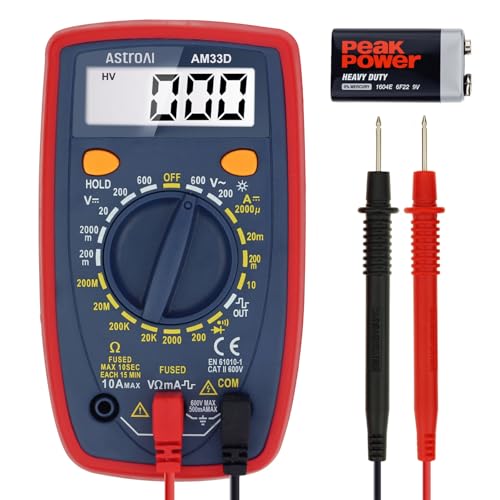
Additional Tips - The following incorrect operations may cause the multimeter not to show results: Firstly, the plugs of test leads are not fully inserted or not inserted into the correct sockets. Secondly, the manual rotary switch is not placed in the correct position. In addition, this meter can not test all AC Current and below 100mV AC Voltage. Please check the user manual carefully before measurement.

【PRECISE READOUTS & CLEAR DIGITAL DISPLAY】Bright LED display shows highly clear readings in any lighting condition, 0.1V resolution gives you reliable indication and shows you the voltage number easily & quickly. Bidirectional light emitting diode on the circuit board for easy battery load testing, red light indicates positive polarity, green light indicates negative polarity.

NON-CONTACT DETECTION of AC voltage in cables, cords, circuit breakers, lighting fixtures, switches, non-tamper-resistant outlets, and wires
Examine Wiring for Damage and Corrosion
Since voltage tests confirm adequate power delivery but your headlight remains inoperative, scrutinize the wiring harness and connectors for physical deterioration that blocks current flow. Inspect insulation for cracks caused by engine compartment heat cycling and temperature extremes that render materials brittle. Check connectors for green or white corrosion deposits—particularly where copper wires contact aluminum or steel components, as moisture enables galvanic reactions. Examine areas near headlight assemblies where wiring stress from vibration frays insulation. Battery acid leaks and hydrogen gas create corrosive compounds on terminals, disrupting electrical continuity. Clean corroded terminals with appropriate solutions and apply dielectric grease for corrosion prevention. For your 2015 Kia Optima, ensure you’re using OEM-compatible wiring connectors that match your H11 and 9005 bulb specifications. Replace compromised wiring immediately, as short circuits near fuel lines present fire hazards. Look for broken copper strands within the wire itself, as internal damage may not be visible through intact insulation. Document all findings to establish maintenance patterns.
Address Moisture and Condensation in Housing
When condensation accumulates inside your headlight housing, it blocks light output and creates corrosion pathways that degrade bulb sockets, reflectors, and electronic components. Begin troubleshooting by inspecting factory vent ports for blockages—dust, debris, or insect nests prevent proper air exchange and trap humidity. Clean or replace damaged vent caps that allow direct water ingress. Check lens seams and gaskets for cracks, UV degradation, or misalignment from improper reassembly. Pressure-test using soapy water to identify leak paths. For moisture prevention, reseal compromised areas with automotive-grade butyl tape or high-temp silicone after locating ingress points. When selecting replacement parts, ensure you’re using the correct bulb type for your specific vehicle model to avoid compatibility issues that may compound moisture problems. Short-term condensation solutions include driving with lights on to evaporate residual moisture or placing silica-gel packets inside overnight. If you notice diminished light output even after replacing the bulb, moisture interference may be preventing proper illumination. Replace severely deteriorated gaskets rather than attempting temporary repairs.
Confirm Correct Bulb Type and Specifications
Before inspecting electrical circuits or relay faults, verify that the replacement bulb matches your vehicle’s required part number, base type, and electrical specification. Bulb compatibility extends beyond physical fit—dual-filament designs (H4, H13) differ from single-filament types (H7, H11), and mismatched bases prevent secure socket connection. Check wattage ratings against OEM limits; exceeding thermal capacity melts sockets and triggers failures. Confirm brightness levels and color temperature align with headlamp optics—extreme Kelvin values or excessive lumens scatter light and reduce effective illumination. When selecting between halogen, LED, and HID options, consider how each technology affects your vehicle’s optical design and electrical demands. Verify filament alignment: emitter position must replicate the original datum point to preserve beam cutoff. Aftermarket “universal” bulbs may fit mechanically yet place filaments incorrectly, causing circuit errors or poor beam patterns. Some older vehicles require a CAN-bus adapter for LED compatibility to prevent bulb-out warnings or failures. Improper bulb selection can also cause uneven beam patterns that compromise visibility and road safety. Cross-reference all specifications using manufacturer lookup tools before reinstalling.

【900% Brighter - S1 Pro Bulbs】The SEALIGHT 9005 H11 bulbs combo feature 16pcs high-performance chips, delivering up to 8 times the brightness than stock bulbs. Upgrade your nighttime driving experience by replacing dim, narrow stock bulbs with SEALIGHT 9005/HB3 H11/H9/H8/H16 LED Bulbs Combo. Enjoy crystal-clear 6500K cool white light that cuts through the dark, giving you way better visibility for safer night drives

[Premium material] : The h7 led bulb adapter is made of high hardness metal material, with beautiful appearance, corrosion resistance, wear resistance, heat resistance, not easy to damage and deformation, long service life
![AIONIXER Headlight Assembly Compatible with Fo-rd Edge 2019 2020 2021 2022 2023 2024, [Bulbs Included] Left/Driver Side w/LED DRL, Replacement Headlamp for FO2502391, Clear Lens](https://m.media-amazon.com/images/I/41226U-wDPL._SL500_.jpg)
[Exact Fit] AIONIXER Headlight is exclusively designed for Fo-rd Edge 2019 2020 2021 2022 2023 2024. Note: Bulbs are included, w/LED DRL. Replaces OEM part numbers FO2502391. This 1-PC item ensures seamless installation with no modifications needed. Please confirm your car’s year and model for optimal compatibility.
Troubleshoot LED and HID Polarity Issues
Unlike halogen bulbs that operate regardless of connection orientation, LED and HID replacements rely on correct polarity alignment to function. If your headlight doesn’t illuminate after installation, reverse polarity is the likely culprit.
Start with basic troubleshooting techniques: unplug the bulb, rotate the connector 180 degrees, and reconnect. Most LEDs feature polarity indicators—the longer lead marks positive, while a flat edge denotes negative. You can verify orientation using a multimeter or coin cell battery test. To avoid damaging the new bulb during this process, handle the replacement bulb with gloves to prevent oil transfer.
For HID systems, reorder the 3-pin harness configuration (ground, low beam, high beam) until proper alignment occurs. If you’ve installed a decoder, test reversal at both the bulb-to-decoder and decoder-to-vehicle connections. Vehicles with hot common wiring require a relay conversion to standard positive-negative operation. Ensure any installed components comply with federal lighting standards to maintain legal roadworthiness. If issues persist after trying these steps, contact support via live chat or email for further assistance.

High Quality: Polar Converter is made of high-quality aluminum alloy, it is , not easy to crack and .

🔌 Compatible Models: The headlight connector compatible with Dodge, Ford, GMC, Chevrolet, Jeep part of the car, compatible with Jeep 1997-2006 Wrangler TJ, 2007-2017 Wrangler JK 2 Door, 2007-2017 Wrangler Unlimited JK 4 Door. Please check if the compatible models match before you buy.

See Wider and Further: Upgraded CSP LED chips, AUTOONE h7 bulbs combo offers white 6500K color temperature. 1200% Ultra brightness provides further and wider visibility for night driving to ensure the front is well lit. You can see road conditions clearly from miles away and take action earlier to keep you safe on the road.
Evaluate Headlight Switch Functionality
If your headlight remains dark after confirming correct bulb polarity and installation, the headlight switch itself becomes the next diagnostic target. Begin with a visual corrosion inspection of terminals and actuator surfaces; contamination increases resistance and prevents proper contact. Verify smooth switch operation through all positions—grinding or excessive play indicates internal wear. With a multimeter, measure input terminal voltage in the “on” position; ~12 V confirms upstream power availability. Perform continuity checks between input and output terminals in each position; you should observe closed circuit for corresponding outputs when engaged. Backprobe the harness connector while cycling the switch to map which pins receive power, comparing results to wiring diagrams. Check ground continuity from ground-referenced terminals to chassis. Test relevant fuses and relays, as failures upstream can mimic switch faults. For bench testing, remove the headlight switch from the vehicle and use an ohmmeter to verify that no continuity exists between the battery power post and other posts when the switch is in the OFF position.
Perform Advanced Diagnostic Tests
When headlight switch testing yields no conclusive results, advanced diagnostic procedures pinpoint faults hidden within the electrical system. You’ll need wiring diagrams to trace circuits from the bulb socket through relays to the fuse box. Use a multimeter to perform continuity tests on the harness, checking for breaks or high resistance exceeding 0.5V drop. Inspect fuses for blown elements and test relays by swapping with identical units. The headlight relay, commonly found in the instrument panel fuse block or engine compartment fuse box, can be diagnosed by listening for a clicking sound when headlights are turned on. Measure voltage at the bulb socket—expect 12-14V with the engine running. Check ground connections for corrosion, ensuring resistance stays below 0.1 ohm. A diagnostic scan tool reveals body control module codes and performs bi-directional tests. Verify bulb compatibility, as incorrect wattage creates phantom failures despite proper installation. If the bulb appears yellowed or hazy even after replacement, apply a UV headlight sealant to restore clarity and ensure proper light output. Modern vehicles may use simulation software during development to test headlight systems virtually, but physical diagnostics remain essential for troubleshooting real-world failures.