The OSRAM NIGHT BREAKER 220 is currently the brightest road-legal halogen headlight bulb, delivering approximately 1,500 lumens at 3,700K—220% more light than minimum legal standards. Philips RacingVision GT200 follows closely with 200% brightness improvement and patented Diamond Precision technology. You’ll need to match your vehicle’s bulb type (H1, H4, H7, H11, or HB3) and guarantee ECE R37/R112 compliance. High-output halogen bulbs typically last 500-1,000 hours compared to standard bulbs’ 2,000-hour lifespan. Understanding these performance specifications and trade-offs will help you maximize visibility for your specific driving conditions.
Understanding Halogen Headlight Brightness Ratings and Percentages
When measuring halogen headlight brightness, you’ll encounter lumens as the primary unit—a quantified measure of total visible light output rather than subjective descriptions like “bright” or “dim.” Standard halogen low beam bulbs emit approximately 700 lumens, while high beams produce between 1,200 and 1,500 lumens per bulb.
Understanding brightness percentages requires comparing halogen performance against other technologies. A 55W halogen bulb outputs roughly 1,400 lumens compared to an HID’s 8,000 lumens—representing just 17.5% relative lumen efficiency. Enhanced halogen variants typically deliver 10-20% brightness improvements over standard bulbs, though regulations restrict excessive output to prevent glare hazards. Proper headlight alignment after installation ensures that brightness improvements don’t create unsafe glare for oncoming drivers.
Brightness perception depends on both lumen output and color temperature, with human eyes responding effectively to white light between 4,300K and 5,000K. While halogen bulbs typically operate at 3000K golden yellow, HID upgrades can provide up to 600% more light than halogen bulbs when configured at optimal brightness temperatures. Lux measurements quantify intensity at specific points, with halogens registering around 5,386 lux during standardized wall tests.
Top-Performing Halogen Bulbs and Their Brightness Claims
Performance testing reveals significant variation among premium halogen bulbs‘ brightness claims, with leading models delivering measurable improvements over standard 55W bulbs. The OSRAM Night Breaker Unlimited leads at 2240 lumens, achieving 29% brightness increase over stock. Sylvania SilverStar Ultra follows closely at 2210 lumens (27% brighter), while GE Nighthawk Platinum delivers 2030 lumens (17% improvement). These brightness comparisons demonstrate that manufacturer claims often exceed actual tested results—OSRAM’s advertised 110% increase translates to a more modest 29% in practice.
Halogen innovations also include specialty options like Flosser Rally 100W bulbs, which double standard halogen output in reflector housings and show 69% higher high-beam performance. When selecting premium halogen bulbs, it’s important to balance enhanced visibility with safe road use and legal compliance. Quality bulbs prevent flickering and ensure consistent light output across various driving conditions. However, you’ll notice diminishing returns between top-tier models, with only 2% separating the leading performers despite significant price differences. The Sylvania SilverStar Ultra offers competitive performance at approximately $30 on Amazon, making it a strong value choice in the premium halogen category.

Powerful brightness: The H4/9003/HB2 halogen car headlight bulb offers powerful illumination that will enable you to see the road clearly and improve your visibility, ensuring safer driving in all conditions.

Lights Dim Over Time, Replace In Pairs: Your lights are a pair, one is never turned on without the other. If one bulb burns out, the other isn't far behind. Replace your H7 XtraVision Halogen bulbs in pairs for optimum performance.

[1300% Ultra Bright & Clear Night Vision]: Our H4/9003 fog light bulbs feature 20 high-performance chips, delivering 60000LM per set and 900% brighter illumination than stock halogen bulbs. The 6500K cool white light mimics natural daylight, cutting through fog, rain, and darkness to provide a farther, wider, and clearer field of vision-ensuring safer night driving and better detection of road signs, animals, and obstacles
OSRAM NIGHT BREAKER 220: The Current Market Leader
Although OSRAM’s Night Breaker 220 claims up to 220% more brightness than minimum legal standards, this metric reflects comparison to the lowest regulatory threshold rather than standard OEM bulbs. You’ll receive approximately 1500 lumens at 3700K color temperature with 150-meter beam length in halogen variants. The HID versions deliver 3200–3500 lumens with 250-meter reach at 4200K.
Market performance data shows the Night Breaker 220 dominates consumer preferences through its documented specifications and two-year warranty coverage. The bulbs operate at 55-58W for halogen and 35W for HID configurations, available in H4, H7, H11, D1S, D2S, D3S, and D4S formats. OSRAM’s trust program validates authenticity, addressing counterfeit concerns that plague performance bulb segments. When comparing halogen, LED, and HID technologies, the Night Breaker 220 represents a strong halogen option for drivers seeking enhanced brightness without switching to alternative lighting systems. The extended beam distance allows drivers to identify potential hazards sooner, improving reaction time in critical driving situations. For drivers who prefer to install their own bulbs, proper electrical connector disconnection during the installation process ensures compatibility with existing headlight assemblies.

OSRAM NIGHT BREAKER 220: The brightest OSRAM halogen light. The model is not universally compatible. Before purchasing, check the current compatibility list and other legal information at osram.de. Please follow the procedure described there before and after installation.

OSRAM NIGHT BREAKER 220: OSRAM's brightest halogen light. The model is not universally compatible. Before buying, please check the current compatibility list and other legal information at osram.co.uk. Follow the procedure described there before and after installation.

OSRAM NIGHT BREAKER 220: OSRAM's brightest halogen light. The model is not universally compatible. Before buying, please check the current compatibility list and other legal information at osram.co.uk. Follow the procedure described there before and after installation.
Philips RacingVision GT200 and Ring Xenon200 H7 Performance Analysis
Philips RacingVision GT200 delivers 200% brightness improvement over standard halogen bulbs with documented 80-meter beam extension beyond legal minimums, operating at 1500 lumens and 3500K color temperature in the H7 configuration. Philips advantages include patented Diamond Precision quartz glass construction, gradient coating technology, and ECE homologation certifying road-legal compliance. You’ll benefit from enhanced UV protection, sharper beam cutoff patterns, and thermal shock resistance that extends both bulb and headlight lens lifespan. The bulb operates at a 55W rating while maintaining its status as the best-performing beam in Philips’s complete product portfolio. These performance metrics demonstrate superior beam pattern quality that prevents blinding other drivers while maximizing visibility. When comparing different bulb technologies, halogen options like the RacingVision GT200 offer cost-effective performance advantages over more expensive alternatives.
Ring Xenon200 claims equivalent 200% brightness gains but Ring limitations become apparent through absent technical specifications. You won’t find verified beam distance data, lumen output measurements, or detailed construction methodology. While Ring markets xenon-enhanced illumination, the lack of published performance metrics and certification documentation makes comparative evaluation difficult against Philips’s extensively validated engineering standards and manufacturer transparency.

【Visual Enhancement】: The OKOENIEO H7 halogen bulbs are 200% brighter than other halogen bulbs, providing drivers with a wider and farther field of vision. Offering a greater visibility, they allow drivers to spot deer, wildlife, falling rocks, or obstacles ahead of time, ensuring safer nighttime driving.

【Ultra High Brightness】Deliver up to 80000LM total luminous flux with 1500% higher brightness than stock halogen bulbs; 6500K pure white light reproduces daylight vision, expanding road visibility at night without dark spots.

Lights Dim Over Time, Replace In Pairs: Be sure to replace both H7 headlights at the same time for optimum performance. If one bulb burns out, the other isn't far behind. Replacing in pairs allows for premium visibility
How Halogen Bulbs Compare to LED and HID Alternatives
When comparing halogen technology against LED and HID alternatives, you’ll find lumens output reveals the most considerable performance gap: standard halogen bulbs deliver 1500–2200 lumens, while LED systems like GTR Lighting Ultra 2 reach 709% brightness increases with several thousand lumens, and HID units typically exceed 3000 lumens at 4000K–6000K color temperatures.
However, halogen efficiency extends beyond raw brightness metrics. Halogen bulbs maintain superior beam pattern control with sharp cutoffs that minimize glare for oncoming traffic. Their 3200K–3700K warm light penetrates fog and rain more effectively than cooler LED/HID alternatives above 5000K. Different headlight designs like reflector versus projector housings also impact how effectively these bulbs distribute light on the road. OEM and aftermarket bulb options each offer distinct advantages depending on your vehicle’s compatibility requirements and performance goals.
Lifespan differences are substantial: halogens last 450–1700 hours versus LEDs’ 20,000+ hours and HIDs’ 2000–3000 hours. Yet halogens cost considerably less and resist electrical fluctuations better than alternatives requiring ballasts or heat management systems. Performance halogen upgrades from OSRAM and Sylvania can deliver up to 44% more low-beam light compared to stock bulbs while maintaining compatibility with existing headlight housings.
Color Temperature Impact on Visibility and Light Quality
Beyond raw lumen output and lifespan metrics, color temperature fundamentally determines how effectively your halogen headlights illuminate the road ahead. Standard halogen bulbs operate between 3000K and 3700K, producing warm white light that penetrates fog and rain while minimizing eye strain. Enhanced “xenon-look” variants reaching 4300K-5000K offer improved visual clarity and contrast in clear conditions, though they sacrifice lifespan and increase glare risks.
Warmer temperatures (3000K-3500K) provide superior performance in adverse weather by reducing light scatter, while cooler temperatures (~4300K) enhance detail perception and driver reaction times on clear roads. However, color temperatures exceeding 6000K decrease visibility despite appearing brighter. Legal regulations often restrict halogen bulbs above 4300K in most countries. In contrast, LED headlights produce approximately three times brighter output than halogen bulbs, emitting whiter light around 6500K that significantly improves road marker recognition. Unlike halogen bulbs, xenon headlights produce significantly brighter, whiter light that can improve nighttime visibility on poorly lit roads. Proper color temperature selection balances illumination distance, color rendering accuracy, and eye comfort—critical factors beyond simple brightness measurements when selecting ideal halogen headlights.
The Trade-Off Between Brightness and Bulb Lifespan
While pursuing maximum light output remains a priority for many drivers, brighter halogen bulbs invariably sacrifice longevity through a fundamental physical constraint: elevated filament temperatures. High-output models typically last 500-1000 hours compared to 2000 hours for standard variants. This brightness lifespan trade-off stems from accelerated tungsten evaporation at higher operating temperatures, creating direct filament stress that degrades bulb components.
Premium manufacturers partially mitigate this relationship through optimized fill gas mixtures and superior filament materials, extending operational life without major brightness reduction. However, thermal management limitations inherent to halogen technology impose practical boundaries. Heat generation affects not only the filament but also reflective coatings and lens materials within the headlight assembly. The quality of beam pattern design in your headlight housing can also influence how effectively the light is distributed on the road. In contrast, LED headlights offer significantly longer lifespans of 25,000+ hours, though they represent a different technological approach to vehicle lighting. Standard halogen bulbs can experience 70%-80% light degradation before reaching the end of their usable life, making timely replacement essential for maintaining optimal visibility.
Your usage patterns considerably influence this balance—continuous high-brightness operation, frequent cycling, and harsh environmental conditions accelerate degradation in performance-oriented bulbs.
Critical Features That Maximize Halogen Brightness Output
Maximizing halogen brightness output depends on five interconnected engineering factors that directly influence luminous performance. First, optimized halogen gas mixtures and filament technology enable higher operating temperatures—premium bulbs like OSRAM NIGHT BREAKER achieve 220% more brightness through enhanced coil designs. Second, tungsten alloy composition and filament geometry determine thermal tolerance and luminous efficiency. Third, glass coatings on quartz envelopes filter UV light while maintaining clarity, and anti-reflective treatments minimize transmission losses. Fourth, stable electrical input—typically 55W versus 45W standard—ensures consistent power delivery without voltage fluctuations. Fifth, precise filament positioning within headlight housings optimizes beam patterns, converting raw lumens into effective road illumination. Proper beam pattern accuracy prevents glare for oncoming traffic while maximizing usable brightness on the road. Halogen headlight housings and reflectors are specifically engineered for the unique light distribution characteristics of halogen filaments, which is why proper beam pattern design is critical for safety and regulatory compliance. When comparing halogen to LED alternatives, testing shows LED bulbs can achieve 400% brightness increases over stock halogen in projector applications through advanced chipset design and cooling systems. These engineered parameters work synergistically, not independently, to achieve maximum brightness while maintaining regulatory compliance and operational safety.
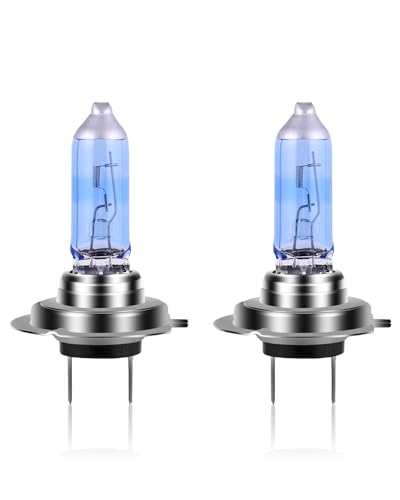
【Super Bright】Our H7 headlight bulbs deliver a brightness of more than 1500LM, up to 5000K color temperature, providing the best visibility in foggy and rainy weather, Our headlight bulb filled with more than 45% Xenon gas to be more brighter and whiter, Blue ion membrane filters yellow light and gets super white light.

【Visual Enhancement】: The OKOENIEO H11 headlight bulb are 200% brighter than other halogen bulbs, providing drivers with a wider and farther field of vision. Offering a greater visibility, they allow drivers to spot deer, wildlife, falling rocks, or obstacles ahead of time, ensuring safer nighttime driving.

BRIGHT, CONSISTENT OUTPUT: Provides clear, reliable illumination for everyday driving conditions
Bulb Compatibility and Vehicle Headlight Housing Requirements
Every halogen bulb upgrade hinges on precise compatibility between bulb specifications and your vehicle’s headlight housing architecture. You must match exact bulb types (H1, H4, H7, H11, HB3) to manufacturer specifications, as improper fitment causes misaligned beams and reduced intensity. Reflector and projector housings demand different optical configurations—projectors are particularly sensitive to filament positioning, with incorrect bulbs producing scattered light and dangerous glare.
Your electrical system’s wattage and voltage ratings constrain bulb selection; exceeding these specifications risks premature failure or wiring damage. Housing specifications determine thermal tolerance—higher-wattage bulbs generating excess heat can degrade plastic lenses not designed for increased thermal loads. Performance bulbs with outputs ranging from 713 to 2317 LUMEN deliver varying intensity levels that must align with your housing’s optical design to maintain proper beam focus. If your headlights fail to illuminate after installing a new bulb, the issue may stem from a faulty headlight relay that requires testing or replacement. Additionally, regulatory compliance requires bulbs meeting ECE R37/R112 standards for your housing type, ensuring beam patterns don’t compromise safety while maximizing legal brightness output.

UP to 300% Brighter—Clearer Warm White Light Vision: Littlelucky H7 halogen bulbs output a 3800K,4000LM warm white light, experience up to 300% brighter for clearer vision in low-light and fog etc conditions, enhancing driving safety and visibility

100,000LM High-Brightness Output: Experience dramatically enhanced road visibility and safety with our powerful H7 bulb, which delivers 50,000 lumens of intense, focused illumination. The pure 6500K cool white light effectively penetates darkness, fog, and adverse weather conditions, providing superior clarity and a wider, longer beam pattern

【Vacuum Precision Optical Blue Film Technology】Engineered with a micron-level optical blue coating to reduce the deep-yellow appearance of conventional halogen bulbs and deliver a clearer, less-yellow warm-white beam. The coating also acts as a thermal insulator with enhanced UV protection, effectively slowing oxidation, yellowing, and premature aging of the headlight housing. Please note: this bulb delivers an enhanced warm white halogen output — not the cool white appearance of HID lighting.
Selecting the Right High-Performance Halogen Bulb for Your Needs
How do you identify which high-performance halogen bulb delivers best results for your specific driving requirements? Bulb selection demands balancing three critical specifications: brightness output, color temperature, and lifespan. If you prioritize maximum illumination, the GTR Lighting Ultra Two achieves 709% brightness gains in projector housings, though performance expectations must account for reduced longevity—typically 300-600 hours for high-output models versus 2,500 hours for standard bulbs. Color temperature between 3,200K-3,700K optimizes visibility while minimizing glare; bulbs like Ring Xenon200 (3700K) and Philips RacingVision GT200 (3500K) deliver 200-220% brightness improvements at this range. Consider your driving conditions: warmer temperatures enhance contrast in fog and rain, while frequent high-beam usage accelerates bulb degradation. Electrical system health significantly impacts bulb longevity, as vehicle electrical system issues can cause premature failure even in quality bulbs. Professional installation using OEM parts ensures optimal performance and warranty coverage compared to budget alternatives. While high-performance halogen bulbs achieve 1,000-1,500 lumens, upgrading to LED alternatives like LS Plus can provide up to 6,500 lumens per bulb for drivers seeking maximum visibility. Match specifications to usage patterns rather than selecting maximum brightness alone.