An H11 headlight bulb is a single-filament halogen lamp featuring a PGJ19-2 L-shaped base, primarily used in low-beam headlights and fog lights. You’ll find it operates at 12V/55W, producing 1,200–1,500 lumens with a focused beam pattern ideal for adverse weather conditions. It’s commonly installed in vehicles like the Honda Accord, Toyota Camry, and Ford Ranger. LED alternatives offer higher output (3,000–7,000 lumens) and extended lifespan. Understanding the technical specifications, compatibility requirements, and regulatory compliance standards will help you make informed replacement decisions.
Understanding H11 Bulb Design and Structure
Because headlight performance depends fundamentally on precise bulb geometry and electrical compatibility, understanding H11 design elements prevents costly installation errors and beam-pattern failures. Standard H11 bulb design centers on a PGJ19-2 L-shaped plastic base with integrated plug architecture, eliminating exposed pins for simplified installation. The H11B variant uses a PGJY19-2 base with exposed two-pin connectors, creating mechanical incompatibility with standard H11 sockets despite similar electrical specifications.
H11 structural features include a single-filament halogen capsule positioned to generate focused low-beam or fog-light patterns. Filament placement relative to the reflector or projector is critical—minor deviations degrade cutoff sharpness and increase glare risk, making proper alignment essential for safe night driving. Socket retention varies: H11B typically employs twist-lock or clip mechanisms, while standard H11 uses push-plug or integrated retainers, directly affecting installation procedures and housing compatibility. H11 bulbs produce 1200–1500 lumens, optimizing visibility for short-range applications and adverse weather conditions. When selecting replacement bulbs, drivers should consider the differences between halogen, LED, and HID technologies to determine which option best suits their vehicle and driving needs.
Technical Specifications and Dimensions
Standard H11 bulbs operate at 12V and draw 55W in halogen configurations, producing 1200-1500 lumens with typical output centered around 1300 lumens. H11 specifications include precise physical dimensions: 58mm total height, 43mm maximum overall length (MOL), and 25mm light center length (LCL). The PGJ19-2 base type guarantees proper fitment in compatible housings.
LED alternatives consuming 15-50W deliver 3000-7000 lumens per bulb, while HID variants typically draw 35-40W and produce 3000-3500 lumens. Color temperature ranges from 2500-3500K for halogens to 3000-6500K for LED options. Bulb dimensions remain standardized across technologies, though some LED designs feature compact 1:1 configurations for restricted spaces. IP65-rated protection and CANBUS compatibility characterize modern LED variants. The H11 features a standardized P14.5s base for direct fit in factory sockets. Popular manufacturers like Philips and Sylvania offer a wide range of H11 replacement options across different technology types. When selecting between halogen, LED, and HID options, drivers should consider their specific performance needs and budget constraints.
Primary Applications in Vehicle Lighting Systems
H11 bulbs serve as the dominant lighting solution across multiple vehicle categories, functioning primarily in low beam headlights, fog lights, and daytime running light systems. You’ll find H11 applications across compact sedans like Honda Accord, midsize vehicles including Toyota Camry (2007–2025), and SUVs such as Honda CR-V (2012–2025). These bulbs deliver controlled beam patterns essential for low beam visibility without dazzling oncoming traffic, meeting DOT and SAE compliance standards.
In fog light configurations, H11 bulbs enhance visibility during inclement weather conditions, with interchangeability across H8, H9, and H16 housings. Popular installations include 2019+ Ford Ranger and 2012-2015 Toyota Tacoma. You’ll also encounter H11 bulbs in daytime running light systems, particularly in Volvo C30 (2012-2013) models, providing energy-efficient operation. Full-size trucks like Chevrolet Silverado integrate H11 compatibility as direct OE replacements. When selecting replacement bulbs, consider brightness levels, lifespan, and color temperature to ensure optimal performance for your vehicle. Upgrade options including halogen, LED, and HID bulbs offer varying benefits depending on your visibility and safety priorities. The bulbs feature identical bases, locking tabs, and plugs with H9 and H8 variants, ensuring seamless replacement across different vehicle models.
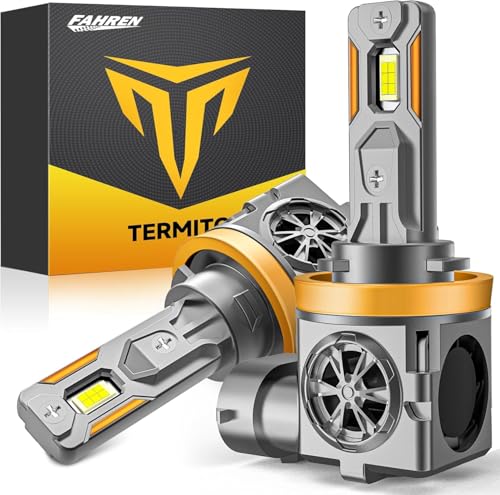
【10X Brighter - Newly Enhanced】The Termitor H11/H9 exterior light bulbs feature 24 high-performance chips, delivering up to 10 times the brightness of standard halogen bulbs. Upgrade your nighttime driving experience by replacing dim, yellow stock bulbs with Termitor H11/H9 fog lights, offering superior illumination and enhanced visibility with a crisp 6500K cool white light for optimal light transmission.

Wider Visibility: The fog lights emit white light at the same point as the bulb, replacing the dim bulb.

【9X Brighter Illumination】: Experience exceptional visibility with OXILAM H11 H8 H9 bulbs, featuring 16 upgraded high-power chips that deliver a staggering 900% increase in brightness. These high-performance bulbs allow you to see further on the road.
H11 Vs Other Headlight Bulb Types
When selecting replacement headlights, you’ll encounter distinct performance specifications and compatibility constraints across bulb families. H11 comparisons reveal critical distinctions: it delivers 1,350 lumens versus 9005’s 1,700 lumens, though 9005 serves high-beam applications exclusively. Against H7’s 1,600 lumens, H11 offers a closed plug design that protects electrical contacts. The H11 advantages become evident when compared to 9006-HB4, producing 350 more lumens with superior glare control. Within the H8-H9-H11 family, wattage differentiates applications—H8’s 35W suits fog lights, H11’s 55W handles low beams, and H9’s 65W powers high beams. Unlike dual-function H4-9003 bulbs, H11 provides dedicated low-beam performance with controlled beam patterns optimized for urban driving. Different bases and locking mechanisms prevent cross-compatibility, ensuring proper fitment. The H11 utilizes a PGJ19-2 base that distinguishes it from the 9005’s P20d base configuration. Proper beam alignment after installation prevents glare to other drivers and ensures optimal visibility performance. Top-rated aftermarket brands like Sylvania, Philips, and Hikari offer H11 replacements that deliver superior visibility compared to stock bulbs across various weather conditions.

【Visual Enhancement】: The OKOENIEO H11 headlight bulb are 200% brighter than other halogen bulbs, providing drivers with a wider and farther field of vision. Offering a greater visibility, they allow drivers to spot deer, wildlife, falling rocks, or obstacles ahead of time, ensuring safer nighttime driving.

⭐【Super Bright H11 Bulbs】Our H11 headlight bulbs deliver over 1000LM brightness and a 3800K color temperature, ensuring optimal visibility in foggy and rainy conditions. Upgrade your automotive headlight bulbs for safer nighttime driving.

UP to 300% Brighter—Clearer Warm White Light Vision: Littlelucky H11 halogen bulbs output a 3800K,4000LM warm white light, experience up to 300% brighter for clearer vision in low-light and fog etc conditions, enhancing driving safety and visibility
Light Output and Performance Characteristics
Performance metrics extend beyond raw lumens. Color temperature greatly impacts functionality: 3000K-4500K warm tones penetrate fog and precipitation effectively, whereas 5000K-6500K cool whites maximize clarity and contrast in clear conditions. Halogens average 500-1000 operating hours, while LEDs provide instant-on capability without warm-up delays. Beam pattern precision prevents glare in reflector housings, ensuring ideal light distribution. Leading brands like Philips and Sylvania offer superior optical designs that optimize beam focus and minimize scattered light. Premium LED bulbs deliver 3,000-6,000 lumens of total light output, significantly outperforming standard halogen alternatives. It’s important to verify DOT compliance standards to ensure your chosen bulbs meet legal requirements for safe vehicle operation. Your selection should balance lumen output, color rendering, and environmental conditions for thorough nighttime visibility.
Compatible Vehicle Models and Fitment
Selecting the ideal H11 bulb requires validating your vehicle actually uses this socket type—fitment varies considerably across makes, models, and production years. Toyota (Camry, Corolla, RAV4), Honda (Accord, Civic, CR-V), Ford (F-150, Fusion, Escape), and Chevrolet (Silverado, Malibu, Equinox) commonly specify H11 for low-beam or fog applications. Mid-2000s through 2010s model years represent peak H11 adoption across mainstream platforms. Fitment verification requires consulting your owner’s manual, OEM parts lookup, or manufacturer compatibility matrices—single model lines often mix H11 with xenon or H7 bulbs depending on trim level and lamp position. Model comparisons reveal H11 typically serves low-beam headlights and fog lamps, rarely high beams. Year-to-year changes occur between generations, so exact-year lookup validates correct replacement for your specific vehicle configuration. The H11’s compact design allows manufacturers to integrate it seamlessly across vehicle categories ranging from compact sedans to full-sized trucks. LED technology offers significant advantages including improved visibility and longer lifespan compared to traditional halogen bulbs. When upgrading your headlights, consider evaluating options across different bulb technologies including standard halogen, LED, and HID conversions to determine which solution best fits your driving needs and budget.

10X Breakthrough Brightness: H11 bulbs use 16 advanced high-power chips,delivering 1000% brightness increase. With the latest technology, H8/H9 bulbs provide stable, high-efficiency illumination for enhanced visibility and maximum road safety

Superior Visibility in Bad Weather: Equipped with 54 cutting-edge LED chips and enhanced top convex lens, the F1 Series H11 LED Fog Light Bulb provides 360° illumination, projecting 400% upgraded light over greater distances with precision. H11 fog light bulb led focused lights ensures safe and comfortable visibility during driving in rainy and foggy conditions

Easy Installation: 1:1 design, no external driver or connector required, plug and play
Halogen Vs LED H11 Options
Anyone upgrading from factory H11 halogen bulbs confronts a fundamental technology choice that directly impacts visibility, energy consumption, and maintenance intervals. Traditional halogen advantages include budget-friendly pricing, instant-on functionality, and straightforward OEM-style replacement requiring zero modifications. They deliver 1200-1350 lumens at 55W with proven adverse weather performance.
LED benefits dominate performance metrics: 3000-7000+ lumens per bulb at reduced 35-50W consumption, representing 400-900% brightness gains. You’ll experience crisp 4300K-6500K white light enhancing nighttime clarity while focused beam patterns prevent oncoming glare. Premium sets reach 33,000 lumens total output with fanless or turbofan cooling designs extending operational lifespan beyond halogen’s 500-1000 hour limitation. Factory original LED bulbs typically last the longest, around 30,000 to 45,000 hours, while aftermarket LEDs vary significantly in manufacturing quality and longevity. LED technology provides superior all-weather visibility in fog, rain, and snow conditions while offering modern aesthetic upgrades. When evaluating LED options, consider the color temperature of different bulbs to ensure optimal visibility for your specific driving conditions. The L-shaped base design distinguishes H11 bulbs from other headlight configurations, making them compatible with specific low beam applications across various vehicle models.

70,000LM Super Brightness: SEALIGHT H11 bulbs ensure up to 1600FT visibility through advanced CSP chip technology, delivering 70,000LM ultra-focused illumination paired with a 6500K crisp white that enhances road clarity and safety in dim nighttime driving scenarios
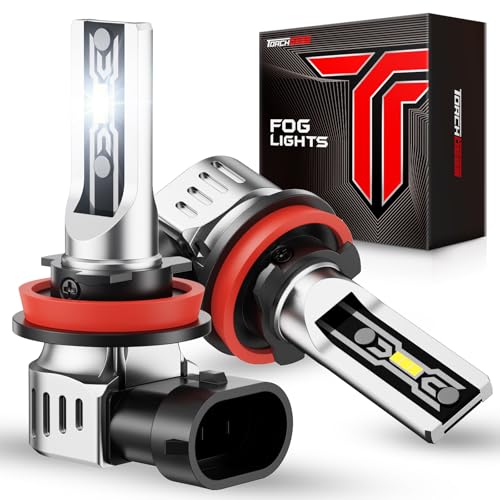
12,000 Lumens Ultra-Bright for All Weather Driving: Cut through dense fog, heavy rain, and snowy roads with 12,000LM of brilliant output—600% brighter than original fog lights. The TF2 Series H11 LED bulb deliver crystal-clear visibility for cars, trucks, and SUVs, keeping you safe in even the toughest driving conditions.

【Experience a 1000% Brighter Night】Transform your drive with our advanced H11 Fog Light Combos. Each H11 light bulbs combo, equipped with 12 high-performance chips, delivers a blinding 100,000 lumens per set. Powered by latest upgraded Z10 technology which provide unparalleled road illumination—turning night into day for a safer, more confident, and utterly superior driving journey.
Installation and Replacement Process
Before you begin any H11 bulb replacement, gather your essential tools and create a safe workspace to confirm efficient installation without complications. You’ll need a flathead screwdriver, gloves, and your vehicle’s service manual. Turn off the ignition, engage the parking brake, and access the headlamp housing’s rear panel.
Remove the dust cover by twisting counterclockwise, then depress the electrical connector’s locking tab and pull straight off. Rotate the old bulb counterclockwise to release the retaining mechanism and extract it carefully. These installation tips prevent socket damage and confirm proper alignment. Carefully handle the bulb to avoid touching the glass during removal and installation.
Insert the replacement H11 bulb, aligning the tabs correctly. Twist clockwise until locked, reconnect the harness, and reseal the dust cover. Test beam function immediately. After replacement, consider adjusting your headlight beam to ensure optimal visibility and prevent blinding other drivers. Replacement frequency typically ranges from 450-1,000 hours depending on bulb technology and driving conditions. When upgrading to LED bulbs, plug and play installation enables job completion in ten minutes or less.

【Up to 1500% More Light – Unmatched Nighttime Clarity】Each Termitor H11/9005 combo bulb packs 16 high-output CSP LEDs, boosting brightness by up to 15 times compared to standard halogens. The crisp 6500K cool-white beam improves road visibility and eases eye fatigue, so you can spot hazards farther ahead and drive more assuredly in any dimly lit environment.

【600% Ultra-High Brightness】Equipped with high-performance CSP chips, Laxmas 9005 H11 led headlight bulb combo deliver 96,000 lumens of brightness, 600% higher than traditional bulbs. The 6500K cool white light has strong penetration, wider irradiation range and longer projection distance, clearly showing road details. It greatly improves driving visibility at night, in rain and fog, reduces visual blind spots, helps predict road conditions in advance, and brings clearer vision and safer driving experience.

Package Contents and Specifications: 1 pair of wires with 6-inch length. Designed for use with 12 - 24V systems, ensuring a wide range of applicability for various automotive lighting setups
Regulatory Compliance and Safety Standards
Proper installation means nothing if your H11 bulb doesn’t meet federal safety requirements. Your halogen H11 must comply with FMVSS No. 108 and display DOT marking with manufacturer identification. These safety standards guarantee proper beam patterns and prevent glare that blinds oncoming drivers.
LED replacements in halogen housings create significant regulatory implications. NHTSA prohibits LED retrofits in replaceable H11 systems, and state inspections will reject non-compliant conversions. Virginia and other states specifically flag HID/LED retrofits in halogen-stamped housings.
If you’re outside the U.S., UN ECE Regulation 37 now permits type-approved LED H11 replacements like OSRAM’s homologated units. However, aftermarket LEDs must carry proper certification for your jurisdiction. SAE-compliant halogen bulbs remain your safest legal option, maintaining optical engineering integrity while meeting all photometric requirements. Premium halogen options feature DOT and SAE regulations to ensure safe on-road use without glare. Proper lens installation with fresh sealant and weatherproofing helps maintain the optical performance of your headlight assembly.