

To replace your Mazda 6 headlight bulbs, first identify your bulb type—2003-2011 models use H7 (low beam) and 9005 (high beam), while Mazdaspeed 6 uses D2S HID and H1. Turn off the ignition, open the hood, and access the assembly by removing wheel well clips or working from the engine bay. Disconnect the electrical connector, twist the bulb socket counterclockwise, and install the replacement without touching the glass. Reconnect everything, then test and adjust beam alignment for proper cutoff. The complete procedure covers specific torque specifications and troubleshooting techniques.
Understanding Bulb Types and Specifications
Before selecting replacement bulbs for your Mazda 6, you’ll need to identify which specifications match your model year and trim level. Standard 2003-2011 models use H7 halogen bulbs for low beams and 9005 for high beams, while Mazdaspeed 6 variants feature D2S HID low beams and H1 high beams. LED upgrades like the SL2 deliver 1400 lumens per bulb with 14-watt power draw, offering direct plug-and-play compatibility for halogen housings. However, bulb compatibility issues arise when attempting LED replacements in OEM HID housings—they’re incompatible. Standard halogen wattages include 55W for H11 and 65W for 9005 bulbs. When evaluating brightness ratings, consider that LED options provide fanless designs with integrated drivers, while maintaining automotive-grade performance across 9-30V operating voltages for reliable illumination. Proper headlight beam alignment should be verified after installation to ensure safe nighttime driving without excessive glare for other drivers. It’s important to verify legal compliance for street use before selecting performance upgrades to ensure your vehicle meets local regulations. Installation typically requires 20-30 minutes and basic tools to complete the bulb replacement process.

Lights Dim Over Time, Replace In Pairs: Your lights are a pair, one is never turned on without the other. If one bulb burns out, the other isn't far behind. Replace your H7 XtraVision Halogen bulbs in pairs for optimum performance.

800% Brighter Night Vision Powered by advanced chip technology, Marsauto H7 bulbs deliver 8x the brightness of standard halogen bulbs, producing crisp 6500K white light for enhanced visibility and faster reaction time—whether driving at night or in low-light conditions.
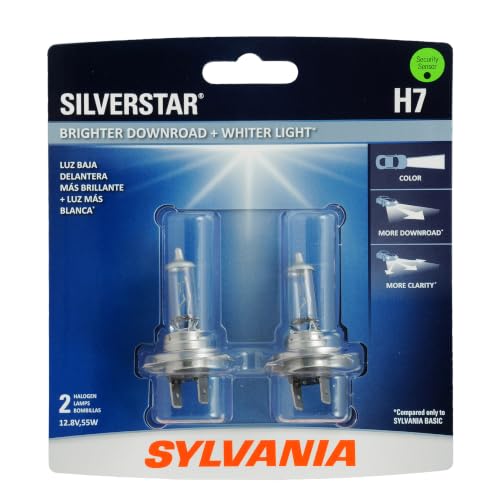
Lights Dim Over Time, Replace In Pairs: Your lights are a pair, one is never turned on without the other. If one bulb burns out, the other isn't far behind. Replace your H7 SilverStar Halogen bulbs in pairs for optimum performance.
Safety Precautions Before Starting
To guarantee electrical safety and prevent component damage, turn off both the ignition and headlight switch before beginning any bulb replacement work. This prevents short circuits and protects the vehicle’s electrical system from voltage spikes during bulb handling.
Wear appropriate safety gear including gloves and eye protection when accessing bulb assemblies. Never touch replacement bulbs directly with bare hands, as skin oils contaminate the glass surface and greatly reduce bulb lifespan. Handle new bulbs only by their base or use clean gloves.
Ensure you’re working in adequate lighting conditions to verify connections and maintain structural integrity of clips and housing components. Allow hot bulbs to cool completely before removal to prevent burns. Keep the engine off throughout the procedure to avoid battery drain and accidental electrical engagement. For optimal safety, consider replacing bulbs in pairs to ensure consistent headlight performance on both sides of your vehicle. Before accessing the headlight assembly, steer the wheel in the opposite direction of the bulb you’re replacing to create adequate working space. In some cases, you may need to remove the battery for easier access to the headlight assembly.
Tools and Materials Needed
Successful headlight bulb replacement on your Mazda 6 requires assembling the correct tools before you begin work. You’ll need Phillips and flathead screwdrivers for removing wheel well liner screws and prying clips. A socket wrench set with 8mm and 10mm sockets handles bumper and fender fasteners, while extensions improve reach behind assemblies. Plastic trim tools prevent damage when removing push clips from liners and covers. Tool compatibility matters—use pocket screwdrivers for jammed plastic threads and ratchets for efficient turning in confined spaces. For bulb specifications, select replacements matching your specific model year. Sylvania Silverstar ZXE halogen bulbs suit 2012 models, while Sylvania XtraVision 9005XV-2 bulbs offer direct-fit alternatives. When upgrading to LED bulbs, you may need adapters for compatibility with your existing halogen or HID system. Include gloves to prevent oil transfer to new bulbs and safety glasses for eye protection during disassembly. Proper headlight alignment improves nighttime visibility and reduces glare affecting oncoming drivers.

Convenient upgrade : This package includes 2pcs of H7 LED headlight bulb adapters, designed for upgrading your halogen to LED bulbs.

Wide Compatibility: This LED H7 bulbs retainer holders set is compatible with Hyundai 2018-2021 Kona, 2014, 2016-2018 Santa Fe (not sport trim), compatible with KIA 2019-2021 Sedona, 2017-2021 Forte, 2014-2016 Optima Hybrid Model, compatible with Mitsubishi 2014-2020 Outlander

LIGHTS DIM OVER TIME, REPLACE IN PAIRS: Your lights are a pair, one is never turned on without the other. If one bulb burns out, the other isn't far behind. Replace your H1 XtraVision Halogen bulbs in pairs for optimum performance.
Accessing the Headlight Assembly
Accessing your Mazda 6’s headlight assembly starts with proper vehicle positioning and initial preparation. Park your vehicle on a flat surface and turn off the engine. Open the hood to locate the headlight assembly. Turn your wheels to access wheel well clips effectively.
Begin assembly removal by extracting the upper two 10mm mounting bolts, followed by the bottom 10mm bolts using an extension. Remove the side bolt and locate 8mm screws along the perimeter. Pop button plugs with a trim tool, removing the center first, then outer parts. Free the fender liner from three wheel well push clips and peel back the bumper cover. Access the hidden 8mm screw behind the cover using an extension. This process maintains proper headlight alignment during reinstallation, similar to how electrical connectors must be carefully disconnected before removing the headlight assembly to prevent damage. Proper handling during this disassembly phase is crucial, as careless handling can damage components just as improper bulb installation affects headlight bulb longevity.

COMPATIBILITY: Universal socket removal tool designed for H8, H9, H10, H11, H12, H13, 9005, 9006, and 9012 headlight and fog light bulbs

Fitment: Headlight Adjusters Kit is compatible with Chevy Impala, Biscayne & Belair 1962 Impala,1963 Impala, 1964 Impala ,1965 Impala,1966 Impala ,1967 Impala.

【Manufacturer Part Number】: GJS1-51-0K6
Replacing the Low Beam Bulb
Once you’ve accessed the headlight assembly, replacing the low beam bulb requires identifying the correct bulb type for your specific Mazda 6 model year and trim level. Most 2014–2021 halogen-equipped models use H11 bulbs, while HID variants require D2S xenon bulbs. Disconnect the electrical connector by pressing the release tab and pulling straight off. Twist the bulb socket counterclockwise and remove it from the housing. Handle the new bulb with clean gloves—skin oils reduce halogen lifespan. Verify bulb orientation by comparing tabs to the old unit. Insert the bulb, align tabs correctly, and rotate clockwise until it locks. Reconnect the electrical connector firmly until it clicks. If your headlight lens has become cloudy or scratched over time, consider restoring clarity with wet sanding and polishing before replacing bulbs to ensure optimal light output. Ensure the ignition is off before beginning any bulb replacement procedure to prevent electrical issues. For models with particularly tight access, you may need to temporarily remove clips to gain better workspace around the headlight assembly. Test the low beam operation before reinstalling dust caps or trim pieces to confirm proper seating and function.

800% Brighter Illumination: Utilizing advanced M2S technology, Marsauto H11/H9/H8 and 9005/HB3 bulbs produce eight times more light than stock halogen bulbs, delivering a wider field of vision and quicker reaction time for safer, clearer driving.

Standard OE replacement bulb, original manufacturer equivalent easy to install, efficient and great value

【Super Bright】Our H11 headlight bulbs deliver a brightness of more than 1500LM, up to 5000K color temperature, providing the best visibility in foggy and rainy weather, Our headlight bulb filled with more than 45% Xenon gas to be more brighter and whiter, Blue ion membrane filters yellow light and gets super white light.
Replacing the High Beam and Turn Signal Bulbs
The high beam and turn signal bulbs follow similar removal procedures to the low beam but occupy different positions within the headlight assembly.
High Beam Replacement
Access the high beam bulb from the engine bay on the passenger side without removing the fender liner. Verify the ignition and headlight switch are off. Push the release tab to disconnect the electrical connector, then rotate the bulb base 1/4 turn counterclockwise and pull straight out. Install the 9005 replacement bulb without touching the glass, rotate 1/4 turn clockwise, and reconnect the power plug until it clicks. The high beam bulb is located near the inner corner of the headlight housing for easier identification. After bulb replacement, consider applying protective clear coat to your headlight lens to maintain clarity and prevent oxidation over time. Be careful to avoid damage when handling electrical connectors during the installation process.
Turn Signal Installation
The turn signal requires wheel well access. Turn the steering wheel fully opposite the target side, remove plastic retainers and mudguard screws, then peel back the liner. Rotate the black socket 1/4 turn counterclockwise, replace with a 7444NA amber bulb, and reinstall.

【Visual Enhancement】: The OKOENIEO 9005 HB3 halogen bulbs are 200% brighter than other halogen bulbs, providing drivers with a wider and farther field of vision. Offering a greater visibility, they allow drivers to spot deer, wildlife, falling rocks, or obstacles ahead of time, ensuring safer nighttime driving.

Lights Dim Over Time, Replace In Pairs: Be sure to replace both 9005 headlights at the same time for optimum performance. If one bulb burns out, the other isn't far behind. Replacing in pairs allows for premium visibility

60,000 Hours Lifespan: Thanks to the fanless, aerospace-grade aluminum body with a hollow-carved structure, heat is dissipated naturally and efficiently without any moving parts. This advanced passive cooling system eliminates the risk of fan failure, ensuring long-term reliability and consistent performance. Enjoy a durable, maintenance-free lighting solution.
Reassembling the Components
After replacing all bulbs and verifying their proper installation, begin reassembly by aligning the headlight assembly’s positioning pins with the corresponding body slots. This guarantees proper headlight alignment and prevents stress on mounting tabs. Hand-start the top mounting screws before tightening, then install center bolts snugly—avoid over-tightening to prevent cracking the plastic housing.
Reconnect the main wiring harness until the tab clicks, then reattach individual bulb sockets by twisting clockwise until locked. Route harnesses away from moving parts and secure with clips. Ensure electrical connections are secure to prevent moisture intrusion into the headlight assembly.
Reposition the inner fender liner and restore wheel-well fasteners using OEM-style clips where needed. Re-seat the bumper cover on alignment pins, securing fasteners evenly. Perform a final gap inspection around all reassembled components, confirming proper fit and function.
Testing and Adjusting Your Headlights
Proper headlight aim directly impacts nighttime visibility and prevents oncoming driver glare. Position your vehicle on level ground 25 feet from a wall or garage door. Turn headlights to accessory mode for AFS-equipped models to disable self-leveling. Mark the initial cutoff line with tape to establish your baseline for headlight alignment.
Access the driver-side adjustment screw through the clear tan plastic hole. On the passenger side, you’ll need to remove the clear cover for access. Insert your Phillips screwdriver and rotate clockwise to raise the beam or counterclockwise to lower it. Use your ratcheting 8mm socket wrench for faster beam adjustment. Verify both sides align evenly at the marked reference point, ensuring proper downward angle to eliminate glare for oncoming traffic. Modern adaptive systems can automatically adjust beam patterns, but manual verification ensures your Mazda 6’s headlights maintain proper beam direction regardless of driving conditions. The ballast regulates voltage to ensure consistent light output without flickering during these adjustments.
If you’ve lowered your Mazda 6, you may need a headlight level adjuster to correct the downward-aimed headlights and restore them to their original orientation. These adjustments improve visibility and safety, particularly after vehicle modifications that affect ride height.


