You can’t interchange H10 and H11 bulbs due to their completely different base designs and pin configurations—H10 uses a unique base for fog lights, while H11 features the P14.5s-style base for low-beam headlights. H11 operates at 55W producing 1,200-1,450 lumens, whereas H10 runs at 35-55W generating approximately 900 lumens. Each requires specific socket matches, with H10 compatible with 9140/9145 variants and H11 working with H8/H9/H16. Understanding these distinctions guarantees you’ll select the correct bulb for your vehicle’s electrical system and lighting application.
Understanding H10 and H11 Bulb Specifications
H10 and H11 bulbs employ distinct base designs that prevent direct interchangeability in factory sockets. You’ll find H10 uses a unique base with specific pin spacing and tab positioning, while H11 features the widely-adopted P14.5s-style base. These physical differences mean you can’t simply swap one for the other without adapters or housing modifications.
Beyond connector compatibility, bulb geometry plays a critical role in beam performance. Each bulb’s filament positioning differs relative to its base, directly affecting how light focuses within your reflector or projector housing. Installing the wrong bulb type misaligns the filament from the designed focal point, producing improper cutoff, excessive glare, or scattered hotspots. This geometry mismatch compromises both beam effectiveness and road safety, making correct bulb selection essential for maintaining your vehicle’s intended light distribution pattern. To avoid potential issues, always follow proper installation procedures and consider consulting your vehicle’s manual when replacing bulbs.
Standard halogen H11 bulbs operate at 55 watts, delivering approximately 1,200 lumens of warm yellow light output.
Wattage and Power Consumption Differences
When comparing electrical specifications, you’ll find that standard halogen H11 bulbs operate at 55 W, while H10 halogens typically draw 50–55 W depending on the manufacturer and application. This wattage impact translates to approximately 4.6 A for H11 and 4.2 A for H10 at nominal 12 V, directly affecting your vehicle’s alternator load and wiring stress.
LED replacements dramatically improve electrical efficiency, often consuming only 20–30 W per pair while maintaining comparable output. You’ll reduce continuous current draw by roughly 50%, which can prevent connector heating and extend component lifespan. Quality LEDs provide a lifespan of 30,000-50,000 hours, significantly outperforming traditional halogen bulbs in longevity. Factors such as manufacturing quality and environmental conditions play important roles in determining actual bulb longevity. Over time, halogen bulbs may also suffer from UV damage and oxidation similar to headlight lenses, which can further reduce their effectiveness. However, lower current may trigger bulb-out warnings on CANbus-equipped vehicles, requiring adapters to simulate halogen draw. Installing over-wattage aftermarket bulbs increases thermal stress on housings and wiring, risking premature failure and potential safety hazards.
Brightness and Lumen Output Comparison
Power consumption matters, but actual light output determines how well you’ll see the road ahead. H10 halogen bulbs produce around 900 lumens at 35W, while H11 bulbs deliver 1200-1450 lumens at 55W—a significant lumens comparison favoring H11 for low-beam applications. The H11’s 787 max lux measurement outperforms H10’s unspecified output, translating to better distance visibility.
LED upgrades dramatically change brightness perception. Both H10 and H11 LED replacements offer 3000-6000 lumens per bulb, with premium sets reaching 10,000 lumens. That’s 200% brighter than halogen equivalents. However, you’ll need to verify local regulations, as outputs exceeding 6000 lumens may violate compliance standards. Universal LED bulbs eliminate the compatibility differences between various bulb types, making it easier to upgrade your lighting system. When comparing options, considering longevity and price points alongside brightness will help you select bulbs that provide improved visibility without creating safety concerns for other drivers. Additionally, proper beam alignment ensures that your upgraded headlights meet legal requirements and don’t blind oncoming drivers.
For fog light applications, H10’s moderate 900-lumen output remains adequate, while H11’s higher baseline makes it superior for primary headlight duty.
Socket Compatibility and Base Design
Understanding base configurations prevents installation failures and potential electrical damage. H10 bulbs feature a distinct base design comparable to 9005/9006 bulb shapes, making them incompatible with H11 sockets. You’ll find H10s primarily in specific foglight applications with different mounting and locking mechanisms.
H11 bulbs utilize a 9006-style wide, flat base with two prongs in a single-filament configuration. While H11 shares similarities with H8/H9 regarding universal power cords, pin width variations create compatibility distinctions. You can’t interchange H11 with 9005 despite visual similarities. H11 bulbs are widely used across major vehicle manufacturers including Toyota, Honda, Ford, Chevrolet, and Nissan for both low beam headlights and fog lights.
Socket compatibility requires exact matches—H10 sockets reject H11 bulbs entirely. When upgrading, verify locking tabs and plug designs match your vehicle’s requirements. H11 supports various filament types including halogen, LED, and HID conversions, while H10 upgrades remain limited to specific high-output halogen alternatives. Distinct prong configurations prevent accidental installation errors between incompatible socket types.

70,000LM Super Brightness: SEALIGHT H11 bulbs ensure up to 1600FT visibility through advanced CSP chip technology, delivering 70,000LM ultra-focused illumination paired with a 6500K crisp white that enhances road clarity and safety in dim nighttime driving scenarios


【10X Brighter - Newly Enhanced】The Termitor H11/H9 exterior light bulbs feature 24 high-performance chips, delivering up to 10 times the brightness of standard halogen bulbs. Upgrade your nighttime driving experience by replacing dim, yellow stock bulbs with Termitor H11/H9 fog lights, offering superior illumination and enhanced visibility with a crisp 6500K cool white light for optimal light transmission.
Primary Applications: Fog Lights Vs Low Beams
H10 and H11 bulbs serve fundamentally different lighting roles in your vehicle’s optical system, each engineered for specific beam characteristics and mounting positions. H10 bulbs traditionally appear in fog light design applications, where they produce concentrated, forward-directed output that penetrates fog when paired with proper reflector optics. Their wide, low-cut beam pattern illuminates road edges without reflecting glare into your vision. Conversely, H11 bulbs commonly serve as OEM low-beam headlights in modern vehicles, designed to create a defined cutoff that prevents oncoming driver glare. Fog-light circuits often use H10, 880/881, or H11 depending on manufacturer specifications, while low-beam systems frequently specify H11 or its H8/H9 variants. Some vehicles use different headlight technologies like HID or LED systems that require specific bulb types for optimal performance. Swapping these bulbs improperly alters filament position relative to reflector geometry, compromising beam pattern quality and increasing dangerous glare risk. Understanding projector vs. reflector headlight designs helps ensure proper bulb selection for your vehicle’s specific optical system. Compatibility between bulbs is determined by locking tabs and plug designs, which differ between H10 and H11 configurations.

SEALIGHT Advantages: Firstly, the lens design projects the light farther away while forming a focused beam, which will not dazzle oncoming vehicles. Secondly, each bulb is equipped with 27 LED chips (most bulbs have only 6 chips) to achieve 360-degree illumination

1:1 Original Size & Seamless Fit: Featuring as 1:1 OEM size and light source, G2S Series H10 9140 9145 LED fog lights are designed to fit your vehicle seamless without any modifications or adapters. They seamlessly integrate with your vehicle's design, maintaining its original design. Fit for Driving, Fog & Spot Lights

30,000LM Super Bright: Equipped with 32 advanced LED chips, AUXITO H10 fog light bulbs deliver a crisp 6500K cool white light. 900% brighter than standard halogen bulbs, they improve visibility during night driving, rain, or fog—helping you see hazards earlier and drive with more confidence
Lifespan and Durability Expectations
When comparing replacement intervals, you’ll find that halogen H10 bulbs typically deliver 500-2000 hours of operational life under standard driving conditions, while H11 halogens average considerably less at approximately 270 hours in their base configuration. Lifespan expectations shift dramatically when you upgrade to LED alternatives—H10 and H11 LED replacements offer 25,000-50,000 hours, potentially outlasting your vehicle’s operational lifetime.
Durability factors greatly influence these projections. Road vibrations degrade halogen filaments prematurely, while LEDs resist physical shock through solid-state construction. Your electrical system’s stability directly impacts both technologies, though LEDs’ lower power draw reduces failure risk. Usage patterns matter: dedicating bulbs to low-beam operation doubles their effective lifespan compared to high-beam service. Long-life halogen variants exceed 1,000 hours but sacrifice brightness, whereas LEDs maintain consistent output throughout their extended service life. LED bulbs typically consume lower wattage and produce less heat, making them a favorable choice for long-term reliability. During installation, protecting the headlights with tape during work prevents accidental damage that could compromise the assembly’s durability.
Cross-Reference and Interchangeable Bulb Options
Before purchasing replacement bulbs, you’ll need to verify cross-compatible part numbers that match your vehicle’s socket configuration and electrical specifications. For H10 sockets, 9140 and 9145 provide direct cross reference options without modification. The 9005 bulb fits H10 sockets only after tab modification, though halogen versions risk overheating damage.
H11 bulbs offer broader interchangeable designs through H8, H9, and H16 variants. These share identical socket configurations but differ in wattage ratings—verify your assembly’s specifications before installation. The H16’s Japanese 90° base accepts standard H11 bulbs despite different designations. Quality connector options with proper heat resistance ensure reliable performance across all H11 variants.
Critical distinction: H11B features protruding prongs versus H11’s nested configuration, commonly found in Hyundai/KIA applications. Never force incompatible bases—mismatched locking tabs will damage headlight assemblies. Always confirm wattage limits to prevent thermal failure in your vehicle’s housing. PIAA provides a comprehensive cross-reference guide to help identify the proper bulbs for your specific vehicle.

【Visual Enhancement】: The OKOENIEO H11 headlight bulb are 200% brighter than other halogen bulbs, providing drivers with a wider and farther field of vision. Offering a greater visibility, they allow drivers to spot deer, wildlife, falling rocks, or obstacles ahead of time, ensuring safer nighttime driving.

Standard OE replacement bulb, original manufacturer equivalent easy to install, efficient and great value

【Super Bright】Our H11 headlight bulbs deliver a brightness of more than 1500LM, up to 5000K color temperature, providing the best visibility in foggy and rainy weather, Our headlight bulb filled with more than 45% Xenon gas to be more brighter and whiter, Blue ion membrane filters yellow light and gets super white light.
LED and HID Upgrade Possibilities
Many drivers consider LED or HID upgrades to gain more light output than factory halogen bulbs provide. Before upgrading your H10 or H11 bulbs, verify socket compatibility and physical clearance for LED driver modules or HID ballasts behind your headlamp assembly. LED upgrades require filament-position matched emitters to preserve proper beam patterns and avoid glare issues. HID conversions in halogen housings often produce excessive scatter and poor cutoff, making them illegal in many jurisdictions without projector retrofits. Check electrical compatibility—CANbus decoders or resistors may be needed to prevent dashboard errors. Assess thermal management; quality LED kits include adequate heatsinks or fans for lumen retention. Projector headlights use a specialized lens to focus light into a concentrated beam with a distinct cutoff line, which is why they perform better with HID and LED upgrades compared to halogen housings. Premium LED bulbs can deliver brightness levels up to 500-700% over halogen, dramatically improving nighttime visibility. Understanding color temperature and beam pattern characteristics helps ensure your upgraded bulbs meet both safety standards and legal requirements for street use. Always follow installation tips specific to your vehicle and confirm local legal regulations before proceeding with aftermarket lighting modifications.
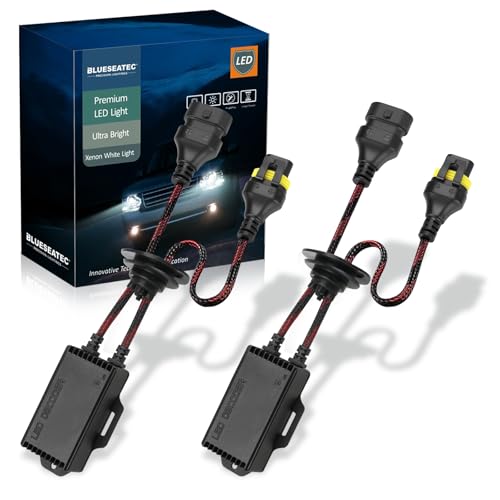
🚗【Fitment List】: The canbus decoders are compatible with 9005 9006 H10 HB4 9012 plug, used for LED lights and fog lights. Not suitable for HID lights. Wide voltage DC 9V-16V, wide operating temperature range -40℃~+85℃, power 5W/13.5V, capacitance 10000UF. (Please make sure our Canbus socket type is suitable for your car before purchasing)

UPGRADE CANbus TYPE: Nilight H11/H9/H8 LED CANbus Decoder is upgraded with a resistor and capacitor design to provide a more stable and reliable performance. The aluminum case enhances heat dissipation and safety protection, ensuring a longer lifespan.

Wide Vehicle Compatibility: Designed for 9005/H11 Light bulbs and h11 fog lights Combo applications, compatible with 2015–2019 Honda CR-V, 2014–2020 Honda Civic, 2007–2014 Toyota Camry, 2017–2022 Ford Escape, 2010–2017 Chevrolet Equinox, and 2019–2024 Ram 1500, esc
Installation Considerations and Common Pitfalls
Common mistakes involve confusing H11 with H11B variants, which have protruding versus nested prong designs. You risk overheating issues when selecting halogen equivalents with incorrect wattage ratings. Never force bulbs that don’t align naturally—H10’s compatibility aligns with 9005/9006 designs, not H11 standards. Always inspect mounting tabs, O-rings, and locking mechanisms to guarantee secure fitment and prevent electrical failures or poor beam performance. Unlike H11 bulbs that produce warmer light at lower wattage, 9005 bulbs operate at higher wattage and produce whiter light with higher color temperature for enhanced road visibility. For long-term headlight clarity, consider applying UV sealant protection after installation to prevent oxidation and yellowing. Consulting automotive bulb lookup websites helps verify compatibility before installation to avoid purchasing incompatible replacements.
Selecting the Best Bulb for Your Vehicle
Prioritize bulb longevity by avoiding wattage mismatches that cause premature failure through overheating. H11 bulbs at 55W deliver 1350 lumens for controlled low-beam patterns, while H10 bulbs function comparably to 9005/9006 alternatives. Consider light temperature preferences for visibility—higher color temperatures improve contrast in adverse conditions. When selecting replacements, LED and HID conversion kits can offer improved brightness and longevity compared to standard halogen options. LED headlights also generate less heat for better durability and safety compared to traditional options. Always select model-specific bulbs rather than forced equivalents to maintain proper beam patterns and prevent electrical system strain. Note that conversion kits are needed if attempting to use bulbs with incompatible socket configurations.
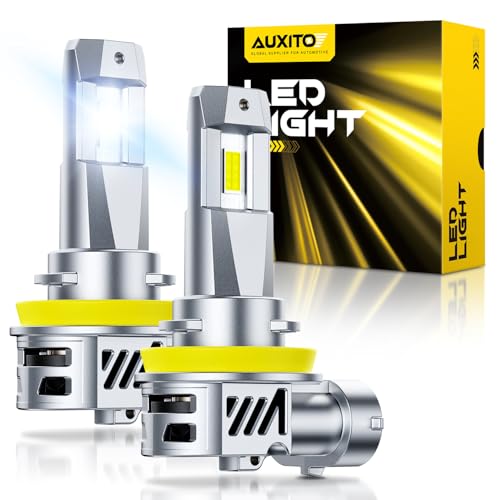
15X Brighter H11 H8 H9 LED Bulbs: 16 high-quality LED chips, 80000LM per pair, covers more road area, helps you spot obstacles quickly during night or foggy drives.

2026 Upgraded 106000LM Output: Experience unmatched brightness with the 2026 Termitor H11 light bulbs. Delivering a massive 106000LM per set and 6500K crisp cool white light, they slice through darkness and extreme conditions for ultimate off-road vision

【NO GLARE PERFECT BEAM PATTERN】Engineered to precisely match the OEM halogen filament position with a sharp cutoff line. These 9005 H11 LED bulbs deliver a focused, ultra-wide illumination range without creating dark spots or blinding oncoming traffic, ensuring compliant road safety for daily night driving.