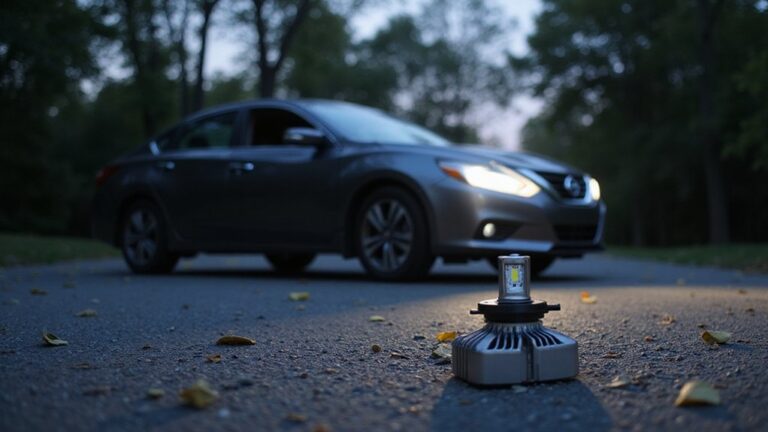
Your vehicle’s headlight assembly is an integrated lighting system that combines the housing, lens, reflector or projector optics, bulb, and electrical connections into a single replaceable unit. It serves as your primary front-end illumination system, protecting internal components from moisture and thermal stress while ensuring proper beam patterns for nighttime visibility. Modern assemblies utilize various technologies including halogen, HID, LED, or laser systems, each offering distinct performance characteristics. Understanding the components, technologies, and maintenance requirements will help you maximize visibility and safety.
Understanding the Basics of Headlight Assemblies
A headlight assembly serves as the primary illumination system mounted to your vehicle’s front end, integrating multiple lighting components into a single replaceable unit. Understanding headlight terminology helps you identify the assembly’s core functions: housing bulbs, reflectors or projector lenses, turn signals, and parking lights within one protected enclosure. Assembly functionality extends beyond basic illumination—it enhances visibility during low-light conditions while signaling your vehicle’s presence to other motorists. The housing protects internal components from moisture, dust, and thermal stress while directing light output through engineered reflective surfaces. If moisture accumulates within the housing, it can be removed using condensation removal techniques ranging from compressed air to professional resealing. Modern assemblies may incorporate halogen, HID, LED, or laser technologies, with designs varying between reflector and projector configurations. Proper beam alignment ensures optimal light distribution on the road while minimizing glare for oncoming drivers. The lightbulb generates illumination by carrying electric current through a filament, converting electrical energy into visible light. You’ll find both OEM and aftermarket options available, with plug-and-play wiring harnesses ensuring compatibility with your vehicle’s electrical architecture.
Key Components That Make Up a Headlight Assembly
When examining headlight assembly construction, five primary components work in concert to deliver regulated illumination: the housing, lens, reflector, bulb, and wiring system. The housing serves as the protective shell, incorporating mounting brackets and providing structural integrity. Lens types range from clear polycarbonate with optical patterns to diffusion-element designs that comply with SAE/DOT standards. Reflector designs have evolved from simple parabolic configurations to complex multi-surface geometries that precisely control beam patterns. The bulb—whether halogen, HID, or LED—functions as the primary light source, often containing dual filaments for switchable near and far beams. Wiring harnesses deliver power through moisture-resistant connectors, sometimes integrating ballasts or control circuits for advanced bulb technologies, ensuring ideal operation and longevity. Many modern assemblies also incorporate integrated turn signals and parking lights within the same housing unit. Over time, headlight lenses can develop oxidation and fogging that reduces light output, but UV protectant sealants can help prevent this degradation and maintain optimal nighttime visibility. Proper alignment of these components is maintained through headlight adjustment screws that allow technicians to fine-tune beam direction for optimal visibility and regulatory compliance.
Different Types of Headlight Technologies
Understanding the physical architecture of headlight assemblies provides the foundation for evaluating how different illumination technologies leverage these components to achieve specific performance characteristics. When comparing halogen vs HID systems, you’ll find halogen uses tungsten filaments while HID generates light through xenon gas arcs, delivering three times longer lifespan. LED advantages include semiconductor-based precision, 25,000+ hour durability, and instant full-brightness activation without warm-up periods. Laser applications remain limited to luxury vehicles but offer superior range and efficiency by exciting phosphor materials. Adaptive technology integrates with matrix LED systems, enabling individually controllable elements that adjust beam patterns based on speed, steering input, and traffic conditions. These intelligent configurations automatically modify high beam distribution to maximize visibility while preventing glare for oncoming drivers. LED headlights reduce power consumption by approximately 50-80% compared to traditional halogen bulbs. Traditional incandescent bulbs suffered from higher energy consumption and overheating issues that compromised their effectiveness over time. Over time, plastic headlight lenses can benefit from wet sanding and polishing to restore clarity and remove oxidation that accumulates on the surface.

[Fit For] - 98-07 Lexus LX470

Uses of 9005 High / 9006 Low Beam Bulbs (Not Included)

✔️ FITMENT: Compatible with GMC Sierra 1500/1500 HD/2500HD/3500HD 2007-2013 models only (Fit 2007 new body style). 2007-2014 GMC Sierra 1500HD/2500HD/3500HD Denali models only (Fit 2007 new body style and 2014 old body style). 2009-2013 GMC Sierra 1500 Hybrid models only.
How Headlight Assemblies Improve Road Safety
Beyond their fundamental function of illuminating roadways, headlight assemblies serve as critical safety systems that measurably reduce collision rates across multiple driving scenarios. Vehicles equipped with good-rated headlights demonstrate 19% fewer nighttime single-vehicle crashes and 23% fewer pedestrian collisions compared to poor-rated systems. The headlight brightness differential is substantial—premium low beams illuminate up to 460 feet versus 125 feet for substandard assemblies, providing approximately four additional seconds of reaction time at 50 mph. Crash statistics reveal that achieving higher visibility ratings reduces nighttime accident rates by 4.6% per 10-point improvement. Good-rated headlights also reduce injuries in crashes by 29% compared to poor-rated headlights. During daytime operations, running lights decrease overall crash rates by 5-10%, with motorcycles experiencing 32% fewer multiparty accidents. Proper headlight maintenance, such as replacing worn halogen bulbs and LED options, ensures consistent performance and optimal visibility for safe nighttime driving. IIHS headlight evaluations have driven industry improvements, with good-rated assemblies increasing from 4% to 34% since 2015.
Projector vs. Reflector Headlight Designs
Modern headlight assemblies employ two distinct optical architectures that fundamentally differ in how they control light distribution. Reflector designs position a bulb inside a mirrored bowl that scatters light forward across a broad area. This creates diffuse beams with inconsistent intensity and potential dark spots. Projector systems integrate an ellipsoidal lens with a curved reflector, generating sharply defined cutoff lines that concentrate illumination precisely where you need it.
The projector benefits include enhanced beam focus, reduced glare to oncoming traffic, and superior compatibility with HID and LED technologies. Projector headlights can accommodate halogen, HID, or LED bulbs, with HID and LED options offering significantly higher brightness and longer lifespan. Reflector drawbacks involve light spillage, lower optical efficiency, and scattered patterns that compromise both visibility and safety. While reflectors offer cost-effective manufacturing and simpler installation, projectors deliver controlled intensity, uniform distribution, and the modern performance standards required for advanced lighting systems. The compact size of reflector headlights allows manufacturers to integrate them into various vehicle styles and body configurations.

【Extreme Brightness】Experience 12X brightness than OEM bulbs with 96,000LM of 6500K cool white light. Perfect for night driving, fog, rain, and off-road adventures, offering wider and longer visibility

Super Bright. This D2H bulbs have High brightness light source. High-power, 6500K Cool White Light. Beam pattern standard, safe driving

Safety-Focused Optics-Precision 1.5mm beam focusing and maintained halogen alignment ensure AUXITO 9003 bulb delivers optimal illumination without creating glare hazards
Multi-Function Capabilities of Modern Headlight Assemblies
As vehicle technology evolves beyond simple illumination, headlight assemblies now integrate multiple sensing, processing, and optical control systems that adapt lighting performance to real-time driving conditions. Adaptive lighting systems adjust beam patterns based on vehicle speed, steering angle, and weather conditions while monitoring traffic to prevent glare. Matrix LED technology divides light into individually controlled segments, enabling high-beam illumination without blinding oncoming drivers. These assemblies consume 80% less power than halogen bulbs while producing up to 10,000 lumens with lifespans exceeding 50,000 hours. Modern units incorporate daytime running lights, fog lamps, and cornering lights within single housings. Premium systems feature laser diodes for extended range and lensless designs that eliminate fogging. Proper headlight alignment techniques ensure optimal visibility while preventing glare to oncoming vehicles. LED headlights must maintain compliance with road safety regulations to ensure they meet legal standards for brightness and beam pattern control. Customizable options include RGB accent lighting and modular components for aesthetic personalization and functional upgrades. The global LED automotive lighting market is projected to grow by 12% annually through 2025 as manufacturers invest in advanced technology to meet regulatory requirements and consumer demand for energy-efficient solutions.
Proper Installation and Alignment Procedures
While advanced lighting technologies deliver superior performance, their effectiveness depends entirely on correct mechanical installation and optical calibration. You’ll need proper installation tools including screwdrivers, socket wrenches, and specialized components like voltage regulators for LED systems. Start by disconnecting the battery to prevent electrical shorts, then remove mounting hardware and wiring harnesses from the old assembly. When installing the new unit, apply dielectric grease to connectors for moisture protection and guarantee all mounting points align precisely. Sometimes you may need to remove surrounding parts like the grille or bumper for better access to the headlight assembly. Critical alignment techniques involve positioning your vehicle 25 feet from a flat wall surface, then adjusting vertical and horizontal screws to center the beam pattern. Set the cutoff line just below eye level to optimize road illumination while preventing glare to oncoming traffic. For model-specific variations, consult low and high beam differences that may apply to your particular Audi model. After reassembly, ensure the dust cover is securely reattached to prevent moisture and debris from entering the headlight assembly, and test the headlights to ensure proper functionality.

Instructions for Use: The first yellow drill attachment installed on the drill, cushion pad white surface and drill attachment black surface paste, use the first in the lamps on the spray water and then use the cleaning pad to dry in a circle, and then according to the grain size from small to large in order to use the waterproof abrasive disc on the lamps for polishing, and finally use the sponge polishing pad for polishing

Fitment: Headlight Adjusters Kit is compatible with Chevy Impala, Biscayne & Belair 1962 Impala,1963 Impala, 1964 Impala ,1965 Impala,1966 Impala ,1967 Impala.
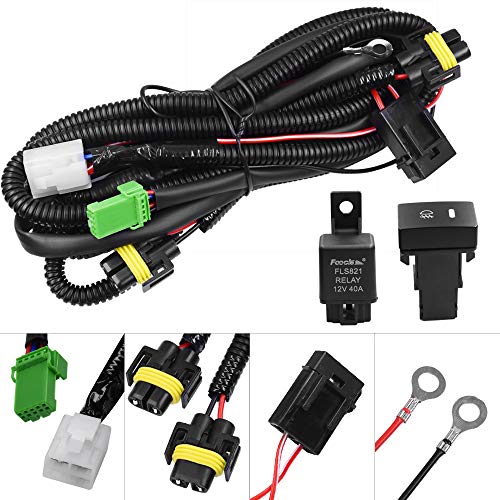
Good For Replacement fog lamps, Add-on fog lights, HID lights, LED daytime running lights, Driving lights, LED work lights, Off-road lighting kit
Signs Your Headlight Assembly Needs Replacement
How can you determine when your headlight assembly has reached the end of its service life? Critical headlight indicators include persistent dimness despite bulb replacement, moisture accumulation within the housing, and physical damage to lens surfaces or mounting points. You’ll notice flickering patterns that suggest electrical instability, often caused by corroded connectors or compromised wiring harnesses. When one headlight fails repeatedly or you observe yellowing that resists restoration treatments, the assembly’s structural integrity has deteriorated. Uneven beam patterns and light output discrepancies between units signal alignment or reflector degradation. If your headlights only work on high beam while low beams fail to operate, this indicates potential problems with the headlight relay or switch within the assembly. Visual inspection for broken filaments or burn marks can help confirm whether the issue originates from the bulb itself rather than assembly failure. While replacement costs vary by vehicle manufacturer and assembly complexity, addressing these issues promptly prevents safety compromises. Professional diagnosis can differentiate between repairable electrical faults and complete assembly failure requiring replacement.

【Compatibility Check】Compatible with Compatible with 2007 2008 2009 2010 2011 2012 2013 Toyota Tundra Pickup,Please use Amazon's "Confirm Fitment" tool above or send us your vehicle's Year, Make, and Model to verify compatibility before purchasing.

【Fitment】The headlight motor rebuild kit is compatible with Chevy Corvette 1988-1996.

15 Mins Installation: OE Standard headlights for1994 1995 1996 1997 1998 1999 2000 2001 2002 RAM 1500 2500 3500. Plug-N-Play Design, No Modification or Drilling Needed
Maintenance Tips to Extend Headlight Assembly Life
Because headlight assemblies function as critical safety components subject to environmental degradation and thermal stress, implementing systematic maintenance protocols greatly extends their operational lifespan and performance consistency. You’ll need regular headlight cleaning using non-abrasive microfiber cloths and automotive detergent to prevent lens opacity. Address oxidation through wet sanding and UV-protectant application. During bulb inspection, verify electrical contacts remain corrosion-free and apply dielectric grease for conductivity maintenance. Replace bulbs in matched pairs while avoiding glass surface contact, particularly with halogen bulbs which are sensitive to skin oils and contamination. Inspect housing seals and gaskets for integrity breaches that permit moisture ingress. Apply protective UV coatings following manufacturer specifications to prevent photodegradation. Conduct annual beam alignment verification to maintain proper illumination geometry. For persistent condensation, remove assemblies, hot-air dry, and reseal using butyl rubber compounds with silica gel desiccant placement. When upgrading to LED or HID technologies, ensure compatibility with your vehicle model to maintain proper beam patterns and avoid blinding oncoming traffic. Proper maintenance maintains resale value by preventing headlight discoloration and hazing that diminish vehicle aesthetics.
Choosing Between OEM and Aftermarket Headlight Assemblies
Systematic maintenance protocols maximize headlight assembly longevity, yet component failure eventually necessitates replacement decisions between original equipment manufacturer (OEM) and aftermarket alternatives. OEM advantages include guaranteed fitment compatibility, manufacturer-backed warranty benefits, and consistent quality standards replicating factory specifications. Aftermarket trade-offs present lower cost considerations—typically 40-70% savings—against potential fitment issues requiring wiring modifications or adapters. Quality comparisons reveal significant performance variability within aftermarket segments; CAPA-certified units approach OEM specifications, while budget options risk water intrusion and premature degradation. Customization options favor aftermarket assemblies, offering enhanced brightness levels, color temperature variations, and aesthetic modifications unavailable in OEM configurations. Modern LED technology provides improved visibility and longer lifespan compared to traditional halogen alternatives, making it an important consideration when evaluating aftermarket upgrade options. Both OEM and aftermarket options must meet legal requirements for headlight modifications to ensure compliance with safety standards. Your selection criteria should prioritize installation complexity tolerance, budget constraints, required service life, and legal compliance requirements. High-end aftermarket assemblies with advanced LED or HID technologies may exceed OEM pricing while delivering superior illumination performance. OEM headlights typically feature plug-and-play installation requiring no additional tools or modifications.

Compatibility: The headlights assemblies are compatible with 2001 2002 2003 2004 Toyota Tacoma; High/Low beam bulb type: H4. Bulbs are not included, use Stock Bulbs For Installation.

Material & Build Quality: High-quality aluminum alloy housing with durable UV-resistant polycarbonate lens. Built for long-term reliability with strong impact resistance and stable performance across various driving conditions.

Compatibility: the headlight assemblies are compatible with 01 02 03 04 2001 2002 2003 2004 Tacoma; high/low beam bulb type: H4; bulbs are not included